In a significant stride towards enhancing user experience and developer functionality, the itch.io desktop application has recently rolled out two pivotal updates, versions v26.15.0 and v26.17.0, addressing a multitude of long-standing community requests and technical challenges. These comprehensive updates mark a new chapter for the popular indie game platform’s dedicated client, introducing robust support for game bundles directly within the library, sophisticated per-game launch settings, the capability to install platform-untagged downloads, and a completely revamped sidebar search interface. The improvements are poised to transform how users interact with their extensive game collections, particularly those acquired through the platform’s renowned large-scale charitable bundles, while offering developers and power users unprecedented control over game execution.
A New Era for Bundle Management: Integrating Vast Collections Seamlessly
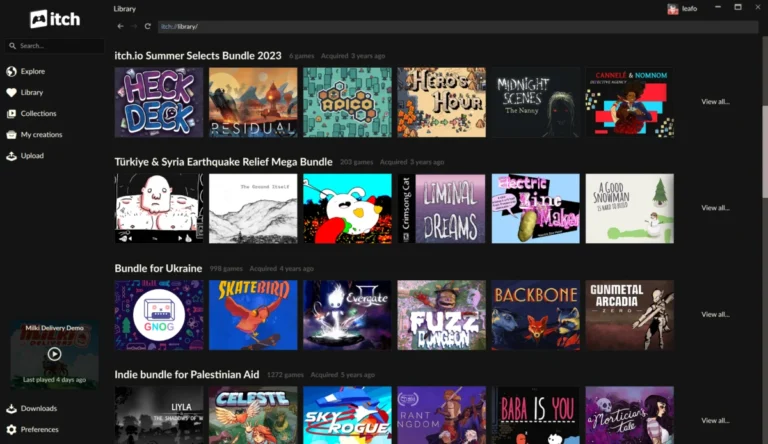
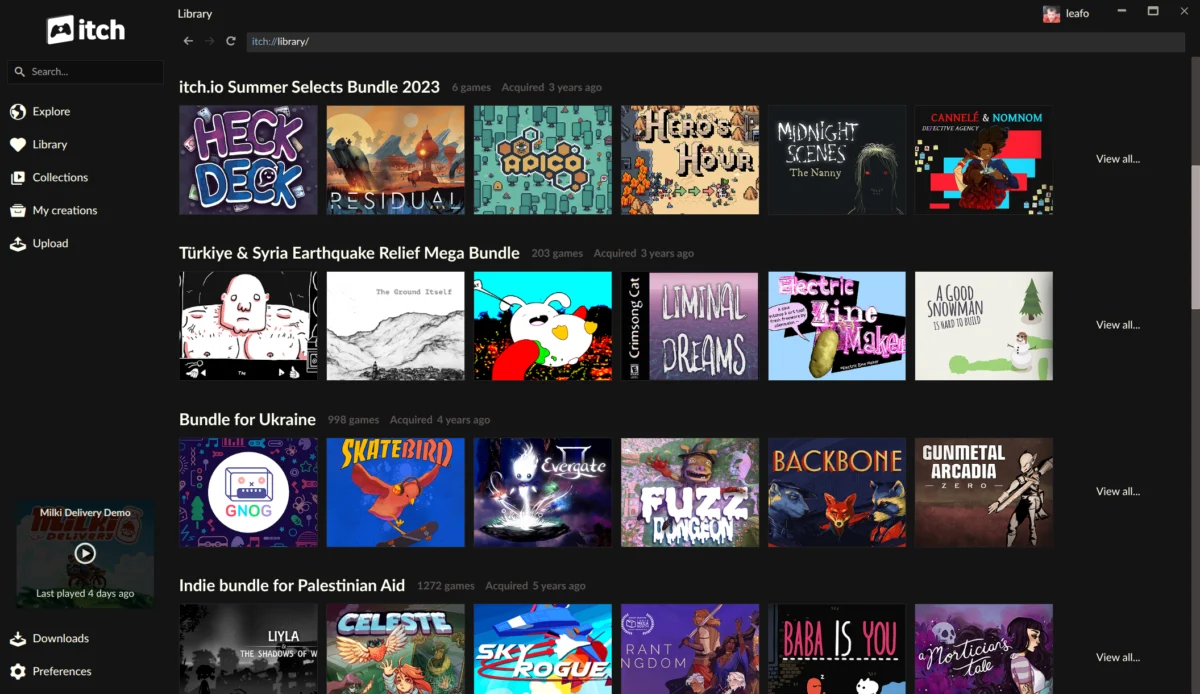
Perhaps the most impactful feature introduced in these updates is the seamless integration of game bundles into the itch.io app library. Previously, despite owning numerous titles through bundles, users often found their extensive collections fragmented, requiring them to claim individual games via the itch.io website before they would appear in the desktop client. This presented a significant hurdle for discoverability and accessibility, especially given the sheer scale of some of itch.io’s most celebrated bundles.
The "Bundle for Racial Justice and Equality," for instance, released in June 2020, was an unprecedented digital collection featuring 1,741 items and garnering over 800,000 purchases. Similarly, the "Bundle for Ukraine" in March 2022 united nearly 1,000 items and saw over 400,000 buyers. These initiatives raised millions for critical causes, demonstrating the power of the itch.io community and its open platform. However, the backend complexity of managing ownership for such colossal bundles posed a unique challenge. Generating an individual download key for every item for every buyer would have resulted in an astronomical number of database entries—potentially exceeding a billion rows for the Racial Justice bundle alone. Consequently, ownership for these bundles was recorded as a single entity, with individual game download keys only being created upon a user’s explicit claim on the website.
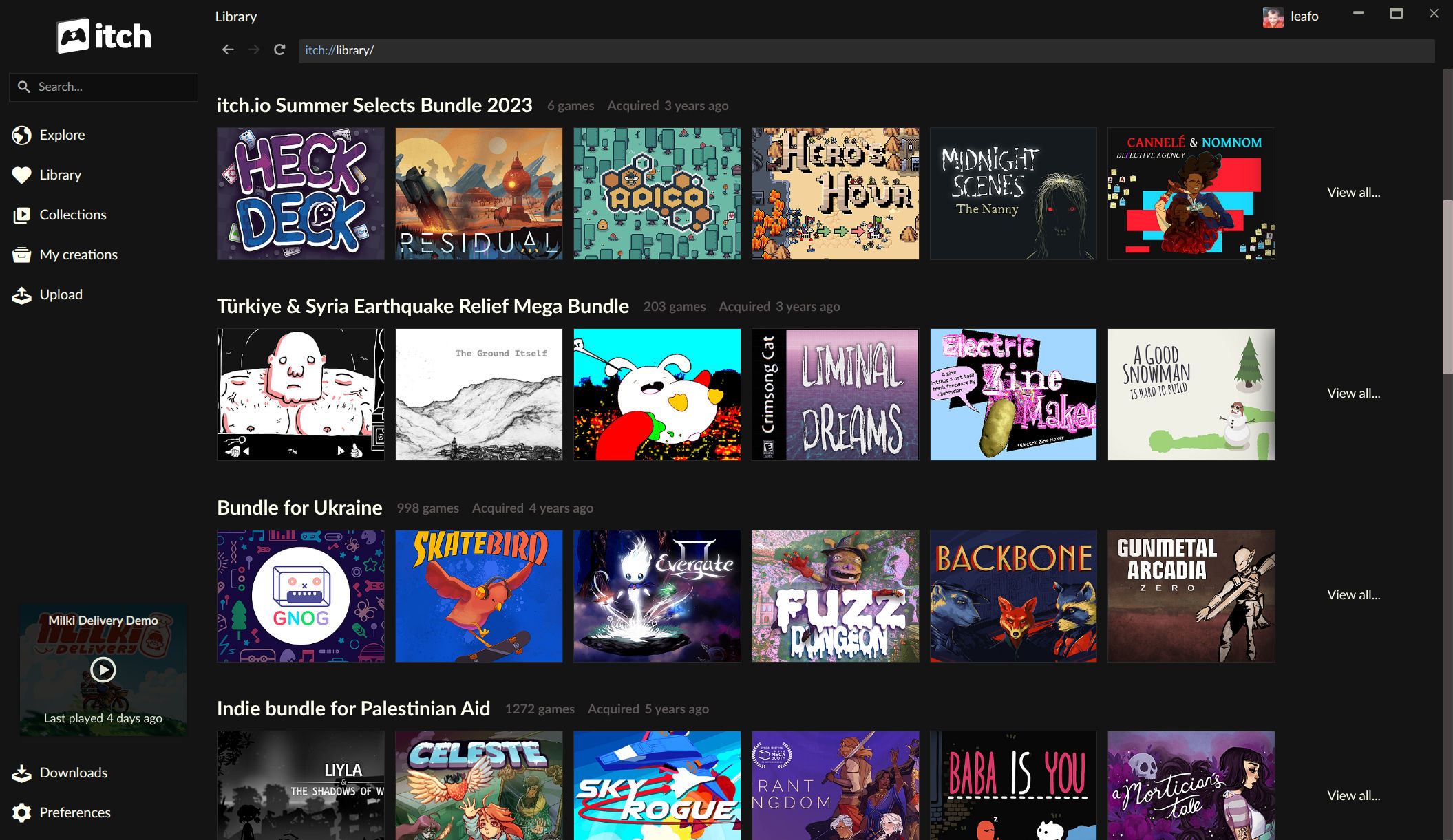
The itch.io app, in its prior iterations, lacked a native understanding of this unique bundle ownership model. This meant that games from these massive collections remained invisible within the app until manually claimed, often leading to a treasure trove of content going unexplored. The latest updates rectify this fundamental limitation. Now, bundles that a user owns are displayed as first-class citizens within their library, each boasting its own dedicated page. These bundle pages are equipped with advanced filtering and sorting capabilities, allowing users to browse, search by title, and filter by platform, classification, and installation status. Crucially, games can now be installed directly from within these bundle pages, eliminating the cumbersome website claiming process entirely. This enhancement not only vastly improves the user experience for existing bundle owners but also solidifies itch.io’s ability to host future large-scale collections, reinforcing its reputation as a platform committed to both indie game promotion and social good. The developers note that if users "purchased some of our larger bundles but had a hard time finding and playing stuff, we encourage you to try out the app," underscoring the transformative nature of this update. This move also complements the recent revamp of itch.io’s bundle hosting tools for creators, signaling a holistic improvement in how bundles are managed across the platform.
Empowering Players with Advanced Launch Controls
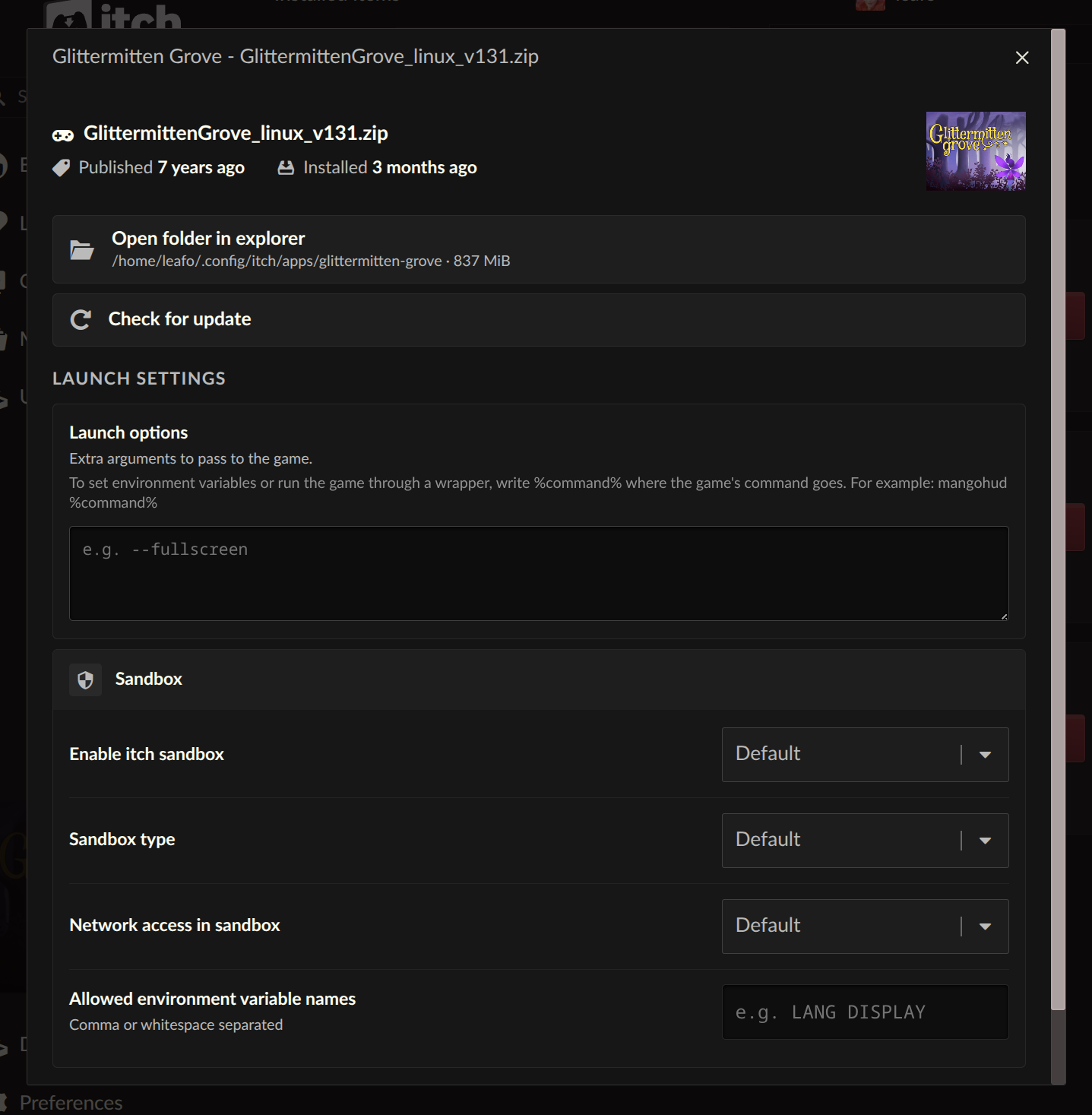
Beyond library management, the new updates introduce a highly anticipated feature for power users and developers: per-game "Launch settings." Accessible from the manage dialog for each installed game, this area provides granular control over how games are launched and executed. Users can now configure crucial parameters such as sandbox restrictions, network access permissions, and environment variables on an individual game basis. This level of customization is a significant step forward, offering a degree of control typically associated with advanced system configurations or developer toolkits.
A particularly noteworthy addition is the "Command pattern" option for launch arguments. This addresses a long-standing request from the community for more flexible game execution. Users can now provide plain arguments to pass directly to a game’s executable, or, more powerfully, utilize a "%command%" pattern. This pattern allows the user to wrap the game’s launch within another command, effectively enabling the integration of compatibility layers, debugging tools, or custom scripts. For instance, Linux users leveraging compatibility layers like Wine or Proton to run Windows-native games can now configure specific launch prefixes or parameters directly within the itch.io app, streamlining their gaming experience. Similarly, developers testing different configurations or modders applying specific patches can manage these settings without resorting to external launchers or manual command-line interventions. This feature underscores itch.io’s commitment to providing a versatile and adaptable environment for its diverse user base, ranging from casual players to seasoned developers and tech-savvy enthusiasts.
Breaking Down Platform Barriers: Flexible Installation Options
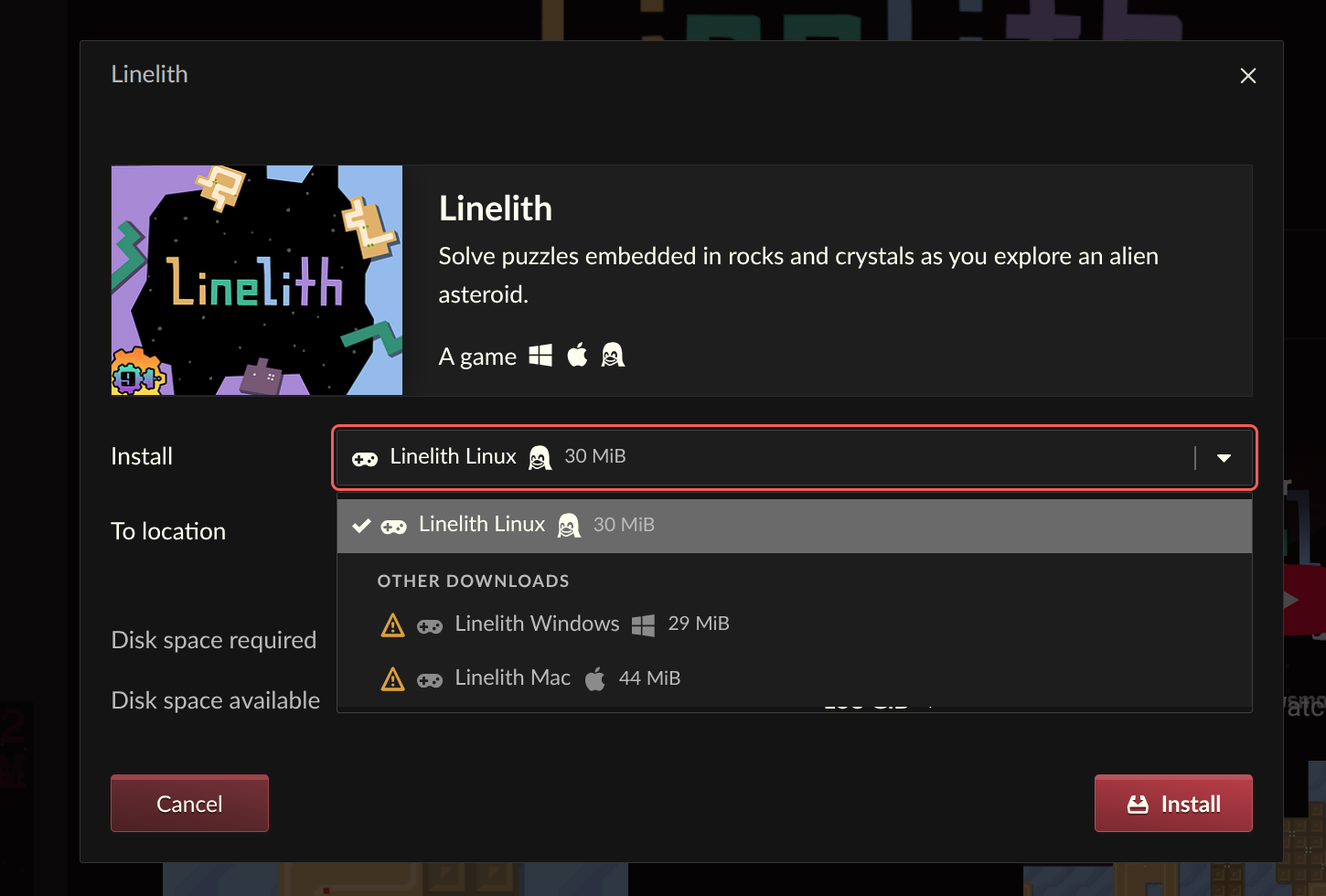
In a move that further enhances the app’s utility and inclusivity, itch.io now allows users to reveal and install downloads that are not explicitly tagged for their operating system. Previously, the app would only display and offer installation for game builds that developers had specifically marked as compatible with the user’s current platform (e.g., Windows builds for Windows users, Linux builds for Linux users). While this approach simplified the experience for many, it inadvertently restricted options for users employing compatibility layers or those needing access to alternative builds for specific purposes.
The updated installation dialog now provides an option to "reveal unsupported downloads," making all available builds accessible regardless of their platform tags. This is particularly beneficial for users on platforms like Linux who frequently rely on tools such as Wine, Proton, or other emulation layers to run games originally developed for Windows. Instead of having to download these "unsupported" builds via the website, users can now manage the entire process directly within the app. This increased flexibility reduces friction and expands the playable library for a broader audience, aligning with itch.io’s philosophy of open access and community-driven content. It acknowledges the evolving landscape of PC gaming, where platform boundaries are increasingly blurred by advanced compatibility technologies.
Refining User Interface and Discoverability: A New Sidebar Search
User interface refinements are also a key component of these updates, with a particular focus on improving discoverability within the app. The sidebar search functionality has been completely overhauled, replacing the previous system that relied on the itch.io API’s autocomplete feature. While autocomplete can be useful, the old implementation often presented search results in a confusing order, making it challenging for users to effectively locate desired items, especially when their library grew large.
The new sidebar search is designed to provide a more intuitive and efficient experience. The developers state that "autocomplete works best for things you already have, and everything else should go through the site’s full search experience." This philosophy guides the new design, which aims to optimize the in-app search for quickly finding owned content while directing broader, exploratory searches to the more comprehensive web-based search engine. This clear distinction helps manage user expectations and streamlines navigation, ensuring that players can swiftly access their purchased games without unnecessary clutter. While the specifics of "Library page updates" were not detailed in the original announcement’s bullet points, this search refinement is a crucial step in enhancing overall library navigability and user satisfaction.
The Context of itch.io’s Evolution and Community-Driven Development
These latest updates are not isolated improvements but rather a continuation of itch.io’s iterative development philosophy, heavily influenced by its dedicated community. Launched in 2016, the itch.io desktop app has steadily evolved from a simple game launcher to a robust client designed to complement the unique ecosystem of the web platform. itch.io distinguishes itself in the digital distribution market through its strong focus on indie games, its flexible revenue sharing model (including 0% cut options for developers), and its commitment to an open platform where creators maintain full control over their content.
The app’s development has consistently incorporated feedback gleaned from its issues tracker and community forums. The explicit mention of addressing "some of the most commonly requested problems and requests" highlights a developer-player dialogue that is central to itch.io’s ethos. The technical challenges inherent in managing massive bundles, as detailed previously, are a testament to the platform’s unique offerings and the bespoke solutions required to support them. These updates demonstrate a maturity in the app’s architecture, allowing it to handle complexities that might overwhelm more conventional digital storefronts.
Community Reception and Broader Implications
Initial reactions from the itch.io community have been overwhelmingly positive. Users expressed enthusiasm for the new features, particularly the bundle integration and cross-platform installation capabilities. One user, ‘criacuervos’, commented, "Thank you, this is great news!" while ‘slitherpunk’ lauded the changes: "these update have been very nice!! thank goodness i can finally download platform untagged games. and the bundle separation makes navigating my library much nicer." These sentiments underscore the tangible improvements to daily usability that these updates bring. While one user, ‘fizzy27’, reported an issue with the app not opening on Mac after the update, indicating that software deployment always comes with potential, the overall reception points to a successful release addressing critical pain points.
The implications of these updates extend beyond mere convenience. For players, they unlock greater control, better organization of vast game libraries, and enhanced accessibility across diverse operating systems. This positions the itch.io app as a more compelling and self-sufficient client, reducing the need to constantly switch between the app and the website for various tasks. For developers, these improvements mean that games included in bundles are more likely to be discovered, installed, and played, thereby increasing their reach and potential audience engagement. The enhanced launch settings also empower developers and users alike to experiment with different configurations, fostering a more dynamic and mod-friendly environment.
Strategically, these updates strengthen itch.io’s competitive standing in the crowded digital game distribution space. By providing robust features that cater to the specific needs of indie game enthusiasts and power users, itch.io reinforces its identity as a platform built by and for its community. It continues to differentiate itself from larger, more rigid storefronts by offering flexibility, transparency, and a direct line of communication between developers and players.
Users interested in experiencing these enhancements can obtain the itch.io app from https://itch.io/app. Existing installations are designed to update themselves automatically. For those seeking a deeper dive into the technical specifics, the full changelogs for v26.15.0 and v26.17.0 are available on GitHub. As itch.io continues to evolve, these updates serve as a clear indication of its ongoing commitment to refining its core services and responding to the needs of its vibrant community.
About the Author