Despite the universe’s staggering age of approximately 13.8 billion years, providing countless opportunities for life to emerge and evolve across an estimated two trillion galaxies, humanity has yet to find definitive evidence or receive any communication from extraterrestrial civilizations. This profound silence, contrasted with the high probability of life existing elsewhere, forms the crux of the Fermi Paradox, a question first posed by physicist Enrico Fermi in 1950: "Where is everybody?" The paradox challenges our understanding of life’s prevalence and its potential trajectories, forcing scientists and philosophers alike to confront the possibility that either life is extraordinarily rare, or there are unseen barriers preventing its advanced forms from making contact.
The Origin of the Paradox and the Drake Equation
Enrico Fermi’s famous query arose during a casual lunch conversation at Los Alamos National Laboratory. Considering the vastness of the universe, the sheer number of stars, and the ancient timeline available for civilizations to develop, he posited that if extraterrestrial life were common, at least some highly advanced societies should have spread throughout the galaxy, making their presence known. The absence of such evidence struck him as a significant discrepancy.
Years later, in 1961, astronomer Frank Drake formalized the factors contributing to the probability of intelligent life with his eponymous Drake Equation. This probabilistic argument, represented as:
*N = R x fp x ne x fl x fi x fc x L**
Where:
- N = The number of civilizations in our galaxy with which communication might be possible.
- **R*** = The rate of formation of stars suitable for the development of intelligent life.
- fp = The fraction of those stars with planetary systems.
- ne = The average number of planets that can potentially support life per star with planets.
- fl = The fraction of those planets that actually go on to develop life at some point.
- fi = The fraction of planets with life that go on to develop intelligent life.
- fc = The fraction of civilizations that develop a technology that releases detectable signs of their existence into space.
- L = The length of time for which such civilizations release detectable signals into space.
While the Drake Equation’s variables remain highly speculative, especially for fl, fi, fc, and L, even conservative estimates often suggest that N should be a number far greater than one, implying that our galaxy alone could host numerous technological civilizations. The discovery of thousands of exoplanets since the 1990s, many within habitable zones, has only amplified the perceived likelihood of life, making the Fermi Paradox even more perplexing. The Kepler Space Telescope, for instance, identified thousands of exoplanet candidates, suggesting that planets are a common byproduct of star formation, with many potentially Earth-like.
The Cosmic Timeline: A Universe Ripe for Life
To fully appreciate the scope of the Fermi Paradox, it is crucial to consider the cosmic timeline. The universe began approximately 13.8 billion years ago with the Big Bang. The first stars, known as Population III stars, formed a few hundred million years later, initiating the cosmic alchemy that forged heavier elements like carbon, oxygen, and iron through nucleosynthesis. These elements are the building blocks of planets and life.

Our own solar system, including Earth, formed about 4.6 billion years ago. Life on Earth emerged relatively quickly, within the first billion years of the planet’s existence, approximately 3.8 to 3.5 billion years ago. Multicellular life appeared about 600 million years ago, and intelligent, tool-using hominids evolved in just the last few million years. This timeline suggests that for planets orbiting older stars, billions of years have been available for life to not only emerge but also to undergo extensive evolutionary processes, potentially leading to advanced civilizations far predating our own. Given a 13 billion-year head start for some cosmic locales, the expectation of widespread, discernible intelligence becomes a powerful driver for the Fermi Paradox.
The Great Filter: Explaining the Silence
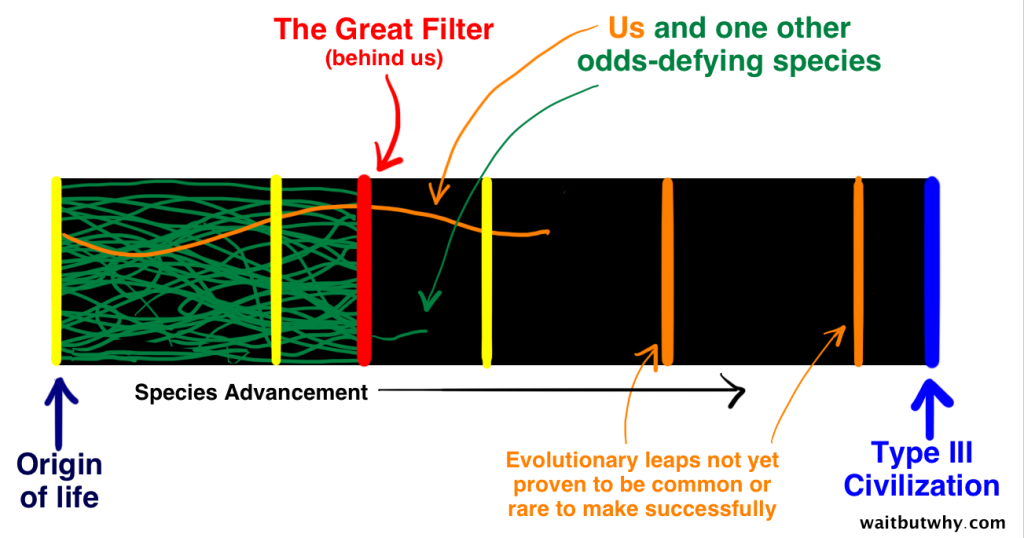
One of the most compelling explanations for the Fermi Paradox is the "Great Filter" theory, popularized by economist Robin Hanson and philosopher Nick Bostrom. This theory posits that at some critical juncture between the emergence of life and the development of a highly advanced, space-faring civilization, there exists an evolutionary bottleneck that all or nearly all forms of life fail to overcome. This "filter" could be a single, extremely improbable step or a series of highly challenging obstacles. The crucial question then becomes: Is the Great Filter behind us, meaning humanity has already overcome it, making us rare? Or is it still ahead of us, implying a catastrophic future that most civilizations cannot surmount?
Potential Past Filters (Making Us Rare)
If the Great Filter is in our past, it suggests that the steps leading to intelligent, technological life are far more improbable than we currently appreciate. These possibilities include:
- Abiogenesis is Exceptionally Rare: The transition from non-living matter to self-replicating life might be an exceedingly rare event, perhaps requiring highly specific and unlikely environmental conditions. Despite extensive research, scientists have not yet fully replicated abiogenesis in a lab, highlighting its complexity.
- The Evolution of Complex Life (Eukaryogenesis): The jump from simple prokaryotic cells (bacteria, archaea) to complex eukaryotic cells (with nuclei and organelles) was a monumental evolutionary leap. This transition, which occurred around 2 billion years ago, involved an endosymbiotic event where one prokaryote engulfed another, eventually forming mitochondria. This might be an exceptionally rare event in the universe.
- The Emergence of Multi-cellular Life: Following eukaryotic life, the development of multi-cellular organisms, allowing for specialized tissues and organs, was another significant hurdle. The "Cambrian Explosion" on Earth, a relatively rapid diversification of complex life forms, might be an anomaly.
- The Development of Intelligence and Technology: Even with complex life, the evolution of high intelligence, consciousness, and the ability to develop advanced technology (like radio communication or space travel) could be an improbable outcome. Many species on Earth are intelligent, but only humans have developed advanced technology.
- The Rare Earth Hypothesis: This theory suggests that the specific combination of astrophysical and geological events that made Earth habitable and conducive to complex life is exceedingly rare. Factors include a stable star, a large moon for tidal stability, plate tectonics for nutrient cycling, a protective magnetic field, and a precise orbital position within the galactic habitable zone.
Potential Future Filters (Making Our Future Precarious)
Conversely, if the Great Filter lies in our future, it implies that most civilizations, after reaching a certain level of technological advancement, inevitably face an existential threat they cannot overcome. This scenario would explain the cosmic silence as a graveyard of failed civilizations, and it casts a shadow over humanity’s long-term prospects. Potential future filters include:
- Self-Destruction: Advanced civilizations might be prone to destroying themselves through technological means. This could manifest as:
- Nuclear War: The development of weapons of mass destruction capable of planetary devastation.
- Ecological Collapse: Unsustainable resource consumption, pollution, and climate change leading to the collapse of planetary ecosystems.
- Artificial Intelligence Catastrophe: The creation of super-intelligent AI that escapes human control and poses an existential threat.
- Biological Warfare or Engineered Plagues: Advanced biotechnology misused to create unstoppable pathogens.
- Resource Depletion: Civilizations might exhaust critical resources on their home planet before developing the capacity for interstellar travel or resource acquisition from space.
- Cosmic Catastrophes: While less likely to be a universal filter due to their random nature, events like gamma-ray bursts, asteroid impacts, or supervolcanic eruptions could wipe out civilizations before they become interstellar. However, for a filter to explain the universal silence, it would need to be a more widespread or inevitable hurdle.
- Technological Singularity Leading to Non-Communicative Forms: Advanced life might transcend physical forms, integrating into vast digital networks or microscopic structures, losing the incentive or ability to communicate across vast interstellar distances in ways detectable by us. This leads into another significant theory.
Alternative Explanations for the Silence
Beyond the Great Filter, several other hypotheses attempt to explain the cosmic silence:
The Zoo Hypothesis and Dark Forest Theory
- The Zoo Hypothesis: Proposed by John Ball, this theory suggests that extraterrestrial civilizations are aware of humanity but choose not to interfere, observing us as one would animals in a zoo. They might adhere to a "Prime Directive" of non-intervention, waiting until humanity reaches a certain level of maturity or development. This implies a coordinated, galaxy-wide agreement among advanced species.
- The Dark Forest Theory: Popularized by Chinese science fiction author Liu Cixin in his novel The Dark Forest, this theory posits a much darker reason for silence. It suggests that the universe is a "dark forest" where every civilization is a hunter. To reveal one’s existence is to invite destruction, as any other civilization, upon detecting you, would rationally perceive you as a potential threat and eliminate you before you can become one. Therefore, silence is the only way to survive.
Technological Limitations and Communication Challenges
- Interstellar Travel is Impractical: The immense distances between stars, even within our own galaxy, make interstellar travel incredibly energy-intensive and time-consuming. Even at relativistic speeds, journeys would span millennia, making sustained contact or colonization projects exceedingly difficult for most civilizations.
- Communication Barriers:
- Signal Degradation: Radio signals weaken significantly over vast cosmic distances, making them hard to detect.
- Wrong Frequencies/Methods: We might be looking for the wrong types of signals (e.g., radio when they use neutrinos, quantum entanglement, or other unknown methods) or listening on the wrong frequencies.
- Temporal Mismatch: Civilizations might rise and fall quickly, their detectable signals lasting for only a cosmic blink, making it unlikely for two civilizations to exist and communicate simultaneously across vast distances.
- The "L" Factor: The duration (
L) for which a civilization is detectable might be very short, either due to self-destruction or transcending detectable forms.
The Transcension Hypothesis: Life Beyond the Physical
A particularly intriguing explanation, and one championed by figures like Seth Shostak and blogger Jeff Atwood, is the "Transcension Hypothesis" or the "Small Technology" theory. This perspective suggests that advanced civilizations, rather than building planet-sized megastructures like Dyson Spheres (which would be highly visible), tend towards increasing efficiency, miniaturization, and ultimately, a departure from macroscopic physical existence.
Drawing an analogy from the history of computing – from room-sized mainframes to ubiquitous microchips – this theory proposes that intelligence, over vast evolutionary timescales, might gravitate towards ever smaller, faster, and more energy-efficient forms. Instead of terraforming planets, highly advanced beings might choose to:
- Migrate to Digital or Virtual Realities: Creating immense simulated worlds within compact, highly efficient computational structures, offering limitless possibilities without the constraints of physical space or resource scarcity.
- Become Nanotechnological Entities: Operating at microscopic scales, perhaps as self-replicating nanobots or distributed swarms that manipulate matter and energy with precision, but are undetectable to our current astronomical instruments.
- Enter "Infinite Spaces Between": As Jeff Atwood suggests, truly advanced life might "do away with all physical stuff that slows you down as soon as they can," existing in states or dimensions that are fundamentally beyond our current understanding and detection capabilities. Seth Shostak, a senior astronomer at SETI, elaborates on this, suggesting that "the engineering of the small, rather than the large, that is inevitable." He points out that smaller machines are faster and require less energy, and small computers have faster internal communication (due to the speed of light constraint).
If civilizations evolve in this manner, they would essentially become invisible to us. Their "footprint" would be minimal, not emitting radio waves or constructing vast structures, but instead focusing on internal complexity and efficiency within incredibly small or non-physical domains. The universe could be teeming with such "post-biological" or "post-physical" intelligences, yet we would remain oblivious, searching for signals that are no longer being sent or looking at scales that are no longer relevant.
The Analogy of Time Travel
The original article aptly draws a parallel between the Fermi Paradox and the lack of evidence for time travelers from the future. If time travel were physically possible, and given the vast stretches of time that have passed, it seems plausible that at least one civilization, somewhere, would have invented it by now. Yet, there are no undeniable signs of visitors from the future. This absence, much like the absence of extraterrestrial contact, doesn’t definitively prove impossibility, but it raises profound questions. Carl Sagan once suggested that time travelers might be here but are disguised or not recognized, a sentiment echoed by some theories on advanced alien civilizations. This analogy underscores the weight of "absence of evidence" when considering phenomena that, by logical extension, should have manifested if they were truly feasible and widespread.
Humanity’s Ongoing Search: SETI and Beyond
Despite the daunting nature of the Fermi Paradox, humanity’s quest for extraterrestrial intelligence continues. The Search for Extraterrestrial Intelligence (SETI) programs, utilizing radio telescopes, have been scanning the skies for decades, primarily listening for artificial signals in the "water hole" frequencies (around 1420 MHz, the emission line of neutral hydrogen). More recently, optical SETI has begun searching for laser pulses.
The limitations of these efforts are significant. The observable universe is vast, and our current search covers an infinitesimally small fraction of potential celestial targets, frequency ranges, and signal types. We are essentially searching for a needle in a cosmic haystack, often assuming that aliens would communicate in ways similar to our own nascent technological capabilities. Furthermore, the light-speed delay means that any conversation with a distant civilization would span centuries or millennia.
Implications for Humanity: Our Place in the Cosmos
The Fermi Paradox is not merely a scientific curiosity; it carries profound implications for humanity’s understanding of its place in the universe. If the Great Filter is behind us, it means humanity is exceptionally rare, perhaps even unique, at least in our galaxy. This would imbue our existence with immense value and responsibility for preserving life and intelligence.
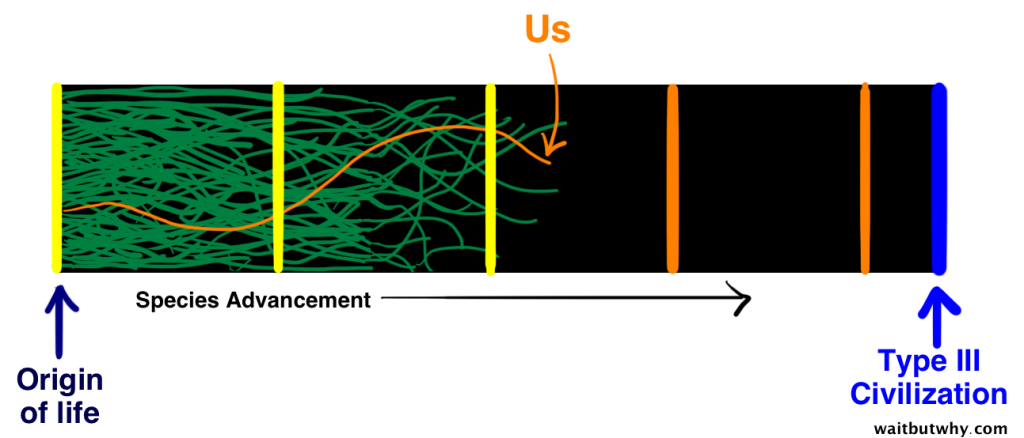
If the Great Filter is ahead of us, it serves as a stark warning. Our current challenges – climate change, nuclear proliferation, pandemics, the ethical development of AI – could be manifestations of the very filter that has silenced countless other civilizations. Understanding the paradox compels us to confront these existential risks with greater urgency and foresight.
Ultimately, the silence of the cosmos continues to fuel both scientific inquiry and philosophical introspection. Whether the universe is teeming with hidden life, or we are a rare cosmic accident, the ongoing search pushes the boundaries of our knowledge, inspiring technological advancements and shaping our perspective on the future of intelligent life. The answer to Fermi’s question remains elusive, but the pursuit of it defines a fundamental aspect of human curiosity: the desire to know if we are truly alone.
About the Author