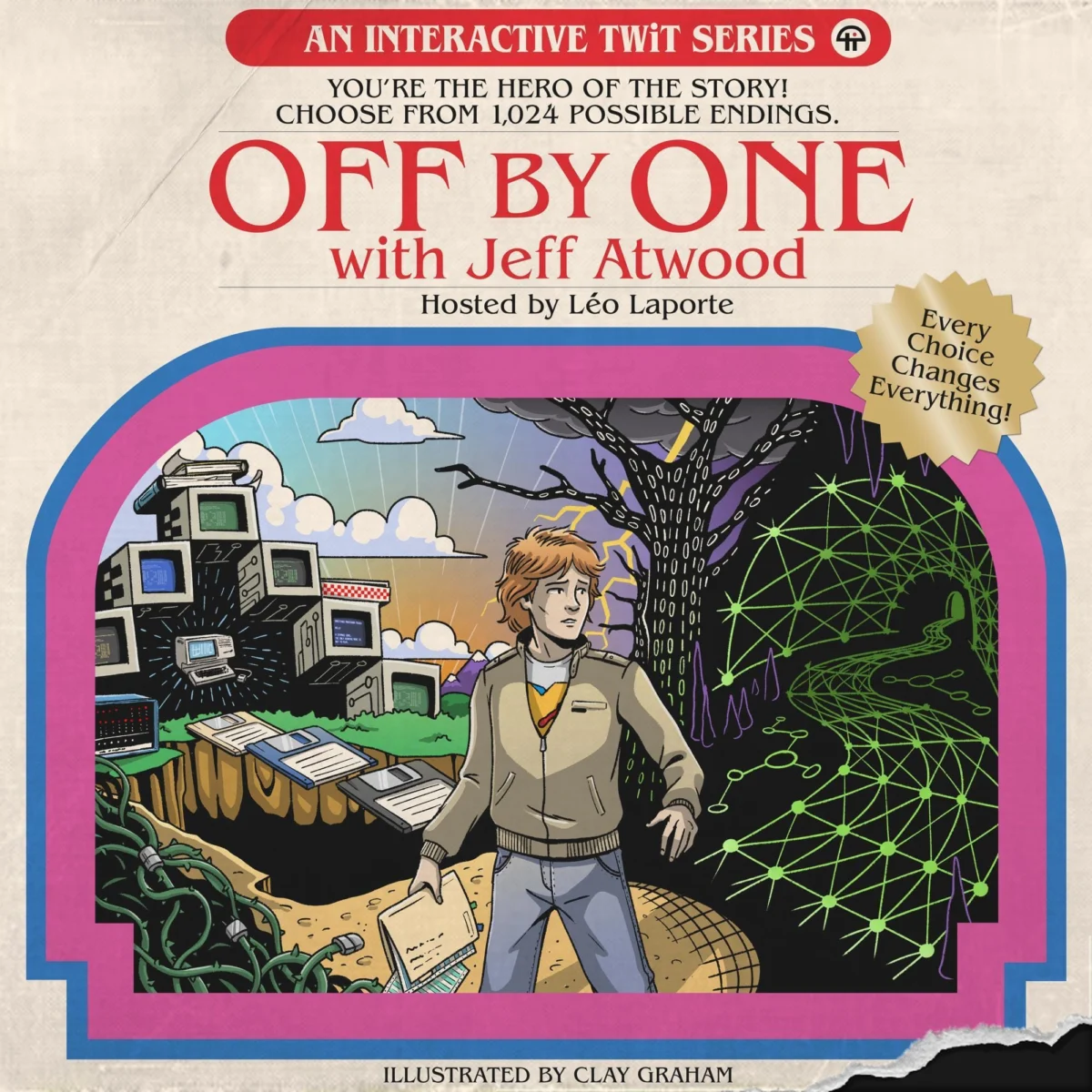
In a significant development for the tech media landscape, Jeff Atwood, co-founder of the influential coding resource Stack Overflow and the community platform Discourse, has partnered with veteran tech broadcaster Leo Laporte to launch a new monthly show titled "Off By One with Jeff Atwood" on the TWiT network. The collaboration, which debuted approximately three weeks ago, aims to deliver a distinctive blend of technological discourse, personal anecdotes, and socio-economic commentary, presented with a decidedly positive and often humorous approach. The second episode of the series, now available for public viewing, further solidifies the show’s unique premise and its hosts’ engaging dynamic.
The Genesis of "Off By One": A Name Steeped in Tech Culture
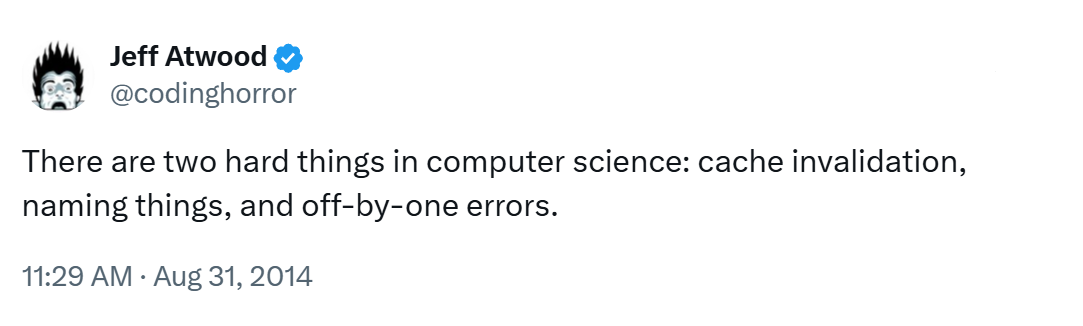
The show’s title, "Off By One," is a deliberate nod to a common programming jest, referencing both "off-by-one errors" – a frequent bug in computer programming where a loop or sequence iterates one too many or one too few times – and a popular variation of computer scientist Martin Fowler’s "Two Hard Things" quote. The original quote posits that "There are two hard things in computer science: cache invalidation, and naming things." The humorous adaptation, often seen in programmer circles, extends this to include "and off-by-one errors," highlighting the pervasive nature of these minor but impactful mistakes. Atwood himself acknowledged the cleverness of the title, stating he wished he had conceived of this specific variation. The naming process, unlike the community-driven vote for Stack Overflow, was swift, indicating a clear alignment between Atwood and Laporte on the show’s identity and its playful yet insightful tone. The decision to embrace such a niche, yet universally understood, piece of developer humor immediately signals the target audience and the show’s commitment to its tech roots.
A New Platform for Established Voices
The collaboration brings together two highly respected figures in the technology sphere. Jeff Atwood has built a formidable reputation through his "Coding Horror" blog, which offers incisive commentary on software development, and his instrumental roles in creating Stack Overflow, a cornerstone Q&A site for programmers, and Discourse, an open-source platform for community discussions. His work has profoundly shaped how developers learn, share knowledge, and interact online. Leo Laporte, on the other hand, is a pioneer in tech broadcasting, having hosted numerous television and radio shows before founding the TWiT (This Week in Tech) network. TWiT has become a leading digital media network dedicated to technology news and commentary, offering a diverse array of podcasts and live streams. This partnership leverages Laporte’s extensive broadcasting expertise and TWiT’s established reach with Atwood’s deep technical knowledge and candid communication style.
The show’s stated mission is to foster positive discussions around technology, moving away from what Atwood describes as negativity often found online. Instead, it promises "low-level insanity" and "mandatory fun," indicating a commitment to engaging content that is both entertaining and thought-provoking. The overarching goal, as articulated by Atwood, is to "make our happiness real" by sharing enthusiasm for positive developments in tech through the richer medium of video and audio, capturing "all the feels, all the time," albeit on a monthly basis.
Episode Two: Diving Deep into Code, Capitalism, and Community
The second episode of "Off By One," running for approximately 1 hour and 47 minutes, exemplifies the show’s eclectic scope. Titled "From Stack Overflow to Stay Gold, America," it delves into various subjects, from Atwood’s personal reflections on his coding philosophy to profound discussions on wealth inequality and the nature of artificial intelligence.
During the episode, Atwood offered a humble self-assessment of his coding prowess, stating, "I am not an elite coder by any stretch of the imagination… I am very persistent." This led to an exchange with Laporte, who noted Atwood’s prominent voice in the coding community. Atwood clarified his role, emphasizing his advocacy for "survivable code," which he humorously equates to "no code at all" as the ideal. This philosophy underscores a preference for robust, maintainable systems and efficient processes that acknowledge human limitations, fostering a collaborative and supportive environment among developers. "It’s a bit of a zen statement but it’s true," he remarked, "So, I’m an advocate for, you know, good engineering. Good process. A process that recognizes that we’re human and we should do this together, and we should actually kinda like each other, even." This perspective aligns with his work on Discourse, which prioritizes constructive community interaction and knowledge sharing.
The episode also touched upon Atwood’s personal life, including a poignant anecdote about his father’s final days, which he referred to as "the last season of the John Atwood show." He described it as a "banger" because, in his words, "we won capitalism, and then we went back and made it better for everyone." This powerful statement serves as a prelude to a more direct and impassioned discussion on socio-economic issues.
A Bold Stance on Wealth Inequality and Poverty Eradication

Perhaps the most striking segment of the second episode involved Atwood’s unequivocal assertion regarding wealth inequality. He posited that the eradication of poverty in the United States is not a matter of means but of will. "If we simply collected a fair tax from Billionaires, we could literally eliminate all poverty in this country at the 100% FPL level, which is $15,000 per year. All poverty. We would have zero poverty. We have the means to do it," Atwood stated, with Laporte underscoring the importance of this claim. "We lack the will."
This position is backed by various studies and reports from organizations like Oxfam and the Congressional Budget Office, which have consistently highlighted the growing disparity in wealth distribution globally and within the United States. For instance, a 2023 Oxfam report indicated that the richest 1% of the world’s population captured nearly two-thirds of all new wealth created since 2020. In the U.S., Federal Reserve data from 2023 showed that the wealthiest 10% of households held approximately 70% of the nation’s total wealth, while the bottom 50% held just 2.6%. The concept of a "fair tax" on billionaires often involves discussions around wealth taxes, higher capital gains taxes, or more progressive income tax structures, which proponents argue could generate substantial revenue. For example, estimates vary, but a modest wealth tax on the richest Americans could generate hundreds of billions annually, theoretically sufficient to fund significant social programs. Atwood’s statement moves beyond mere critique, offering a direct, if ambitious, proposed solution to a systemic societal challenge.
The "JPEG for Words" Analogy: Understanding Large Language Models
Another notable discussion point revolved around Large Language Models (LLMs) and artificial intelligence. Atwood introduced a compelling analogy, describing LLMs as "JPEG for words." He explained that while LLMs are proficient at tasks like summarization – effectively compressing information without significant loss, much like a JPEG image format – they fundamentally lack true understanding. "It doesn’t know what it’s doing. It has no actual understanding. It’s playing a game of global brain statistics and copy paste," he argued.
He recounted his initial skepticism about LLM-powered summarization on Discourse but admitted to being impressed by their accuracy in condensing complex discussions. "It got nothing wrong. And it basically was JPEG for that conversation, wasn’t it… without much loss." This analogy underscores both the practical utility and the inherent limitations of current AI technology, differentiating between pattern recognition and genuine cognitive comprehension. The "JPEG for words" concept resonated strongly, providing an accessible framework for understanding the capabilities and boundaries of generative AI for a broader audience.
The Precursor: "Intelligent Machines #859" and the Call to Action
The genesis of "Off By One" can be traced back to Atwood’s "chaotic good" guest appearance on TWiT’s "Intelligent Machines #859" on February 25th, alongside Paris Martineau, Jeff Jarvis, and Leo Laporte. This earlier episode, particularly its first 45 minutes, showcased Atwood’s unfiltered style and willingness to engage with contentious topics, laying the groundwork for his dedicated show. In that appearance, he reiterated his belief in the responsibility of those with abundance: "If you have everything you need, then help others have everything they need." He questioned the accumulation of excessive wealth, stating, "What is money even FOR? I don’t even have ‘that much’, what do you.. how do you spend it all? I don’t have.. I just want a simple life, man!"
During the "Intelligent Machines" episode, Atwood also highlighted the contemporary parallel to the first Gilded Age, characterized by immense wealth concentration among a few. "Ok, the first gilded age, we’re deep in the second one now. I mean, just look up the numbers. More money in the hands of fewer people than in any other period of time. In the first gilded age, that was basically the railroad barons. Guess who it is in the second gilded age? I’m in this picture and I don’t like it. So like, what are we gonna do about it?" This blunt assessment reflects a growing sentiment among many tech leaders and commentators who acknowledge the immense wealth generated by the digital economy but also recognize the ethical implications of its uneven distribution.
Community Engagement and Future Prospects
The "Off By One" show is designed not just for consumption but for interaction. Atwood and Laporte actively encourage viewer engagement, particularly on the TWiT community Discourse platform. This approach aligns perfectly with Atwood’s expertise in building vibrant online communities and fosters a direct dialogue with the audience. To kickstart this engagement, Atwood has offered a unique incentive: the first ten viewers who watch the entire second episode, enjoy it, and fill out a specific form will receive a free one-year membership to Club TWiT, granting access to live streams and exclusive content. This strategy aims to convert casual viewers into active community members, leveraging the power of direct participation.
The show’s permanent homepage is located at twit.tv/obo, featuring striking artwork by Clay Graham, depicting an interactive series where viewers are "the hero of the story," choosing from 1,024 possible endings. This whimsical presentation further emphasizes the show’s departure from conventional tech commentary, promising a journey that is both unpredictable and deeply engaging.
The launch of "Off By One with Jeff Atwood" marks a compelling evolution in tech media, bringing together a seasoned broadcaster and an influential developer to explore not just the mechanics of technology but its profound societal and ethical dimensions. By blending technical insights with a willingness to tackle challenging social issues, all wrapped in an entertaining and positive format, the show positions itself as a fresh voice in a crowded digital landscape. It offers a unique opportunity for audiences to witness "how we feel" about technology and its impact, fostering a sense of shared experience and community in an increasingly complex world. As the series progresses, its ability to bridge the gap between niche tech discussions and broader socio-political commentary will undoubtedly be a key factor in its ongoing influence and success.
About the Author