The rapid advancement of artificial intelligence (AI) continues to reshape industries, offering unprecedented opportunities for enhanced efficiency, creativity, and problem-solving. In 2023, a curated selection of AI tools stands at the forefront of this technological revolution, empowering individuals and businesses alike to automate mundane tasks, streamline complex workflows, and unlock new levels of productivity. This comprehensive overview delves into the ten most impactful AI tools currently making waves, exploring their capabilities, applications, and the transformative potential they hold across diverse sectors. From sophisticated language models to innovative image generators and intelligent coding assistants, these platforms represent the cutting edge of AI-driven innovation, providing a robust toolkit for navigating the demands of the modern digital landscape.
The AI Landscape: A Paradigm Shift in Efficiency
The integration of AI into daily operations is no longer a futuristic concept but a present-day reality. The tools highlighted in this analysis are not merely novelties; they are sophisticated systems designed to address specific challenges and unlock latent potential within various professional domains. Their emergence signifies a broader trend towards intelligent automation, where algorithms and machine learning algorithms are augmenting human capabilities, rather than replacing them entirely. This symbiotic relationship between human intellect and artificial intelligence is proving to be a potent combination for driving progress and fostering innovation. The following AI tools have been identified as leading the charge in this transformative era, each offering a unique set of functionalities that cater to a wide spectrum of user needs.
Defining the Top Tier: A Closer Look at Leading AI Solutions
The selection of these ten AI tools is based on their demonstrable impact, widespread adoption, and the innovative functionalities they offer. They represent a diverse range of AI applications, from natural language processing and content generation to coding assistance and search engine optimization. Understanding the nuances of each tool is crucial for leveraging their full potential and integrating them effectively into existing workflows.
1. ChatGPT: The Conversational AI Pioneer
Background and Development: Developed by OpenAI, ChatGPT is a powerful large language model (LLM) that has garnered significant attention for its ability to generate human-like text in response to a wide array of prompts. Built upon the GPT (Generative Pre-trained Transformer) architecture, it has been trained on an enormous dataset of text and code, enabling it to understand context, engage in coherent dialogue, and perform a multitude of language-based tasks. Its initial public release marked a watershed moment in accessible AI, demonstrating the potential for advanced conversational agents.
Core Functionalities: ChatGPT excels in tasks such as:
- Text Generation: Crafting articles, emails, creative writing, and marketing copy.
- Question Answering: Providing informative and detailed responses to user queries.
- Language Translation: Facilitating communication across different languages.
- Summarization: Condensing lengthy texts into concise summaries.
- Code Generation: Assisting developers by generating code snippets based on descriptions.
Impact and Applications: The implications of ChatGPT are far-reaching. Businesses are utilizing it for customer service chatbots, content creation, and internal communication. Educators are exploring its potential for personalized learning experiences and research assistance. While its capabilities are impressive, users are cautioned to critically evaluate the output, as the model can occasionally generate biased, inaccurate, or nonsensical information. Its continuous refinement and updates, however, suggest a trajectory towards even greater reliability and utility.
Pros:
- Exceptional natural language understanding and generation.
- Versatile across a wide range of text-based tasks.
- Continuously learning and improving with ongoing development.
- Accessible via user-friendly interfaces.
Cons:
- Potential for factual inaccuracies or biases in generated content.
- Ethical considerations regarding authorship and originality.
- Reliance on prompt engineering for optimal results.
- Can sometimes produce generic or repetitive outputs.
Analysis: ChatGPT represents a significant leap forward in human-computer interaction. Its ability to process and generate human language at scale democratizes access to sophisticated AI capabilities. The ongoing discourse surrounding its ethical implications and potential misuse underscores the need for responsible development and deployment.
2. DALL-E: Visualizing Imagination
Background and Development: Also from OpenAI, DALL-E is a groundbreaking AI system that creates original images from textual descriptions. Leveraging advanced deep learning techniques, it translates abstract concepts and detailed prompts into visual representations. Its development built upon the success of transformer models in natural language processing, extending their power to the realm of visual art.
Core Functionalities:
- Image Generation: Creating unique images based on descriptive text prompts.
- Artistic Style Emulation: Generating images in various artistic styles, from photorealistic to abstract.
- Concept Combination: Synthesizing disparate concepts into novel visual compositions.
- Image Editing and Variation: Modifying existing images or generating variations based on input.
Impact and Applications: DALL-E is revolutionizing creative industries, enabling designers, marketers, and artists to rapidly prototype ideas and generate visual assets. Its applications span advertising, product design, concept art, and even personal creative expression. The ability to translate text into compelling visuals opens new avenues for storytelling and communication. However, users must be mindful of copyright and ethical considerations related to AI-generated art.
Pros:
- Unprecedented ability to generate novel and creative images from text.
- Supports a wide range of artistic styles and complexities.
- Accelerates visual content creation workflows.
- Facilitates rapid ideation and concept visualization.
Cons:
- Generated images may require refinement for specific commercial use.
- Potential for unintended biases or misinterpretations of prompts.
- Ethical and copyright concerns surrounding AI-generated art.
- Can sometimes produce surreal or abstract results that may not align with user intent.
Analysis: DALL-E democratizes visual creation, empowering individuals without traditional artistic skills to bring their ideas to life. Its impact on design and media industries is profound, prompting a reevaluation of creative processes and intellectual property rights in the age of AI.
3. Lumen5: Streamlining Video Content Creation
Background and Development: Lumen5 is a platform designed to simplify video production for businesses and content creators. It utilizes AI to analyze existing content, such as blog posts and articles, and automatically transform it into engaging video formats suitable for social media and marketing campaigns. This approach addresses the growing demand for video content while mitigating the time and resource constraints often associated with traditional video editing.
Core Functionalities:
- AI-Powered Video Generation: Automatically converting text-based content into videos.
- Content Analysis: Identifying key themes and visuals from articles and blog posts.
- Template-Based Editing: Offering customizable video templates for various purposes.
- Stock Media Integration: Access to a library of music, images, and video clips.
- Branding Customization: Allowing users to incorporate logos, colors, and fonts.
Impact and Applications: Lumen5 empowers small businesses, marketers, and individuals to create professional-looking videos without extensive technical expertise. It accelerates the content creation cycle, making it easier to maintain a consistent online presence. Its ease of use and AI-driven automation are particularly beneficial for organizations with limited budgets or in-house video production capabilities.
Pros:
- Significantly reduces the time and effort required for video creation.
- User-friendly interface suitable for non-videographers.
- Effective for repurposing existing written content into video.
- Generates shareable content for social media marketing.
Cons:
- Generated videos may lack the nuanced creativity of human-directed productions.
- Customization options can be limited compared to professional editing software.
- Quality of output depends heavily on the source material.
- May require subscription fees for full functionality and advanced features.
Analysis: Lumen5 exemplifies how AI can democratize complex creative processes. By automating key aspects of video production, it lowers the barrier to entry, enabling a wider range of individuals and businesses to harness the power of video marketing.
4. Grammarly: Enhancing Written Communication
Background and Development: Grammarly has become an indispensable tool for writers and communicators worldwide. This AI-powered writing assistant goes beyond basic spell-checking, offering sophisticated suggestions for grammar, punctuation, style, and clarity. Its continuous learning algorithms analyze vast amounts of text to identify patterns and provide context-aware recommendations, making it a vital asset for anyone who writes.
Core Functionalities:
- Grammar and Punctuation Correction: Identifying and rectifying errors in written text.
- Spelling Checks: Ensuring accuracy in word usage.
- Clarity and Conciseness Suggestions: Recommending ways to make writing more direct and impactful.
- Tone Detection: Analyzing the emotional tone of the writing and suggesting adjustments.
- Plagiarism Detection: Verifying the originality of written content.
- Style and Readability Improvements: Offering advice on sentence structure and word choice.
Impact and Applications: Grammarly is widely used by students, professionals, bloggers, and businesses to improve the quality and effectiveness of their written communication. It helps to ensure that messages are clear, professional, and free from errors, thereby enhancing credibility and impact. Its integration into various platforms, including web browsers and word processors, makes it readily accessible.
Pros:
- Comprehensive error detection and correction capabilities.
- Provides actionable suggestions for improving writing style and clarity.
- Offers real-time feedback across multiple writing platforms.
- Enhances the professionalism and credibility of written work.
Cons:
- Suggestions may not always align with the writer’s intended style or voice.
- Occasional false positives or misinterpretations of context.
- Advanced features often require a paid subscription.
- Can sometimes lead to over-reliance, hindering natural writing development.
Analysis: Grammarly showcases the power of AI in refining human expression. By acting as an intelligent editor, it empowers users to communicate more effectively, bridging the gap between thought and polished prose.
5. OpenAI Codex: The AI Programmer’s Assistant
Background and Development: OpenAI Codex is an AI system developed by OpenAI that translates natural language instructions into computer code. Built on the foundation of GPT-3, it has been specifically trained on a massive dataset of publicly available code from sources like GitHub. This allows it to understand programming concepts and generate code in numerous programming languages, significantly aiding developers in their tasks.
Core Functionalities:
- Code Generation from Natural Language: Creating code snippets or entire functions based on descriptive requests.
- Code Completion: Suggesting relevant code as a programmer types.
- Code Translation: Converting code from one programming language to another.
- Code Explanation: Providing natural language explanations for complex code segments.
Impact and Applications: Codex has the potential to dramatically accelerate software development. It can assist novice programmers by making coding more accessible and empower experienced developers by automating repetitive coding tasks. This tool is particularly valuable for rapid prototyping, debugging, and exploring new programming languages. However, developers are reminded that the generated code requires thorough review and testing to ensure correctness and security.
Pros:
- Speeds up the coding process by automating code generation.
- Lowers the barrier to entry for aspiring programmers.
- Assists in understanding and refactoring existing code.
- Supports a wide range of programming languages.
Cons:
- Generated code may contain errors or security vulnerabilities.
- Requires careful review and testing by human developers.
- Can sometimes produce inefficient or non-optimal code.
- May not fully grasp complex algorithmic requirements without precise prompting.
Analysis: OpenAI Codex represents a significant advancement in AI’s role in technical fields. By bridging the gap between human language and machine code, it has the potential to democratize software development and accelerate innovation in the tech industry.
6. Tabnine: Intelligent Code Completion
Background and Development: Tabnine is an AI-powered code completion tool designed to enhance developer productivity. It utilizes machine learning models trained on vast amounts of code to predict and suggest relevant code snippets as developers write. Compatible with a wide range of programming languages and integrated with popular code editors, Tabnine aims to reduce the time spent on writing boilerplate code and minimize typing errors.
Core Functionalities:
- Context-Aware Code Suggestions: Providing intelligent, context-specific code completions.
- Full Line and Function Completion: Suggesting entire lines or blocks of code.
- Multi-Language Support: Offering assistance across numerous programming languages.
- IDE Integration: Seamlessly working within popular Integrated Development Environments (IDEs).
- Team-Specific Models: Ability to train on private code repositories for personalized suggestions.
Impact and Applications: Tabnine helps developers write code faster and with greater accuracy. By reducing the need to recall syntax and common patterns, it allows developers to focus on problem-solving and higher-level design. This leads to increased efficiency and a more enjoyable coding experience.
Pros:
- Significantly accelerates the coding process through intelligent suggestions.
- Improves code accuracy by reducing manual errors.
- Supports a broad spectrum of programming languages and IDEs.
- Can be trained on custom codebases for enhanced relevance.
Cons:
- Suggestions may not always be the most efficient or idiomatic.
- Requires careful review to ensure the suggested code meets project requirements.
- Potential privacy concerns if using cloud-based models with sensitive code.
- Can sometimes provide irrelevant or incorrect suggestions.
Analysis: Tabnine exemplifies how AI can serve as an intelligent assistant in specialized professional fields. By augmenting a developer’s workflow with predictive capabilities, it enhances both speed and precision in software creation.
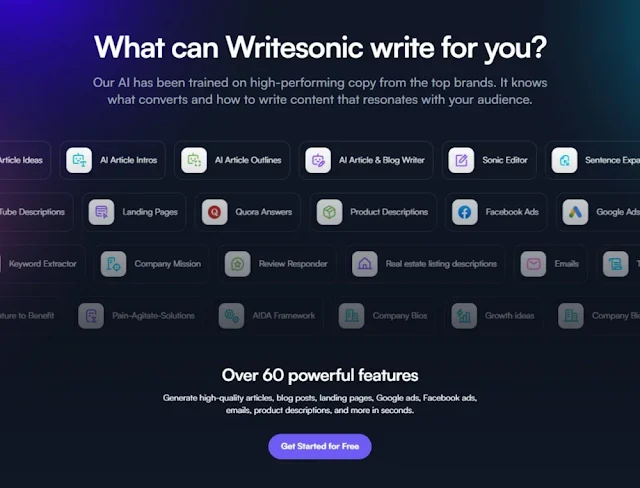
7. Jasper AI: The AI-Powered Content Creator
Background and Development: Jasper AI is a sophisticated content generation platform that leverages artificial intelligence to assist users in creating compelling written content. It is designed to help identify the most effective words and sentence structures for a given writing style and medium, aiming for efficiency and accessibility in content creation. Jasper has quickly become a popular choice for marketers, copywriters, and bloggers seeking to scale their content production.
Core Functionalities:
- Diverse Content Formats: Generating blog posts, social media captions, ad copy, website content, and more.
- Tone and Style Customization: Adapting generated content to specific brand voices and target audiences.
- AI-Powered Templates: Utilizing pre-designed frameworks for various content types.
- Collaboration Features: Enabling teams to work together on content creation.
- Plagiarism Checker: Ensuring the originality of generated content.
Impact and Applications: Jasper AI empowers businesses and individuals to overcome writer’s block and produce high-quality content at scale. It is instrumental in boosting marketing efforts, improving SEO rankings through consistent content output, and enhancing overall brand communication.
Pros:
- Rapid generation of a wide variety of content types.
- Customizable tone and style to match brand identity.
- User-friendly interface and intuitive workflow.
- Helps overcome writer’s block and increase content output.
Cons:
- Generated content may require human editing for nuance and originality.
- Can sometimes produce generic or repetitive phrasing.
- Subscription-based pricing model can be a barrier for some users.
- Ethical considerations regarding AI-generated content authorship.
Analysis: Jasper AI represents a significant advancement in AI-driven content marketing. It democratizes sophisticated copywriting capabilities, allowing businesses to create engaging narratives and marketing materials more efficiently.
8. Surfer SEO: Optimizing for Search Engines
Background and Development: Surfer SEO is a comprehensive software tool dedicated to enhancing search engine optimization (SEO) efforts for websites. It employs AI and data analysis to provide actionable insights into on-page optimization factors, helping website owners and digital marketers improve their search engine rankings. The platform analyzes top-ranking content for specific keywords and provides data-driven recommendations for content structure, keyword density, and other crucial SEO elements.
Core Functionalities:
- Content Editor: Guides users in optimizing content based on competitor analysis and NLP (Natural Language Processing) analysis.
- Keyword Research: Identifies relevant keywords and their search volume.
- SERP Analyzer: Evaluates the top-ranking pages for a given keyword to identify common patterns.
- On-Page Audits: Assesses the current SEO performance of web pages.
- Content Planner: Helps strategize content creation based on SEO opportunities.
Impact and Applications: Surfer SEO empowers marketers and website owners to make data-driven decisions about their content and website structure. By aligning content with search engine algorithms and user intent, it helps drive organic traffic, improve search engine visibility, and ultimately achieve better business outcomes.
Pros:
- Provides data-driven insights for effective SEO strategies.
- Helps create content that ranks higher in search results.
- Offers a comprehensive suite of SEO tools in one platform.
- User-friendly interface for both beginners and experienced SEO professionals.
Cons:
- Requires a subscription fee, which can be a significant investment.
- SEO is an ever-evolving field; tools need constant updates to remain effective.
- The tool is a guide, not a guarantee of higher rankings.
- Can be complex for absolute beginners to navigate without proper training.
Analysis: Surfer SEO demonstrates how AI can be applied to complex analytical tasks like search engine optimization. By providing actionable data and recommendations, it empowers users to navigate the intricate world of SEO with greater confidence and efficacy.
9. Zapier: Automating Workflow Connections
Background and Development: Zapier is a powerful web automation tool that allows users to connect different web applications and automate repetitive tasks without the need for coding. By creating "Zaps"—automated workflows—users can seamlessly move data between apps, trigger actions based on specific events, and streamline their digital operations. Its intuitive interface and extensive library of app integrations have made it a cornerstone of modern workflow automation.
Core Functionalities:
- App Integration: Connecting thousands of popular web applications.
- Automated Workflows (Zaps): Creating custom rules to automate tasks between apps.
- Trigger-Action Automation: Setting up workflows where an event in one app triggers an action in another.
- Data Transfer and Synchronization: Automatically moving data between connected services.
- Task Scheduling: Automating tasks at specific intervals.
Impact and Applications: Zapier significantly boosts productivity by eliminating manual data entry and repetitive tasks. Businesses across all sectors use it to automate marketing campaigns, manage customer relationships, streamline sales processes, and improve internal communication. Its flexibility and ease of use make it an invaluable tool for optimizing operational efficiency.
Pros:
- Simplifies complex workflows by connecting disparate applications.
- Saves significant time and reduces manual errors.
- Wide range of app integrations available.
- User-friendly interface suitable for non-technical users.
Cons:
- Advanced workflows and higher usage may require a paid subscription.
- Requires careful setup and testing to ensure Zaps function correctly.
- Reliance on third-party app APIs means potential disruptions if an app changes.
- Can sometimes require creative problem-solving to achieve desired automation.
Analysis: Zapier is a prime example of how AI-driven automation can transform business operations. By creating seamless connections between digital tools, it empowers organizations to operate more efficiently and focus on strategic initiatives rather than mundane tasks.
10. Compose AI: Natural Language Generation for Data
Background and Development: Compose AI specializes in developing natural language generation (NLG) software. Their technology uses AI to automatically generate written or spoken text from structured data sources such as spreadsheets, databases, or APIs. This capability is crucial for organizations that need to communicate insights derived from large datasets in an accessible and human-readable format.
Core Functionalities:
- Data-to-Text Generation: Automatically creating narrative reports and summaries from structured data.
- Customizable Templates: Tailoring the output text to specific reporting needs and brand voices.
- Real-time Data Integration: Generating content based on live data feeds.
- Multi-Format Output: Producing text for reports, dashboards, emails, and more.
- Scalable Content Creation: Generating large volumes of text efficiently.
Impact and Applications: Compose AI’s NLG software is invaluable for industries that deal with significant amounts of data, such as finance, healthcare, and business intelligence. It enables faster reporting, improved data comprehension, and more efficient communication of complex information. This technology is pivotal in transforming raw data into actionable insights that can inform strategic decisions.
Pros:
- Automates the creation of written content from data.
- Ensures consistency and accuracy in data reporting.
- Saves time and resources on manual report generation.
- Makes complex data more accessible and understandable.
Cons:
- Quality of generated content depends heavily on the quality and structure of input data.
- May require fine-tuning to achieve the desired narrative style and nuance.
- Can be a niche tool, requiring specific data integration expertise.
- Ethical considerations regarding the interpretation and presentation of data.
Analysis: Compose AI highlights the power of AI in making data more meaningful and actionable. By transforming complex datasets into clear, concise language, it facilitates better decision-making and communication across organizations.
Conclusion: Navigating the Future with AI
The landscape of AI tools in 2023 is characterized by innovation, accessibility, and a profound impact on productivity and creativity. The ten tools detailed above—ChatGPT, DALL-E, Lumen5, Grammarly, OpenAI Codex, Tabnine, Jasper AI, Surfer SEO, Zapier, and Compose AI—represent a diverse yet powerful collection of technologies that are fundamentally altering how we work, create, and communicate.
These tools are not merely technological marvels; they are enablers of efficiency, democratizers of complex skills, and catalysts for new forms of expression. As AI continues its rapid evolution, the capabilities and applications of these platforms will undoubtedly expand, further integrating them into the fabric of our professional and personal lives. For businesses and individuals seeking to remain competitive and innovative, understanding and strategically leveraging these AI tools is no longer an option but a necessity. The journey of AI is ongoing, and its potential to shape a more productive, creative, and intelligent future is only beginning to be realized.
About the Author