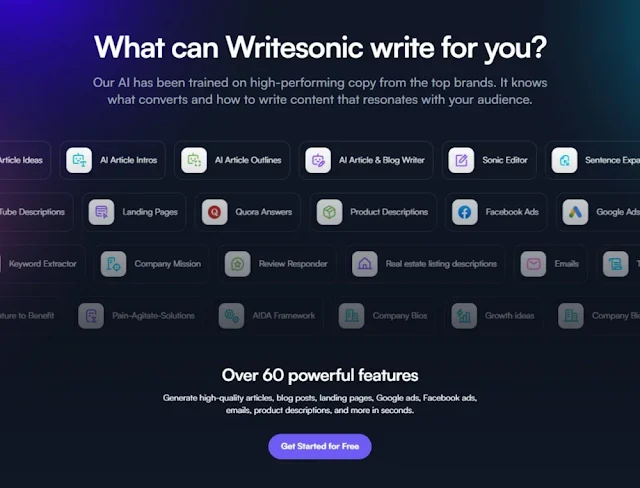
The marketing industry is undergoing a profound transformation, with artificial intelligence (AI) emerging as a critical driver for enhancing efficiency and enabling more sophisticated, personalized campaigns. Data reveals a significant industry trend: 61% of marketers identify AI software as the most crucial component of their data strategy. This widespread adoption signals a paradigm shift, moving beyond traditional marketing methodologies to embrace intelligent automation and data-driven insights. For businesses and marketing professionals who may be newcomers to the AI revolution, integrating these powerful tools into their strategic approach is now more accessible than ever. This comprehensive overview explores eleven key AI marketing tools that are poised to redefine how campaigns are conceived, executed, and optimized in the contemporary digital ecosystem.
The Ascendancy of AI in Marketing
The rapid evolution of digital marketing has been characterized by an increasing demand for personalization, hyper-targeting, and measurable results. As consumer expectations grow more sophisticated, traditional methods of segmentation and campaign management often fall short. Artificial intelligence offers a powerful solution, capable of processing vast datasets, identifying intricate patterns, and automating complex tasks with unprecedented speed and accuracy. This not only frees up human marketers to focus on strategic ideation and creative oversight but also unlocks new levels of campaign performance that were previously unattainable. The integration of AI is no longer a futuristic concept; it is a present-day imperative for staying competitive.
Unpacking the Top AI Marketing Tools
The following tools represent a diverse range of AI applications within the marketing domain, each addressing specific challenges and offering unique capabilities to enhance campaign effectiveness.
1. Jasper AI: Empowering Content Creation with Intelligent Assistance
Jasper AI, formerly known as Jarvis, stands at the forefront of AI-powered content generation. This sophisticated tool leverages artificial intelligence to analyze writing styles and identify optimal word choices and sentence structures, facilitating the creation of engaging and relevant content across various mediums. Its ability to adapt to different writing styles and formats makes it an invaluable asset for content marketers, copywriters, and social media managers.
Key Features and Implications:
Jasper AI’s core strength lies in its ability to overcome writer’s block and accelerate content production. By understanding the nuances of language and audience engagement, it can generate blog post outlines, marketing copy, social media captions, and even longer-form articles. This not only saves significant time but also helps maintain a consistent brand voice and messaging. The tool’s capacity to produce multiple content variations for A/B testing further enhances its utility, allowing marketers to quickly identify the most resonant messaging. The availability of a 10k free credit offer for new users through specific affiliate links underscores the industry’s push for broader AI adoption, making it accessible for businesses to experiment with its capabilities.
2. Personalize: Driving Hyper-Targeted Engagement
Personalize is an AI-driven technology designed to create highly targeted sales and marketing campaigns by meticulously tracking customer interest in specific products and services. Its advanced algorithms analyze real-time website activity to identify each contact’s top three interests, which are continuously updated.
Key Features and Implications:
The ability to understand and act upon real-time customer interests is a game-changer for personalization. Personalize enables marketers to move beyond generic messaging and deliver content and offers that are directly relevant to individual customer needs and preferences. This dynamic segmentation leads to higher engagement rates, improved conversion rates, and a more satisfying customer experience. By anticipating what a customer is likely to be interested in next, businesses can proactively offer solutions and build stronger relationships.
3. Seventh Sense: Optimizing Email Delivery for Maximum Impact
In the crowded digital landscape, capturing audience attention through email is a persistent challenge. Seventh Sense addresses this by employing behavioral analytics to determine the optimal time and frequency for sending emails to individual contacts.
Key Features and Implications:
The science of email send times is complex, with general best practices often failing to account for individual recipient habits. Seventh Sense’s AI-based platform analyzes when each contact is most likely to open and engage with emails. This intelligent timing ensures that marketing messages land in inboxes when they are most likely to be seen and acted upon, significantly boosting open rates and click-through rates. For platforms like HubSpot and Marketo, where email marketing is a core function, Seventh Sense offers a critical advantage in maximizing campaign ROI by respecting individual recipient behaviors. This nuanced approach to communication fosters better engagement and reduces the likelihood of emails being ignored or marked as spam.
4. Phrasee: Crafting Compelling Subject Lines with AI
The subject line is often the first, and sometimes only, point of contact a recipient has with an email. Phrasee leverages artificial intelligence and Natural Language Generation (NLG) to create highly effective subject lines that resonate with target audiences.
Key Features and Implications:
Phrasee’s AI analyzes vast amounts of data to generate millions of natural-sounding copy variants that align with a brand’s voice. Its end-to-end learning model continuously refines its predictions based on campaign performance, ensuring that subject lines become progressively more effective over time. By moving beyond human intuition and relying on data-driven insights, Phrasee helps marketers craft subject lines that increase open rates and drive engagement, ultimately contributing to higher campaign success. This ability to rapidly test and learn from different linguistic approaches offers a significant edge in the competitive email marketing space.
5. HubSpot SEO: Enhancing Organic Visibility Through Intelligent Optimization
HubSpot SEO is an integral tool for content teams seeking to improve their search engine rankings. It employs machine learning to understand how search engines categorize and interpret content, guiding marketers to create content that aligns with search engine algorithms and user intent.
Key Features and Implications:
In an era where organic search is a vital source of traffic, HubSpot SEO helps businesses optimize their content strategy around topic clusters. By identifying keywords and themes that are relevant to both the business and its target audience, the tool aids in improving search engine rankings and outperforming competitors. The implications for businesses are substantial: increased organic visibility translates into more qualified leads, reduced reliance on paid advertising, and a stronger overall online presence. This data-driven approach to SEO ensures that content efforts are not only creative but also strategically aligned with search engine best practices.
6. Evolv AI: Accelerating Website Optimization Through Simultaneous Testing
Optimizing website experiences can be a time-consuming process, especially when limited to testing only a few variables at a time. Evolv AI revolutionizes this by using advanced algorithms to test multiple ideas simultaneously, identifying top-performing concepts and iteratively refining them.
Key Features and Implications:
Evolv AI’s approach to website optimization is a significant leap forward from traditional A/B testing. By allowing marketers to test all their hypotheses concurrently, it dramatically accelerates the discovery of what truly resonates with users. The platform’s ability to combine successful elements and repeat the optimization process ensures a continuous improvement cycle, leading to enhanced user experiences, higher conversion rates, and improved overall website performance. For e-commerce businesses and lead generation websites, this rapid optimization can directly translate into increased revenue and customer satisfaction.
7. Acrolinx: Scaling Content Quality and Consistency
Acrolinx is a content alignment platform designed to help large enterprises scale their content creation efforts while maintaining high quality and brand consistency. Its AI capabilities provide real-time guidance and suggestions to writers.
Key Features and Implications:
For organizations with extensive content needs, such as Google, Adobe, and Amazon, managing quality across thousands of pieces of content is a monumental task. Acrolinx simplifies this by allowing users to set preferences for style, grammar, tone of voice, and company-specific terminology. The platform then checks and scores existing content, identifying areas for improvement and providing actionable feedback directly within the writing process. This ensures that all content adheres to brand guidelines and maintains a high standard of clarity and professionalism, regardless of the number of contributors. The implications for brand reputation and customer trust are profound, as consistent, high-quality content reinforces brand authority.
8. MarketMuse: Strategic Content Planning with Algorithmic Insights
MarketMuse employs sophisticated algorithms to assist marketers in building robust content strategies. It identifies optimal keywords for ranking within specific topic categories and recommends keywords that can help businesses dominate particular subject areas.
Key Features and Implications:
Understanding where to focus content efforts is critical for achieving search engine visibility. MarketMuse’s AI analyzes your existing content against thousands of related articles to uncover gaps and opportunities. By prioritizing these opportunities based on their probable impact on rankings, it enables marketers to create content that is not only comprehensive but also strategically positioned for success. This data-driven approach to content planning ensures that resources are invested wisely, leading to improved search performance and a stronger competitive edge in specific niches.
9. Copilot: Enhancing E-commerce Customer Communication
Copilot is a suite of tools specifically designed for e-commerce businesses to maintain real-time, round-the-clock communication with customers at every stage of their journey. It facilitates product promotion, cart recovery, and timely updates via messaging platforms.
Key Features and Implications:
In the fast-paced world of e-commerce, timely and personalized communication is paramount. Copilot leverages AI to automate and streamline these interactions, ensuring that customers receive relevant information and support precisely when they need it. This includes proactive outreach to abandoned carts, promotional messages, and order status updates. By providing a seamless and responsive communication channel, Copilot helps e-commerce businesses improve customer satisfaction, reduce cart abandonment rates, and foster repeat purchases, ultimately driving revenue growth.
10. Yotpo: Leveraging Deep Learning for Customer Insights and Review Management
Yotpo utilizes deep learning technology to analyze customer product reviews, providing valuable insights for business decision-making. Its AI engine identifies key topics and customer sentiment expressed in reviews, helping businesses understand their products from the customer’s perspective.
Key Features and Implications:
Customer reviews are a rich source of information, but manually sifting through them can be overwhelming. Yotpo’s AI automates this process, extracting relevant feedback and presenting it in actionable formats. The platform also enhances the conversion of new shoppers by showcasing strategically selected reviews. Furthermore, its AI-powered moderation tool automatically scores reviews and flags those with negative sentiment, allowing marketing teams to focus on quality control and customer service rather than manual review processing. This intelligent approach to reputation management and customer feedback can significantly influence purchasing decisions and build brand trust.
11. Albert AI: Autonomous Marketing Campaign Management
Albert AI is a self-learning software that automates the creation and management of marketing campaigns. It analyzes vast datasets to run optimized campaigns autonomously, allowing businesses to provide creative content and target markets while Albert handles the strategic execution.
Key Features and Implications:
Albert AI represents a significant step towards fully automated marketing. By feeding in creative assets and target demographics, businesses can leverage Albert’s AI to identify potential customers, run trial campaigns, and refine strategies for larger-scale deployment. The platform integrates with existing marketing technology stacks, maintaining access to ads, search, and social media channels. By mapping tracking and attribution to the source of truth, Albert provides clear insights into channel performance, enabling businesses to understand which efforts are driving growth. This autonomous approach promises unprecedented efficiency and optimization, allowing marketing teams to focus on higher-level strategy and innovation.
The Broader Impact and Future of AI in Marketing
The integration of these AI tools signifies a fundamental shift in how marketing operates. The ability to process data at scale, personalize interactions, automate repetitive tasks, and optimize campaigns in real-time is no longer a luxury but a necessity for businesses aiming to thrive in the digital age. The implications are far-reaching:
- Increased Efficiency and ROI: By automating tasks and optimizing campaign performance, AI tools enable marketing teams to achieve more with fewer resources, leading to a higher return on investment.
- Enhanced Customer Experience: Hyper-personalization and timely, relevant communication fostered by AI tools create more engaging and satisfying customer journeys.
- Data-Driven Decision-Making: AI provides deeper insights into customer behavior and campaign performance, enabling marketers to make more informed strategic decisions.
- Competitive Advantage: Early adopters of AI in marketing are likely to gain a significant competitive edge by outperforming less technologically advanced rivals.
- Evolution of the Marketer Role: The role of the marketer is evolving from execution-focused to strategy-oriented, requiring skills in data interpretation, AI tool management, and creative oversight.
As marketing continues its rapid evolution, new strategies and AI applications will undoubtedly emerge, pushing the boundaries of what is currently imaginable. However, the eleven tools highlighted in this overview provide a robust foundation for any marketer looking to harness the power of artificial intelligence and secure a leading position in the future of marketing. The journey into AI-driven marketing is not just about adopting new technologies; it’s about fundamentally rethinking how businesses connect with their audiences in an increasingly intelligent and personalized world.
About the Author