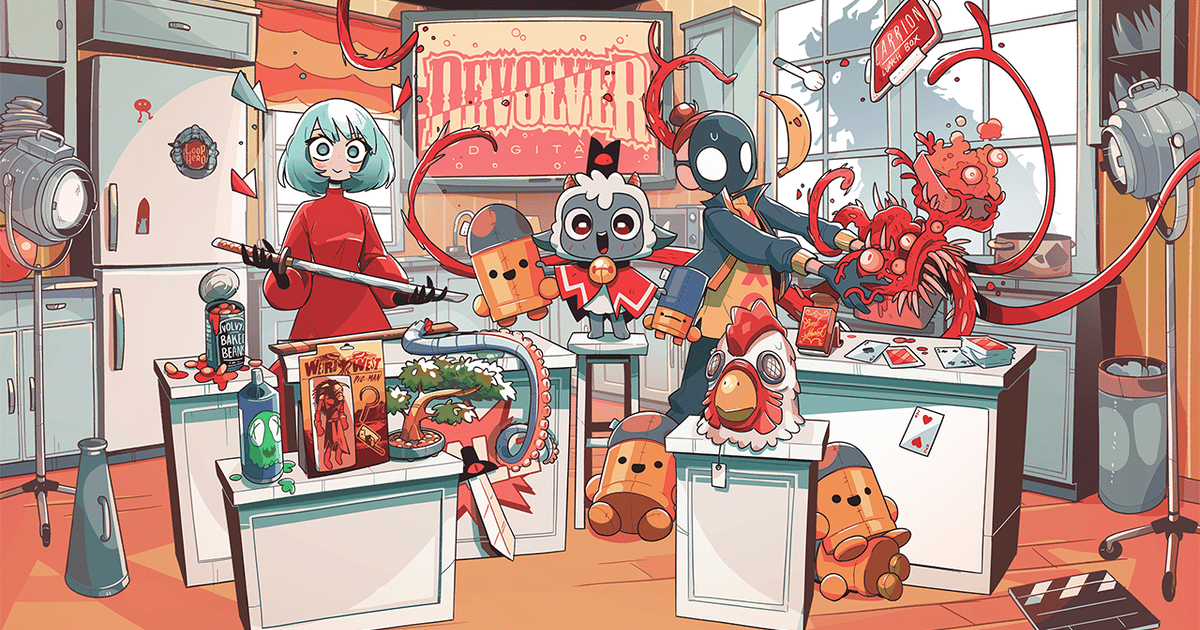
Devolver Digital, the acclaimed publisher renowned for its distinctive portfolio of independent video games, has formally announced its intention to delist from the Alternative Investment Market (AIM) of the London Stock Exchange, transitioning back to a private company structure. This strategic pivot, communicated in a detailed note to investors on August 6, 2026, comes after a period of intense scrutiny regarding the inherent challenges of reconciling the often-unpredictable nature of video game publishing with the stringent demands and expectations of public trading. The move, if approved by shareholders, is slated to culminate in the cessation of trading on AIM by September 16, 2026. As part of this proposed transition, Devolver Digital has committed to a return of capital of up to $5 million in cash to qualifying shareholders and holders of depositary interests, underscoring a commitment to its investor base even as it departs the public stage.
The Genesis of a Public Listing and Subsequent Market Realities
Devolver Digital’s journey to the public market commenced with considerable fanfare in November 2021, when the company successfully executed its Initial Public Offering (IPO) on AIM. At the time, the gaming industry was experiencing an unprecedented boom, largely fueled by increased engagement during global lockdowns and a surge in digital entertainment consumption. Devolver, known for cultivating a unique brand identity and fostering a vibrant ecosystem for critically acclaimed titles such as Hotline Miami, Baby Steps, and Poinpy, capitalized on this bullish sentiment. Its IPO valued the company at an impressive $939.8 million, positioning it as a significant player within the indie publishing space and a beacon for creative-driven enterprises seeking public investment. The AIM market, designed to facilitate growth for smaller, dynamic companies, seemed a natural fit for Devolver’s innovative spirit and ambition.
However, the enthusiasm of late 2021 soon collided with a starkly altered economic and industry landscape. The post-pandemic normalization saw a cooling of the hyper-accelerated growth rates, giving way to a period characterized by significant disruption and volatility across the global video games sector. This shift, which Devolver’s board explicitly cited as a primary driver for its delisting decision, manifested in widespread layoffs across studios and publishers, a rationalization of platform strategies, and substantial financial impairments reported throughout the industry. Companies that had expanded rapidly during the boom found themselves overextended, leading to retrenchment and consolidation.
The "Valuation Disconnect": A Chasm Between Performance and Market Perception
Devolver Digital has articulated that public trading has led to a profound "valuation disconnect," where the market’s assessment of the company’s worth does not align with the board’s perception of its intrinsic value and operational performance. This disconnect is starkly evident in the company’s share price trajectory since its IPO. From an initial valuation of nearly $940 million, Devolver’s market capitalization has plummeted to approximately $46 million, as noted on its investor relations website. This represents an astonishing decline of 91.35 percent over the past five years, reflecting a severe erosion of investor confidence in its public market prospects.
The company stated, "The global video games industry has undergone a period of significant disruption and volatility, characterized by widespread layoffs for studios and publishers, platform rationalization and substantial impairments across the industry." Devolver itself has not been immune to these macroeconomic headwinds, navigating "a number of operational and market headwinds, including several impairments of underperforming titles amid an increasingly competitive and unpredictable market environment." The pressure on a publicly-quoted company to consistently deliver growth in line with market expectations, even under such arduous sector conditions, proved unsustainable. This environment, the board argues, has prevented the market from adequately recognizing the "lifetime and long-tail revenue delivery inherent in the video games business," which often sees titles generating revenue over extended periods rather than in immediate, sharp spikes.
Despite the precipitous drop in share price, Devolver’s board maintains that its operational performance has demonstrated resilience and improvement. The company reported that its revenues, gross margins, and Adjusted EBITDA all improved in 2025 compared to 2024. Furthermore, a June 2026 Trading Update highlighted robust revenue growth of over 60 percent year-on-year. Yet, this positive operational momentum failed to translate into a commensurate recovery in share value. The closing share price on August 5, 2026, at £0.16, was over 25 percent lower than the £0.215 price observed immediately after the announcement of the company’s 2024 annual results, underscoring the persistent "valuation disconnect." This paradox suggests that the market, fixated on short-term metrics and linear growth, was unable or unwilling to fully appreciate the underlying strength and future potential of Devolver’s business model.
The Incompatibility of Indie Publishing with Public Reporting Demands
At the core of Devolver’s rationale for delisting lies a fundamental philosophical misalignment between the nature of independent video game publishing and the rigorous, often rigid, demands of semi-annual public reporting. The company explicitly stated that the "unpredictable nature of indie publishing is not readily compatible" with a framework that places a premium on "predictable, sequential growth."
The development timelines for video games, particularly in the independent sector, are inherently fluid and subject to numerous variables. Creative processes, technical challenges, and market dynamics can lead to significant shifts in release schedules. As Devolver explained, "Development timelines can be unpredictable, and, as a result, financial performance can vary significantly between reporting periods and may not follow a linear progression." This inherent variability makes it exceedingly difficult to provide the kind of consistent, quarter-on-quarter or half-on-half growth projections that public markets typically demand.
Consequently, Devolver has faced "increased pressure to deliver short-term market expectations that do not necessarily reflect the underlying long-term value creation potential of its portfolio and development pipeline." Public companies are often incentivized to prioritize immediate returns and predictable revenue streams to satisfy analyst forecasts and investor sentiment. For a publisher like Devolver, whose success is built on fostering innovation, supporting unique creative visions, and allowing ample development time, this pressure can be counterproductive, potentially forcing compromises on quality or long-term strategic decisions in favor of transient market appeasement. The private structure will ostensibly free Devolver from these short-term pressures, enabling a renewed focus on its core mission of identifying, nurturing, and bringing to market distinctive indie titles without the constant shadow of quarterly earnings reports.
Financial and Strategic Implications of Going Private
The decision to delist from AIM carries several tangible financial and strategic implications for Devolver Digital. Foremost among these are the expected annual cost savings of $1.6 million, which are directly associated with the administrative, legal, and compliance overheads of maintaining a public listing. Devolver’s board asserts that this capital could be more effectively deployed to "drive future revenue and growth," rather than being consumed by regulatory obligations. These savings, though modest in the context of overall revenue, represent a significant operational efficiency that can be reinvested into game development, marketing, or talent acquisition, thereby strengthening the company’s core business.
The proposed return of capital of up to $5 million to qualifying shareholders is a critical component of the delisting plan, serving as an incentive for investors to support the transition and providing a cash exit opportunity. For shareholders who have witnessed a substantial decline in their investment value, this cash return offers some liquidity and a degree of compensation, albeit far from the initial IPO valuation. This move aims to facilitate a smoother transition by addressing immediate investor concerns and ensuring a fair process for those who prefer not to remain invested in a private entity.
Strategically, becoming a private company affords Devolver greater operational flexibility and the ability to pursue a longer-term vision without the constant scrutiny of public markets. This could manifest in several ways:
- Enhanced Risk-Taking: Private companies often have a greater appetite for risk, allowing Devolver to invest in more experimental or niche titles that might not offer immediate, predictable returns but could become cult classics or significant long-term assets.
- Streamlined Decision-Making: Freed from quarterly reporting cycles and extensive shareholder communication requirements, the company’s leadership can make decisions more rapidly and strategically, aligning with development cycles rather than financial reporting periods.
- Focus on Core Business: Resources and management attention can be fully directed towards publishing operations, developer relations, and creative endeavors, rather than diverting significant efforts to investor relations and regulatory compliance.
- Potential for Future Re-evaluation: While delisting now, a private Devolver could, in theory, pursue another public offering or a sale in the future under more favorable market conditions, having had the opportunity to rebuild value outside the public eye.
A Broader Industry Context: Post-Pandemic Correction and Market Pressures
Devolver Digital’s decision is not an isolated incident but rather indicative of broader trends and pressures within the video game industry, particularly in the wake of the post-pandemic correction. The exuberance that characterized the market in 2020-2021 has given way to a more sober assessment of growth prospects, leading to a period of consolidation, belt-tightening, and strategic re-evaluation across the sector. Companies like Unity Technologies have faced significant backlash and operational challenges, while major publishers have announced thousands of layoffs, reflecting a widespread recalibration of expectations.
The challenges faced by Devolver highlight a potential structural mismatch between the traditional public market’s demand for consistent, predictable growth and the inherently cyclical and project-based nature of creative industries like video game development and publishing. While large, established publishers with diversified portfolios and live-service games might be better equipped to smooth out revenue fluctuations, smaller, indie-focused entities often experience more volatile performance tied to specific game releases.
This situation prompts a wider discussion about the suitability of public markets, specifically growth markets like AIM, for companies operating in sectors with irregular revenue streams and long development cycles. It may lead other independent publishers to reconsider or delay their own IPO plans, opting instead for private equity funding, strategic partnerships, or maintaining private ownership to preserve operational autonomy and focus on long-term creative goals. The departure of a high-profile entity like Devolver Digital from AIM sends a strong signal about the prevailing sentiment regarding public market viability for certain segments of the gaming industry.
Chronology of Devolver Digital’s Public Journey
- November 2021: Devolver Digital successfully completes its Initial Public Offering (IPO) on the Alternative Investment Market (AIM) of the London Stock Exchange, achieving a valuation of approximately $939.8 million. The move is celebrated as a significant milestone for an independent games publisher.
- Late 2021 – 2024: The global video games industry enters a period of significant post-pandemic adjustment, characterized by cooling growth, increased competition, widespread layoffs, and substantial financial impairments across many companies. Devolver navigates operational and market headwinds, reporting impairments on underperforming titles.
- Throughout this period: Devolver’s share price experiences a steady and significant decline, reflecting broader market downturns and specific company challenges.
- 2025: Despite challenging market conditions, Devolver Digital reports operational improvements, with increases in revenues, gross margins, and Adjusted EBITDA compared to 2024, demonstrating internal resilience.
- June 2026: A Trading Update from Devolver highlights continued positive momentum, reporting revenue growth of over 60 percent year-on-year, further underscoring the company’s operational recovery.
- August 5, 2026: Despite reported operational improvements, Devolver’s closing share price stands at £0.16, more than 25 percent lower than the price recorded immediately after the announcement of its 2024 annual results, reinforcing the "valuation disconnect."
- August 6, 2026: Devolver Digital formally announces its intention to delist from AIM, citing public market volatility, the "valuation disconnect," and the incompatibility of indie publishing with public reporting demands. The company proposes a return of capital to qualifying shareholders.
- September 16, 2026: Subject to shareholder approval, Devolver Digital is expected to cease trading on AIM, officially transitioning back to a private company.
Devolver Digital’s pivot to private ownership marks a significant moment for the company and serves as a poignant reflection of the evolving dynamics within the video game industry. It underscores the ongoing tension between creative endeavor, market expectation, and financial reality, ultimately suggesting that for certain innovative and inherently unpredictable businesses, the public spotlight may not always be the most conducive environment for long-term success. Game Developer has reached out to Devolver for more information regarding this pivotal strategic decision.
About the Author