The fundamental impulse to create art is inherently social, driven by a profound desire for connection, validation, and shared experience. Artists, in their myriad forms, seek not merely to produce but to communicate, to elicit a response that confirms their message has been received, understood, and perhaps even resonated with an audience. This dynamic mirrors basic human interaction, where spoken words are met with active listening, mirroring behaviors, and follow-up questions, signaling mutual engagement and valuing the exchange. When this connection occurs, it offers invaluable validation; when it challenges, it provides constructive insights crucial for growth.
The Internet’s Initial Promise: A Democratic Forum
With the advent of the internet, particularly in the late 1990s and early 2000s, a pervasive optimism emerged regarding its potential to democratize creation and foster global online communities. This era, often referred to as the "blogosphere" or Web 2.0, promised an unprecedented level of accessibility for creators and unparalleled opportunities for discovery. Platforms like early YouTube, DeviantArt, independent blogs, and forums facilitated direct interaction between artists and their burgeoning fanbases. Around 2010, this vision appeared to be largely realized; creators could publish their work—be it a video game, a piece of music, visual art, or written content—and reasonably expect organic discovery and meaningful engagement from a diverse online audience. This period was characterized by a more decentralized web structure, where content could spread virally through direct links, RSS feeds, and early social sharing mechanisms, rather than being solely curated by proprietary algorithms.
A notable example from this era is the launch of the video game "100 Rogues" in 2010. Despite being a developer’s inaugural published title, reportedly launched with bugs and inconsistent artwork, it garnered significant community interaction. Players created fan art, uploaded gameplay videos, and developers were frequently interviewed by independent gaming websites. This level of engagement was attributed not to extensive marketing budgets or polished production values, but to the internet’s design at the time, which favored organic discovery and fostered direct connections between creators and their audiences. Such instances underscored the potential of a digital landscape where artistic merit and community interest, rather than corporate backing or sophisticated algorithms, primarily drove visibility.
The Algorithmic Shift and Market Consolidation
However, over the ensuing decade, the digital landscape underwent a profound transformation, moving away from this decentralized, discovery-rich model towards an increasingly "top-heavy" structure. This shift has been primarily driven by two interrelated forces: the pervasive adoption of sophisticated algorithms by large technology companies and an accelerating trend of corporate consolidation within the digital economy.
The evolution of social media platforms and content-sharing sites saw a gradual departure from chronological feeds to algorithmically curated content. These algorithms, designed to maximize "engagement" (often defined by time spent on platform and advertising impressions), began to filter and prioritize content based on complex, proprietary metrics. This change fundamentally altered how creators reached audiences. Instead of content being discovered through direct navigation or user-driven sharing, it became subject to the opaque dictates of these algorithms, which increasingly favored established accounts, professionally produced content, and content optimized for specific engagement patterns.
Simultaneously, the digital economy witnessed an unprecedented wave of mergers and acquisitions. Major tech companies, including Meta (Facebook, Instagram, WhatsApp), Google (YouTube, Search), Amazon, and Tencent, acquired smaller competitors, consolidating vast swathes of online activity under their control. In the gaming industry, for instance, a significant number of independent studios and publishers have been absorbed by giants like Microsoft (which acquired Activision Blizzard), Tencent (with stakes in numerous global gaming entities), and Take-Two Interactive. This consolidation has led to fewer, larger entities controlling the dominant platforms and distribution channels, effectively creating digital monopolies or duopolies in various sectors.
The consequences of this algorithmic and corporate centralization are stark. Data from various studies on the creator economy illustrate a dramatic power law distribution of attention and revenue. For example, a 2020 report by the Reboot Foundation highlighted that less than 1% of Spotify artists generate 90% of the platform’s music streams. Similarly, on YouTube, a minuscule fraction of channels captures the vast majority of viewership and advertising revenue. This "winner-take-all" dynamic means that while theoretically millions can create, only a select few achieve significant visibility and financial success. What was once a broad base of creators each reaching a modest audience has morphed into a system where a tiny elite commands massive followings, often at the expense of independent voices struggling for any recognition.
Rising Barriers and Algorithmic Optimization
For contemporary creators, the barriers to entry and visibility have escalated dramatically. To gain traction in the current digital environment, it is no longer sufficient to simply create compelling art; one must also navigate complex algorithmic hurdles. This often necessitates substantial investment in marketing, search engine optimization (SEO), and content production specifically tailored to appease platform algorithms. A 2023 survey by Adobe found that over 60% of creators felt pressured to create content that would perform well with algorithms, sometimes compromising their authentic artistic vision. This pressure leads to a homogenization of content, as creators converge on formats and topics proven to trigger algorithmic amplification, rather than innovating freely.
Becoming a prominent online figure—be it a game developer, a Twitch streamer, or a digital artist—in 2025 typically requires not just artistic talent but also a sophisticated understanding of digital marketing, audience analytics, and algorithm mechanics. Content creation increasingly transforms into a strategic game of optimization, where the primary audience becomes the algorithm itself, rather than human beings. This shift fundamentally compromises the authenticity and diversity of creative expression, as creators are incentivized to produce what the algorithm rewards, not necessarily what resonates most deeply with human experience.
Government Inaction and Regulatory Failures
The current state of the internet, characterized by algorithmic gatekeeping and corporate dominance, was not an inevitable outcome. Rather, it is a direct consequence of governmental inaction and regulatory failures. Policymakers, particularly in Western democracies, have been widely criticized for their hesitancy or outright refusal to enforce existing anti-trust laws effectively against burgeoning tech monopolies. The Sherman Antitrust Act of 1890 and the Clayton Antitrust Act of 1914, designed to prevent monopolies and promote fair competition, have been largely underutilized in the digital sphere. The unique characteristics of digital platforms, such as network effects and "free" services, have presented interpretative challenges for traditional antitrust frameworks, often leading to a lax enforcement environment.
Furthermore, governments have largely failed to introduce new legislation specifically tailored to the digital age, which could have preserved the open, democratic vision of the early internet. Proposals for data portability, interoperability requirements, and stricter regulations on algorithmic transparency have often languished in legislative bodies. This regulatory vacuum allowed large tech companies to consolidate power, acquire potential competitors, and design their platforms in ways that prioritize profit and proprietary control over public good and equitable access. Had robust anti-trust measures been applied and new digital regulations implemented, the internet could have evolved into a more decentralized and equitable space, fostering genuine discovery and community rather than becoming a highly centralized marketplace.
The "Open Mic" as a Counter-Model
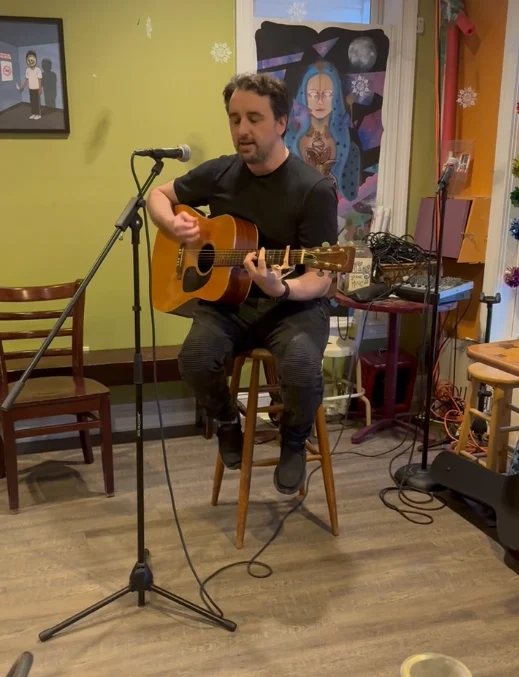
In stark contrast to the algorithmically mediated and commercially driven digital sphere stands the physical "open mic" event—a powerful analogue for what an equitable creative platform could represent. In a real-world, shared physical space—a coffee shop, a local club, a community center—the arbitrary barriers, algorithmic filters, and corporate interference that plague the internet are largely absent.
At an open mic, every participant is afforded an equal opportunity: typically 3-5 minutes on stage to share their chosen art form. Whether it is poetry, amateur musical performance, stand-up comedy, or simply a personal reflection, the platform is democratically accessible. There is no algorithm to optimize for, no million-dollar marketing budget required, and no corporate entity dictating visibility. Individuals from all walks of life—diverse ages, backgrounds, socioeconomic statuses, and artistic skill levels—can sign up, observe, and eventually take their turn. The primary requirement for engagement is simply presence: being "there," sharing space with others in a spirit of mutual curiosity and support.
This model of direct, unfiltered human interaction embodies principles of fairness, equity, and openness that are conspicuously absent in the mainstream digital creative landscape. While it is true that much of the broader "IRL" art world is also susceptible to biases, financial barriers, and commercial interests, the open mic represents a grassroots, non-monetized space where these influences are minimal. Its very lack of significant financial stakes is often what preserves its egalitarian nature, making it a powerful symbol for a more accessible and community-driven approach to art.
Re-embracing Physical Spaces and Advocating for a Better Digital Future
The current digital reality underscores a critical need for re-evaluating our engagement with both online and offline spaces. While the internet will undoubtedly remain an integral part of modern life, the experience it offers has diverged significantly from its initial promise. Platforms like Discord, which facilitate relatively flat hierarchies in text-based communication, offer glimpses of how digital spaces can still foster more equitable interaction, where every participant’s contribution receives similar attention.
However, the profound benefits of physical presence extend beyond mere artistic exchange. In an increasingly polarized and challenging global landscape, actively participating in real-world communities and shared spaces holds broader societal significance. Being physically present fosters direct human connection, builds local networks, and strengthens community resilience. This can manifest as meeting potential collaborators, witnessing inspiring performances, or becoming an inspiration for others. Crucially, it also means being one more individual embedded in a community, positioned to mobilize and resist against societal challenges, including the rise of authoritarian tendencies.
Ultimately, the trajectory of the internet is not fixed. Its current centralized, algorithm-driven form is a product of policy choices and corporate strategies, not an inherent inevitability. The demand for a more equitable digital future—one that prioritizes genuine discovery, diverse voices, and authentic community over algorithmic optimization and corporate control—remains vital. Simultaneously, re-engaging with physical spaces and fostering direct human interaction offers a tangible, immediate antidote to the digital divide, reminding us of the foundational social impulses that drive both art and community.
About the Author