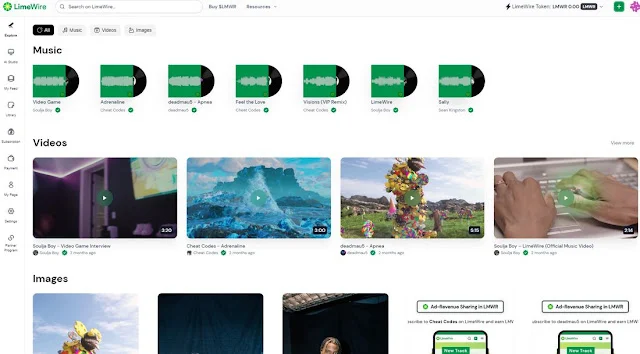
In a significant pivot from its controversial past, the name LimeWire has been resurrected, not as a peer-to-peer file-sharing service, but as a pioneering platform at the forefront of generative AI content creation and monetization. This new iteration of LimeWire aims to democratize digital artistry, offering creators powerful AI tools to generate unique content, which can then be shared, owned, and traded as Non-Fungible Tokens (NFTs) on a blockchain. The platform’s ambitious vision extends beyond image generation, with plans to incorporate AI-driven music and video creation, positioning it as a comprehensive hub for the next wave of digital expression.
From File-Sharing Notoriety to AI Innovation: A Timeline of Transformation
The original LimeWire, a ubiquitous file-sharing application popular in the early 2000s, became synonymous with the widespread availability of copyrighted material, leading to legal challenges and its eventual demise in 2010. However, the brand’s legacy has been dramatically redefined. In 2023, the revitalized LimeWire launched as an AI content publishing platform, signaling a complete departure from its previous identity. This strategic rebirth leverages the burgeoning interest in generative AI, aiming to provide a legitimate and creator-centric ecosystem. The platform’s re-emergence taps into a market ripe for innovation, where creators are increasingly seeking accessible tools to produce and monetize their digital works. Early adopters and notable figures, including musicians Deadmau5, Soulja Boy, and Sean Kingston, have already embraced the platform, publishing their AI-generated music, videos, and images as NFTs, underscoring LimeWire’s appeal to both established and emerging artists.
Empowering Creators: The LimeWire AI Studio Ecosystem
At its core, LimeWire Studio provides a robust suite of AI tools designed to empower creators. Currently, the platform excels in AI image generation, offering users sophisticated capabilities to translate textual prompts into visual art. Supporting advanced AI models such as Stable Diffusion 2.1, Stable Diffusion XL, and DALL-E 2, LimeWire equips users with a versatile toolkit for artistic exploration. The interface is designed for both novice and experienced users, allowing for simple, word-based prompts or more complex, detailed instructions to guide the AI.
A key differentiator for LimeWire is its seamless integration of diverse AI models and artistic styles. Users can fluidly switch between different AI engines and explore a wide array of aesthetic choices, including cinematic, digital art, pixel art, anime, and analog film looks. This flexibility allows for a broad spectrum of creative output, enabling artists to fine-tune their vision and achieve unique visual identities for their AI-generated pieces. The platform also incorporates features like samplers to control image quality and detail, alongside customization options and prompt guidance, further enhancing the user experience and accessibility.
Looking ahead, LimeWire has ambitious plans to expand its generative capabilities. The company is actively developing its proprietary AI model, a move that promises to introduce novel features and further refine its image generation tools. More significantly, the roadmap includes the integration of AI music and video generation tools, which are anticipated to launch in the near future. This expansion is poised to transform LimeWire Studio into a comprehensive content creation hub, offering creators unprecedented avenues for multi-modal artistic expression.
From Creation to Ownership: The NFT Integration
A groundbreaking aspect of the LimeWire platform is its seamless integration of Non-Fungible Token (NFT) technology. Once a piece of content is created, users have the option to publish it, and LimeWire automatically handles the minting process. This creation is then registered as an NFT on either the Polygon or Algorand blockchain, imbuing it with a unique digital signature that verifies its authenticity and establishes ownership within the decentralized digital landscape.
This NFT integration offers creators significant control over their work’s accessibility and distribution. Content can be made public, allowing for broad discovery and fostering a community where fans can engage with and trade the NFTs. Alternatively, creators can opt for exclusive releases, making their content available only to premium subscribers. This tiered access model caters to different creator strategies, enabling them to build dedicated fan bases and offer unique value propositions. The ability to curate exclusive content for a core audience can foster deeper engagement and loyalty, while public releases can maximize reach and potential for wider community interaction.
Monetization Strategies: Earning from Digital Artistry
LimeWire has implemented a multifaceted approach to monetization, enabling creators to generate revenue from their AI-generated works. Beyond the potential appreciation of their NFT assets, creators can earn ad revenue from user engagement with their content. When content is published on the platform, creators are entitled to receive 70% of the ad revenue generated from views of their images, music, and videos. This revenue-sharing model is particularly beneficial for designers and artists, allowing them to earn a passive income stream from their creative output while exploring the platform’s generative tools.
The revenue earned is distributed in the form of LMWR tokens, LimeWire’s native cryptocurrency. These tokens are liquid assets that can be traded on major cryptocurrency exchanges such as Kraken, ByBit, and UniSwap, providing creators with flexible options for realizing their earnings. Furthermore, LMWR tokens can also be utilized within the LimeWire ecosystem to pay for prompts when using the generative AI tools, creating a self-sustaining economic loop for active users. This token-based reward system incentivizes content creation and platform engagement, aligning the interests of creators with the growth of the LimeWire community.
Pricing Structures and Accessibility
LimeWire offers a tiered pricing structure designed to accommodate a range of user needs and budgets. The platform provides a free tier that allows users to sign up and utilize its AI tools with an initial allocation of credits. This free access typically includes a limited number of credits, enabling users to generate a set number of AI images daily, and offers a 50% share of ad revenue. This accessibility ensures that individuals can experiment with AI art creation without an initial financial commitment.
For users seeking more extensive capabilities and benefits, LimeWire offers several premium subscription plans:
- $9.99 per month: This plan provides 1,000 credits per month, sufficient for approximately 2,000 image generations, early access to new AI models, and a 50% ad revenue share.
- $29 per month: Subscribers receive 3,750 credits monthly, enabling up to 7,500 image generations. This tier also includes early access to new AI models and an increased ad revenue share of 60%.
- $49 per month: This higher-tier plan offers 5,000 credits per month, allowing for up to 10,000 image generations. It includes early access to new AI models and a 70% ad revenue share.
- $99 per month: The most comprehensive plan provides 11,250 credits per month, supporting up to 22,500 image generations. It also includes early access to new AI models and the maximum ad revenue share of 70%.
All premium plans come with additional benefits such as a Pro profile badge, full access to creation history, faster image generation speeds, and an ad-free experience. These tiered plans allow creators to scale their usage and benefits according to their engagement and revenue-generating ambitions.
Broader Implications for the Creative Economy
The emergence of platforms like LimeWire signals a significant shift in the digital creative economy. By integrating advanced AI tools with blockchain-based ownership and monetization, LimeWire is not only lowering the barrier to entry for aspiring artists but also creating new revenue streams and ownership models. The ability for creators to earn royalties on secondary sales of their NFTs, coupled with ad revenue sharing, represents a more equitable distribution of value within the digital art market.
Furthermore, LimeWire’s strategic expansion into AI music and video generation suggests a future where the lines between different creative disciplines blur. This could lead to novel forms of multimedia content and collaborative artistic endeavors. The platform’s emphasis on a creator-first approach, combined with its accessible pricing and robust monetization tools, positions it as a significant player in shaping the future of digital content creation and consumption. As AI technology continues to evolve, platforms that can effectively bridge the gap between creation, ownership, and economic opportunity will likely lead the charge in democratizing the digital art world. The success of LimeWire’s transformation serves as a compelling case study in brand reinvention and adapting to the transformative power of emerging technologies.
About the Author