The launch of Madden NFL 27 marks another significant iteration in a franchise that has long served two distinct, yet interconnected, audiences: dedicated video game enthusiasts demanding refined mechanics and a pristine gameplay experience, and avid NFL fans seeking an authentic digital representation of their favorite sport and its star players. This year’s installment positions itself squarely at the nexus of these expectations, striving to be more than just a sports simulation; it aims to function as a dynamic roster database, a robust engine for fan debate, and, increasingly, a precise mirror reflecting the broader football world’s evolving valuation of its athletes.
The Enduring Power of Player Ratings: More Than Just Numbers
At the core of Madden’s enduring appeal and its profound cultural impact are its player ratings. These are not merely numerical values assigned to digital avatars; they are deeply influential metrics that permeate every facet of the Madden ecosystem. High ratings translate directly into competitive advantages in online matchups, dictating the viability of certain strategies and player compositions. In the immersive Franchise Mode, these numbers guide crucial roster decisions, contract negotiations, and long-term team building. For players engaging with Ultimate Team, a highly popular mode focused on collecting and assembling fantasy rosters, ratings are the primary drivers of market value and team synergy. Beyond the virtual gridiron, these ratings fuel countless annual arguments among fans, analysts, and even players themselves, igniting passionate debates over who has been rightfully celebrated, unjustly overrated, or egregiously overlooked.
Historical Context of Madden Ratings and the 99 Club
The concept of player ratings has been integral to the Madden franchise since its inception in 1988, evolving from simple statistical representations to a complex multi-attribute system. Over the decades, these ratings have become a barometer of a player’s perceived dominance. The "99 Club," a highly exclusive group of players awarded the maximum overall rating of 99, emerged as a cultural phenomenon within the Madden community, reaching widespread recognition in the late 1990s and early 2000s. Membership in this club is more than a numerical distinction; it is a digital accolade, a status symbol, and a testament to a player’s elite standing in the NFL. Historically, players like Barry Sanders, Jerry Rice, Ray Lewis, and Peyton Manning have graced this elite tier, their 99 ratings cementing their legendary status within the game’s narrative. For Madden NFL 27, the presence of multiple 99-rated stars, particularly among quarterbacks, receivers, and pass rushers, directly reflects the modern NFL’s strategic emphasis on explosive offensive playmaking and disruptive defensive pressure. This trend aligns with the league’s ongoing shift towards a more pass-heavy, high-scoring environment, where individual brilliance in key positions can dramatically alter game outcomes.
The Ratings Room: Data, Scouting, and Human Judgment
Behind the seemingly straightforward overall rating lies a meticulous and complex process, often described by developers as a blend of art and science. Madden ratings are the product of rigorous performance data analysis, comprehensive scouting logic, an understanding of positional value within the NFL, and significant human judgment. The headline overall rating captures most of the public’s attention, but the true depth of a player’s in-game performance is derived from dozens of smaller, granular attributes. These include fundamental physical traits like speed, acceleration, and strength; technical skills such as throw power, route running, and man coverage; and intangible qualities like awareness and play recognition. For instance, a quarterback with elite throw power fundamentally alters offensive play-calling, enabling deep routes that might be impossible for others. Similarly, a cornerback boasting top-end speed can neutralize vertical threats, while a pass rusher with exceptional power moves can consistently disrupt an opponent’s game plan, even if the user never directly controls them. The challenge for the ratings team at EA Sports is to ensure these intricate attribute combinations create a player experience that feels both statistically justified by real-world performance and emotionally resonant with how fans perceive and experience these athletes on Sundays.
Madden’s Mirror to the NFL Economy: Betting Markets and Valuation
The intersection between the virtual world of Madden and the tangible economy of the real NFL is particularly pronounced when examining the robust betting markets, such as those offered by platforms like DraftKings. These markets, which aggregate vast amounts of data and public sentiment to set odds for NFL games and futures, frequently reflect many of the same underlying assumptions that inform Madden ratings. Key factors like quarterback value, overall roster strength, the presence of explosive playmakers, defensive dominance, and injury risk are paramount in both domains. When a player receives a high rating in Madden NFL 27, it almost invariably signifies that they are also perceived by analysts, fans, and bettors as an individual capable of significantly influencing real-world expectations and outcomes. Elite-rated players such as Josh Allen, Matthew Stafford, Ja’Marr Chase, and Myles Garrett do not merely impact gameplay in Madden; their digital prowess mirrors their real-world ability to shift perceptions regarding team ceilings, award races, and weekly matchup dynamics. While Madden is not dictating betting odds, nor are betting markets directly influencing Madden ratings, both systems are fundamentally built upon the same core football conversation: identifying and quantifying who truly changes games in the National Football League. This symbiotic relationship underscores Madden’s role as a sophisticated analytical tool and a cultural barometer for the sport.
The Financial Intersections: From Player Value to Team Ceilings
The implications of Madden’s player valuations extend beyond mere game dynamics, subtly influencing broader financial discussions within the NFL. A high Madden rating can enhance a player’s public profile, potentially boosting endorsement opportunities and contributing to their perceived market value during contract negotiations. While not a direct determinant, a player’s standing in Madden, particularly their overall rating and "99 Club" status, contributes to their brand equity. This is particularly relevant in an era where player branding and social media presence play a significant role in their overall economic footprint. Furthermore, the consensus on player and team strength, as reflected in both Madden ratings and betting markets, informs broader discussions among sports analysts and media regarding team valuations and investment potential. Teams with a strong core of highly-rated players are often seen as more stable, more marketable, and possessing a higher ceiling, influencing everything from sponsorship deals to media rights.
Revolutionizing Franchise Mode: The Persona Engine
One of Madden NFL 27’s most ambitious behind-the-scenes innovations is the introduction of the new Persona Engine within its venerable Franchise Mode. The primary objective of this engine is to fundamentally transform how players are perceived and managed, shifting them from static numerical assets to dynamic individuals imbued with distinct motivations, expectations, and reactions. For years, Franchise Mode, while a fan favorite, has grappled with capturing the intricate human dimension of NFL roster building. In the real National Football League, player contracts and team loyalties are not reducible to mere mathematical equations. Athletes are driven by a complex interplay of factors: their role on the team, the overall direction and competitive window of the franchise, financial compensation, geographic location preferences, and, critically, the respect they feel from coaching staff and management. By integrating personality traits and dynamic psychological elements into negotiations, locker-room dynamics, and long-term strategic planning, Madden NFL 27 aims to make team management a far more reactive, nuanced, and less predictable experience.
The Evolution of Franchise Mode: A Look Back
Franchise Mode has been a cornerstone of the Madden experience for decades, offering players the fantasy of controlling an NFL team from top to bottom. Its origins can be traced back to earlier iterations of the game, evolving from simple roster management to comprehensive systems encompassing drafting, free agency, coaching, and financial decisions. Over the years, features like scouting reports, training camps, and salary cap management were gradually introduced, adding layers of complexity. However, a persistent critique from the community has been the mode’s perceived lack of depth in player personality and dynamic team chemistry, often leading to repetitive gameplay loops where players could "exploit" the system rather than engage in truly strategic, human-centric management. The Persona Engine is a direct response to this feedback, representing a significant philosophical shift.
Developer Intent and Anticipated Player Experience
Developers at EA Sports have reportedly focused on making player interactions in Franchise Mode feel more organic and less scripted. The Persona Engine is designed to simulate the various moods, ambitions, and contentment levels of players, which can fluctuate based on team performance, individual stats, contract status, and even interactions with coaches or other players. For example, a star wide receiver with a "demanding" persona might become disgruntled if not targeted enough, impacting locker room morale. A rookie with a "team-first" persona might be content with a smaller contract if the team is a Super Bowl contender. This level of detail is intended to create a more immersive narrative for each franchise playthrough, where decisions about who to draft, sign, trade, or even bench carry genuine, often unpredictable, consequences. If successful, this innovation could transform Franchise Mode from a system-based optimization exercise into a rich, consequence-driven narrative about managing human capital in the high-stakes world of professional football.
Elevating Gameplay Realism: Physicality and Environmental Dynamics
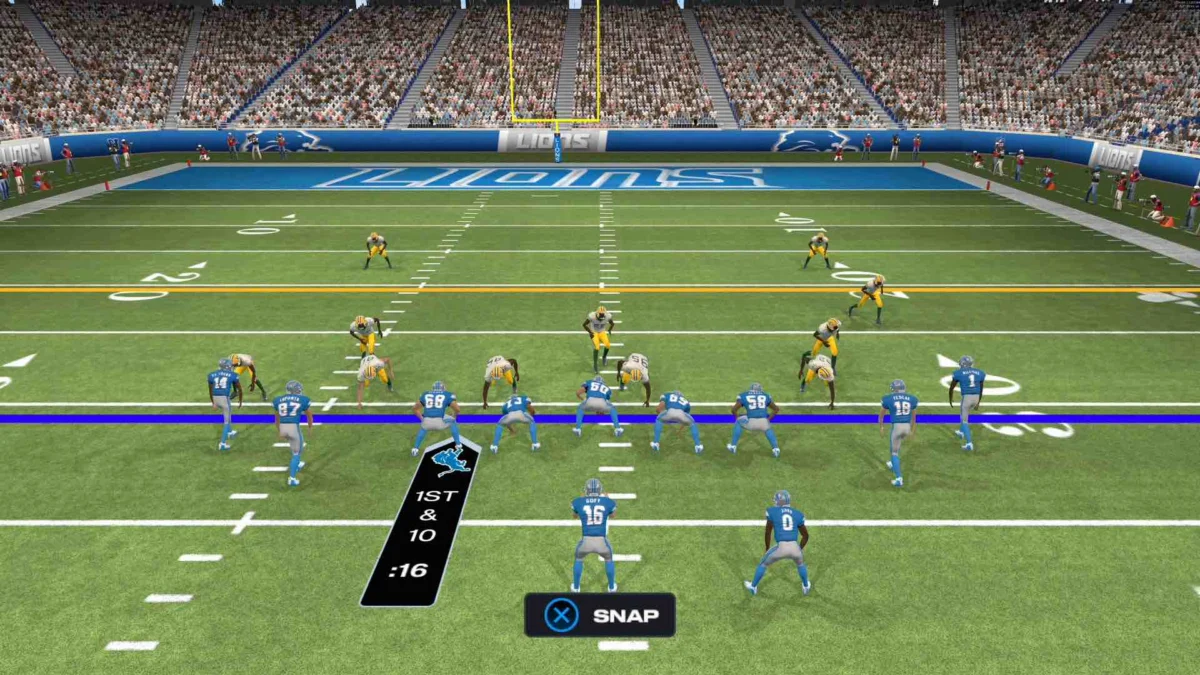
On the virtual field, Madden NFL 27 is making a concerted effort to emphasize physicality, aiming to replicate the demanding, often brutal, nature of real-world NFL contests. Key updates around wide receiver and defensive back interactions are meticulously designed to make routes feel significantly more contested and realistic. The intricate dance of hand fighting, leveraging body position, precise timing, and aggressive body positioning are all critical components of authentic NFL passing games, yet they have historically proven challenging to translate effectively into a controller-based experience. This year’s enhancements seek to bring those nuanced battles for space and possession to the forefront. Another crucial area of focus for gameplay refinement lies in short-yardage situations. These moments—the fourth-and-one conversion attempts, goal-line stands, critical late-game clock control scenarios, and heavy formation runs—are often the defining moments of real NFL games, showcasing the raw power and strategic grit of both offense and defense. By meticulously refining these scenarios, Madden NFL 27 aims to ensure that the least glamorous plays on the field feel as strategically vital and impactful as the most spectacular deep touchdowns.
The Quest for Authenticity: Gameplay Milestones
The pursuit of realism has been a continuous journey for the Madden franchise. Early iterations focused on establishing foundational football mechanics. Over time, advancements like the hit stick, gang tackling, and various animation engines sought to capture the physical impact of the sport. The introduction of "Real Player Motion" in previous titles aimed to create more fluid and authentic player movements. However, the fine details of player-on-player interaction, especially in areas like route running and defensive coverage, have always presented a significant challenge. Madden NFL 27’s focus on hand fighting and leverage suggests a move towards micro-interactions that contribute significantly to the overall feel of a contested play.
Strategic Implications of Environmental Factors
Beyond player interactions, Madden NFL 27 is also embracing dynamic weather systems and field degradation, adding another layer of authenticity and strategic depth. A game that commences under clear, ideal conditions can dramatically shift as rain begins to fall, snow blankets the turf, or the field itself deteriorates, impacting player movement and reliability. This kind of environmental detail is not merely cosmetic; it carries significant strategic implications. Passing-heavy teams, for instance, may find their aerial assault hampered by slick conditions, necessitating a shift towards a more ground-oriented attack. Ball security becomes paramount as fumbles become more likely. Player stamina and footing can be directly influenced, affecting late-game decisions and the effectiveness of speed-dependent players. The brilliance of such features lies in their subtlety: they are designed to feel authentic enough to be believable, yet meaningful enough to genuinely alter how players strategize and call a game, forcing adaptability and rewarding tactical foresight. This commitment to environmental realism contributes to making each playthrough feel less scripted and more like a live NFL broadcast.
The Broader Impact: Madden as a Cultural Barometer
Madden’s influence extends far beyond its status as a popular video game; it has cemented itself as a significant cultural barometer for the NFL. Its annual release is a highly anticipated event, serving as an unofficial kickoff to the football season and generating discussions that resonate throughout the sports world. The game’s power to shape perceptions, particularly through its player ratings, is immense. It provides fans with an additional, interactive lens through which to analyze player performance, debate team strengths, and project future outcomes.
Fan Engagement and Community Feedback
The Madden community is one of the most passionate and vocal in gaming. Online forums, social media platforms, and streaming channels buzz with discussions surrounding every new feature, every controversial rating, and every perceived glitch. This constant stream of feedback, both positive and critical, plays a crucial role in the game’s ongoing development. While not every suggestion can be implemented, the sheer volume of discourse underscores Madden’s deep integration into the fan experience. From casual players discussing their favorite Franchise Mode moments to competitive gamers dissecting meta-strategies for online play, the game fosters a vibrant and opinionated community. This engagement transforms Madden from a mere product into a shared cultural experience, a virtual town square where football fans gather to discuss, debate, and celebrate the sport they love.
The Future of Sports Simulation: Challenges and Opportunities
Madden NFL 27, like its predecessors, grapples with an inherently impossible problem: translating the chaotic, deeply emotional, and extraordinarily complex sport of American football into a playable, balanced, and believable interactive experience. The ratings will undoubtedly be subjected to intense scrutiny and argument. The new gameplay mechanics will be rigorously tested by millions of players. Franchise Mode’s innovative Persona Engine will be judged by whether it genuinely breathes life into player management or merely adds cosmetic layers. Yet, this very cycle of debate, scrutiny, and passionate engagement is precisely the point. Madden remains profoundly relevant because it offers fans an unparalleled opportunity to process, dissect, and experience the NFL narrative, often before the real season even fully commences. As sports simulation technology continues to advance, the challenge for EA Sports will be to leverage emerging technologies like AI and advanced physics engines to further blur the lines between the digital and physical realms of football, while also maintaining the accessibility and fun that has defined the franchise for decades.
In many fundamental ways, Madden NFL 27 is not merely a game that offers a behind-the-scenes look at football; it is an active and integral part of the scene itself, influencing perceptions, shaping conversations, and continually evolving alongside the sport it so meticulously simulates. Its ongoing journey reflects the dynamic interplay between technology, sports, and culture, solidifying its place as a cornerstone of the NFL experience.
About the Author