The digital landscape of independent gaming continues to flourish, with itch.io, a prominent platform for indie developers, regularly curating selections of browser-based titles that offer immediate entertainment without the commitment of downloads. This initiative caters to players seeking casual yet engaging experiences, particularly for weekend leisure. The recent compilation highlights a diverse array of genres, ranging from introspective visual novels and fast-paced racers to strategic idle games and atmospheric horror, all accessible with a single click. This focus on accessibility underscores a broader trend in game consumption, where convenience and instant gratification play a significant role in player choice.
The Enduring Appeal of Browser Gaming
Browser games represent a unique segment of the gaming industry, characterized by their low barrier to entry. Unlike traditional downloadable titles that require installation, system compatibility checks, and potentially significant storage space, browser-based games eliminate these hurdles. This accessibility makes them ideal for casual players, those with limited hardware resources, or individuals simply looking for quick diversions during a break. The evolution of web technologies, particularly HTML5, WebGL, and advancements in JavaScript engines, has dramatically expanded the capabilities of browser games, allowing for more complex graphics, sophisticated mechanics, and richer interactive experiences that were once exclusive to dedicated applications.
Itch.io, as a hub for independent creators, has particularly leveraged this format. The platform provides developers with an easy way to host and share their web-based projects, often born from game jams or experimental endeavors. For players, it offers a constantly refreshing library of new and innovative titles that might not be found on mainstream storefronts. This symbiotic relationship fosters a vibrant ecosystem where creativity and player engagement thrive on convenience.
Spotlight on Featured Titles: A Diverse Weekend Lineup
The latest collection curated by itch.io showcases the breadth of innovation occurring within the browser game space. Each title, often a product of focused development sprints like game jams, brings a distinct flavor to the table.

Dead Names
Dead Names emerges as a poignant sci-fi visual novel, delving into themes of acceptance and letting go within a future dystopia. Set against the backdrop of a solitary winter day, the game utilizes a pixel art style that evokes a nostalgic Game Boy aesthetic, enhancing its atmospheric quality. Beyond its retro visual appeal, Dead Names is notable for its inclusion of LGBTQIA themes, contributing to the growing representation of diverse narratives in gaming. Visual novels, as a genre, have gained significant traction in recent years, offering players deep storytelling and character-driven experiences. The choice to present this narrative within a Game Boy ROM format further amplifies its retro charm, appealing to players who appreciate both modern thematic exploration and classic gaming sensibilities. This title exemplifies how independent developers are pushing boundaries not just in gameplay, but also in narrative and inclusive representation, delivering powerful stories through accessible means.
Tiny Truck Racing
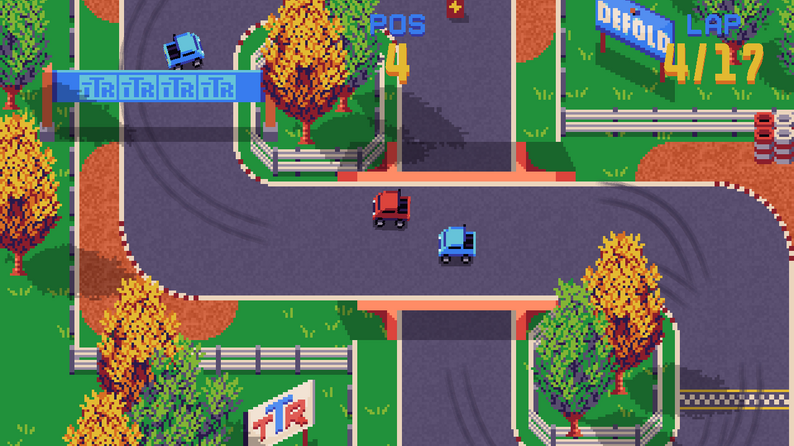
For enthusiasts of high-speed action, Tiny Truck Racing delivers an arcade-style experience. This pixel art racing game challenges players to navigate various tracks in miniature trucks, offering three distinct modes: Single Race for quick thrills, Tournament for a more structured challenge, and Time Trial for competitive speedrunning. Players can select from four unique trucks and strategically collect nitro cans for temporary speed boosts, adding a tactical layer to the fast-paced gameplay. Tiny Truck Racing originated from the Made With Defold Jam 2024, highlighting the efficiency and capabilities of the Defold game engine, known for its lightweight and versatile nature in creating 2D games. The creation within a game jam context underscores the developer’s ability to rapidly prototype and polish a fun, engaging experience under time constraints, resulting in a title that offers immediate, unadulterated racing enjoyment reminiscent of classic top-down racers.
Nomad Idle
Nomad Idle, a recently updated title, represents the popular idle game genre combined with auto-battler mechanics. In this game, players craft intricate character builds to combat relentless hordes of enemies, with much of the action unfolding automatically. The core loop involves strategic progression: unlocking new stats to level up, crafting superior equipment, and selecting passive skills that enhance the character’s capabilities. While the game operates largely autonomously, active engagement is rewarded through the use of character-specific skills, allowing players to accelerate their progress and influence key battles. Idle games, often characterized by their "set it and forget it" appeal, tap into a psychological desire for continuous progression, even during periods of minimal active play. Nomad Idle provides a deeper layer of engagement through its build customization and periodic active skill usage, appealing to players who enjoy long-term strategic planning and passive advancement. The continuous updates signal ongoing developer commitment and community engagement.
Laura’s Room
Venturing into the realm of psychological horror, Laura’s Room offers a chilling narrative experience. Players assume the role of Danni, who finds herself driving down a rain-slicked road in the dead of night, pursued by an unknown dread. The game’s atmospheric tension is expertly crafted through its Game Boy-inspired aesthetic, which paradoxically enhances the horror by forcing the player’s imagination to fill in the details. Developed for GBJAM 12, an event dedicated to creating games with the aesthetic limitations of the original Game Boy, Laura’s Room demonstrates how creative constraints can lead to highly effective and unique horror experiences. The lo-fi graphics and minimalist sound design contribute to a pervasive sense of unease, proving that high-fidelity visuals are not a prerequisite for generating genuine fright. This title is a testament to the power of suggestion and environmental storytelling in the horror genre.
Hamster Shelter
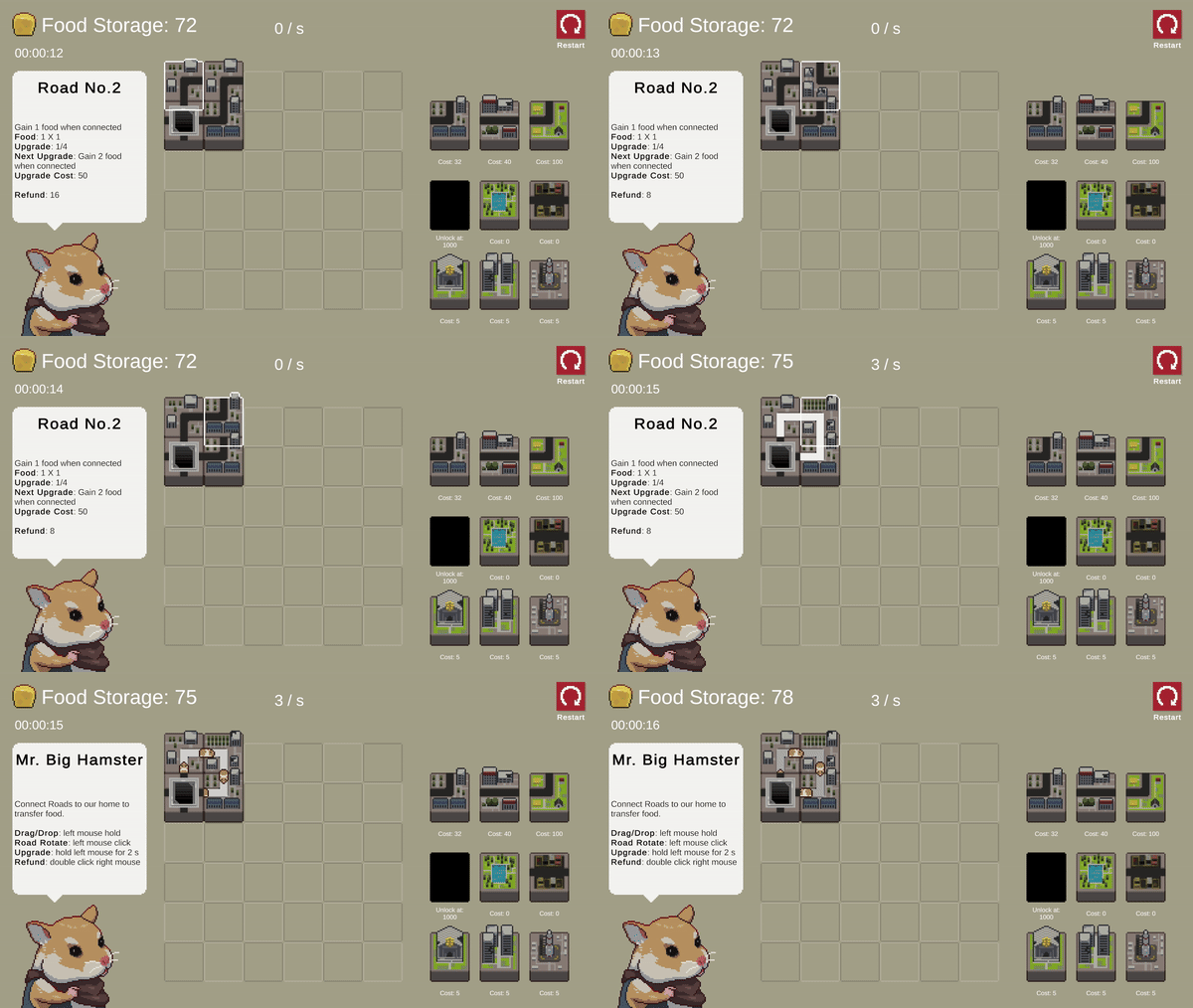
In a departure from intense action or horror, Hamster Shelter provides a relaxing, post-apocalyptic management simulation. Players are tasked with overseeing a community of tiny hamsters striving for survival in a desolate world. The core gameplay revolves around building roads to their shelter and transporting as much food as possible. A key feature of Hamster Shelter is its background operation, allowing players to engage with the game intermittently while it continues to progress, aligning with the "relaxing" gameplay tag. This design choice caters to players seeking a low-stress experience that fits into busy schedules. Created for Ludum Dare 56, a prominent game jam known for its tight development cycles and thematic prompts, Hamster Shelter exemplifies how creative concepts can emerge from such events, delivering a unique blend of casual strategy and charming character design. The post-apocalyptic setting, typically associated with grim narratives, is reimagined here with a heartwarming, survival-oriented twist.
Mouse Mouse
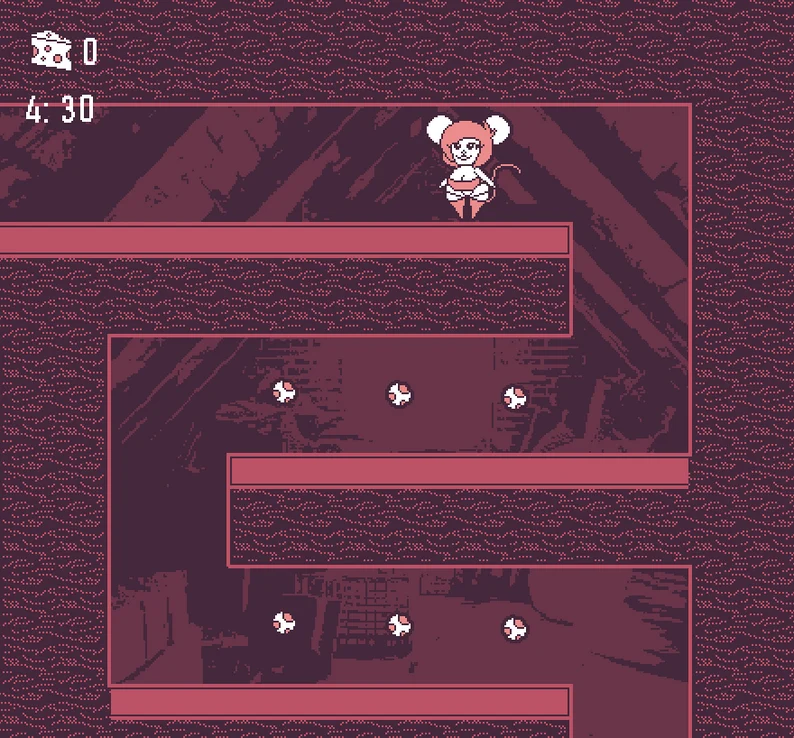
Mouse Mouse is a short, pixel art platformer that introduces an inventive control scheme: the player controls a mouse character using their actual computer mouse. This unique interaction requires players to jump, climb, and collect cheese as quickly as possible, adding a fresh layer of challenge to traditional platforming mechanics. The game’s minimalist design and direct control method contribute to its immediate appeal and replayability. Developed within a mere 48 hours for Ludum Dare 56, Mouse Mouse stands out as an example of rapid prototyping and innovative game design under extreme time pressure. Game jams often push developers to experiment with core mechanics, leading to novel experiences like this that re-evaluate fundamental aspects of interaction. Its simple premise belies a surprisingly engaging and skill-based experience, proving that creativity in control can reinvigorate established genres.
Play With Me
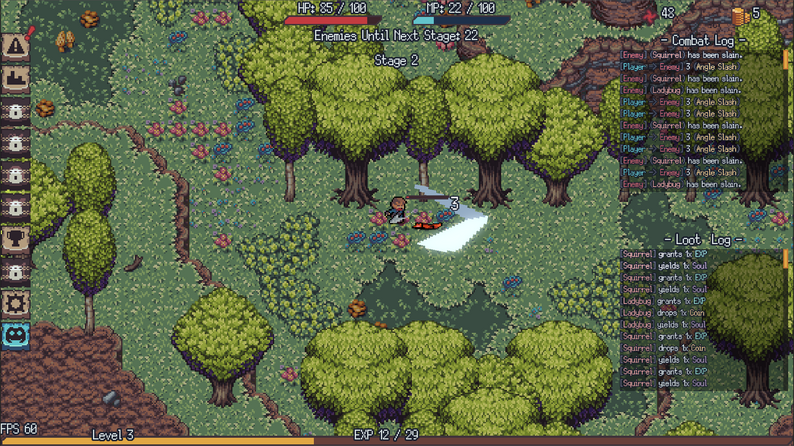
Subverting the charming innocence of virtual pets, Play With Me injects a spooky twist into the genre. The game invites players to interact with three mysterious creatures residing within a forgotten toy, each offering unique minigames. The retro-inspired visuals enhance the unsettling atmosphere, creating a sense of nostalgic dread. Also a product of Ludum Dare 56, Play With Me effectively demonstrates how familiar gameplay loops can be recontextualized to evoke entirely different emotional responses. The blend of virtual pet mechanics with horror elements creates a compelling tension, as players nurture these eerie companions while uncovering their secrets. This title appeals to those who enjoy both the comfort of retro aesthetics and the thrill of the macabre, showcasing the versatility of indie developers in blending genres to create distinctive experiences.
Jelly Gang
Jelly Gang is an innovative puzzle platformer that challenges players with controlling a group of 30 squishy characters simultaneously. The core mechanic involves a "focus region" around the player’s mouse cursor; only characters within this region respond to commands, adding a significant strategic dimension to movement and puzzle-solving. This physics-based game, another entry from Ludum Dare 56, requires precise manipulation and thoughtful planning to navigate obstacles and progress. The sheer number of characters and their distinct physics-driven behavior create emergent gameplay scenarios, where the collective movement of the "jelly gang" becomes a puzzle in itself. Jelly Gang pushes the boundaries of the platformer genre by introducing a unique crowd-control mechanic, offering a fresh and engaging challenge for players who appreciate physics-driven puzzles and strategic group management.
The Role of Game Jams in Content Generation

A significant number of the featured titles, including Tiny Truck Racing, Laura’s Room, Hamster Shelter, Mouse Mouse, Play With Me, and Jelly Gang, are direct outcomes of various game jams. These events, such as the Made With Defold Jam 2024, GBJAM 12, and Ludum Dare 56, are crucial incubators for innovation in the independent game development scene. Game jams typically involve developers creating a game from scratch within a very short timeframe—often 48 to 72 hours—based on a specific theme or set of constraints.
This intense, time-boxed environment fosters immense creativity, encourages rapid prototyping, and often leads to the development of unique mechanics and concepts that might not emerge in longer development cycles. For platforms like itch.io, game jams serve as a continuous pipeline of fresh, experimental content. They allow developers to test ideas, gain experience, and build a portfolio, while providing players with a constant stream of new and diverse games, many of which are freely accessible. The visibility gained from being featured in itch.io’s curated lists can be a significant boost for these budding projects and their creators, sometimes leading to further development into full-fledged commercial titles.
Community Engagement and Future Trends
The interactive nature of itch.io extends beyond simply hosting games. The platform actively fosters a community where players can directly interact with developers, provide feedback, and express their appreciation. Comments on the original post, such as "thank you for featuring mouse mouse!!!" from aplovestudio, or "I’m gonna shelter some hamsters now!" from a player, underscore the immediate and positive engagement generated by these curated lists. Developers like yogurtthehorse also utilize these channels to seek feedback and understand the editorial process, illustrating the transparency and collaborative spirit inherent to the platform.
This active community feedback loop is invaluable for independent developers, offering insights into player preferences and contributing to the iterative improvement of games. For itch.io, these curations reinforce its position as a discovery engine for indie games, demonstrating a commitment to highlighting quality and innovation regardless of budget or team size. The continued emphasis on browser-based games suggests a recognition of the growing demand for convenient, accessible, and diverse gaming experiences. As web technologies continue to advance, the capabilities of browser games are expected to expand further, solidifying their role as a vital component of the broader gaming landscape and a fertile ground for indie innovation. Players interested in exploring more such titles are encouraged to visit the "New & Popular Browser Games from the last 7 days" section on itch.io, a dynamic repository of the latest community-driven creativity.
About the Author