
A notable transformation is reshaping the automotive landscape, compelling even those with historically minimal interest in cars to reconsider their long-held views on personal transportation. What was once considered a niche or experimental technology, electric vehicles (EVs) are rapidly transitioning from the bleeding edge to a mainstream, compelling alternative, leading many to view traditional gasoline-powered cars as increasingly outmoded. This paradigm shift, often experienced by new EV owners, reflects a broader market movement driven by technological advancements, economic incentives, and evolving environmental consciousness.
The Genesis of a Revolution: From Experimental Fleets to Mass Production
The journey of the electric car is not a recent phenomenon but rather a cyclical narrative marked by early promise, significant setbacks, and a triumphant resurgence. Electric vehicles predated their gasoline counterparts in the late 19th and early 20th centuries, offering quiet operation and ease of use, particularly appealing to urban drivers. However, limitations in battery technology, range, and the burgeoning infrastructure for gasoline production ultimately ceded dominance to internal combustion engine (ICE) vehicles.

The modern chapter of the EV story truly began in the late 20th century, notably with General Motors’ ambitious, albeit short-lived, EV1 program from 1996 to 1999. This highly experimental vehicle, primarily available through lease in select markets, offered a glimpse into an electric future. Equipped with rudimentary lead-acid batteries in its initial models and later nickel-metal hydride (NiMH) batteries, the EV1 suffered from prohibitive costs, estimated by some analysts to be between $100,000 and $250,000 per unit, and limited practical range. Despite the fervent loyalty of its lessees, as famously documented in the film "Who Killed the Electric Car?", the program was ultimately discontinued, with most vehicles recalled and crushed. This episode highlighted that while the concept of electric mobility resonated with some, the underlying battery technology and economic viability were not yet mature enough for widespread adoption.
The true inflection point arrived with the advent of Lithium-Ion battery technology in the mid-2000s, ushering in the modern era of electric vehicles. This period, captured in the sequel documentary "Revenge of the Electric Car," chronicled the renewed efforts of various manufacturers. Key players emerged, each contributing significantly to the EV renaissance:
- The Tesla Roadster (2008): While an expensive, low-volume sports car, the Roadster proved that electric vehicles could be performance-oriented and desirable, shattering the perception of EVs as slow or utilitarian. Its success validated the potential of Lithium-Ion batteries for automotive applications and attracted significant attention to the nascent EV market.
- The Nissan Leaf (2010): Positioned as the first truly mass-market, affordable all-electric vehicle, the Leaf brought EVs to a broader consumer base. Despite early limitations in range (initially around 73 miles EPA-estimated) and charging infrastructure, it demonstrated the feasibility of daily electric commuting for many drivers.
- The Chevrolet Volt (2010): As a plug-in hybrid electric vehicle (PHEV), the Volt offered a bridge technology, providing a substantial all-electric range (initially 35 miles EPA-estimated) backed by a gasoline engine for extended trips, effectively mitigating range anxiety for many early adopters.
These early models, despite their imperfections and challenges, laid critical groundwork. The Roadster demonstrated performance, the Leaf proved affordability was possible, and the Volt addressed range concerns. This period marked a crucial shift from theoretical possibility to tangible products entering the market, albeit still with significant hurdles.
The Current Landscape: Technological Maturity and Market Acceleration

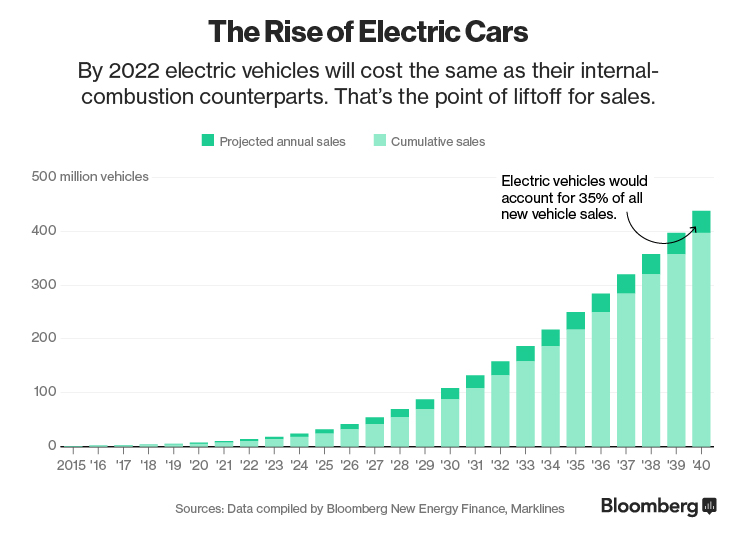
Fast forward a decade, and the EV market has undergone a profound transformation. Battery technology has advanced exponentially, with energy density increasing and costs plummeting. According to BloombergNEF, the average price of lithium-ion battery packs fell by 89% from 2010 to 2020, making EVs increasingly competitive on an upfront cost basis. This cost reduction, combined with economies of scale, has enabled manufacturers to offer a diverse range of electric models at increasingly accessible price points.
Vehicles like the 2019 Kia Niro EV, cited as a contemporary example, represent this new wave of practical, affordable, and high-performing electric cars. With an EPA-estimated range of 239 miles and an initial price point comparable to well-equipped gasoline compact SUVs, particularly after factoring in national and state tax incentives and rebates (which can reduce the effective price by several thousand dollars), modern EVs are no longer a luxury for the privileged few. This puts them in direct competition with popular ICE models, often offering a superior driving experience and lower total cost of ownership (TCO).
The Superior Driving Experience: A Radical Worldview
For many, the transition to an electric vehicle is not merely an incremental upgrade but a radical shift in driving perception. The objective advantages of EVs are manifold and immediately apparent:

- Instant Torque and Smooth Acceleration: Electric motors deliver maximum torque from a standstill, providing immediate, seamless acceleration that often surpasses comparable gasoline engines. This contributes to a feeling of effortless power and responsiveness.
- Quiet Operation: The absence of an internal combustion engine eliminates engine noise and vibrations, resulting in a remarkably quiet and refined cabin experience. This reduction in NVH (noise, vibration, and harshness) contributes significantly to driver comfort and reduced fatigue.
- Reduced Maintenance: EVs have significantly fewer moving parts than ICE vehicles. There are no oil changes, spark plug replacements, timing belts, or complex exhaust systems. This translates to fewer scheduled maintenance visits and potentially lower long-term ownership costs.
- Lower Running Costs: Charging an EV, particularly at home using off-peak electricity rates, is generally cheaper per mile than purchasing gasoline. While electricity prices vary, the operational cost savings accumulate over time, enhancing the TCO advantage.
- Environmental Benefits: At the point of use, EVs produce zero tailpipe emissions, contributing to cleaner air in urban environments. When charged with renewable energy, their overall carbon footprint can be dramatically lower than that of gasoline cars, aligning with global efforts to combat climate change.
These cumulative benefits create an experience that many new EV owners describe as fundamentally superior, making the traditional gasoline car, with its noise, vibrations, and dependence on fossil fuels, feel increasingly antiquated and "deeply unnatural" in comparison. The shift is not just about environmental consciousness but a tangible improvement in the daily act of driving.
Infrastructure Development and Overcoming Skepticism
Despite the compelling advantages, the widespread adoption of EVs still faces hurdles, primarily concerning charging infrastructure and overcoming persistent myths. Range anxiety, the fear of running out of charge, remains a concern for some, though advancements in battery technology (with many new EVs offering ranges exceeding 250-300 miles) and the proliferation of charging stations are steadily mitigating this.
The global charging infrastructure is expanding rapidly. Public charging networks, encompassing Level 2 (240V) chargers for slower top-ups and DC Fast Chargers for rapid charging on longer journeys, are becoming increasingly common in urban centers, along highways, and at workplaces. Governments and private companies are investing heavily in this expansion. For instance, in the United States, initiatives like the Bipartisan Infrastructure Law are dedicating billions to building a national EV charging network. The European Union has set ambitious targets for charging point density, and China boasts the world’s largest public charging network.

Moreover, the vast majority of EV charging occurs at home, often overnight, akin to charging a smartphone. This convenience eliminates routine trips to gas stations for many drivers, adding another layer of practicality to EV ownership. Addressing common myths, such as the perceived high cost, limited range, or lack of charging options, through educational resources and real-world experience, is crucial for accelerating mainstream acceptance.
Industry Transformation and Policy Imperatives
The profound shift towards EVs is not merely a consumer-driven trend but a strategic imperative for the global automotive industry and governments worldwide. Major automakers, including traditional giants like General Motors, Ford, Volkswagen, and Mercedes-Benz, have announced multi-billion-dollar investments in EV research, development, and manufacturing. Many have committed to phasing out internal combustion engine vehicle production within the next decade or two, signaling an irreversible transition. Volkswagen, for example, aims for 70% of its European sales to be all-electric by 2030, while General Motors plans to eliminate tailpipe emissions from new light-duty vehicles by 2035.
Government policies play a critical role in accelerating this transition. Emissions regulations, zero-emission vehicle (ZEV) mandates, and purchase incentives (such as tax credits, rebates, and reduced registration fees) are designed to make EVs more attractive and accessible. Countries like Norway have demonstrated remarkable success in EV adoption through aggressive incentive programs, with over 80% of new car sales being electric. China, the world’s largest automotive market, has heavily subsidized EV production and sales, driving massive growth and establishing itself as a global leader in EV manufacturing and deployment.
Broader Implications and the Inevitable Future
The implications of this accelerating shift extend far beyond the automotive sector. Environmentally, the transition to EVs, particularly when coupled with renewable energy sources for electricity generation, offers a powerful tool in combating climate change and improving urban air quality. Economically, it signifies a massive reallocation of capital, a retooling of manufacturing facilities, and the creation of new industries and job markets, while potentially disrupting existing fossil fuel-dependent sectors. Energy grids will require modernization and expansion to handle increased demand, necessitating smart charging solutions and greater integration of renewable energy.
For consumers, the normalization of EVs means a broader choice of vehicles that offer superior performance, lower running costs, and a more refined driving experience. The initial skepticism is rapidly giving way to a widespread understanding that electric vehicles are not just "another car" but a fundamentally better mode of transportation, poised to redefine personal mobility for generations to come.
In conclusion, the journey from a niche, experimental technology to a mainstream, competitive, and often superior alternative has solidified the electric vehicle’s position as the undeniable future of transportation. The confluence of technological maturity, economic viability, environmental urgency, and evolving consumer preferences has created an irreversible momentum. The future, as seen through the lens of those who have embraced this change, is unequivocally, and quite simply, electric.
About the Author