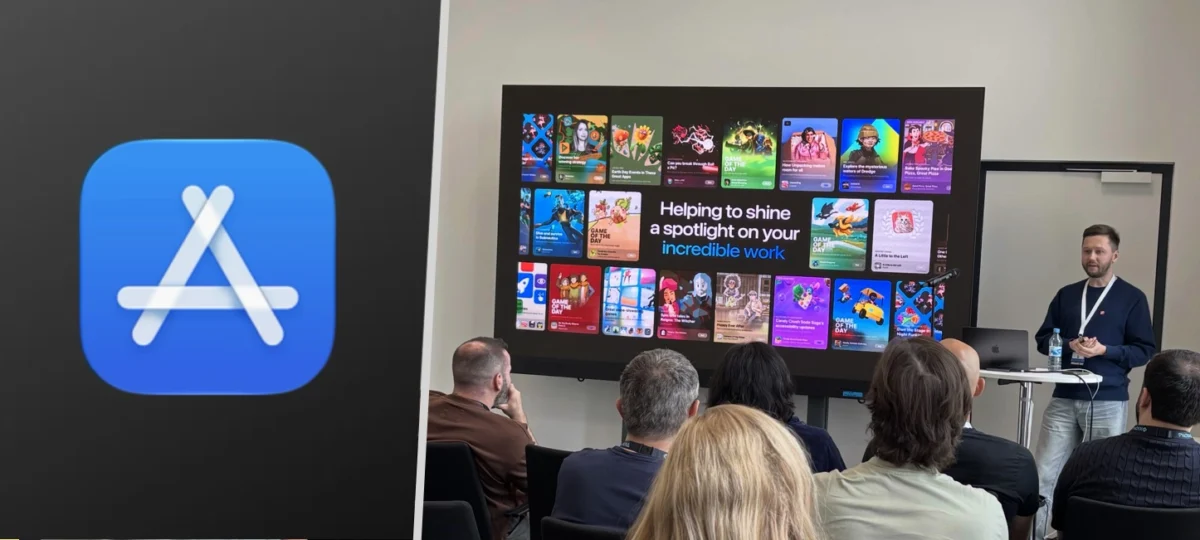
At the recent Gamescom Dev conference in Cologne, Germany, representatives from Apple’s App Store team provided an extensive roadmap for game developers seeking to navigate the increasingly competitive mobile gaming landscape. The session, led by Abhishek Radhakrishnan, who spearheads product and business development for the Apple Games app, alongside Sergey Kuznetsov, Apple’s EU games editor, offered a rare deep dive into the internal mechanics of App Store discovery, editorial selection, and the evolving economics of premium mobile titles. The presentation served as a strategic guide for developers aiming to leverage Apple’s vast ecosystem, which now spans 2.5 billion devices and serves 850 million weekly visitors across 175 storefronts in 50 languages.
The Evolution of the Try Before You Buy Model
A central theme of the presentation was the shifting paradigm of game monetization, specifically the "try before you buy" model. This approach allows users to download a game for free, experience a portion of the content, and then encounter a one-time paywall to unlock the full experience. Radhakrishnan highlighted this as a bridge between traditional premium games and the accessibility of free-to-play titles. By removing the upfront cost—a significant friction point for many mobile users—developers can dramatically increase their initial install base.
The efficacy of this model was illustrated through a case study of Deep Rock Galactic: Survivor, developed by Funday Games. Emil Kjaer of Funday Games shared that the title, which carries a €12.99 price tag for the full unlock, achieved a conversion rate of 13%. In the context of mobile gaming, where conversion rates for in-app purchases often hover in the low single digits, a 13% conversion for a premium unlock represents a significant success. This data suggests that when players are given the opportunity to engage with high-quality gameplay before committing financially, they are more likely to perceive the value of a premium price point.
Technical Integration as a Catalyst for Visibility
Beyond monetization, Apple emphasized the importance of deeply integrating with the iOS ecosystem to enhance organic discovery. Radhakrishnan urged developers to utilize Apple’s cross-platform "universal purchase" system, which allows a single purchase to grant access across iPhone, iPad, Mac, and Apple TV. This not only increases the perceived value for the consumer but also makes the title more attractive for editorial featuring, as it showcases the versatility of Apple’s hardware suite.
Furthermore, the integration of the Game Center API was cited as a critical factor for visibility. According to the presenters, games that actively utilize Game Center for leaderboards, achievements, and multiplayer functionality are eligible for specific editorial placements within the App Store and the dedicated Apple Games app. This social layer provides Apple’s editors with data-driven insights into player engagement, which can influence which titles receive prominent placement in "What Our Friends Are Playing" or "Global Leaderboard" collections.
The pre-launch phase also received significant attention. Developers were reminded that they can open pre-orders up to 180 days before a scheduled launch. However, this comes with strict requirements: a working binary must be submitted and approved, and for premium titles, the business model must be finalized and cannot be altered once the pre-order period begins. Radhakrishnan pointed to Devolver Digital’s Ball x Pit as a benchmark for a successful pre-order campaign, noting that such campaigns build crucial momentum that can propel a game to the top of the charts on release day.
The Art and Science of App Store Featuring
Sergey Kuznetsov provided transparency into the editorial process, which remains one of the most coveted yet misunderstood aspects of the App Store. While algorithmic recommendations play a role, a significant portion of the "Today" tab and "Games" tab content is hand-curated by a global team of editors.
Kuznetsov revealed that for general featuring, developers should submit a "feature nomination" via App Store Connect at least three weeks prior to a launch or a major update. This window allows editors to play the game, assess its quality, and determine where it fits within the editorial calendar. For titles looking to align with major cultural or global events—such as Earth Day, International Women’s Day, or Pride Month—the lead time is significantly longer. Developers are encouraged to submit requests at least 10 weeks in advance for these high-traffic periods.
The criteria for selection are multifaceted. Kuznetsov noted that there is no rigid checklist, but several core pillars remain constant:
- Gameplay Design: This includes the fluidity of the "gameplay flow," the intuitiveness of the UI, and the innovation within the mechanics.
- Aesthetics: High-quality art, animation, and sound design are essential for catching an editor’s eye.
- Storytelling: Compelling narratives can elevate a game from a simple pastime to an editorial "must-play."
- Technical Performance: Stability, fast load times, and optimization for the latest Apple silicon are non-negotiable.
- Localization and Accessibility: These are increasingly prioritized. By localizing content and including robust accessibility features—such as the fully customizable virtual controls seen in Dead Cells—developers expand their potential audience and align with Apple’s corporate values of inclusivity.
Case Studies and Editorial Success
The impact of editorial support was quantified through the example of Pools. According to Radhakrishnan, a staggering 70% of the game’s total downloads were directly attributed to its editorial featuring. This underscores the power of the App Store’s curation in an era where user acquisition costs on social media platforms continue to climb.
Other recent editorial favorites mentioned included the chess roguelike Gambonanza, the stylized racer Drive Rally, the psychological adventure Mindcop, and the high-score-chaser Sisyphos. The game Afterplace was highlighted as a gold standard, having earned both an "Editors’ Choice" badge and an Apple Design Award. These examples demonstrate that Apple’s editorial team looks for variety, rewarding both niche indie projects and polished, high-production titles.
Broader Market Implications and Industry Context
The advice provided at Gamescom Dev arrives at a pivotal moment for the mobile gaming industry. As the global mobile games market matures, estimated by analysts to be worth over $90 billion annually, the "gold rush" era of easy organic growth has ended. Developers are now faced with a dual challenge: the "signal-to-noise" problem on digital storefronts and the increasing difficulty of monetization under stricter privacy regulations like Apple’s own App Tracking Transparency (ATT).
By promoting the "try before you buy" model and deep ecosystem integration, Apple is essentially coaching developers on how to thrive in a post-ATT world. When traditional targeted advertising becomes less effective, the "storefront as a destination" becomes more important. Apple’s push for editorial curation is a move to maintain its platform as a premium environment, distinguishing it from the often-cluttered landscape of alternative app stores and third-party marketplaces that are beginning to emerge, particularly in the European Union following the Digital Markets Act (DMA).
The emphasis on accessibility and localization also reflects a broader industry trend toward global inclusivity. As gaming grows in markets like Southeast Asia, Latin America, and India, the ability for a developer to present a polished, localized product is no longer an optional "extra" but a fundamental requirement for scaling.
Chronology of a Strategic Launch
Based on the insights from Radhakrishnan and Kuznetsov, a successful launch timeline on the App Store now looks like the following:
- 6-9 Months Pre-Launch: Finalize the core loop and begin internal testing. Implement Game Center APIs and ensure the game supports Universal Purchase.
- 180 Days Pre-Launch: Submit a working binary to App Store Connect to initiate the pre-order campaign. Finalize the business model (Premium vs. Try Before You Buy).
- 10-12 Weeks Pre-Launch: If the game aligns with a major cultural event, submit a specific featuring request with assets demonstrating the relevance to the occasion.
- 4-6 Weeks Pre-Launch: Conduct A/B testing of the app icon and store page assets using App Store Connect’s native tools. This was specifically highlighted by the success of A Little to the Left.
- 3 Weeks Pre-Launch: Submit the final feature nomination. Ensure the submission is concise, focusing on unique mechanics, art style, and accessibility features.
- Launch Week: Monitor performance and utilize the Apple Games app’s new features to promote any limited-time introductory offers or discounts.
The Gamescom Dev session sent a clear message to the development community: success on the App Store is no longer just about building a great game; it is about building a great game that lives harmoniously within the Apple ecosystem. By adhering to these editorial timelines and embracing hybrid monetization models, developers can significantly increase their chances of standing out in a crowded marketplace. As Apple continues to evolve its storefront into a curated media platform, the relationship between the platform holder and the creator has never been more vital to the commercial viability of a title.
About the Author