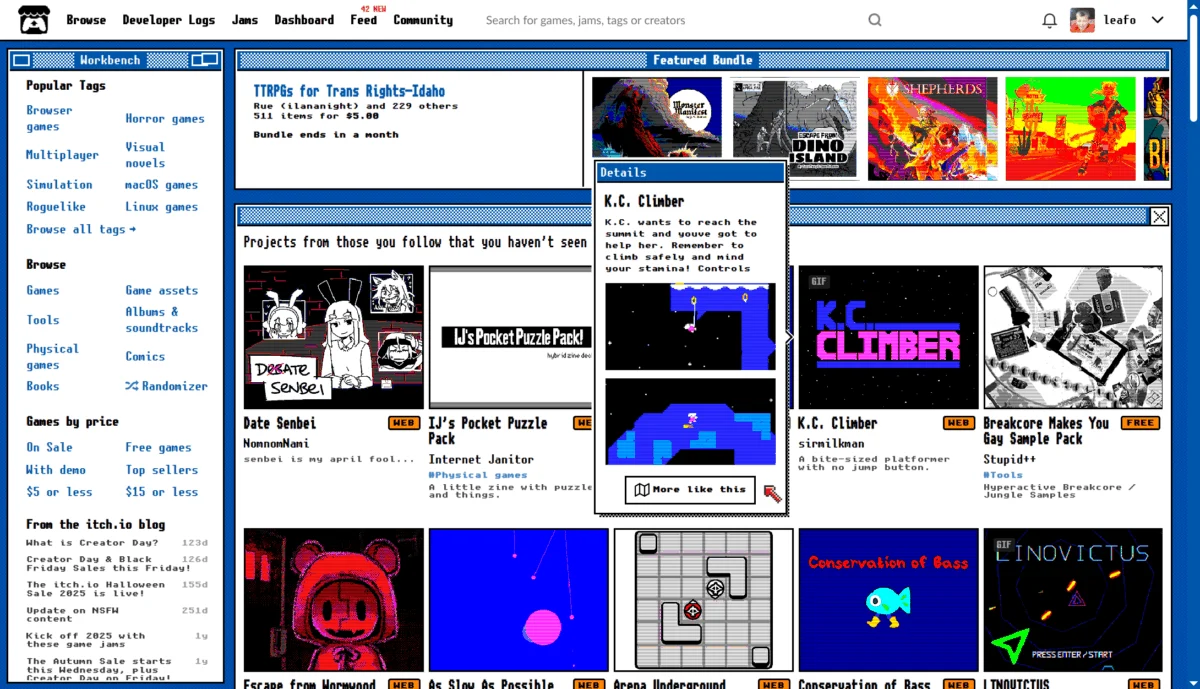
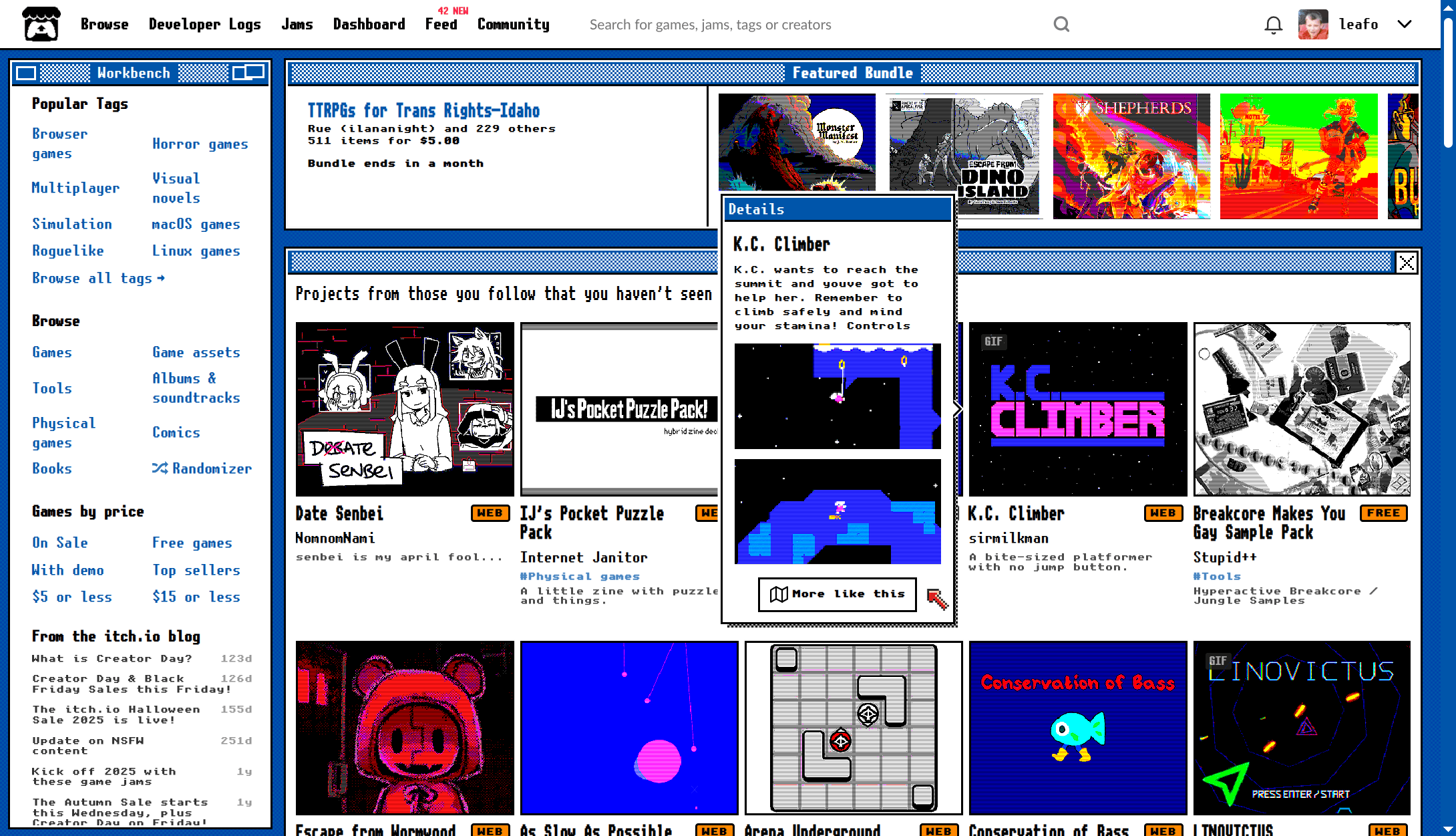
San Francisco, CA – The independent game platform itch.io has officially concluded its temporary "Ameyega mode," a distinctive visual overhaul of its homepage implemented as an April Fool’s Day initiative. The experimental interface, characterized by its retro, ASCII art-inspired aesthetic, was live for an extended period beyond April 1st, drawing a wide range of reactions from its dedicated user base. While the default homepage has been restored, itch.io has made a special provision, allowing logged-in users to revisit the "Ameyega mode" at a specific URL, ensuring its availability until future substantial changes to the platform’s main page are enacted.
The "Ameyega mode," a playful nod to the classic Amiga computers and early computing graphics, transformed the typically sleek and modern itch.io homepage into a pixelated, text-based experience. Images, text, and navigational elements were rendered using characters from the ASCII character set, evoking a profound sense of nostalgia for those familiar with vintage computing environments, bulletin board systems (BBS), and the demoscene. The visual style, a stark contrast to contemporary web design, was a deliberate artistic choice, crediting viznut.fi/unscii/ for the fonts that facilitated this unique presentation.
The Genesis and Chronology of a Digital Prank
April Fool’s Day has long been a tradition within the tech industry, with companies often leveraging the occasion to showcase creativity, humor, and sometimes even innovative prototypes disguised as jokes. From Google’s elaborate hoaxes, such as "Gmail Motion" or "Google Nose," to smaller, more niche platforms engaging their communities, these pranks serve as a means of brand engagement and a lighthearted break from routine. Itch.io, known for its independent spirit and close-knit developer community, embraced this tradition with "Ameyega mode."
The initiative was subtly rolled out around April 1st. The platform’s communication indicated that the release was "out late," prompting a decision to extend its availability beyond the single day typically associated with April Fool’s gags. This extension allowed more users to experience the unique interface and contributed to a prolonged period of community discussion. For several days, users visiting itch.io’s homepage were greeted by the pixelated display, sparking immediate reactions ranging from amusement and admiration to confusion and frustration. The official announcement regarding its conclusion came later, coupled with the offer of continued, albeit hidden, access for those who wished to revisit the retro theme. This chronology highlights a responsive approach from the platform, adapting to user engagement rather than strictly adhering to a one-day event.
Itch.io’s Identity and the Power of Community Engagement
Itch.io stands as a vital hub for independent game development, hosting hundreds of thousands of games and projects from a global community of creators. Its ethos revolves around supporting indie developers, fostering experimentation, and maintaining a direct connection between creators and players. This community-centric approach makes it a fertile ground for initiatives like "Ameyega mode," which, while temporary, generated significant buzz and interaction.
The decision to implement such a visually distinct, albeit temporary, change aligns with itch.io’s brand identity as a platform that champions creativity and isn’t afraid to deviate from mainstream norms. Unlike larger corporate entities, itch.io often engages its community in more personal and experimental ways. The "Ameyega mode" served not just as an April Fool’s prank but also as a cultural statement, celebrating the roots of digital creativity and the enduring appeal of lo-fi aesthetics that resonate deeply within certain segments of the independent game development scene. The event became a talking point across social media, forums, and developer communities, generating widespread discussion about interface design, nostalgia, and accessibility.
Community Reactions: A Spectrum of Sentiment
The comments section of the official blog post, as well as discussions across various online forums and social media, revealed a diverse spectrum of user reactions to "Ameyega mode." This feedback provides valuable insight into user preferences, the impact of UI/UX changes, and the often-complex relationship between aesthetics and functionality.
On one hand, a significant portion of the community expressed immense appreciation and nostalgia. Users described the ASCII art homepage as a "delightful throwback" that made browsing feel "nostalgic and charming." Many praised itch.io for its creativity and willingness to implement such a unique theme. Some users explicitly stated their desire for "Ameyega mode" to become a permanent, optional theme, highlighting a demand for customizable interfaces and a longing for retro aesthetics. Phrases like "Please please please make an option to keep this, it’s SO much easier to read for me wow I love love love it" indicate that for some, the high-contrast, blocky text was surprisingly more legible or less straining than the default interface. This unexpected accessibility benefit for a subset of users, particularly those with certain visual processing differences, was a noteworthy observation.
Conversely, a substantial number of users found the "Ameyega mode" to be disruptive, difficult to use, and even visually uncomfortable. Complaints frequently centered on navigation challenges, with users stating, "omg please change it back this is so hard to navigate" and "I hate thisssss." For many, the pixelated interface hindered their ability to quickly scan information, identify interactive elements, or simply browse the site effectively. The stark visual change was perceived by some as an inconvenience rather than a charming novelty.
The Critical Dimension of Accessibility
Perhaps the most significant aspect of the negative feedback revolved around accessibility. Several users reported that the "Ameyega mode" caused genuine discomfort or rendered the site unusable for them. Comments such as "Oh so cool, i’m disabled and I CAN’T WATCH THIS! How do you get this crap off?!" underscore the critical importance of inclusive design. While intended as a temporary, humorous feature, the dramatic visual alteration inadvertently created barriers for users with certain visual impairments, sensory sensitivities, or other accessibility needs. The high contrast, blocky fonts, and often distorted images could trigger discomfort, eye strain, or even migraines for susceptible individuals.
Furthermore, several users reported that the "Ameyega mode" interfered with the platform’s dark mode setting, a crucial accessibility and preference feature for many. Comments like "it’s over but dark mode is not working now…" and "Because you messed up, Dark mode and I can’t get it to work" indicated that the temporary theme either overrode or broke existing user interface settings, further exacerbating usability issues for those who rely on dark mode for visual comfort or to reduce eye strain in low-light environments. While itch.io appeared to address the dark mode issue promptly, as noted by one user ("EDIT: four hours after posting this, the front page is showing Dark mode correctly"), the initial oversight highlights the complexities of implementing broad UI changes.
This aspect of the feedback serves as a powerful reminder for all digital platforms: even temporary or playful design changes must consider their impact on diverse user populations. What might be an amusing novelty for one user can be a significant barrier for another. Inclusive design principles advocate for choices that accommodate the widest possible range of users, and temporary visual pranks, while fun, inadvertently test the limits of these principles.
Technical Underpinnings and Creative Inspiration
The execution of "Ameyega mode" relied on specific technical and design choices. The credit given to viznut.fi/unscii/ points to the use of UNSCII, a pixel font designed by Viznut (a Finnish demoscene artist and programmer). UNSCII is known for its distinctive retro aesthetic, mimicking the character sets found in early personal computers and text-mode displays. Employing such a font, combined with techniques to render graphical elements using ASCII characters, allowed itch.io to achieve the authentic vintage computing look. This attention to detail underscored the creative intent behind the prank, demonstrating a deep understanding and appreciation for the aesthetics it sought to emulate. The transformation of a modern web interface into a text-mode experience is not a trivial undertaking, requiring careful implementation to ensure even basic functionality.
Broader Implications for Platform Development and User Experience
The "Ameyega mode" event, despite its brief tenure, offers several broader implications for itch.io and the wider digital platform ecosystem:
- User Preference and Customization: The strong positive feedback and requests for "Ameyega mode" as an optional theme indicate a significant demand for interface customization. Providing users with choices for visual themes, beyond just dark/light modes, could enhance user satisfaction and cater to diverse aesthetic preferences within the community.
- Accidental A/B Testing: The April Fool’s prank inadvertently functioned as a large-scale A/B test for a radically different UI. The resulting feedback, both positive and negative, offers invaluable data on how different visual styles impact user engagement, navigation efficiency, and perceived accessibility.
- Prioritizing Accessibility in Design: The negative feedback regarding accessibility issues serves as a crucial learning point. It reinforces the necessity of conducting thorough accessibility audits for any significant UI change, even temporary ones, and ensuring that core functionalities and user preferences (like dark mode) are not compromised.
- Brand Reinforcement: Despite some negative feedback, the overall event reinforced itch.io’s unique brand as a playful, community-oriented platform that is willing to experiment and engage with its users in unconventional ways. Such initiatives can foster a sense of loyalty and distinctiveness in a crowded digital landscape.
- The Enduring Power of Nostalgia: The positive reception from many users underscores the powerful appeal of retro aesthetics and nostalgia in the digital realm. As technology rapidly advances, many users find comfort and joy in revisiting the visual and experiential paradigms of earlier computing eras.
In conclusion, itch.io’s "Ameyega mode" was more than just an April Fool’s prank; it was a transient yet impactful experiment in user interface design that resonated deeply with its community. While it successfully tapped into a vein of digital nostalgia and showcased the platform’s creative spirit, it also inadvertently highlighted critical considerations regarding user experience, interface customization, and, most importantly, the indispensable role of accessibility in all forms of digital design. As itch.io continues to evolve, the diverse feedback generated by "Ameyega mode" will undoubtedly contribute to future discussions on how best to balance innovation, aesthetics, and inclusivity for its global community of independent game enthusiasts.
About the Author