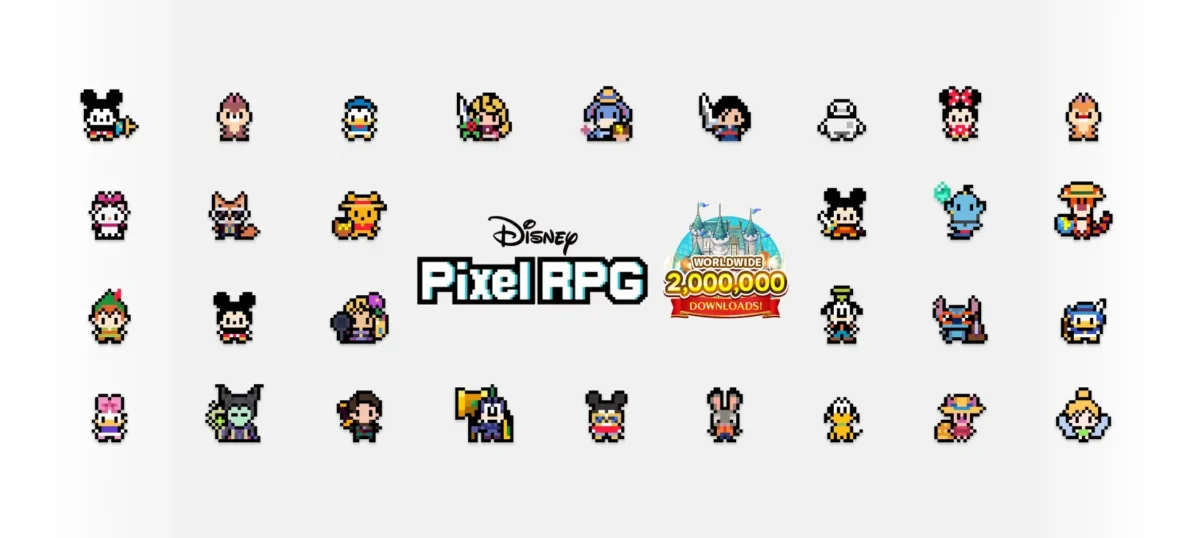
GungHo Online Entertainment, the prominent Japanese video game developer and publisher best known for the global phenomenon Puzzle & Dragons, has officially confirmed the permanent termination of services for its mobile-exclusive title, Disney Pixel RPG. According to an official closure notice published on the game’s dedicated website, the retro-styled role-playing game is scheduled to cease all operations on September 30. This decision marks the end of a relatively brief lifecycle for the project, which sought to blend Disney’s iconic library of characters with classic 8-bit aesthetic sensibilities and modern mobile RPG mechanics.
The announcement has triggered a structured wind-down process designed to conclude the game’s service in an orderly fashion. As part of this transition, the development team has initiated a series of "farewell events" throughout the current summer season. These events are intended to provide the existing player base with an opportunity to experience the game’s remaining content and story arcs without the typical financial barriers often associated with free-to-play mobile titles. Effective September 30, the application will be removed from major digital storefronts, including the Apple App Store and Google Play Store, and all game servers will be permanently deactivated, rendering the title unplayable.
Operational Termination and Key Deadlines
The timeline for the cessation of Disney Pixel RPG is definitive, leaving little room for a transition period beyond the end of the third quarter. GungHo has outlined a clear roadmap for the shutdown to ensure transparency for its users. Following the server closure on September 30, the focus will shift toward financial reconciliation for players who have invested in the game’s premium ecosystem.
Under current consumer protection guidelines and GungHo’s internal policies, any unused in-game currency—typically purchased through microtransactions—will be eligible for a refund. The developer has established a dedicated portal on the game’s official website to facilitate these claims. Notably, the window for requesting refunds is uncharacteristically long, extending until January 13, 2027. This multi-year window suggests a commitment to regulatory compliance and a desire to maintain goodwill among a player base that may be frustrated by the game’s sudden departure from the market.
Performance Metrics and Revenue Analysis
Data provided by market intelligence firm AppMagic offers a clearer picture of the financial and engagement landscape that may have influenced GungHo’s decision to sunset the title. Since its launch in 2024, Disney Pixel RPG has garnered approximately 1.5 million downloads globally. While a million-plus download figure is respectable for many indie titles, it often falls short of the "break-out" success required to sustain a high-profile licensed IP in the competitive mobile RPG sector.
From a monetization perspective, the game generated a lifetime revenue of over $3.1 million. While $3.1 million represents a significant sum in isolation, the economics of mobile gaming require a deeper analysis of the Average Revenue Per User (ARPU) and the Cost Per Acquisition (CPA). In the context of a Disney-licensed product, a substantial portion of gross revenue is typically directed toward licensing fees, royalties, and platform fees (the standard 30% cut taken by Apple and Google). When factoring in the costs of live-service development, server maintenance, and global marketing campaigns, a $3.1 million revenue stream over several months may not have met the internal benchmarks for long-term viability.
The disparity between the number of downloads and the total revenue suggests a challenge in converting casual players into "whales"—the high-spending minority that typically sustains the free-to-play model. In a market saturated with heavy hitters like Genshin Impact, Fate/Grand Order, and Disney’s own Emoji Blitz, Disney Pixel RPG struggled to carve out a profitable niche despite its charming visual style.
A Brief History of the Disney Pixel RPG Lifecycle
Disney Pixel RPG was conceived as a nostalgic journey through the Disney "multiverse," featuring pixelated versions of characters from franchises such as Mickey & Friends, Sleeping Beauty, Tangled, and Big Hero 6. The game’s premise involved a "Pixel World" where various Disney dimensions collided, requiring players to assemble teams of heroes to combat a mysterious corruption threatening the digital realm.
The gameplay featured a simplified turn-based combat system designed for accessibility, catering to both younger audiences and older fans of retro RPGs. Its 2024 launch was met with moderate critical acclaim, with reviewers praising the art direction and the novelty of seeing Disney characters in a classic JRPG format. However, the game’s reliance on automated battle features and a relatively standard gacha (randomized character draw) system meant it faced uphill battles in terms of player retention.
The rapid progression from launch to shutdown within the same calendar year highlights the volatility of the modern mobile gaming industry. Many publishers now operate on a "fail fast" philosophy, where games that do not demonstrate immediate exponential growth or high retention rates are discontinued to reallocate resources to more promising ventures.
The Business of Licensed IP in Mobile Gaming
The closure of Disney Pixel RPG serves as a case study for the complexities of managing licensed intellectual property in the gaming space. Disney is known for its rigorous brand standards and significant licensing costs. For a developer like GungHo, the partnership offered the prestige of the Disney brand and an established fan base. However, the overhead associated with such a high-tier license means that a game must perform exceptionally well to remain profitable.
Industry analysts suggest that the mobile market is currently undergoing a "correction." After years of explosive growth, the market is now characterized by high user acquisition costs and a player base that is increasingly selective about where they spend their time and money. For Disney, the strategy appears to be shifting toward fewer, larger-scale partnerships or internalizing more of their gaming efforts. The recent shutdown of other Disney-themed titles, such as Disney Mirrorverse (developed by Kabam), suggests a broader trend of consolidating the Disney mobile portfolio.
Consumer Protection and the Refund Process
The announcement of a refund window lasting until 2027 is a significant detail for the gaming community. Typically, when a mobile game shuts down, refund windows are limited to a few months. GungHo’s decision to keep the refund portal open for over two years is likely a strategic move to mitigate the backlash associated with "sunsetted" live-service games.
In the current regulatory environment, particularly in Japan and the European Union, there is increasing pressure on digital service providers to ensure that consumers are not left with worthless digital assets when a service is discontinued. By providing a clear and lengthy path for refunds of unspent premium currency, GungHo is aligning itself with best practices for corporate social responsibility in the digital age. This move also protects the company’s reputation as it prepares to launch future titles, ensuring that players feel their financial contributions are respected even if a project is ultimately unsuccessful.
The State of GungHo Online Entertainment’s Portfolio
GungHo Online Entertainment remains a powerhouse in the industry, largely due to the enduring success of Puzzle & Dragons, which has remained a top-grossing title for over a decade. However, the company has faced challenges in replicating that level of success with new IPs or licensed collaborations.
The termination of Disney Pixel RPG allows GungHo to refocus its development talent and marketing budgets on other projects. The company’s portfolio currently includes titles like Ninjala and Let It Die, which have found dedicated, if smaller, audiences. The experience gained from Disney Pixel RPG—specifically in managing global Disney fans and high-fidelity pixel art assets—will likely inform GungHo’s future development cycles.
Broader Implications for the Mobile RPG Landscape
The fate of Disney Pixel RPG reflects a broader trend within the mobile RPG landscape: the decline of the "mid-tier" game. In today’s market, games often either become massive, billion-dollar cultural touchstones or struggle to survive past their first year. The "middle ground"—games that are profitable but not "blockbusters"—is increasingly difficult to maintain due to the rising costs of live-service operations.
Furthermore, the "pixel art" aesthetic, while popular among a core group of enthusiasts, may have lacked the broad-market appeal necessary to compete with the high-end 3D graphics of contemporary mobile titles. While Disney Pixel RPG offered a unique visual experience, it may have been perceived as a "budget" or "niche" title by the wider mobile gaming public, despite the high-profile nature of its characters.
As the industry moves forward, developers are likely to become even more cautious about entering licensing agreements for mobile RPGs unless they can guarantee a massive, sustainable player base. The shutdown of Disney Pixel RPG on September 30 stands as a reminder that even the most recognizable characters in the world cannot guarantee the longevity of a mobile game in an era of unprecedented competition and shifting consumer habits.
For the players of Disney Pixel RPG, the coming weeks will be a period of finality. As the farewell events conclude and the servers go dark, the pixelated versions of Mickey, Maleficent, and Ariel will vanish from the digital storefronts, leaving behind a brief legacy of retro charm and a cautionary tale for the mobile gaming industry. Players are encouraged to log in before the September 30 deadline to finalize their progress and to visit the official site to begin the refund process for any remaining premium currency.
About the Author