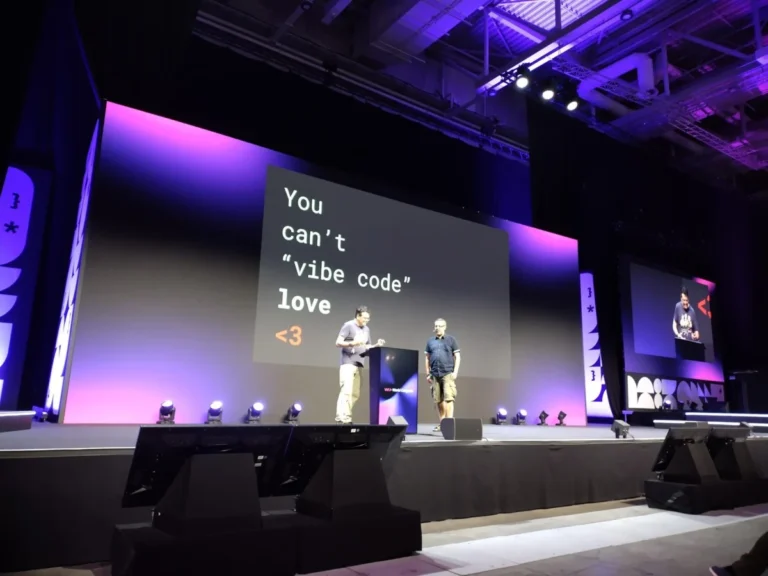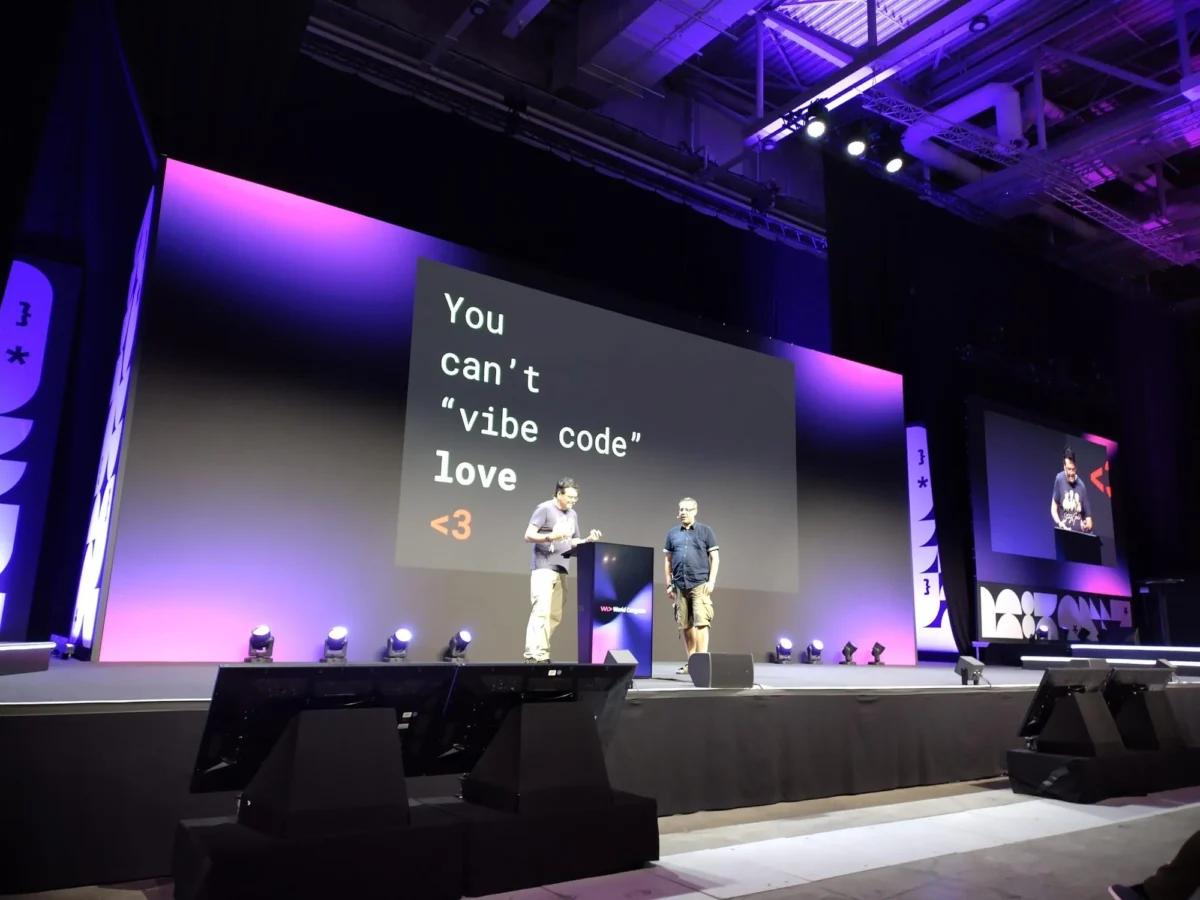
Berlin, Germany – A pivotal discussion on the evolving landscape of developer knowledge and community in the age of artificial intelligence took center stage at the WeAreDevelopers World Congress (WWC) in Berlin on Friday, July 10th. Esteemed tech luminary Jeff Atwood, co-founder of Stack Overflow and author of the influential "Coding Horror" blog, joined by Ben Dumke-von der Ehe, an early and significant community hire at Stack Overflow, presented a compelling session titled, "None of Us Is As Dumb As All of Us: Community And Knowledge Go Hand In Hand." Their joint presentation, delivered at the CityCube, explored the profound impact of Large Language Models (LLMs) on collaborative knowledge creation and the enduring importance of human-centric developer communities.
The invitation to speak at the WeAreDevelopers World Congress, one of the largest and most influential global developer conferences, arrived for Atwood approximately a year prior. While typically selective about speaking engagements, particularly international ones, the confluence of timing, location, and the unique opportunity to collaborate with Dumke-von der Ehe proved irresistible. Atwood accepted on the express condition that Dumke-von der Ehe, a Berlin resident with a deep history at Stack Overflow, would co-present. This condition was readily accepted by the conference organizers, setting the stage for a presentation that promised diverse perspectives and a shared, critical message. The congress itself, an annual gathering that attracts thousands of developers, tech leaders, and innovators from around the globe, serves as a crucial platform for discussing the future of technology and its human implications. Held in the vibrant tech hub of Berlin, WWC is renowned for its high-caliber speakers and forward-thinking agenda, making it an ideal venue for a discussion of this magnitude.
A Unique Partnership Forged in the Commons
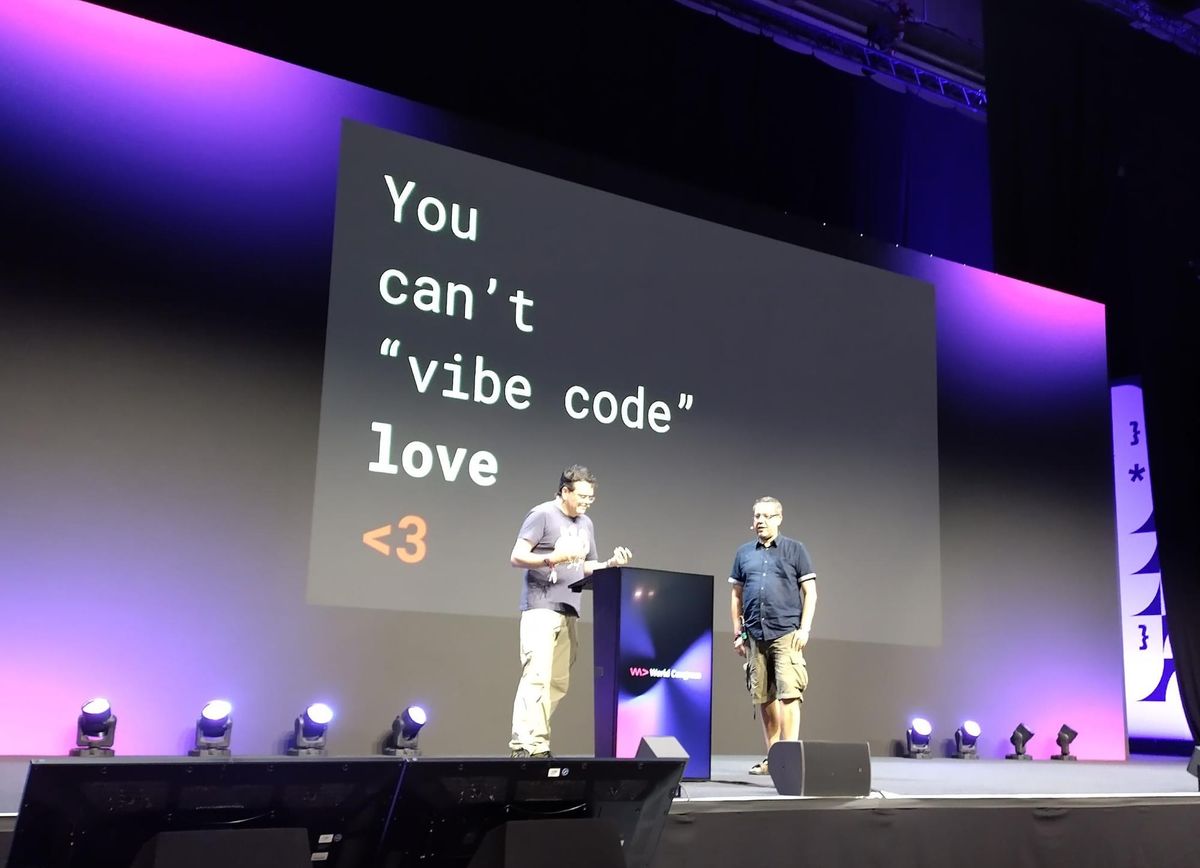
The heart of Atwood and Dumke-von der Ehe’s presentation was not just about technology, but about a deeply human story of connection and collaboration. As Atwood succinctly put it on stage, "The long version of this story is that we changed each others’ lives. The short version is: unicorns." This evocative statement hints at the extraordinary journey of their professional and personal intersection, rooted in the nascent days of Stack Overflow. Ben Dumke-von der Ehe was among the very first community hires at Stack Overflow, recognized for his exceptional contributions and profound understanding of the platform’s ethos. His story, which Atwood encouraged the audience to hear directly from him, is notable not only for his initial integral role but also for his unconventional path of leaving, returning, and then departing again from the company. This dynamic relationship underscored Atwood’s public acknowledgement of a profound debt: "I told Ben, I’m mostly doing this presentation because I owe you so much." This sentiment extended beyond Dumke-von der Ehe to every individual who contributed to Stack Overflow, emphasizing the collective effort that built the platform into a global phenomenon.
Stack Overflow, launched in 2008 by Jeff Atwood and Joel Spolsky, rapidly transformed the landscape of programming assistance. It moved beyond traditional forums and documentation to create a highly efficient, peer-to-peer question-and-answer platform. Its success was predicated on a rigorous moderation system, an upvoting/downvoting mechanism to curate quality answers, and, crucially, a bedrock Creative Commons license. This license ensured that the vast repository of knowledge — the "commons" — built by millions of developers through their questions and answers remained openly accessible and respected the intellectual effort invested. The platform’s influence grew exponentially, becoming an indispensable resource for programmers worldwide, a testament to the power of collective intelligence and open contribution.
Stack Overflow’s Vision and the LLM Revolution
Atwood reiterated Stack Overflow’s original higher-level goals, emphasizing that the platform was designed to make knowledge readily available, often passively. "Passively searching and reading highly ranked Stack Overflow answers as they appear in web search results is arguably the primary goal of Stack Overflow," he stated. He elaborated that ideally, "98% of programmers should get all the answers they need from reading search result pages and wouldn’t need to ask or answer a single question in their entire careers. This is a good thing! Great, even!" This long-held vision finds an unexpected ally in the advent of Large Language Models.

The rise of LLMs like ChatGPT, Google Bard, and other AI-powered coding assistants has introduced a transformative element to this equation. Atwood highlighted one significant benefit: LLMs possess an unparalleled ability to "cut the gordian knot" of duplicate questions, a perennial challenge that he once considered "basically impossible" to fully resolve within traditional Q&A frameworks. The sheer volume of questions on Stack Overflow, which grew from millions to tens of millions, made the act of asking a truly unique question incredibly difficult. Users had to navigate a vast "field of prior art," meticulously avoiding "vaguely similar looking landmines" to ensure their query hadn’t already been addressed. This process often led to frustration, questions being closed as duplicates, and a perceived barrier to entry for new contributors.
LLMs, however, offer a powerful solution. Their advanced natural language processing capabilities allow them to semantically map a newly phrased question, even if it uses entirely different words, to an existing answer with remarkable accuracy. This capacity for intelligent de-duplication is profoundly transformative. It promises less redundancy, faster access to relevant information, and a more streamlined experience for developers seeking immediate solutions. From this perspective, LLMs align with Stack Overflow’s core mission: providing answers quickly and efficiently. The promise is clear: more answers, delivered faster, and with less friction.
The Looming Threat to the Commons
Despite the acknowledged benefits, Atwood and Dumke-von der Ehe posed a critical, existential question that underpins the future of collaborative knowledge: "But what happens to the commons when everyone is privately whispering to LLMs?" This query strikes at the heart of the community-driven model that built platforms like Stack Overflow. If developers increasingly turn to private AI chatbots for immediate answers, bypassing public forums, what becomes of the shared knowledge ecosystem?
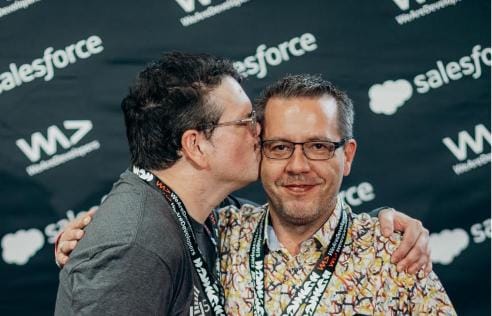
The concern extends beyond mere information retrieval. Stack Overflow, for many, was not just a database of answers but a vibrant community where programmers learned from each other, honed their skills, and even found career opportunities. Ben Dumke-von der Ehe’s own story exemplifies this, having been hired by Stack Overflow precisely for "doing things he loved" within its community. The presentation underscored the profound social and developmental aspects of these platforms. When interaction shifts from public discourse to private AI prompts, the collective learning experience diminishes. The ability to engage in nuanced discussions, receive diverse perspectives, and witness the iterative process of problem-solving—all hallmarks of a thriving community—is potentially lost.
Furthermore, the presenters raised a crucial question about the sustainability of AI itself: "Where exactly will the LLMs get their next set of training data from, if we don’t build for and protect the commons together?" The vast knowledge bases that power current LLMs, including Stack Overflow’s extensive dataset, are products of human collaboration, open contribution, and shared intellectual property, often under licenses like Creative Commons. If the incentive and opportunity for public contribution dwindle, the wellspring of future training data could dry up. This creates a paradoxical situation where the very technology that benefits from the commons could inadvertently dismantle the structures that feed it.
The presentation also touched upon the intangible, yet vital, human element of learning and collaboration. The phrase "You can’t ‘vibe code’ love" succinctly captures this sentiment. Learning to code, solving complex problems, and innovating are often deeply social processes. They involve mentorship, shared struggles, mutual encouragement, and the joy of collective achievement. These "vibes" of community, the unquantifiable human connections and shared passion, are integral to how many developers grow and thrive. Private interactions with an LLM, no matter how efficient, cannot replicate this rich tapestry of human experience and emotional engagement.
Implications for the Future of Knowledge Sharing
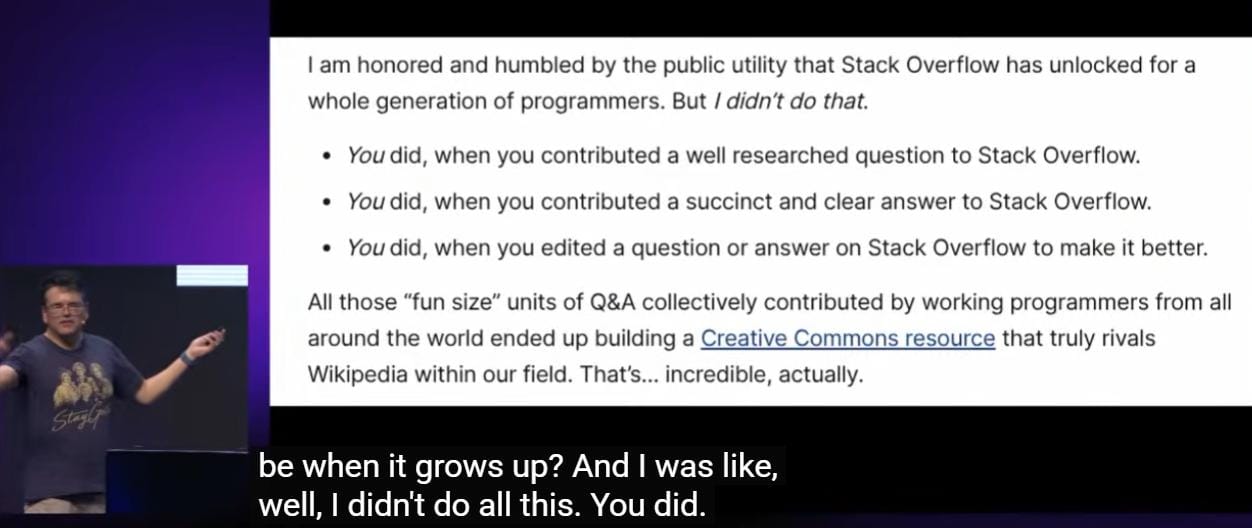
The discussion at WeAreDevelopers World Congress highlighted a critical juncture for the global tech community. The benefits of LLMs in streamlining information access are undeniable, offering unprecedented efficiency in answering common programming queries and resolving the long-standing issue of content duplication. However, these advantages come with a significant potential cost: the erosion of the public knowledge commons and the vibrant communities that fuel it.
The implications are far-reaching. For individual developers, a future dominated by private AI interactions might mean a more solitary learning experience, potentially limiting exposure to diverse problem-solving approaches and the invaluable soft skills gained through community engagement. For the tech industry, a diminished commons could lead to a slowdown in the organic creation of new, openly accessible knowledge, impacting future innovation and the equitable distribution of information. For AI developers, the long-term viability of their models depends on a continuous supply of high-quality, human-generated data. If the mechanisms for generating this data are undermined, the progress of AI itself could be jeopardized.
The call to action from Atwood and Dumke-von der Ehe is clear: there is an urgent need to find a balance. While embracing the efficiencies offered by LLMs, the tech community must actively work to protect and foster the collaborative spaces where knowledge is openly shared, debated, and refined. This involves not only preserving existing platforms but also innovating new models that encourage public contribution and maintain the human connection at the core of learning and development. The question of "How will we continue to share knowledge – and love – with each other?" remains central to ensuring a sustainable, equitable, and human-centric future for technology. The dialogue initiated in Berlin serves as a powerful reminder that while technology advances, the fundamental human need for connection, collaboration, and shared understanding remains paramount.
About the Author