The virtual and augmented reality industry witnessed a transformative week characterized by significant hardware leaks, breakthroughs in generative artificial intelligence, and the somber exit of a pioneer in the enterprise social VR space. Central to these developments is the accidental disclosure of a high-end color passthrough add-on for Valve’s rumored "Steam Frame" headset, alongside the debut of OpenAI’s GPT-6 Astra, a model that industry experts suggest could democratize 3D content creation and accelerate the development of the metaverse.
Hardware Innovation and the Steam Frame Leak
The VR community was galvanized this week when Komodo Station, a primary distributor for Valve hardware in Asian markets, prematurely published a product page for the "Arcturus Vision Camera." This device is a modular add-on designed specifically for the Steam Frame, a headset that has long been the subject of industry speculation. Developed by Arcturus Industries—the computer vision firm responsible for the Steam Frame’s existing tracking architecture—the new module aims to rectify one of the headset’s most criticized features: its monochromatic, low-resolution passthrough.
Technical specifications for the Arcturus Vision Camera indicate a significant leap in mixed reality (MR) capabilities. The module features dual 32-megapixel sensors capable of 10-bit HDR video capture at a per-eye resolution of 2,464 x 2,464 pixels. While the standard operation is set at 60 frames per second (FPS), specialized software configurations reportedly allow for refresh rates of 72 FPS and 144 FPS. Furthermore, the cameras are spaced 64mm apart, matching the average human interpupillary distance (IPD) to provide a natural stereoscopic view.
Beyond simple visual passthrough, the device is marketed as a sophisticated capture system for environment reconstruction via Gaussian Splatting. This suggests that Valve and its partners are moving toward a future where users can rapidly scan physical environments to create high-fidelity digital twins. While pricing remains unconfirmed, the modularity of the Steam Frame continues to distinguish it from the closed-ecosystem approach favored by competitors like Meta.

GPT-6 Astra and the Democratization of 3D Modeling
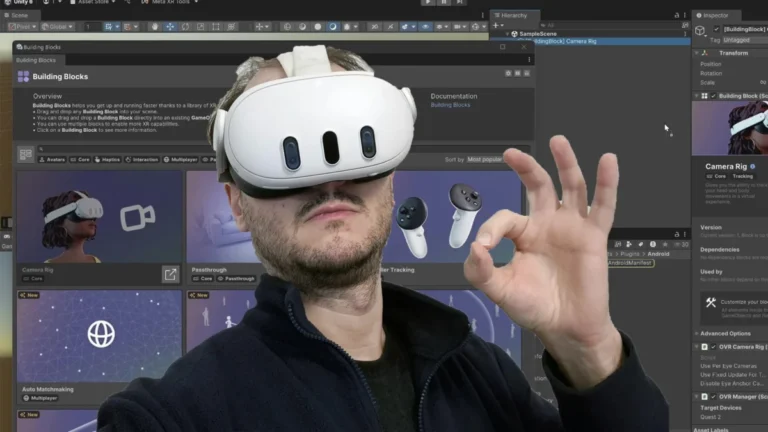
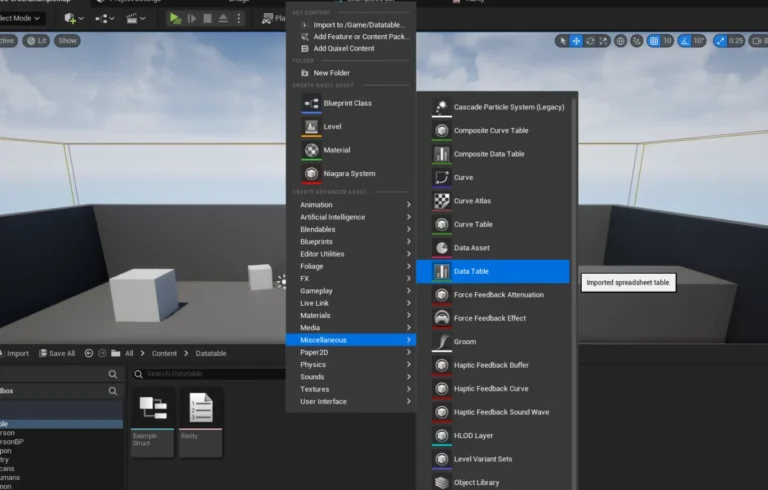
Parallel to hardware advancements, the software landscape was reshaped by the release of GPT-6 Astra. The new AI model has demonstrated an unprecedented ability to generate complex 3D assets and environments from natural language prompts. Early testers reported that the system can interface directly with professional software like Blender and the Unity engine, performing manual modeling tasks by taking control of the user’s interface.
The implications for the "metaverse" are profound. Industry analysts, including Andrew Chen of Andreessen Horowitz (a16z), have suggested that the primary bottleneck for virtual worlds—the high cost and technical skill required for 3D asset creation—is being dismantled. NVIDIA CEO Jensen Huang went as far as to suggest that the capabilities demonstrated by Astra indicate that Artificial General Intelligence (AGI) may have arrived, though other researchers maintain that true AGI requires the ability to learn in real-time rather than relying on static training data.
In practical applications, Astra has already been used to create optimized Unity prefabs with Level of Detail (LOD) settings, effectively automating the work of junior technical artists. While the aesthetic quality of these AI-generated models currently lags behind world-class human artistry, the rate of improvement suggests a looming disruption in the 3D design labor market.
World Labs and the Atlas Reconstruction Model
Adding to the AI momentum, World Labs—a startup co-founded by renowned AI researcher Fei-Fei Li—unveiled "Atlas." This model is designed to reconstruct full 3D scenes from limited 2D video inputs. By analyzing footage from as few as three viewpoints, Atlas can synthesize a "world model" that allows a user to navigate the scene from any perspective, effectively generating a virtual environment from a handful of smartphone videos. This technology complements the hardware capture systems leaked by Valve, pointing toward a future where the barrier between physical and virtual spaces is increasingly porous.
The Liquidation of Engage XR and Market Consolidation
Despite the technological optimism, the industry faced a significant setback with the announcement that Engage XR is entering judicial liquidation. Based in Ireland and listed on the London Stock Exchange, Engage XR was a cornerstone of the enterprise VR sector, providing a platform for remote collaboration, education, and virtual events.

The company’s downfall is attributed to a broader "metaverse fatigue" following the COVID-19 pandemic. As major corporate clients scaled back their virtual presence and a key contract failed to renew, the firm found its path to profitability unsustainable. This follows a trend seen with the closure of Microsoft’s AltspaceVR and recent workforce reductions at Rec Room, signaling a consolidation of the social VR market. Analysts suggest that while the technology is improving, the demand for dedicated social hubs has been superseded by integrated productivity tools and specialized gaming platforms.
Competitive Responses: Meta and the Quest 3
Meta responded to the looming threat of Valve’s Steam Frame by pushing the technical limits of its current hardware. The release of Horizon OS version 2.7 introduced a new display mode for the Quest 3, allowing for refresh rates of 207 Hz, with an experimental developer mode reaching 240 Hz. This update aims to provide the smoothest visual experience currently available on a consumer standalone headset.
Additionally, Meta introduced gamepad emulation for its Touch controllers and is reportedly working on a complete overhaul of the Horizon OS user interface. Leaked footage suggests a move away from the current "floating window" architecture toward a more immersive and intuitive spatial UI.
Industry Briefs and Chronology
- Bigscreen Beyond Price Adjustment: In a rare move for the high-end VR market, Bigscreen announced a permanent price reduction for its Beyond headset. The standard model decreased from $1,019 to $959, while the eye-tracking version dropped from $1,219 to $1,159. The company also resumed production of its redesigned "Halo Mount."
- Valve’s Software Strategy: Reports from hardware analyst Brad Lynch suggest Valve may bundle a free copy of Half-Life: Alyx with every Steam Frame purchase. Speculation remains as to whether this will be the existing PC version or a new standalone port optimized for the headset’s onboard processing.
- Steam Link USB Support: Steam Link has entered a public beta phase for wired USB streaming on Quest headsets. This feature addresses latency issues for users without high-speed Wi-Fi 6E infrastructure, bringing the platform in line with competitors like Virtual Desktop.
- Cultural Recognition: The Ferryman Collective was awarded an Emmy for "Outstanding Emerging Media Program" for their VRChat-based production, Uncanny Alley: A New Day. This marks a significant milestone for VR storytelling, validating the medium within the traditional entertainment industry.
- Legacy Preservation: The "Oculus Home Remitted" project was released this week, allowing users to restore and access their original Oculus Rift home environments. The tool leverages the fact that Meta still hosts these assets on its servers, providing a sense of digital heritage for early adopters.
Analysis of Implications
The events of this week suggest a bifurcated future for the XR industry. On one hand, the hardware market is moving toward modularity and extreme performance, as seen with Valve’s leaked add-ons and Meta’s refresh rate updates. On the other hand, the collapse of Engage XR highlights the fragility of the "metaverse" as a pure social or enterprise concept.
The most significant long-term driver, however, appears to be generative AI. If GPT-6 Astra and World Labs’ Atlas can continue their current trajectory, the cost of building virtual worlds will plummet. This could lead to a resurgence of interest in VR, not as a social platform, but as a personalized, AI-generated extension of the physical world. The arrival of these tools, combined with high-fidelity passthrough hardware, suggests that the "Mixed Reality" era is transitioning from a niche experimental phase into a viable consumer and industrial utility.
About the Author