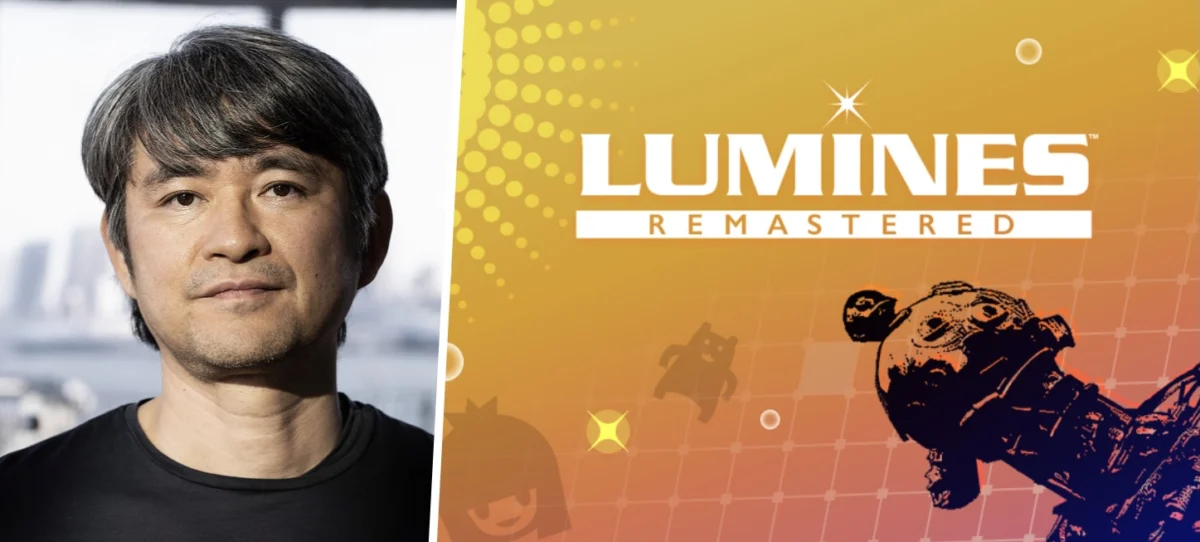
The recent launch of Lumines Remastered on iOS and Android platforms marks a significant turning point for Enhance, the studio led by visionary creator Tetsuya Mizuguchi, as the company explores a broader expansion into the mobile gaming sector. Following the successful summer release of the cult-classic rhythm-puzzler, Mizuguchi has indicated that the transition of his acclaimed portfolio to mobile devices is no longer a matter of "if" but "when." This strategic pivot comes at a time when the mobile landscape is undergoing a fundamental shift, with a growing segment of the global player base demonstrating an increased appetite for premium, high-fidelity experiences over traditional free-to-play models.
The Return of a Handheld Icon
The July release of Lumines Remastered on mobile devices represents the first authentic return of the franchise to its portable roots since its 2018 debut on PC and consoles. Originally a launch title for the PlayStation Portable (PSP) in 2004, Lumines became a cornerstone of handheld gaming, praised for its unique blend of "synesthesia"—the merging of light, sound, and tactile feedback. Mizuguchi, whose career includes the development of iconic titles such as Rez, Space Channel 5, and Child of Eden, views the current generation of smartphones as the natural successors to the dedicated handheld hardware of the early 2000s.
Mizuguchi noted that the DNA of Lumines was always intended for personal, portable devices, even before the smartphone revolution transformed the industry. The decision to bring the remastered version to mobile was catalyzed by the 2023 release of Lumines Arise on PlayStation 5 and PSVR2. The momentum generated by the series’ return to modern consoles provided the necessary impetus for Enhance to seek a partner capable of translating the complex, rhythm-dependent gameplay to a touchscreen environment.
Strategic Partnership with Sound Games
To facilitate a seamless transition to mobile, Mizuguchi’s studio, Enhance, collaborated with Sound Games, a specialized publisher that recently made headlines by raising $6.5 million to focus on premium cross-platform titles. The partnership was driven by Sound Games’ technical proficiency and their ability to maintain the "magic" of the original experience while optimizing it for mobile hardware.
Julian Chunovic, VP of Development at Enhance, emphasized that the choice of partner was critical. Sound Games provided an early prototype that showcased a "buttery smooth" frame rate and high-quality haptic feedback, proving that the technical fidelity of the console version could be preserved. This technical assurance was paramount for Mizuguchi, whose games rely heavily on precise timing and sensory immersion. The prototype served as a proof of concept that mobile devices had finally reached a level of technological maturity where they could support the high standards of the Enhance brand.
Overcoming the Mobile Control Paradigm
One of the primary challenges in porting a rhythm-based game to mobile is the loss of physical buttons. In Lumines, where every block movement must align with the musical beat, tactile feedback is essential. Mizuguchi addressed this by leaning heavily into modern haptic technology. By providing a "texture of feedback," the developers were able to keep players rhythmically locked into the experience, simulating the sensation of physical input on a flat glass surface.
The mobile port also introduced a dual-control system to accommodate different playstyles. For purists, a virtual button layout mimics the original PSP configuration, while a gesture-based system offers a more modern, "mobile-native" experience. Additionally, the game supports external controllers, acknowledging a growing trend among mobile gamers who utilize peripherals for a console-like experience on the go. To address the nature of mobile play—which is often characterized by short bursts and frequent interruptions—the team implemented a robust suspend feature, allowing players to pause and resume their sessions without losing progress.
A History of Lumines on Mobile Platforms
The journey of Lumines on mobile has been iterative and, at times, experimental. While Lumines Remastered is the first direct port of the original vision, it is not the first time the franchise has appeared on the platform:
- 2004: Lumines debuts on the PSP, establishing the "synesthesia" puzzle genre.
- 2006-2012: Various sequels and iterations launch on Xbox Live Arcade, PlayStation 3, and PlayStation Vita.
- 2016: Lumines: Puzzle & Music launches on mobile. Developed by an external studio, this version reformatted the game into a portrait orientation for one-handed play.
- 2018: Lumines Remastered launches on PC, PS4, Xbox One, and Nintendo Switch.
- 2020: Lumines: Puzzle & Music is delisted from app stores due to the high costs of maintaining its live-service infrastructure and licensing.
- 2024: Lumines Remastered arrives on iOS and Android as a "free-to-start" premium title.
Mizuguchi cited the short lifespan of the 2016 iteration as a primary reason for wanting to preserve the original vision of the game in a more sustainable, premium format. The failure of previous live-service attempts highlighted the volatility of the free-to-play market for niche, artistic titles.
The Shift Toward Premium Value in the Mobile Market
Mizuguchi’s optimism regarding the future of his games on mobile is rooted in an observed shift in consumer behavior. For over a decade, the mobile market has been dominated by the free-to-play (F2P) model, which often prioritizes monetization through microtransactions and advertising over cohesive game design. However, Mizuguchi believes that players are becoming more sensitive to how they spend their time.
As the mobile audience matures, there is a burgeoning segment of consumers who are willing to pay upfront for "richer" experiences. This trend is supported by broader industry data. According to recent market reports, while F2P remains the dominant revenue driver, the "Premium Plus" segment—which includes premium ports and subscription-based gaming services like Apple Arcade and Netflix Games—is seeing steady growth.
The decision to use a "free-to-start" model for Lumines Remastered is a calculated compromise. It allows players to experience the core gameplay loop before committing to a full purchase, effectively acting as a high-quality demo. Mizuguchi argues that this approach helps establish the "right expectation of value," ensuring that players understand they are paying for a complete, curated artistic experience rather than a never-ending service.
Technical Fragmentation and the Android Challenge
Despite the optimism, bringing high-fidelity games to mobile is not without its hurdles. Julian Chunovic noted that the team was particularly focused on the Android release, which presents unique challenges due to hardware fragmentation. Unlike the relatively uniform iOS ecosystem, Android devices vary wildly in terms of processing power, screen ratios, and haptic capabilities.
The success of Lumines Remastered on Android has been a point of pride for the team, as it demonstrates that sophisticated rhythm games can be optimized across a wide spectrum of hardware. This technical success serves as a blueprint for Enhance’s future mobile projects. As mobile processors, such as Apple’s A-series and Qualcomm’s Snapdragon chips, continue to narrow the gap with console hardware, the potential for porting other Enhance classics like Rez Infinite or Tetris Effect: Connected becomes increasingly viable.
Broader Implications for the Indie and AA Sector
The moves made by Mizuguchi and Enhance are being closely watched by other developers in the indie and AA space. For years, many studios avoided mobile due to the "race to the bottom" in pricing and the difficulty of standing out in a crowded market. However, the successful migration of high-concept titles like Death Stranding, Resident Evil Village, and now Lumines Remastered to mobile suggests that the platform is being re-evaluated as a legitimate home for core gaming.
Mizuguchi’s philosophy focuses on taking advantage of what technology offers to enable new experiences. For him, mobile is no longer a secondary platform or a place for "lite" versions of console games; it is a primary frontier for innovation. By leveraging advanced haptics, high-resolution displays, and evolving monetization sentiments, Enhance is positioning itself to lead a new wave of premium mobile content.
Ultimately, the goal for Mizuguchi remains the pursuit of innovation and the preservation of his creative legacy. As mobile devices continue to evolve into high-fidelity gaming machines, the industry can expect to see more of Enhance’s catalog making the transition, bringing the studio’s signature blend of music and visuals to a global audience that is increasingly ready to pay for quality.
About the Author