The recently concluded GB Pixel Art Jam 2024, hosted on itch.io’s versatile Jams platform, has once again underscored the enduring appeal and creative potential of the classic Nintendo Game Boy’s distinct aesthetic. This annual event challenged a global community of digital artists to meticulously craft pixel art within the highly restrictive, yet profoundly inspiring, technical specifications of the original Game Boy hardware. Participants were tasked with adhering to a limited four-shade color palette—typically various hues of green or grayscale—and specific resolution and tile-based constraints, pushing the boundaries of creativity through intentional limitation. The overwhelming response, culminating in 378 unique submissions, stands as a testament to the vibrant retro gaming and pixel art communities. As the event officially draws to a close, anticipation is building for the release of a compiled ROM containing all submitted artwork, an innovative method to preserve and experience these digital creations as they were intended, directly on Game Boy hardware or through emulators.
The Enduring Legacy of the Game Boy and Pixel Art
To fully appreciate the significance of the GB Pixel Art Jam, it is essential to contextualize it within the broader history of handheld gaming and digital art. Launched by Nintendo in 1989, the Game Boy revolutionized portable entertainment. Its monochromatic screen, displaying only four shades, became an iconic visual signature. Despite what might now seem like severe technical limitations—a 160×144 pixel resolution and a palette restricted to variations of green/grey—the Game Boy fostered an era of unprecedented creativity in game design and pixel art. Developers learned to convey complex characters, intricate environments, and compelling narratives using minimal visual data, relying on clever dithering, contrast, and animation to imply detail and depth. This era solidified pixel art as a legitimate and cherished art form, distinct from its higher-resolution counterparts.

The aesthetic principles established by the Game Boy continue to resonate with artists and enthusiasts today. Pixel art, far from being merely a relic of past technology, has evolved into a sophisticated medium that celebrates precision, economy of expression, and a unique blend of nostalgia and contemporary artistic interpretation. Its constraints force artists to think critically about every single pixel, making intentional choices that contribute to the overall composition and message. The Game Boy’s legacy is not just about the games it hosted, but also the visual language it helped to define, a language that continues to inspire new generations of digital creators.
Itch.io’s Jams Platform: A Hub for Creative Challenges
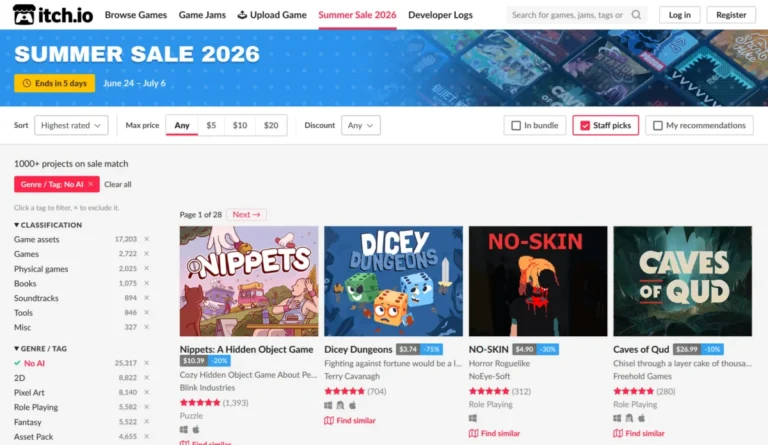
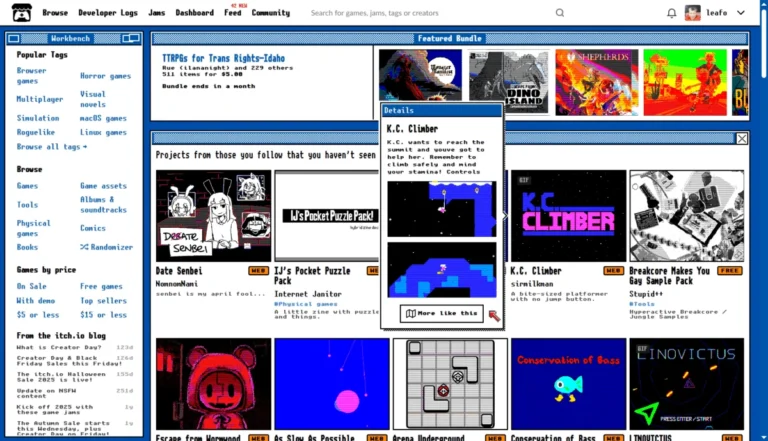
Itch.io, a prominent open marketplace for independent digital creators, has become a vital ecosystem for hosting and promoting various creative challenges, prominently featuring its "Jams" system. The platform’s Jams feature is a highly flexible and robust tool that allows organizers to set up events ranging from game development sprints to art creation contests, all centered around specific themes, tools, or limitations. Over the years, itch.io has observed a vast spectrum of innovative uses for its Jams, from experimental game design to unique digital art showcases like the GB Pixel Art Jam. This adaptability has cemented itch.io’s position as a crucial facilitator for burgeoning and established creative communities alike, providing infrastructure, visibility, and a centralized hub for collaboration and competition.
The success of events like the GB Pixel Art Jam highlights the effectiveness of itch.io’s model. By providing an accessible platform, it lowers the barrier to entry for artists and developers, allowing them to engage with diverse creative prompts without needing extensive technical knowledge for event organization. The platform handles submissions, showcases entries, and often provides tools for community voting and feedback, fostering a supportive and interactive environment. This democratic approach to creative expression has attracted millions of users, solidifying itch.io as a cornerstone of the indie development and digital art scenes.

GB Pixel Art Jam: A Chronology of Constraint-Driven Creativity
While the original article describes the GB Pixel Art Jam 2024 as an "annual event," its exact inception and specific timeline for the 2024 iteration can be inferred to provide a fuller context. Typically, such jams are announced several weeks in advance, allowing participants to register and plan their submissions. The 2024 jam likely followed a similar structure, providing a defined period, usually spanning from a few days to a couple of weeks, for artists to conceptualize, design, and execute their pixel art pieces. For instance, a common jam duration might be from early to mid-March, allowing for submission review and result compilation by late March or early April. The "recently concluded" status indicates that the submission window has closed, and the community is now in the phase of reviewing entries and awaiting the final compilation.
The rules for the GB Pixel Art Jam are consistently strict, a deliberate choice to emulate the original hardware experience. Artists must work within a canvas size that matches the Game Boy’s native resolution, typically 160×144 pixels. The most defining constraint, however, is the color palette: only four distinct shades. This limitation forces artists to master techniques like dithering, where patterns of two colors are used to simulate a third shade, creating an optical illusion of greater color depth. Furthermore, understanding the Game Boy’s tile-based graphics system—where images are constructed from 8×8 pixel tiles—often guides artists in structuring their compositions, even if not explicitly enforced for all submissions, contributing to an authentic "Game Boy feel." These constraints are not seen as hindrances but as creative catalysts, pushing artists to innovate within a familiar yet challenging framework.
Showcasing Artistic Brilliance: A Deep Dive into Selected Submissions
The 378 submissions to the GB Pixel Art Jam 2024 collectively represent a vast spectrum of themes, styles, and artistic interpretations, all filtered through the iconic Game Boy lens. The selected artworks highlighted in the original report offer a compelling glimpse into the talent and ingenuity of the participating artists.
-
"Malibu Dream-Game Boy Art" by BenJelter: This piece evokes a serene, almost nostalgic landscape, characteristic of a tranquil beach scene. BenJelter masterfully utilizes the limited palette to create depth and atmosphere, with subtle shading differentiating sand, water, and sky. The composition likely employs strong lines and clear shapes, common in Game Boy art, to maintain readability despite the low resolution. The overall impression is one of calm, a stark contrast to the often frenetic action associated with some Game Boy titles, demonstrating the versatility of the art form for conveying mood.
-
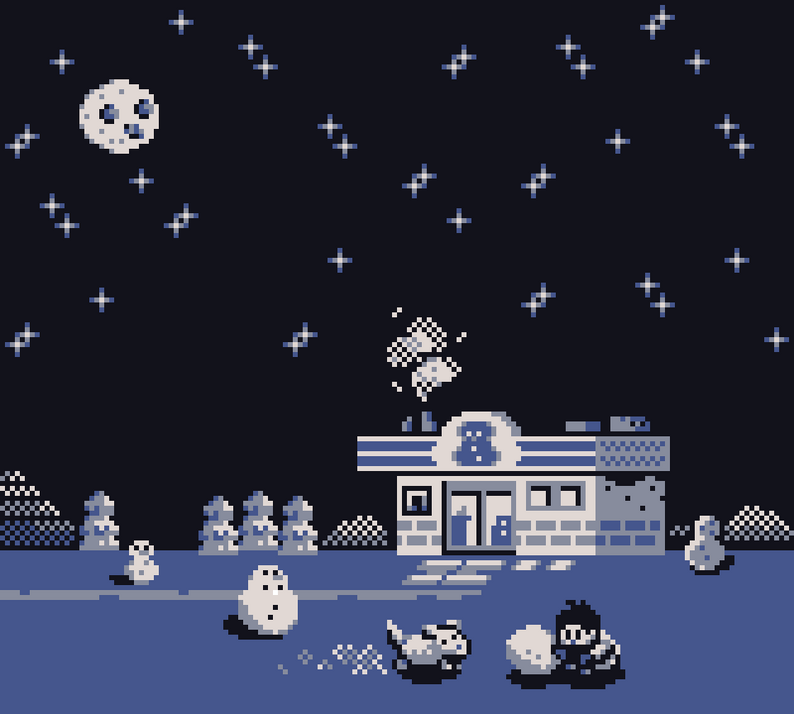
"Night time at Snowball Conbini" by howdy riceball: This submission showcases excellent environmental storytelling. The concept of a "conbini" (convenience store) under a snowy night sky immediately sets a specific, cozy, yet slightly melancholic tone. Howdy riceball’s skill lies in rendering architectural details and atmospheric elements like falling snow or subtle lighting effects using only four shades. The artist likely employed dithering to suggest varying light intensities from the store’s windows or reflections on snowy surfaces, creating a believable nocturnal scene that feels both intimate and expansive.
-
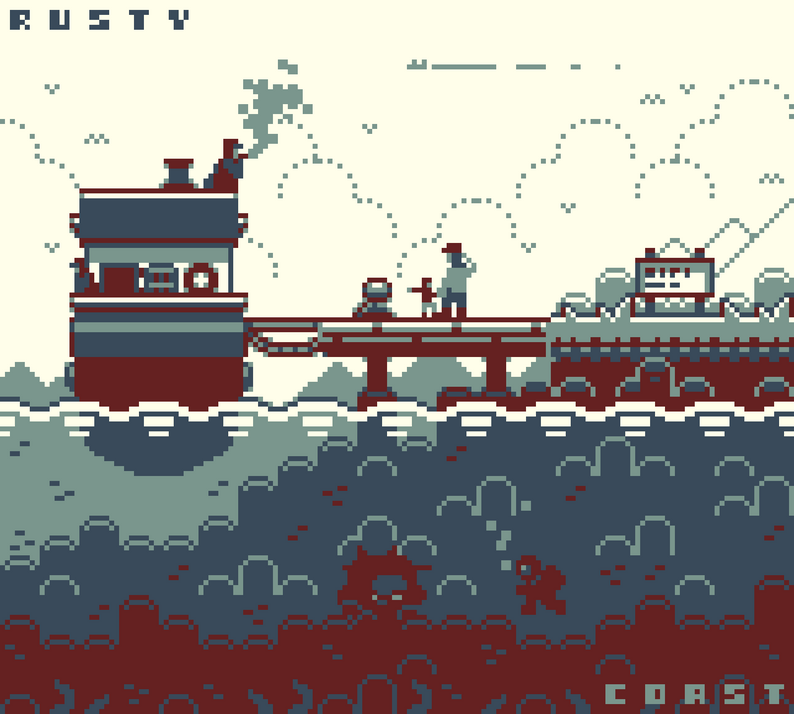
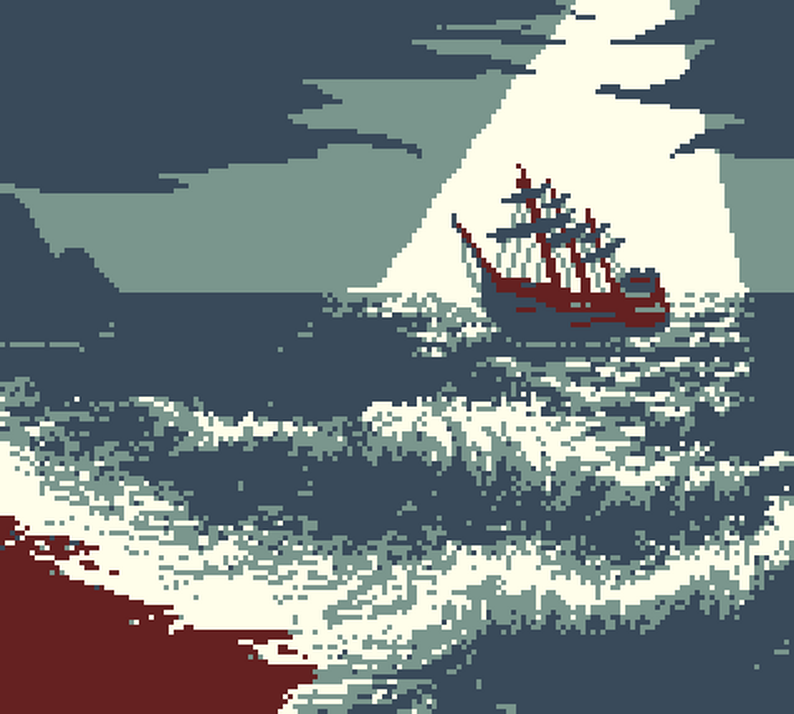
"Rusty Coast" by Birds Probably: This artwork likely focuses on a more rugged, perhaps desolate, landscape. The title suggests elements of decay or natural erosion, which are challenging to depict with a limited palette. Birds Probably would have excelled in rendering textures—the roughness of rust, the irregularity of coastal rock formations, or the movement of water—through careful pixel placement and contrast. Such a piece often relies on strong silhouettes and careful outlining to define distinct objects within the scene, giving it a tactile quality despite its digital nature.
-
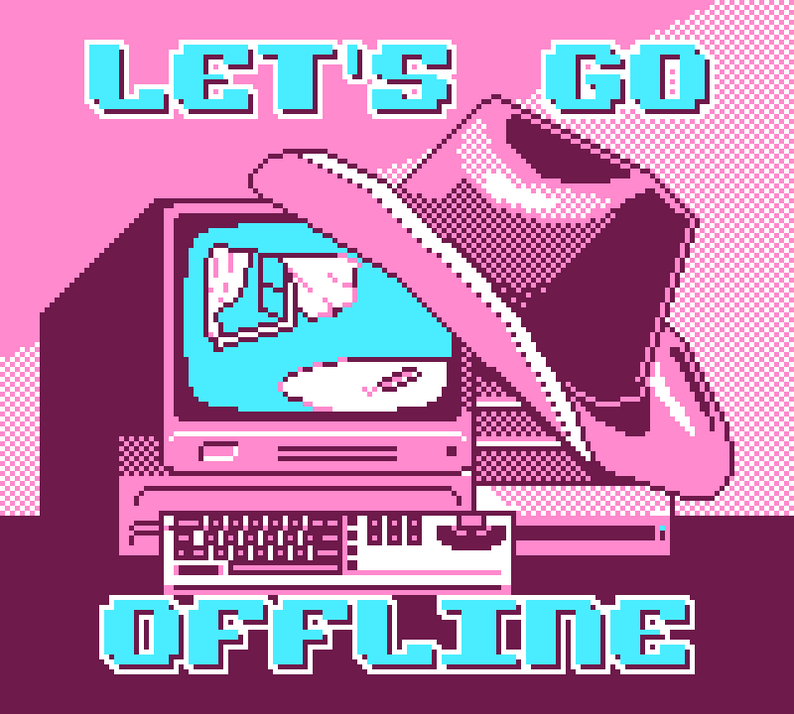
"Let’s Go Offline" by Robert Doman: This piece carries a thematic weight, possibly commenting on modern digital life through a retro medium. The imagery might involve classic Game Boy-era elements, perhaps a character interacting with an old console or a scene that implies a simpler, less connected time. Robert Doman’s contribution likely uses the Game Boy aesthetic to enhance the feeling of nostalgia and reflection, making a statement that resonates deeply with those who grew up with such technology. The use of limited colors can lend a timeless quality to such a theme, emphasizing the core message over visual extravagance.
-
"A Lament for Forgotten Souls" by Annagmo: This title suggests a more somber and emotionally charged piece. Annagmo would have faced the challenge of conveying complex emotions and perhaps abstract concepts like "forgotten souls" using the Game Boy’s visual language. This might involve evocative character design, symbolic imagery, or atmospheric effects that use light and shadow (through varied shades) to create a sense of mystery or sadness. The success of such a piece lies in its ability to communicate a profound narrative or emotional state with extreme visual economy.
-
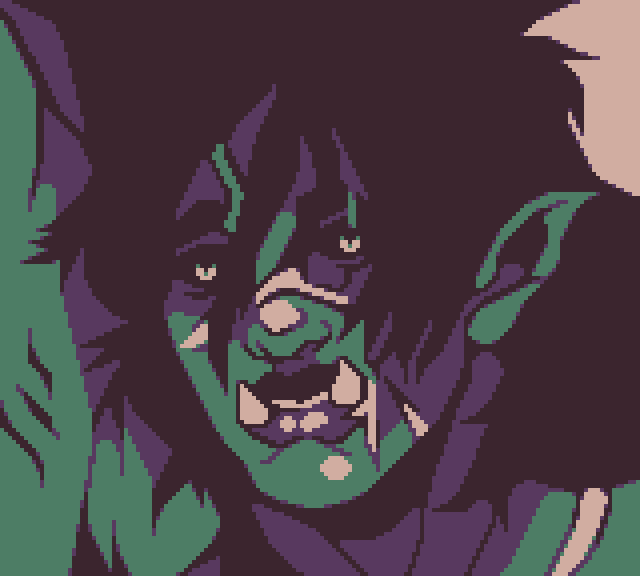
"Aren, Orc Warrioress" by Rohezk: This submission likely features a strong character portrait or a dynamic action pose. Rohezk’s skill would be evident in the detailed rendering of the warrioress’s armor, weaponry, and facial expressions, all within the pixel constraints. Character-focused pixel art often requires precise outlining and strategic use of highlights and shadows to give the figure volume and presence. The artist would have focused on conveying strength and personality through carefully chosen pixel clusters, bringing the character to life within the small canvas.
-
"Swamps’ witch" by BifStek: This artwork conjures images of fantasy and perhaps a touch of eerie atmosphere. BifStek’s challenge would be to depict a mystical character within a natural, potentially murky environment. This could involve intricate details on the witch’s attire or magical elements, combined with the dense textures of swamp foliage and water. The use of the limited palette for a swamp setting would require clever differentiation of muddy waters, ancient trees, and perhaps magical glows, relying heavily on contrast and pattern to build the scene’s distinctive mood.
These selections exemplify the diverse artistic expressions possible within the Game Boy’s restrictive framework, ranging from environmental landscapes and character studies to thematic commentaries and emotional narratives. Each artist demonstrates a profound understanding of pixel art principles and a creative approach to overcoming technical limitations.
The Significance of the Compiled ROM
One of the most exciting outcomes of the GB Pixel Art Jam 2024 is the impending release of a compiled ROM containing all submitted artwork. This initiative elevates the jam beyond a mere online gallery, offering a truly authentic way to experience the art. By compiling the images into a Game Boy ROM file, participants and enthusiasts can load the collection onto actual Game Boy hardware via flash carts or experience it through Game Boy emulators on modern devices. This method provides an immersive, historically accurate viewing experience, allowing the art to be seen precisely as it would have appeared on the original console.
This practice holds significant cultural and archival value. It acts as a digital preservation effort, ensuring that these contemporary creations, made in homage to a classic platform, are saved in a format native to that platform. It bridges the gap between modern digital art creation and retro hardware, celebrating the enduring functionality and aesthetic of the Game Boy. Furthermore, it reinforces the sense of community among participants, as their individual efforts are consolidated into a collective digital artifact, accessible and shareable for years to come.
Broader Impact and Implications for the Creative Community
The GB Pixel Art Jam 2024, like its predecessors and other similar events on itch.io, carries several important implications for the digital art and retro gaming communities.
Firstly, it serves as a powerful reminder that creative limitation can be a profound catalyst for innovation. In an era of increasingly powerful hardware and expansive digital tools, these jams encourage artists to refine their fundamental skills and push the boundaries of what can be achieved with minimal resources. This discipline often translates into stronger artistic principles that benefit creators regardless of the medium they ultimately choose.
Secondly, these events foster a strong sense of community and shared passion. The act of creating art under a common theme, submitting it to a public platform, and seeing it alongside hundreds of other interpretations builds camaraderie and encourages peer learning. The feedback loops, even informal ones, contribute to artistic growth and inspire continued participation.
Thirdly, the consistent success of such niche jams reinforces itch.io’s role as a vital platform for diverse creative endeavors. It demonstrates the platform’s ability to support not just commercial game development but also artistic expression, experimentation, and community building around specific technical or aesthetic challenges. This commitment to variety attracts a broad user base and strengthens the overall indie creative ecosystem.
Finally, the GB Pixel Art Jam contributes to the ongoing cultural conversation about retro aesthetics and their place in contemporary art. It shows that the "pixelated" look is not merely a nostalgic trend but a legitimate and expressive artistic style with its own set of rules, challenges, and masterpieces. These jams help keep the history of computing and gaming art alive, educating new generations about the foundations of digital visual design while simultaneously inspiring future artistic directions. The success of the 2024 jam confirms that the call to create within the classic handheld’s constraints continues to resonate, promising more fascinating explorations in the years to come.
About the Author