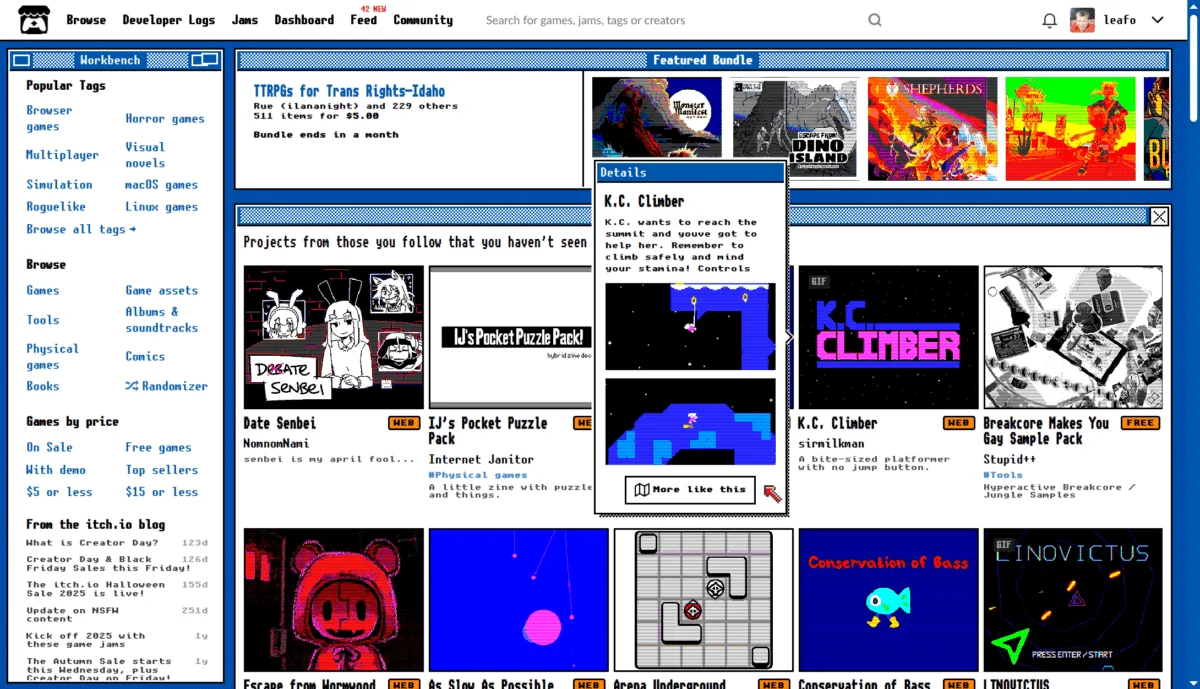
Itch.io, the prominent digital storefront for independent video games, recently concluded its whimsical ‘Ameyega Mode’ April Fool’s Day prank, a temporary transformation of its homepage into a retro-inspired ASCII art interface. The experimental visual overhaul, which offered a stark contrast to the platform’s usual modern design, ran for a limited period around April 1st and has since been reverted to its standard appearance, though a persistent link remains accessible for those wishing to revisit the nostalgic experience. The conclusion of ‘Ameyega Mode’ has prompted reflections on the intersection of digital culture, community engagement, and the inherent challenges of introducing playful, yet potentially disruptive, features on a widely used platform.
The ‘Ameyega Mode’ was publicly announced by itch.io as an April Fool’s Day jest, extending beyond the traditional single-day observance due to a self-acknowledged late deployment. This extension allowed a broader segment of its global user base to encounter the unique visual spectacle. For a period, visitors to the itch.io homepage were greeted not by the familiar graphical interface, but by a meticulously crafted landscape of characters, symbols, and typographic elements, reminiscent of early computing environments and the demoscene aesthetics of the late 20th century. The visual style, explicitly credited to the "unscii" font project by Viznut, effectively leveraged the inherent charm and limitations of character-based graphics to render a fully navigable, albeit distinctly different, version of the website.
The Genesis of a Digital Prank: Ameyega Mode’s Inception and Chronology
April Fool’s Day has long served as an unofficial holiday for technology companies to engage in lighthearted pranks, often showcasing their creative prowess and sense of humor. These annual traditions range from elaborate hoaxes to temporary feature alterations, designed to surprise and entertain their user bases. Itch.io’s ‘Ameyega Mode’ falls squarely into the latter category, a temporary yet significant visual alteration that transformed the platform’s primary gateway. The choice of an ASCII art theme was particularly resonant with segments of the gaming community, tapping into a collective nostalgia for early personal computers, bulletin board systems (BBS), and the foundational aesthetics of digital art.
The event unfolded chronologically around April 1st. While the exact moment of ‘Ameyega Mode’s activation was not precisely detailed, the platform’s communication indicated it went live slightly later than initially intended for an April Fool’s prank. This delay, however, prompted itch.io to extend the mode’s active duration, allowing more users to experience it. The official announcement of the mode’s conclusion came shortly thereafter, confirming its temporary nature. Importantly, itch.io made the ‘Ameyega Mode’ accessible via a specific URL (https://itch.io/?ameyega) for logged-in users, promising its availability until "the next time we make substantial changes to the homepage." This decision offered a compromise, allowing enthusiasts to revisit the unique interface while restoring the standard user experience for the general public.
The ‘Ameyega Mode’ was more than just a static image; it was a fully interactive interface. Navigation elements, game listings, and even user profiles were rendered using character sets, creating an immersive, albeit visually challenging, experience for some. This commitment to a comprehensive transformation, rather than a mere overlay, underscored the technical effort involved in implementing the prank. The use of fonts from viznut.fi/unscii/ was crucial to achieving the authentic retro look, providing the specific character sets that defined the visual language of the mode. This project, known for its pixel-perfect font recreations inspired by classic computer systems, lent a layer of genuine historical accuracy to itch.io’s temporary aesthetic.
Itch.io: A Hub for Independent Creativity and Its Global Reach
To fully appreciate the context of the ‘Ameyega Mode’ event, it is essential to understand itch.io’s position within the broader digital landscape. Launched in 2013 by Leaf Corcoran, itch.io quickly distinguished itself as a creator-friendly open marketplace primarily focused on independent video games. Unlike larger, more corporate digital distribution platforms, itch.io prioritizes flexibility, developer control, and a generous revenue share model, typically allowing creators to keep 90% or more of their earnings. This ethos has fostered a vibrant and diverse ecosystem, attracting a wide array of indie developers, experimental game designers, and niche communities from across the globe.
The platform boasts a catalogue of hundreds of thousands of games, assets, tools, and zines, reflecting its commitment to supporting diverse forms of digital creation. As of recent data, itch.io hosts well over 500,000 games and projects, contributed by hundreds of thousands of creators. Its user base, while often described as more niche than mainstream platforms, is highly engaged and passionate, valuing the platform’s independent spirit and its role in discovering unique, experimental, and often overlooked titles. This deep connection with its community is a cornerstone of itch.io’s identity, making any significant alteration to its user experience, even a temporary one, a notable event that resonates across its global user base. The ‘Ameyega Mode’ was, in essence, a direct interaction with this community, a playful nod to shared digital heritage.
Community Reaction: A Spectrum of Sentiment and Key Concerns
The introduction and subsequent conclusion of ‘Ameyega Mode’ generated a lively discussion within the itch.io community, as evidenced by the comments section of the official announcement. User reactions spanned a broad spectrum, highlighting the diverse preferences and needs of the platform’s audience.
On one end of the spectrum, many users expressed genuine delight and nostalgia. Comments such as, "The ASCII art homepage was a delightful throwback – it actually made browsing feel nostalgic and charming. Kudos to the team for the creativity, and props for keeping it available a little longer. Would love to see it return as an optional theme someday!" and "I love how most people hate it, and I’m over there being like jack_nicholson_yes.gif," illustrate a strong appreciation for the retro aesthetic. Some users even advocated for the mode’s permanent inclusion as an optional theme, stating, "I would like for itch.io to change to it permanently. I was sad to find out it was a joke," and "Please please please make an option to keep this, it’s SO much easier to read for me wow I love love love it." These sentiments underscore the appeal of vintage computing aesthetics and the platform’s ability to tap into a shared cultural memory. The positive reception also lauded the creativity and humor of the itch.io team for executing a comprehensive and engaging prank.
Conversely, a significant portion of the community encountered difficulties and expressed frustration. The primary concerns revolved around usability and accessibility. Several users reported issues with the site’s Dark Mode setting, which appeared to be disrupted by the ‘Ameyega Mode’ overlay. "it’s over but dark mode is not working now…" and "Yeah, and never do it again, please. Because you messed up, Dark mode and I can’t get it to work. And it looks like I’m not the only one who’s having that problem," were common refrains, indicating a technical incompatibility that hindered the user experience for those who rely on or prefer dark themes. One user initially posted about the Dark Mode issue but later updated their comment, stating, "EDIT: four hours after posting this, the front page is showing Dark mode correctly. Apparently they’re paying attention!" This quick resolution demonstrated itch.io’s responsiveness to critical user feedback.
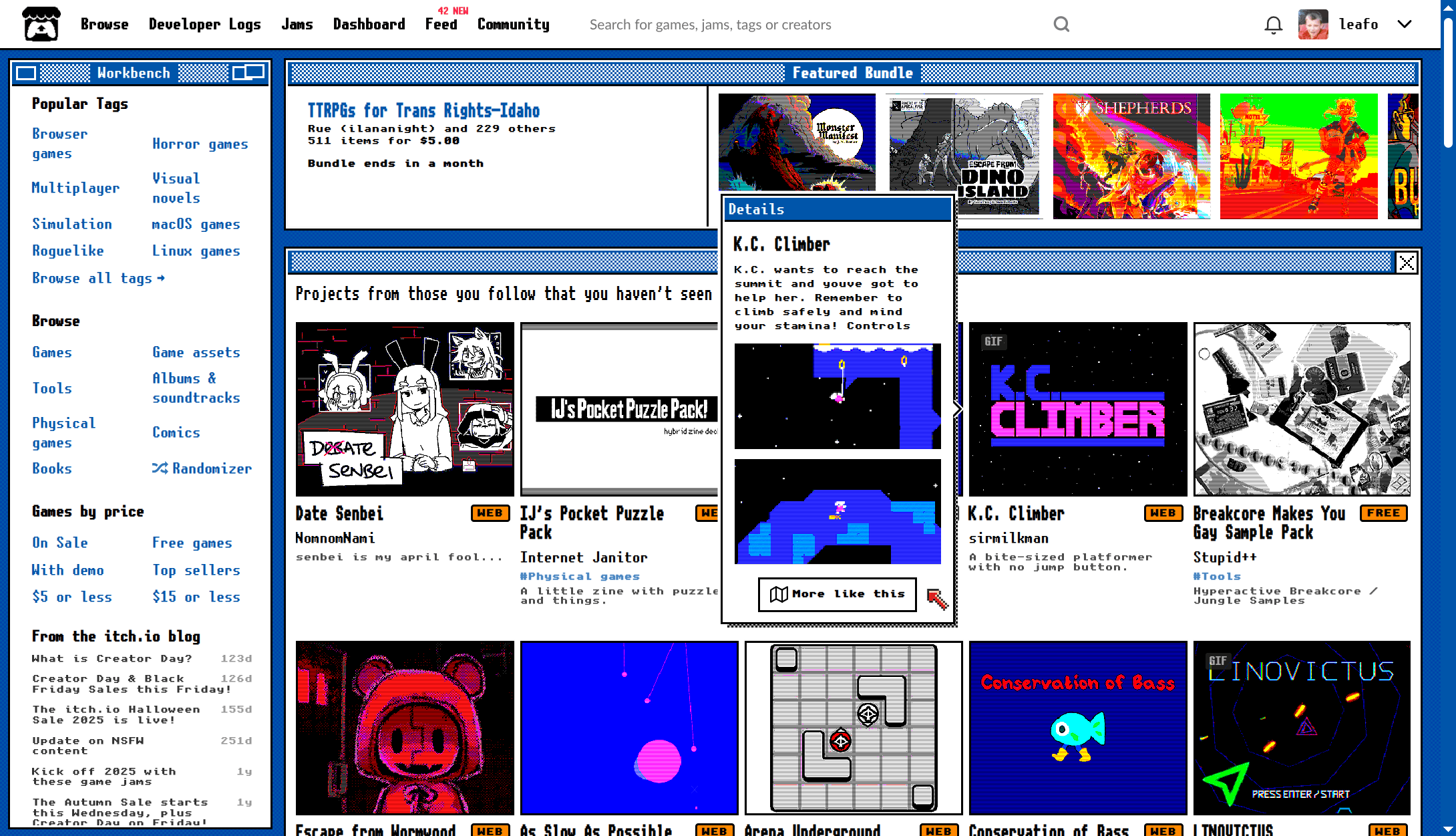
More critically, some users found the ‘Ameyega Mode’ to be genuinely disruptive and even inaccessible. Comments like, "omg please change it back thus is so hard to navigate and there is no option in my feed to see new updates I follow. I hate thisssss," and "Oh so cool, i’m disabled and I CAN’T WATCH THIS! How do you get this crap off?!" highlight the serious implications of visual changes on users with specific accessibility needs or visual impairments. The stark, low-contrast nature of ASCII art, while charming to some, can be genuinely difficult to parse for others, leading to navigation challenges and potential eye strain. These reactions serve as a crucial reminder of the importance of universal design principles, even in the context of temporary, playful features. One user succinctly summarized the sentiment for many: "please do not keep it as a permanent home page theme, it hurting my eyes and from the perspective of having a professional home page, the standard one is better, the new one is nice as a funny thing temporarily but it will feel pretty odd after couple of days."
Technical Craftsmanship and Underlying Challenges
The implementation of ‘Ameyega Mode’ was a non-trivial undertaking for itch.io’s development team. Transforming a modern web interface, built with contemporary HTML, CSS, and JavaScript, into a consistent ASCII art representation requires careful consideration of how layout, images, and interactive elements are rendered using a limited character set. The explicit credit given to http://viznut.fi/unscii/ points to the reliance on specialized retro fonts that accurately emulate the character output of vintage systems. This choice not only provided the aesthetic foundation but also introduced specific constraints and potential compatibility issues with modern web rendering engines and user-defined display settings.
The reported issues with Dark Mode, for instance, likely stemmed from how ‘Ameyega Mode’ applied its styling, potentially overriding or conflicting with the platform’s established Cascading Style Sheets (CSS) for dark themes. While quickly rectified, it underscores the intricate balance required when introducing deep visual changes to a live production environment that serves millions of requests daily. The fact that the mode remained accessible via a direct URL (https://itch.io/?ameyega) for logged-in users, and its stated availability until "the next time we make substantial changes to the homepage," suggests a robust underlying implementation that could be toggled or maintained separately from the primary homepage rendering logic, possibly through a dedicated style sheet or JavaScript-driven renderer. This flexibility allowed for a graceful exit from the prank while preserving it as an easter egg.
Broader Implications and Lessons Learned from the Ameyega Experiment
The ‘Ameyega Mode’ event, despite its temporary nature, offers several insights into platform management, community interaction, and web design, extending beyond a simple April Fool’s joke.
User Engagement and Brand Identity: For itch.io, a platform that thrives on its unique identity and close relationship with its community, such an event serves multiple purposes. It reinforces the brand’s playful and indie spirit, distinguishing it from more corporate competitors like Steam or Epic Games Store. It generates conversation, driving organic traffic and discussion around the platform on social media and within gaming forums. The "top tier jump scare" described by one user indicates successful execution of the prank aspect, fostering a memorable, albeit brief, shared experience among users. Such initiatives can strengthen brand loyalty by demonstrating a human, creative side to the technology company.
The Imperative of Accessibility: The negative feedback, particularly concerning accessibility and Dark Mode compatibility, highlights a critical lesson for all web developers and platform managers. While playful interventions are valuable, they must be designed with inclusivity in mind. Modern web design standards increasingly emphasize accessibility for all users, regardless of their visual capabilities, preferred display settings, or assistive technologies. Even temporary features must undergo scrutiny to ensure they do not inadvertently exclude or inconvenience a segment of the user base. The prompt resolution of the Dark Mode bug by itch.io suggests an active monitoring of feedback and a commitment to rectifying unforeseen issues, underscoring the importance of post-launch vigilance. This incident serves as a case study for how even well-intentioned creative endeavors can inadvertently create barriers if not rigorously tested for diverse user needs.
Future of Optional Themes and Customization: The recurring requests for ‘Ameyega Mode’ to become a permanent, optional theme points to a potential area for future platform development. Offering customizable themes or display modes could empower users to tailor their experience, catering to both aesthetic preferences and accessibility needs. This would allow itch.io to embrace its quirky, retro-loving segment of the audience without imposing a potentially challenging interface on others. Many popular platforms, from social media sites to development environments, offer customizable themes, and itch.io could explore this as a way to integrate the "fun" of Ameyega mode into a user-controlled setting, thereby satisfying diverse user demands simultaneously.
The Role of Transparency: Itch.io’s clear communication that ‘Ameyega Mode’ was an April Fool’s prank, coupled with the explanation for its extended run, contributed to managing user expectations. This transparency is crucial in maintaining trust and mitigating potential frustration when unexpected changes are introduced, especially those that alter fundamental user interface elements.
Conclusion
Itch.io’s ‘Ameyega Mode’ was a memorable April Fool’s Day initiative, successfully blending digital nostalgia with a playful disruption of the user experience. While it garnered significant appreciation for its creativity and retro charm, it also underscored the complexities of web design in a diverse user environment, particularly regarding accessibility and compatibility with existing user preferences like Dark Mode. The event served as a testament to itch.io’s unique brand identity and its commitment to fostering an engaging community. As the platform continues to evolve, the feedback from ‘Ameyega Mode’ will likely inform future design choices, balancing innovative features with the critical need for universal usability and accessibility across its vibrant independent game ecosystem. The lingering link to the ‘Ameyega Mode’ serves as a digital artifact, a reminder of a brief, pixelated journey into itch.io’s past, available for those who wish to revisit the character-laden homepage until its next major overhaul.
About the Author