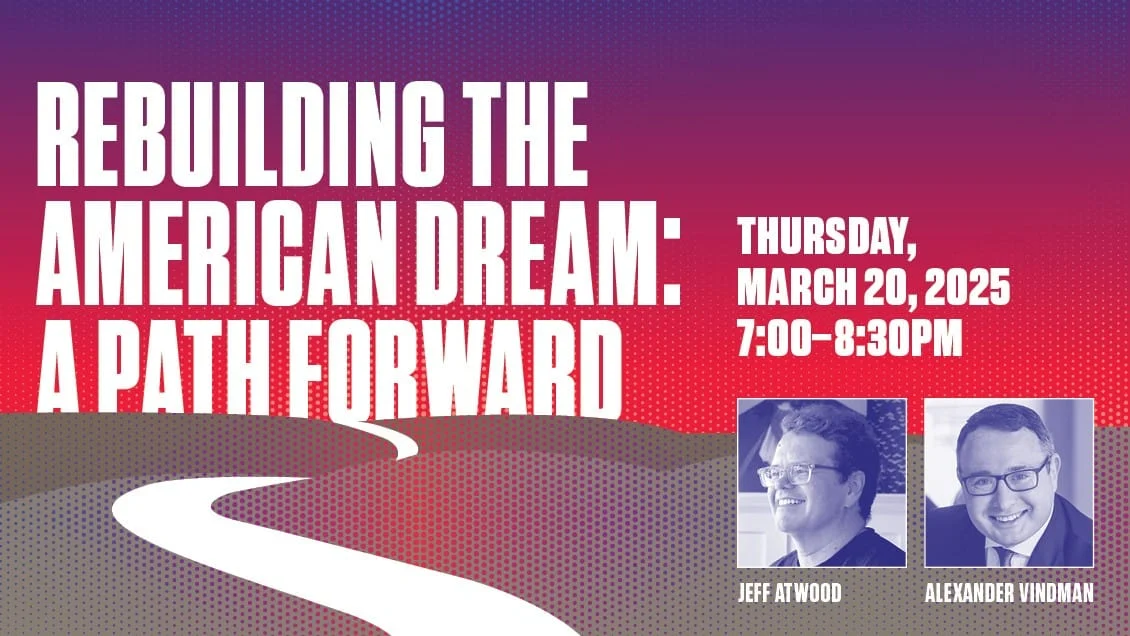
New York, NY – The historic Cooper Union Great Hall recently hosted a pivotal discussion titled "Rebuilding The American Dream: A Path Forward," featuring renowned internet architect Jeff Atwood and distinguished former National Security Council official Lieutenant Colonel (Ret.) Alexander Vindman. The event, held exactly 14 days from its announcement, brought together two figures from vastly different professional spheres to tackle one of the nation’s most pressing contemporary questions: how to evolve the American Dream to ensure it is attainable for all citizens in an increasingly complex 21st century. The conversation, which was streamed live via the Cooper Union Great Hall YouTube channel, underscored the critical need for proactive engagement, difficult conversations, and systemic changes to uphold the nation’s foundational ideals.
A Historic Venue for Timely Discourse
The choice of the Cooper Union Great Hall for this significant event was itself symbolic, grounding the forward-looking discussion in a rich legacy of American intellectual and political discourse. Established in 1859, the Great Hall has served as a crucible for some of the nation’s most defining debates and speeches, most famously Abraham Lincoln’s "Might Makes Right" speech in 1860, which is widely credited with propelling him to the presidency. Over the decades, luminaries from Frederick Douglass and Susan B. Anthony to sitting U.S. Presidents and global leaders have graced its stage, addressing issues of civil rights, social justice, and national identity. This historical backdrop lent an added gravitas to Atwood and Vindman’s exploration of the American Dream, implicitly linking their contemporary challenge to generations of Americans who have strived to perfect the nation’s promise. The venue itself stands as a testament to the power of public dialogue in shaping the course of a nation, setting a high bar for the depth and impact of the discussions held within its walls. The anticipation surrounding the event highlighted the public’s hunger for substantive conversations that transcend partisan divides and offer tangible pathways for collective progress.
The "Stay Gold" Imperative: A Foundation for Renewal
The discussion built upon Jeff Atwood’s earlier reflections on what it means to "stay gold"—a concept he articulated as actively preserving the most valuable aspects of oneself, one’s community, and the aspirational spirit of the American Dream. This philosophy posits that maintaining these core values is not a passive endeavor but requires continuous effort, intentional action, and a willingness to confront uncomfortable truths about past shortcomings and present challenges. Atwood emphasizes that "staying gold" necessitates hard conversations about the nation’s trajectory: where it has been, where it currently stands, and the collective vision for its future. This active approach served as the philosophical bedrock for the Cooper Union talk, framing the pursuit of the American Dream not as a given right but as an ongoing project of national renewal that demands robust civic engagement from every citizen. The event aimed to translate this philosophical framework into practical strategies for achieving widespread opportunity and security, moving beyond abstract ideals to concrete proposals for societal betterment.
Lieutenant Colonel Alexander Vindman: A Beacon of Civic Duty
Lieutenant Colonel (Ret.) Alexander Vindman brought to the discussion a profound personal narrative of defending American ideals under immense pressure. Born in the Soviet Union and immigrating to the United States as a child, Vindman’s journey from a Brooklyn upbringing to a decorated military career epitomizes a quintessential aspect of the American Dream. His 21 years of service in the U.S. Army included earning a Purple Heart for injuries sustained in Iraq, culminating in his role as Director of European Affairs for the National Security Council. Vindman’s public testimony during the 2019 impeachment inquiry, where he upheld his sworn duty to the Constitution over personal and professional consequences, cemented his status as a principled defender of democratic institutions. His decision, which ultimately cost him his military career, became a powerful symbol of integrity and the moral courage required to safeguard the rule of law. His perspective offered a stark, real-world example of the personal sacrifices sometimes demanded to protect the democratic values underpinning the American Dream, providing a crucial counterpoint to the more theoretical discussions of systemic change. Vindman’s life story resonates with countless immigrants and citizens who view the U.S. as a beacon of opportunity and justice, underscoring the preciousness and fragility of these ideals.
Jeff Atwood: Architecting Digital Democracy and Community
Complementing Vindman’s institutional perspective, Jeff Atwood offered insights derived from his extensive experience in building and managing large-scale online communities. As the co-founder of seminal platforms like Stack Overflow and Discourse, Atwood has spent years grappling with the practicalities of fostering constructive interaction, managing diverse user bases, and establishing fair, transparent systems in digital spaces. His work has involved designing environments that encourage participation, enable productive discourse, and ultimately create "artifacts for the common good," akin to physical public spaces like local parks. Atwood’s key insight is that the principles governing successful digital communities—clear expectations, fair systems, strong boundaries, and a shared sense of purpose—are remarkably analogous to those required for a functioning democracy and a thriving society. He argues that understanding how people interact and self-govern in the digital realm offers invaluable lessons for strengthening civic engagement and democratic processes in the physical world. His unique perspective bridges the gap between technological innovation and societal governance, suggesting that lessons learned in the virtual sphere can be directly applied to the challenges of national unity and purpose.
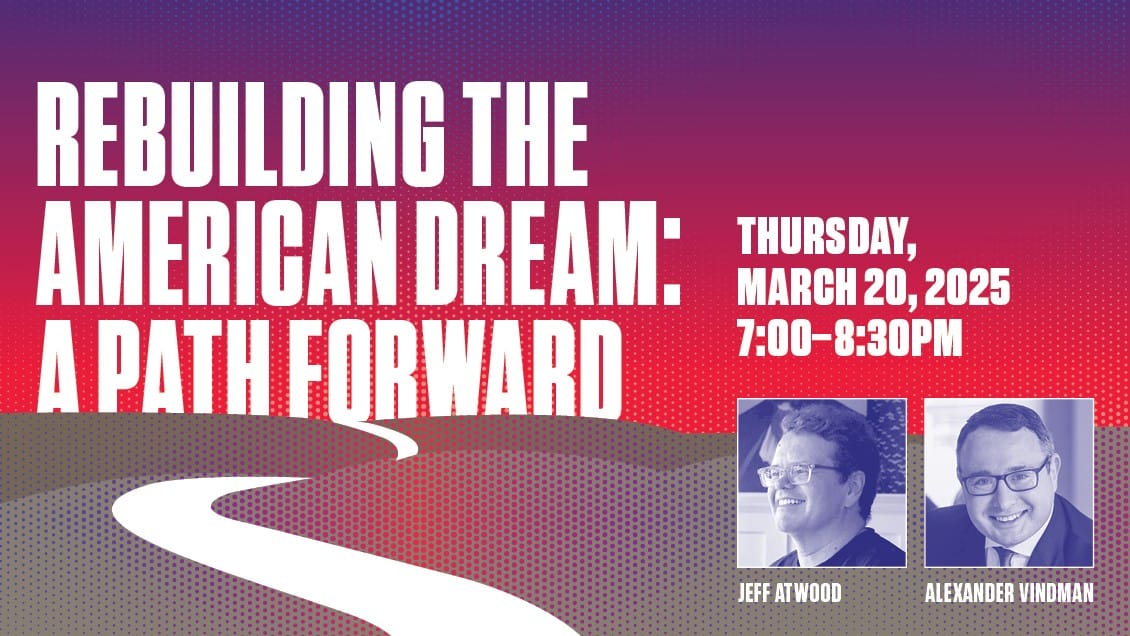
The American Dream in 2025: A Question of Equity and Access
The core premise of the talk was the recognition that, in 2025, the traditional promise of the American Dream—that hard work, fairness, and opportunity lead to a better future—is increasingly perceived as tenuous for many. Data from various economic and social indicators supports this sentiment. Studies by organizations such as the Pew Research Center and the Economic Policy Institute have consistently highlighted widening income inequality, with the top 10% of earners holding a disproportionately large share of the nation’s wealth, while median wage growth has stagnated for decades for many working-class families. Social mobility, once a hallmark of American society, has also shown signs of decline, with children born into lower-income brackets facing increasingly steep obstacles to moving up the economic ladder compared to previous generations. Furthermore, public trust in key institutions, including government, media, and even the electoral process, has eroded significantly, as evidenced by polling data from Gallup and other research firms. These trends suggest a growing disparity in access to opportunity, education, healthcare, and stable employment, leading to a pervasive sense among many citizens that the "dream" is increasingly out of reach. This context established the urgency and critical importance of Atwood and Vindman’s proposed "path forward," acknowledging that merely wishing for a better future is insufficient without structural interventions.
Bridging Divides: Democracy, Community, and Economic Mobility
Atwood and Vindman aimed to explore these complex issues through the interconnected lenses of democracy, community, and economic mobility. Their collaboration highlighted the understanding that these three pillars are interdependent; a robust democracy relies on engaged communities, and both are undermined by significant economic disparities. Vindman’s experiences underscore the fragility of democratic institutions when challenged by internal and external pressures, emphasizing the need for active defense of democratic norms and processes. Atwood’s work, conversely, focuses on building the communal infrastructure—both digital and conceptual—necessary for citizens to engage constructively, fostering a shared sense of purpose and collective responsibility. Together, they articulated how strengthening these interconnected areas could lead to a more equitable and resilient American Dream. Their dialogue promised to delve into specific strategies that address the systemic barriers to economic mobility, promote genuine civic participation, and reinforce the foundational principles of democratic governance, moving beyond superficial solutions to target the root causes of national fragmentation and inequity.
From Individual Generosity to Systemic Solutions: A Call for Structural Change
A central theme of the discussion was the imperative to transition from a reliance on individual generosity and episodic acts of kindness to the implementation of systemic, structural changes that create lasting security, dignity, and possibility for all. This argument posits that while individual philanthropy and good deeds are commendable, they are insufficient to address the deep-seated, institutional challenges that limit opportunity for vast segments of the population. Instead, the speakers advocated for policy reforms and institutional strengthening across various sectors. This includes rethinking educational access and funding to ensure quality learning opportunities for every child, regardless of zip code; reforming economic policies to promote fair wages, reduce wealth disparities, and stimulate inclusive growth; strengthening social safety nets to provide a baseline of security; and safeguarding voting rights to ensure full democratic participation. The goal is to design systems that inherently promote equity and opportunity, rather than depending on individual heroic efforts to patch over systemic deficiencies. This approach requires a shift in mindset from problem-solving on a case-by-case basis to a comprehensive redesign of the frameworks that govern society, ensuring that the benefits of the American system are broadly distributed.
Anticipated Discourse and Key Takeaways
The event was highly anticipated to generate a wide-ranging and impactful discourse, offering not just a diagnosis of the challenges facing the American Dream but also concrete, actionable pathways for moving forward. Attendees and online viewers were expected to engage with ideas concerning how to rebuild public trust, foster more inclusive economic growth, and cultivate a stronger sense of national community. From Atwood’s perspective, this might involve applying principles of transparent governance and fair moderation, learned from digital platforms, to civic institutions. From Vindman’s vantage, it would involve reaffirming the foundational principles of democracy, civic integrity, and the rule of law as non-negotiable elements of national character. The speakers’ diverse backgrounds were expected to yield a multifaceted approach, blending technological insights with deep understanding of geopolitical and democratic pressures. The discussion was poised to encourage a re-evaluation of current approaches to civic engagement and policy-making, inspiring participants to consider how collective action, informed by a shared sense of purpose, can overcome the complex problems facing the nation. The emphasis on "specifics" signaled a commitment to moving beyond abstract rhetoric to practical solutions that can be implemented at various levels of society.
Broader Implications and Future Outlook
The dialogue between Atwood and Vindman at Cooper Union holds significant implications for the ongoing national conversation about America’s future. By bringing together a technologist who builds platforms for human interaction and a military officer who has defended democratic principles on the global stage, the event highlighted the interdisciplinary nature of the challenges facing modern democracies. Their call for systemic change, rather than merely individual generosity, resonates in an era where many feel that existing structures are failing to deliver on their promises. The streaming of the event ensured its accessibility to a global audience, potentially sparking broader conversations among policymakers, community organizers, educators, and citizens about how to foster resilience and equity. The event served as a powerful reminder that the American Dream is not a static concept but a dynamic aspiration requiring constant effort, adaptation, and collective commitment. Their joint appeal for collaboration—"Imagine what we could do if we all worked together"—serves as a rallying cry, emphasizing that the revitalization of the American Dream ultimately depends on a unified national effort to build a more secure, dignified, and opportunity-rich future for every American. The impact of such a high-profile discussion is likely to be felt in subsequent policy debates, community initiatives, and public discourse, reinforcing the idea that safeguarding and enriching the American Dream is a continuous and collective responsibility.
About the Author