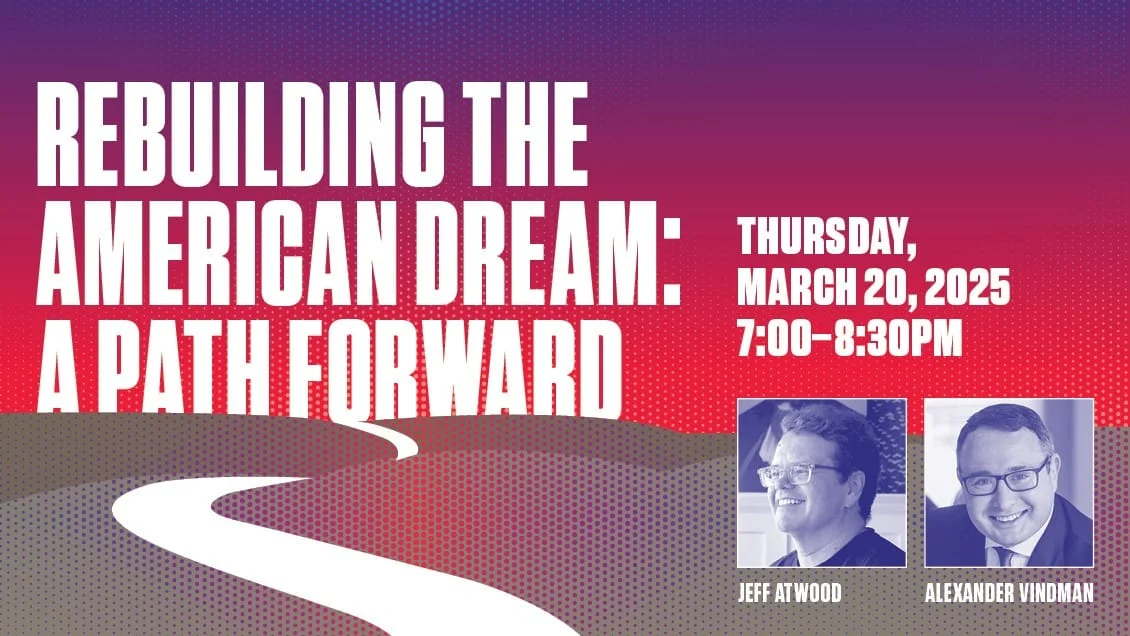
New York, NY – The historic Cooper Union Great Hall, a venerated stage for pivotal American discourse, recently hosted a profound discussion titled "Rebuilding The American Dream: A Path Forward." The event brought together two distinct voices, technology entrepreneur Jeff Atwood, founder of Stack Overflow and Discourse, and decorated U.S. Army Colonel (Ret.) Alexander Vindman, to explore the contemporary relevance and future trajectory of the American Dream. Their joint presentation, held fourteen days after its announcement, aimed to dissect the complex interplay of democracy, community, and economic mobility in shaping a more inclusive future for the nation. The event was live-streamed, underscoring its broad public interest and accessibility.
The Genesis of a Crucial Dialogue: "Stay Gold" as a Guiding Principle
The foundation for this significant gathering was laid months prior with Jeff Atwood’s reflection on the concept of "staying gold." This philosophy, articulated in an earlier blog post, posits that upholding the best aspects of oneself, one’s community, and the American Dream is not a passive endeavor but an active commitment requiring work, decisive action, and often difficult conversations. It necessitates a candid examination of the past, an honest assessment of the present, and a collective vision for the future. The Cooper Union event was presented as a tangible extension of this philosophy, an actionable step in confronting the challenges that threaten the promise of the American Dream.
Atwood, known for building influential digital platforms that foster collaboration and knowledge sharing, emphasized the active nature of preserving societal ideals. His work in creating self-governing online communities, which thrive on clear expectations, fair systems, strong boundaries, and a shared sense of purpose, provided a unique lens through which to view the mechanisms necessary for broader societal resilience. He posited that the principles governing effective digital communities bear striking resemblances to those required for a functioning democracy and a just society.
Distinguished Voices: Unpacking the Speakers’ Diverse Paths to Advocacy
The choice of speakers, Jeff Atwood and Alexander Vindman, underscored the multifaceted nature of the challenges facing the American Dream. Their backgrounds, while divergent, converge on a shared commitment to foundational American values.
Colonel Alexander Vindman: A Life of Unwavering Integrity
Colonel Alexander Vindman’s journey is a testament to the ideals of civic duty and unwavering integrity. Born in the Soviet Union, Vindman immigrated to the United States as a child, growing up in Brooklyn and eventually enlisting in the U.S. Army. His distinguished 21-year military career included service in Iraq, where he earned a Purple Heart for injuries sustained in combat. He rose through the ranks to become the Director of European Affairs for the National Security Council. Vindman gained national prominence for his pivotal role in upholding democratic principles during a period of intense political scrutiny, a decision that ultimately cost him his military career but solidified his reputation as a defender of constitutional values. His willingness to prioritize national interest and ethical conduct over personal gain served as a powerful example of the "stay gold" ethos in action. His lived experience, transitioning from an authoritarian state to embracing and defending American democracy, offered a profound perspective on the fragility and preciousness of democratic institutions.
Jeff Atwood: Architect of Digital Communities and Civic Discourse
Jeff Atwood represents a different, yet equally vital, dimension of civic engagement. As the co-founder of Stack Overflow, a leading platform for programmers, and Discourse, an open-source discussion platform, Atwood has spent years at the forefront of designing digital spaces that facilitate constructive dialogue and collective problem-solving. His work addresses the complexities of online interaction, community governance, and the creation of digital "artifacts for the common good." Atwood’s insights into how clear rules, fair moderation, and a shared purpose can cultivate thriving online ecosystems are increasingly relevant in an era where digital spaces significantly influence public discourse and civic participation. He highlighted that the challenges of fostering fairness, participation, and constructive engagement in a large-scale online forum are not dissimilar to the challenges faced by nations striving to maintain democratic health and social cohesion.
The American Dream in 2025: A Question of Accessibility
The central question posed by Atwood and Vindman was pointed: "How can we build on our dream so that it works for everyone?" This query reflects a growing national sentiment that the traditional promise of the American Dream—that hard work, fairness, and opportunity lead to a better future—has become increasingly elusive for significant segments of the population.
Recent data underscores this concern. A 2023 survey by the Wall Street Journal and NORC at the University of Chicago revealed that only 36% of Americans believe the American Dream is attainable for them, a stark decline from 53% in 2012. Factors contributing to this sentiment include rising income inequality, stagnant wages for many, escalating costs of living (housing, education, healthcare), and reduced intergenerational economic mobility. For instance, studies by the Pew Research Center indicate that while many Americans still value the ideal of upward mobility, actual rates of mobility have remained relatively flat for decades, and for some, have even declined. The median wealth of the top 1% has soared, while that of the bottom 50% has barely budged in real terms over the last 30 years, painting a picture of widening disparities.
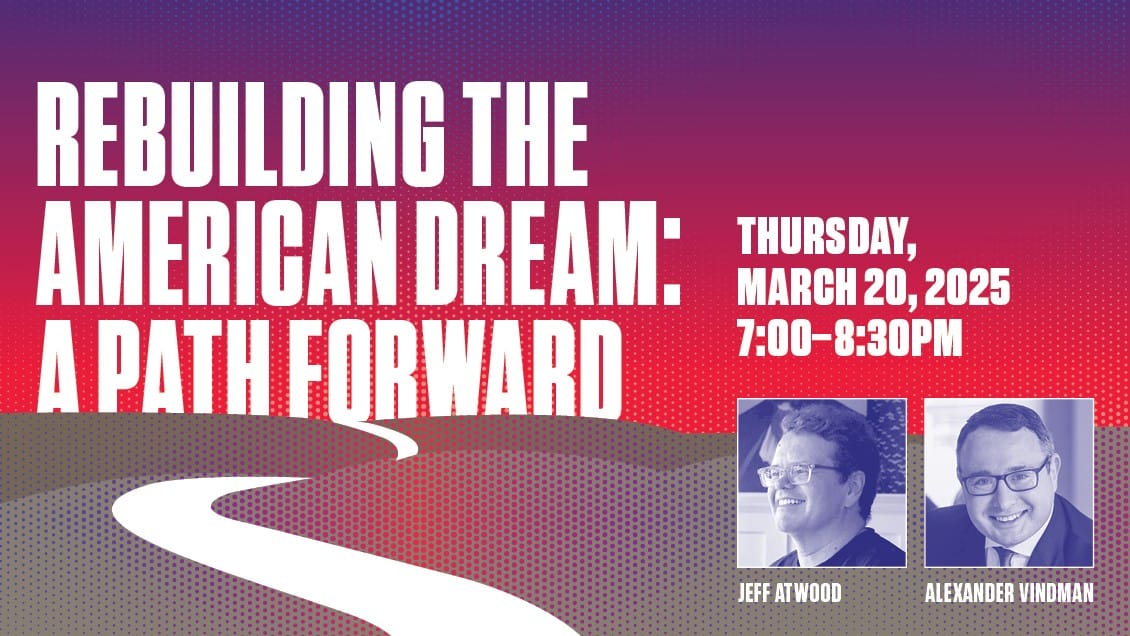
The discussion aimed to move beyond individual anecdotes and delve into systemic issues. It sought to explore how the principles of democracy, community, and economic mobility could be strengthened to ensure that the dream is not just a rhetorical ideal but a tangible reality for all citizens, regardless of their background.
The Historic Venue: Cooper Union’s Legacy of Public Discourse
The choice of the Cooper Union Great Hall as the venue added another layer of historical resonance to the discussion. Founded in 1859 by industrialist Peter Cooper, the institution was established on the radical principle that education should be "free and open to all." Its Great Hall quickly became a prominent forum for public debate and social change, hosting figures like Abraham Lincoln, Susan B. Anthony, Frederick Douglass, and Mark Twain. Lincoln’s "Right Makes Might" speech in 1860, which helped propel him to the presidency, is perhaps its most famous moment, solidifying its place as a crucible of American democracy.
By hosting Atwood and Vindman, Cooper Union continued its tradition of providing a platform for critical conversations that shape the nation’s future. The institution’s commitment to fostering dialogue on pressing societal issues aligns perfectly with the "stay gold" philosophy, offering a physical space where diverse perspectives can converge to address complex challenges. Representatives from Cooper Union expressed their honor in hosting such a timely and relevant discussion, emphasizing the institution’s role in promoting civic engagement and intellectual exploration.
Beyond Individual Generosity: Towards Systemic Change
A core tenet of the discussion revolved around the necessity of moving "beyond individual generosity and toward systems that create security, dignity, and possibility for all." This distinction is crucial for understanding the speakers’ approach to societal improvement. While individual acts of kindness and philanthropy are valuable, they often represent temporary solutions or ameliorate symptoms rather than addressing root causes. True, sustainable change, the speakers argued, requires structural reforms that embed principles of fairness, opportunity, and security into the very fabric of society.
This perspective aligns with contemporary policy discussions on social safety nets, equitable access to education and healthcare, fair labor practices, and progressive taxation. For instance, the expansion of programs designed to support early childhood education has shown long-term benefits in economic mobility and reduced social disparities. Similarly, debates around universal basic income or robust social security systems are rooted in the idea of providing a foundational level of security and dignity, thereby enabling individuals to pursue opportunities without the constant fear of precarity. Atwood’s experience in building robust, self-regulating digital systems that scale provides a practical framework for thinking about how rules and infrastructure can enable broad participation and equitable outcomes.
The Interplay of Democracy, Community, and Economic Mobility
Atwood and Vindman aimed to illustrate how these three pillars are inextricably linked.
- Democracy: A healthy democracy relies on an informed, engaged citizenry and robust institutions that protect rights and ensure fair representation. Vindman’s career epitomized the defense of these institutions.
- Community: Both physical and digital communities provide the social capital, support networks, and collective action necessary for individuals to thrive and for democratic processes to function effectively. Atwood’s work directly addresses the architecture of such communities.
- Economic Mobility: The ability to improve one’s economic standing, often through hard work and opportunity, is a cornerstone of the American Dream. When economic mobility falters, it can erode faith in democratic systems and fragment communities.
The speakers highlighted that a weakening in one area inevitably impacts the others. For example, declining economic mobility can lead to disengagement from democratic processes, while fractured communities can hinder collective action needed to advocate for systemic economic reforms. Conversely, a strong democratic framework can protect and foster communities, which in turn can push for policies that enhance economic opportunity.
Anticipated Impact and Broader Implications
The discussion at Cooper Union was not merely an academic exercise; it was framed as a direct contribution to the national conversation about America’s future. By bringing together perspectives from national security and civic technology, Atwood and Vindman offered a fresh, interdisciplinary approach to perennial challenges.
The implications of their collaboration are significant:
- Inspiring Cross-Disciplinary Solutions: The event demonstrated the value of bridging traditionally disparate fields—military service, national security, and technology development—to tackle complex societal issues. This multi-lens approach can yield innovative solutions that a single disciplinary focus might miss.
- Elevating the Discourse on Digital Civics: Atwood’s insights into building functional online communities provided a practical framework for understanding the challenges and opportunities in digital democracy. As more civic engagement moves online, lessons from successful digital platforms become crucial for fostering constructive discourse and combating misinformation.
- Reinvigorating Civic Engagement: By presenting the American Dream as something that requires active defense and systemic reform, the speakers aimed to galvanize a broader sense of civic responsibility. Their call to "work together" resonated as an appeal for collective action, transcending partisan divides to focus on shared national goals.
- Policy Dialogue: While not directly advocating for specific policies, the event implicitly contributed to the ongoing policy dialogue around economic inequality, democratic resilience, and social cohesion. The emphasis on systemic change over individual generosity could inform approaches to social welfare, education, and economic development.
The event, streamed widely, served as a catalyst for discussion, inviting viewers and participants to consider not just the "what" but the "how" of rebuilding the American Dream. The promise of "honest, unfiltered conversation about how we move forward, with specifics" suggested a pragmatic approach to tackling problems that often feel insurmountable. The collaboration between a figure who literally defended democratic ideals at great personal cost and one who architected digital spaces for collaborative problem-solving offered a compelling vision: that by combining integrity, innovation, and a shared sense of purpose, a more secure, dignified, and opportunity-rich future for all Americans is not just a dream, but an attainable goal. The question remains for all citizens: what can we achieve if we truly all worked together?
About the Author