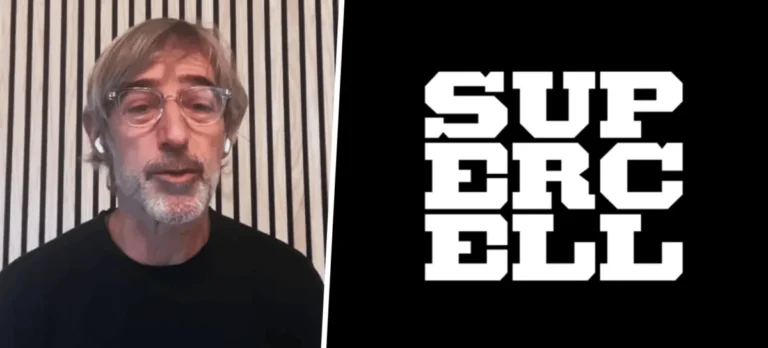
In a candid retrospective that sheds new light on the missed opportunities of the early mobile gaming era, Zynga founder Mark Pincus has disclosed that the company was on the verge of acquiring Supercell for $400 million in 2012. The revelation, shared during an appearance on the Deconstructor of Fun podcast, outlines a pivotal moment in corporate history where a "handshake agreement" between Pincus and Supercell CEO Ilkka Paananen was ultimately vetoed by Zynga’s board of directors. This decision effectively prevented Zynga from owning what would become one of the most profitable mobile gaming portfolios in history, including titles such as Clash of Clans and Hay Day.
The disclosure provides a rare glimpse into the internal frictions that often occur between visionary founders and cautious boards of directors. According to Pincus, the deal’s collapse was not due to a lack of interest from the Finnish developer, but rather a crisis of confidence within Zynga’s own leadership following a series of high-profile financial disappointments.
The Context of the 2012 Handshake Deal
In 2012, the mobile gaming landscape was undergoing a seismic shift. Zynga, which had built its empire on Facebook’s web-based platform with hits like FarmVille and Mafia Wars, was struggling to transition its dominance to the burgeoning smartphone market. Meanwhile, a small Finnish studio named Supercell was beginning to capture global attention.
Pincus noted that at the time, Supercell’s agricultural simulation game, Hay Day, was already significantly outperforming Zynga’s own mobile offerings. "Hay Day was eating our lunch," Pincus admitted during the interview. Furthermore, Supercell had just launched Clash of Clans, a combat strategy game that was rapidly ascending the App Store charts and would eventually become a multi-billion-dollar franchise.
Recognizing the threat and the potential, Pincus leveraged his relationship with Ilkka Paananen to negotiate a $400 million cash acquisition. At the time, such a figure was considered substantial for a mobile startup, yet it paled in comparison to the value Supercell would generate in the following decade.
The Shadow of the OMGPOP Acquisition
The primary obstacle to the Supercell deal was the lingering fallout from Zynga’s acquisition of OMGPOP earlier that year. In March 2012, Zynga had purchased OMGPOP, the developer of the viral hit Draw Something, for approximately $200 million. However, the acquisition quickly soured as the game’s popularity plummeted almost immediately after the deal closed.
The failure of the OMGPOP deal created a climate of risk aversion within the Zynga board. When Pincus presented the $400 million proposal for Supercell, the board reacted with skepticism. "They were grumpy and they said, ‘Until you prove you can manage what you have, we don’t want you to buy anything else,’" Pincus recalled.
The board’s refusal to approve the Supercell acquisition highlights a classic corporate governance conflict. While Pincus saw a "winning hand" that could secure Zynga’s future on mobile, the board saw another potential $400 million loss following a $200 million "failure." Pincus expressed regret over his lack of "conviction" at the time, comparing his situation to the more aggressive management style of contemporary figures like Elon Musk.
Legal Constraints and Corporate Governance
A significant portion of the interview touched upon the legal complexities of the situation. Despite holding voting control of the company at the time, Pincus was advised by Zynga’s legal counsel that forcing the deal through would have required extreme measures. To bypass the board’s disapproval, Pincus would have had to terminate the entire board of directors and replace them with appointees who would support the acquisition.
"He said, you could do this, but to exercise your voting control, you’d have to fire everyone on the board, replace them with your own people, and then you would be sued personally," Pincus explained. Fearing the personal legal ramifications and the potential fallout with Wall Street, Pincus chose to acquiesce to the board’s decision—a choice he now views as a detriment to the company’s long-term trajectory.
The Financial Divergence: Supercell vs. NaturalMotion
The historical data underscores the magnitude of the missed opportunity. In 2013, the year following the failed acquisition, Supercell reported a net profit of $500 million—more than the entire proposed purchase price. Supercell’s valuation continued to soar, eventually leading to a majority stake acquisition by SoftBank and later a multi-billion-dollar acquisition by Tencent. Today, Supercell remains one of the most valuable private entities in the gaming industry.
In contrast, after Pincus stepped down as CEO in 2013, his successor, Don Mattrick, sought board approval for a different major acquisition. In early 2014, Zynga acquired NaturalMotion, the developer behind CSR Racing and the Clumsy Ninja tech demo, for approximately $527 million. Pincus criticized this move, noting that the board approved a more expensive deal for a company he described as having "no revenues, no hit games" compared to the momentum Supercell had possessed.
While NaturalMotion did eventually contribute to Zynga’s portfolio, it did not achieve the transformative cultural or financial impact that Supercell’s titles provided to the industry.
The Return of Pincus and the Path to Take-Two
Pincus returned to the CEO role in 2015, inheriting a company with approximately $1 billion in cash reserves but a stagnant stock price. During this period, Pincus shifted the company’s strategy toward financial stabilization rather than aggressive expansion. He directed $800 million toward stock buybacks at an average price of $2.20 per share.
While Pincus characterized the buybacks as a "good investment"—noting that the company was eventually acquired by Take-Two Interactive for approximately $10 per share in 2022—he admitted that this "defensive" posture prevented further innovation. "I was licking wounds, I was playing defense. I was not my best CEO self," he remarked.
The eventual $12.7 billion acquisition of Zynga by Take-Two Interactive marked the end of Zynga’s journey as an independent entity. While the deal was a success for shareholders, Pincus argued that the company could have achieved a much higher valuation had it secured the "winning hand" of Supercell and maintained a more visionary approach.
A Critique of the Modern Gaming Industry
Beyond the specifics of the Supercell deal, Pincus offered a broader critique of the current state of the global gaming industry. He argued that the "Western world" lacks a gaming company with a market capitalization exceeding $100 billion, a feat achieved by the Chinese conglomerate Tencent.
Pincus attributed this disparity to a lack of vision and innovation among Western executives. "There’s no game companies with any fucking vision today," Pincus stated. "They’re all just playing defense." He suggested that the industry has become overly focused on risk mitigation and incremental updates rather than the bold, genre-defining bets that characterized the early era of social and mobile gaming.
Chronology of Key Events
- 2007: Mark Pincus founds Zynga, focusing on social games for Facebook.
- December 2011: Zynga goes public with an initial public offering (IPO) valuation of $7 billion.
- March 2012: Zynga acquires OMGPOP (Draw Something) for $210 million; the game’s popularity begins to decline shortly after.
- Late 2012: Pincus reaches a "handshake agreement" to buy Supercell for $400 million. The Zynga board blocks the deal.
- 2013: Supercell reports $500 million in net profit. Mark Pincus steps down as CEO; Don Mattrick takes the role.
- January 2014: Zynga acquires NaturalMotion for $527 million.
- April 2015: Mark Pincus returns as CEO of Zynga.
- 2015-2016: Zynga executes $800 million in stock buybacks at approximately $2.20 per share.
- March 2016: Frank Gibeau is appointed CEO, succeeding Pincus, who remains Chairman.
- January 2022: Take-Two Interactive announces the acquisition of Zynga for $12.7 billion.
- May 2022: The Take-Two and Zynga merger is officially completed.
Broader Impact and Industry Implications
The story of the failed Supercell acquisition serves as a cautionary tale for the technology and gaming sectors regarding the balance of power between founders and boards. In the fast-moving mobile market of the early 2010s, the delay of even a few months or the rejection of a single deal could alter the trajectory of a multi-billion-dollar industry.
The "defensive" strategy Pincus described is a common phenomenon in maturing industries. As companies grow and become accountable to public shareholders, the appetite for high-risk, high-reward acquisitions often diminishes. However, in the gaming sector, where "hits" drive the majority of revenue, a conservative approach can lead to long-term irrelevance.
If Zynga had acquired Supercell, the combined entity would have likely dominated the mobile charts for the last decade, potentially reaching the $100 billion market capitalization Pincus envisioned. Instead, the industry saw the rise of a fragmented market where legacy players like Zynga eventually became acquisition targets for traditional console publishers seeking a foothold in the mobile space.
Pincus’s reflections suggest that the next major evolution in gaming will require a return to the "founder’s conviction" he felt he lacked in 2012—a willingness to challenge institutional skepticism in pursuit of transformative innovation. As the industry looks toward new frontiers such as cross-platform play and AI-driven development, the lessons of the $400 million "missed hand" remain more relevant than ever.
About the Author