A groundbreaking new add-on for Blender, dubbed "Bed Fit Splitter," promises to dramatically streamline the process of 3D printing large and complex models by automating the segmentation of objects into manageable parts, complete with integrated connection systems. Developed by Hanru Croucamp, this innovative tool addresses a significant bottleneck in the additive manufacturing workflow, enabling hobbyists and professionals alike to overcome the physical limitations of their 3D printer build volumes. The add-on automatically divides a model based on user-defined printer bed dimensions, ensuring each segment fits within the build area. Crucially, it also intelligently designs and carves matching dowel sockets into opposing faces of each split, facilitating precise alignment and robust assembly of the final printed object.
The implications of Bed Fit Splitter extend across various sectors that rely on 3D printing, from hobbyist creators producing large-scale props and art pieces to engineers and designers needing to prototype substantial components. Historically, dividing large models has been a laborious and often error-prone manual process, requiring meticulous planning and execution within 3D modeling software. This manual approach not only consumes considerable time but also increases the risk of misalignments or structural weaknesses in the assembled print. Bed Fit Splitter aims to democratize large-format 3D printing by making this complex task accessible and efficient.
The Genesis of Bed Fit Splitter: Addressing a Persistent Challenge
The development of Bed Fit Splitter emerges from a recognized need within the 3D printing community for more sophisticated tools to handle oversized projects. As 3D printing technology has advanced, allowing for increasingly intricate and large-scale creations, the limitations imposed by the physical build volume of printers have become more apparent. Users often face the dilemma of scaling down their ambitious designs or undertaking the arduous task of manually cutting and joining models.
Hanru Croucamp, the developer behind the add-on, has directly addressed this challenge by creating a solution that integrates seamlessly with Blender, a widely adopted open-source 3D creation suite. The genesis of the project can be traced to observations within the growing community of makers who frequently share their experiences and struggles with printing large objects. The demand for a more automated and intelligent splitting solution has been a recurring theme in online forums and discussions related to 3D printing and digital fabrication. Croucamp’s initiative to develop Bed Fit Splitter appears to be a direct response to these persistent user-driven needs.
Automating the Complexities of Model Segmentation
Bed Fit Splitter operates on a principle of intelligent automation. Users begin by inputting the dimensions of their 3D printer’s build bed. This critical step allows the add-on to understand the spatial constraints it must work within. Alternatively, the tool offers a selection of pre-defined bed sizes, catering to common printer models and further simplifying the setup process.
Once the bed dimensions are established, the user selects the model to be split. Bed Fit Splitter then analyzes the model’s geometry and, based on the provided bed dimensions, calculates an optimal division strategy. The primary objective is to divide the model into the fewest possible parts, a crucial factor for minimizing print time and assembly complexity. The algorithm prioritizes creating equal-sized segments, contributing to a balanced printing process and more uniform structural integrity.
A key innovation of the add-on lies in its automated generation of connection points. For every joint where a model is split, Bed Fit Splitter carves matching dowel sockets into the corresponding faces of the two segments. This ensures that when the printed parts are brought together, they will perfectly align and can be secured with simple dowel pins. This feature eliminates the need for manual design of alignment features, a common pain point in traditional model splitting.
Upon completion of the segmentation, the add-on exports a set of print-ready STL files. Each part is automatically oriented to its best possible print orientation, further optimizing print success rates and reducing the need for manual adjustments in slicing software. In addition to the model segments, Bed Fit Splitter also generates a separate STL file containing a plate of loose dowels, ready for printing. A comprehensive print plan is also provided, meticulously listing each joint and its corresponding dowel configuration, offering a clear guide for the assembly process. The original, undivided object remains intact within Blender, hidden but not deleted, allowing for easy reference or further modifications.
Performance Metrics and User Testing
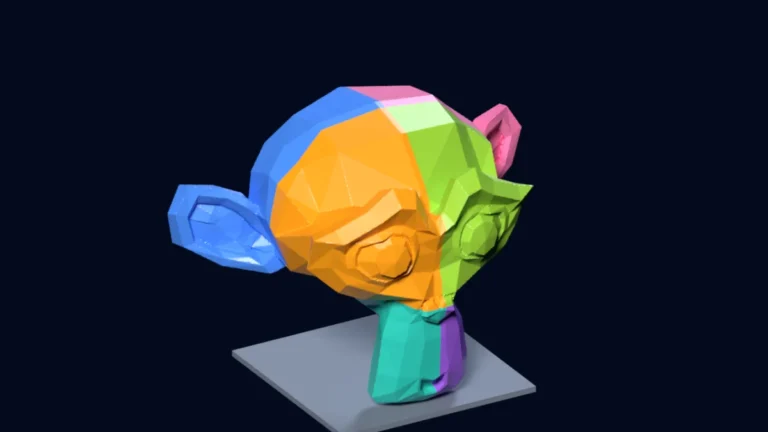
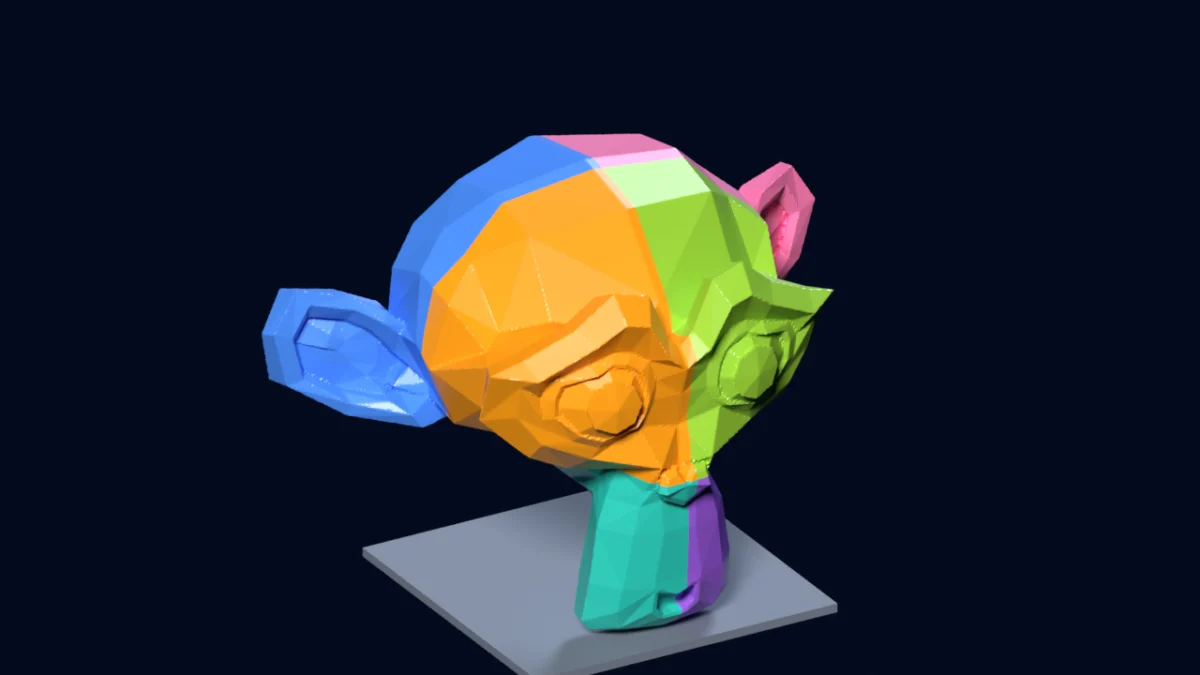
The effectiveness and efficiency of Bed Fit Splitter have been demonstrated through rigorous testing. In a notable test case, a solid 400 mm model of Suzanne, the iconic monkey head from Blender’s test data, was successfully split for a printer with a build volume of 220 x 220 x 250 mm. This substantial object was divided into eight manageable parts, all of which comfortably fit within the specified bed dimensions. The assembly of these eight parts required the integration of 36 dowels, highlighting the add-on’s capability to create a robust and precisely aligned structure.
The processing speed of the add-on is another significant advantage. A complex mesh comprising 1.3 million triangles was split in approximately 15 seconds, even when processed on a modest 2-core CPU. This rapid processing time indicates that the add-on is computationally efficient and will not introduce significant delays into the workflow, even for highly detailed models.
The developer has implemented several validation checks to ensure the integrity and accuracy of the split. The total volume of the exported parts is verified to match the original object’s volume, accounting for the material removed to create the dowel sockets. Each exported part is also checked against the printer’s bed dimensions to confirm it will fit. Furthermore, joints that are too thin to accommodate a dowel are flagged, preventing potential structural failures. These built-in checks provide users with a high degree of confidence in the output of the add-on.

Current Limitations and Future Potential
While Bed Fit Splitter represents a significant leap forward, it is important to acknowledge its current limitations. The add-on primarily employs straight, grid-aligned cuts. This means that users do not have the ability to manually place cuts or create curved segmentation lines. The algorithm automatically determines the cut locations based on its optimization criteria. For certain aesthetic or structural considerations, manual control over cut placement might be desired.
The add-on also requires the input mesh to be "watertight," meaning it must be a solid, manifold object without any holes or internal faces. This is a standard requirement for most 3D printing workflows, but users with non-watertight models will need to clean them up before using Bed Fit Splitter. The dowels generated by the add-on are exclusively round, offering a standard connection method. Finally, the add-on leaves the generation of support structures to the user’s chosen slicing software, meaning supports for the individual parts will need to be added in the slicer.
As of its initial release, Bed Fit Splitter has been tested on Blender versions 4.2 LTS and 5.1 running on Linux. Compatibility with Windows and macOS has not yet been officially confirmed, although it is reasonable to expect broader platform support to be a priority for future development. The add-on is offered with a 30-day refund policy, allowing users to evaluate its suitability for their needs. The licensing is GPL-3.0-or-later, indicating its open-source roots and commitment to community contribution.
Accessibility and Pricing
Bed Fit Splitter is available for purchase at a price of $19. This price point positions the add-on as an accessible tool for a wide range of users, from individual hobbyists to small professional studios. The purchase includes a comprehensive user guide, which is essential for understanding the full capabilities and nuances of the add-on. Additionally, a 400 mm sample model is provided, allowing users to immediately experiment with the tool and appreciate its functionality on a pre-prepared example. This bundled offering enhances the value proposition for new users.
Broader Impact and Implications for the 3D Printing Ecosystem
The introduction of Bed Fit Splitter has several significant implications for the broader 3D printing ecosystem.
Democratization of Large-Scale Printing: By simplifying the most challenging aspect of printing large objects, the add-on lowers the barrier to entry for individuals and organizations looking to create substantial 3D prints. This could lead to an increase in the creation of large-scale artistic sculptures, architectural models, cosplay props, and functional prototypes that were previously impractical or prohibitively difficult to produce.
Efficiency Gains for Professionals: For businesses and studios that rely on 3D printing for rapid prototyping and production, Bed Fit Splitter offers substantial time and cost savings. The automation of the splitting and joint creation process reduces manual labor, minimizes errors, and speeds up the overall workflow, allowing for faster iteration cycles and quicker project completion.
Innovation in Design and Application: With the limitations of print volume more easily overcome, designers and engineers may be more inclined to explore designs that inherently require larger structures. This could spur innovation in product design, leading to the development of larger, more integrated components rather than assembling numerous smaller pieces. The ability to easily split and reassemble models could also open up new possibilities for modular designs in furniture, art installations, and even construction.
Community Growth and Development: The success of tools like Bed Fit Splitter often inspires further development within the 3D printing software community. It highlights the potential for specialized add-ons to address specific pain points and encourages other developers to create complementary tools or enhancements. As the add-on gains traction, it is likely to foster discussions and collaborations around best practices for large-scale 3D printing and model preparation.
Potential for Enhanced Assembly Techniques: While the current iteration focuses on dowel joints, the underlying principles of automated segmentation and connection could pave the way for future developments. Imagine add-ons that could generate interlocking mechanisms, magnetic connection points, or even integrate channels for wiring or other components directly into the split design.
In conclusion, Bed Fit Splitter represents a significant advancement in the field of 3D printing software. By intelligently automating the complex process of segmenting large models and incorporating robust connection systems, it empowers users to overcome the physical limitations of their printers and bring ambitious projects to life with greater ease and efficiency. Its accessibility, coupled with its powerful functionality, positions it as a valuable tool for a wide spectrum of 3D printing enthusiasts and professionals, promising to unlock new creative and practical possibilities in the realm of additive manufacturing. The ongoing evolution of such tools will undoubtedly continue to shape the future of how we design, create, and assemble physical objects.
About the Author