
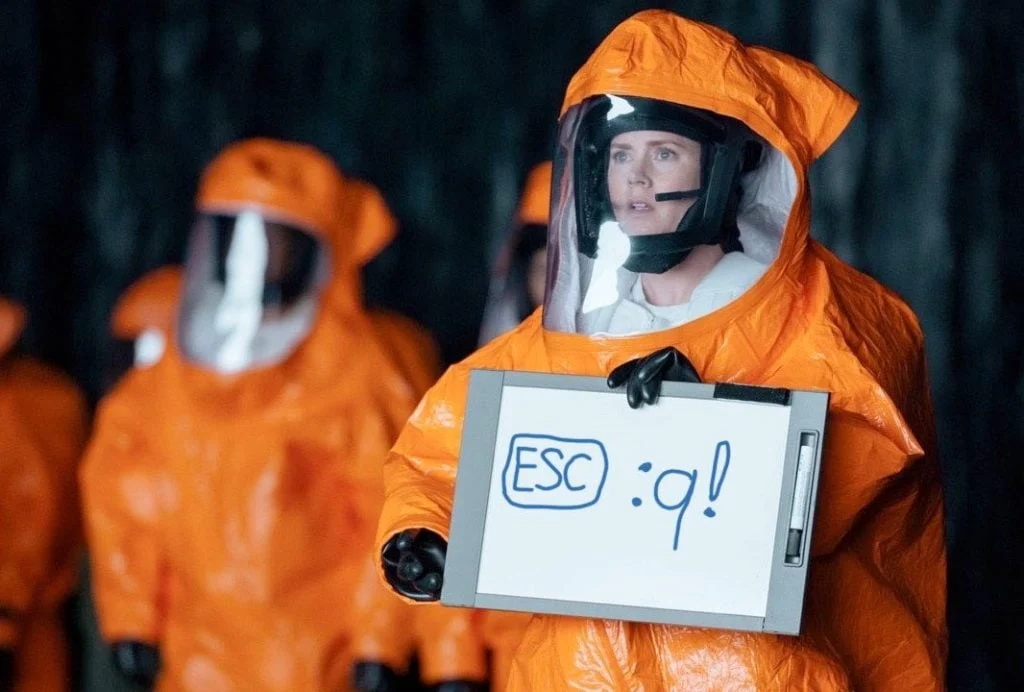
With a universe estimated to be 13.8 billion years old, and our own planet forming approximately 4.5 billion years ago, the profound question arises: given the immense timescale and the sheer number of potential habitats, why have humanity’s extensive efforts yielded no definitive evidence of other intelligent life, or any contact from extraterrestrial civilizations? This cosmic silence, starkly juxtaposed against the statistical likelihood of life beyond Earth, forms the crux of the Fermi Paradox, a perplexing enigma that challenges our understanding of life, intelligence, and the universe itself. The observable universe alone spans an estimated 93 billion light-years in diameter, containing hundreds of billions of galaxies, each hosting hundreds of billions of stars. Scientific advancements in exoplanet detection, notably through missions like Kepler and TESS, have revealed that planets are not only abundant but that a significant fraction reside within the habitable zones of their stars, suggesting that environments suitable for life are commonplace. Yet, despite these promising indicators, our telescopes remain silent, our radio antennae receive no greetings, and no interstellar probes have ever graced our skies. This profound absence of evidence for extraterrestrial civilizations has prompted rigorous scientific and philosophical debate, driving humanity’s relentless quest for answers to one of existence’s most fundamental questions: Are we alone?
The Genesis of a Cosmic Conundrum: Enrico Fermi’s Question
The paradox takes its name from the Italian-American physicist Enrico Fermi, who, in a casual lunchtime conversation in 1950 with colleagues at Los Alamos National Laboratory, famously posed the question, "Where is everybody?" His spontaneous query underscored a seemingly simple yet deeply unsettling contradiction: if the universe is teeming with life, and given its vast age, some civilizations should have had ample time to develop interstellar travel and explore the galaxy, or at least leave detectable signs of their existence. Fermi’s observation was rooted in a logical progression: the Milky Way galaxy, our cosmic home, contains an estimated 200 to 400 billion stars. Even if only a tiny fraction of these stars host planets, and an even smaller fraction develop life, and a minuscule subset of that life evolves into advanced, technological civilizations capable of interstellar communication or travel, the sheer numbers suggest that the galaxy should be bustling with activity. With a potential head start of billions of years on Earth’s relatively young civilization, some of these hypothetical older civilizations should have expanded across the galaxy by now, or at least made their presence known. The lack of any such evidence was, to Fermi, a significant challenge to the assumption of widespread extraterrestrial intelligence.
Quantifying the Unquantifiable: The Drake Equation
Decades after Fermi’s initial query, astronomer Frank Drake attempted to bring a quantitative framework to the discussion with his eponymous Drake Equation in 1961. This probabilistic argument is used to estimate the number of active, communicative extraterrestrial civilizations in the Milky Way galaxy. The equation is expressed as:
N = R* × fp × ne × fl × fi × fc × L
Where:
- N: The number of civilizations in our galaxy with which communication might be possible.
- *R:** The average rate of star formation in our galaxy.
- fp: The fraction of those stars that have planets.
- ne: The average number of planets that can potentially support life per star that has planets.
- fl: The fraction of planets that could support life that actually develop life at some point.
- fi: The fraction of planets with life that go on to develop intelligent life (civilizations).
- fc: The fraction of civilizations that develop technology that releases detectable signs of their existence into space.
- L: The length of time for which such civilizations release detectable signals into space.
While the Drake Equation provides a structured way to consider the variables, the current scientific understanding of many of these factors remains speculative, leading to wildly divergent estimates for ‘N’. Optimistic estimations, often championed by proponents of the Search for Extraterrestrial Intelligence (SETI), suggest that N could be in the millions, implying a galaxy teeming with intelligent life. Conversely, pessimistic interpretations, particularly regarding the fractions for the development of life, intelligence, and the longevity of technological civilizations, can drive N down to one (us), or even less than one. This vast range of possibilities underscores the profound uncertainty at the heart of the Fermi Paradox: is our universe truly barren, or are we simply missing the signals?
The Great Filter: Explaining the Bottleneck of Life
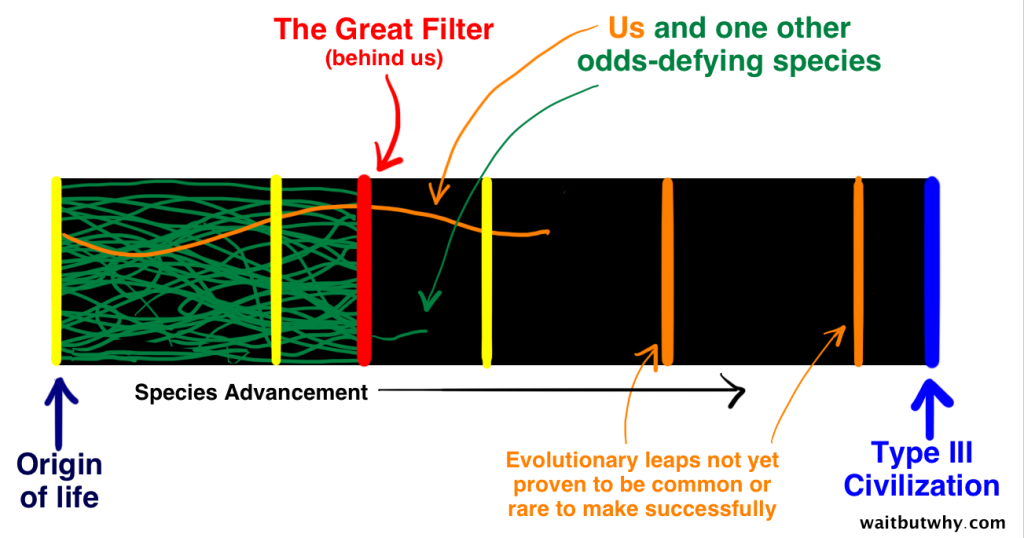
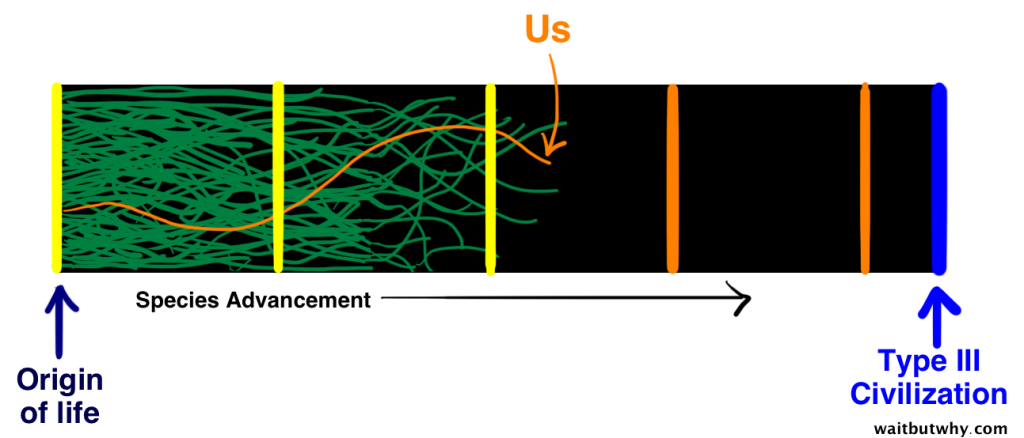
One of the most compelling hypotheses proposed to reconcile the statistical likelihood of extraterrestrial intelligence with the observed cosmic silence is the "Great Filter." This theory posits that at some critical juncture in the long evolutionary pathway from the emergence of simple life to the development of a Type III civilization (capable of harnessing the energy of an entire galaxy, as categorized by the Kardashev scale), there exists a "wall" or an evolutionary bottleneck that all, or nearly all, attempts at life encounter. This stage, highly improbable or impossible for life to overcome, is the Great Filter. The crucial and somewhat terrifying question for humanity is whether this filter lies in our past or our future.
Filters in Our Past: The Unlikelihood of Our Existence
If the Great Filter is behind us, it means that one or more steps in the evolution of intelligent life on Earth were incredibly rare, making our existence an exceptional cosmic fluke. Potential past filters could include:

- Abiogenesis: The transition from non-living matter to self-replicating life. Despite extensive research, the precise mechanisms by which life first arose from primordial soups remain largely unknown and incredibly complex.
- The Emergence of Complex Life: The leap from simple prokaryotic cells to more complex eukaryotic cells, a pivotal event that occurred roughly 2 billion years ago, was incredibly difficult and took a significant portion of Earth’s history.
- Sexual Reproduction and Multicellularity: These innovations allowed for greater genetic diversity and the development of larger, more specialized organisms, dramatically accelerating evolution but potentially representing another improbable step.
- The Rise of Intelligence and Tool Use: The development of a brain capable of abstract thought, problem-solving, and the creation of advanced tools is a unique evolutionary path that might be far less common than generally assumed.
- The "Rare Earth" Hypothesis: This broader concept suggests that the specific combination of astrophysical and geological events that made Earth habitable and conducive to complex life (e.g., a stable star, a large moon, plate tectonics, a magnetic field, the right planetary neighbors) is exceedingly rare.
If any of these stages represent the Great Filter, then humanity’s presence is an astonishing rarity, explaining why we detect no others. This scenario, while humbling, offers a degree of cosmic optimism, as it suggests our greatest challenges may already be overcome.
Filters in Our Future: The Looming Threat
Conversely, if the Great Filter lies in our future, it implies that intelligent civilizations frequently emerge but inevitably face a catastrophic barrier that prevents their long-term survival or galactic expansion. This is a far more sobering prospect, suggesting that humanity itself might be hurtling towards an existential threat. Future filters could include:
- Self-Destruction: The most commonly cited future filter. This includes global catastrophes initiated by intelligent species, such as nuclear war, uncontrolled artificial intelligence, genetically engineered pandemics, irreversible environmental collapse (e.g., climate change), or the unintended consequences of advanced technologies.
- Resource Depletion: Civilizations might deplete their home planet’s resources before they can achieve interstellar travel or sustainable off-world colonization.
- Technological Stagnation: A civilization might reach a technological plateau where further advancement becomes impossible or prohibitively expensive, leading to eventual decline.
- Cosmic Catastrophes: While less likely to be a universal filter due to their localized nature, events like supervolcano eruptions, asteroid impacts, or gamma-ray bursts could wipe out civilizations before they reach interstellar capabilities.
The implications of a future Great Filter are profound, serving as a stark warning about the fragility of civilization and the immense responsibility that comes with advanced intelligence. Our ongoing challenges, from climate change to geopolitical instability, could be viewed through this lens as potential precursors to such a filter.
Beyond Filters: Alternative Explanations for the Silence
While the Great Filter provides a powerful framework, other hypotheses attempt to explain the cosmic silence without necessarily invoking an insurmountable barrier. These theories offer different perspectives on why we haven’t encountered extraterrestrial life.
The Zoo Hypothesis: This intriguing idea suggests that advanced extraterrestrial civilizations are aware of humanity but deliberately choose not to interfere, observing Earth as if it were a protected wilderness preserve or a cosmic zoo. Their non-intervention could be based on ethical principles (e.g., a "Prime Directive" preventing contamination of developing civilizations), a desire to allow natural evolution, or simply a lack of interest until we reach a certain level of development. This hypothesis implies a vast, organized interstellar community operating under a strict code of conduct.
The Dark Forest Theory: A more pessimistic and chilling explanation, the Dark Forest Theory, popularized by Chinese science fiction author Liu Cixin, posits that the universe is a dangerous place. Any civilization that announces its presence broadcasts its location to potential predators. Therefore, the safest strategy for any intelligent species is to remain silent and hidden, lest they attract the attention of hostile or expansionist civilizations. In this scenario, the cosmic silence is not an absence of life, but a terrifying testament to its hidden prevalence, where detection means annihilation.
Technological Limits and Communication Challenges: The sheer scale of the universe imposes immense challenges on interstellar communication and travel. Distances are vast, and the speed of light is a fundamental limit. Even if civilizations exist, they might be too far apart for their signals to reach us, or for us to detect them. Their communication methods might also be entirely different from our radio waves, making them undetectable by our current technology. Furthermore, the lifetime of a technological civilization capable of transmitting signals might be relatively short, meaning we could simply be missing each other in time and space. We might be listening during their quiet period, or they during ours.
The "Small and Fast" Hypothesis: Evolving Beyond the Physical
Perhaps one of the most intriguing and forward-thinking explanations for the Fermi Paradox, championed by thinkers like Jeff Atwood and Seth Shostak, suggests that advanced civilizations may simply evolve beyond detectable, large-scale physical forms. This hypothesis draws an analogy from the history of computing: technology doesn’t get larger; it gets smaller, faster, and more efficient. From colossal mainframes to ubiquitous microchips, the trend is towards miniaturization.
Applied to intelligent life, this theory posits that truly advanced civilizations might transcend their biological origins and eventually shed their physical bodies entirely. Instead of building monumental Dyson spheres or vast interstellar fleets, they might transition into post-biological, computational existences, residing in highly efficient, ultra-dense data structures or even spreading as complex informational patterns throughout the cosmos. As Seth Shostak, a senior astronomer at the SETI Institute, suggests, "Why build planet-size anything when the real action is in the small things? Small spaces, small units of time, everything gets smaller."
This concept implies that advanced intelligence would prioritize efficiency, speed, and information processing over physical grandeur. Such civilizations might exist within microscopic constructs, quantum realms, or even as pure energy patterns, operating at scales and frequencies entirely imperceptible to our current macroscopic observation methods. They might inhabit "the infinite spaces between," as Atwood describes, focusing on internal complexity rather than external expansion. Their technology might be nanobots, self-replicating intelligent dust, or even abstract computational entities inhabiting black holes or quantum foam.
The implications are profound: if intelligent life follows this trajectory, then the universe might indeed be teeming with highly evolved civilizations, but they would be fundamentally undetectable by our current search strategies, which are largely geared towards identifying large-scale engineering projects or radio signals from physical beings. Our inability to perceive them would not be due to their absence, but to our own technological and conceptual limitations in recognizing intelligence in radically different forms. This aligns with the idea that our definition of "life" or "civilization" might be too anthropocentric.
The Time Travel Analogy: A Parallel Absence of Evidence
The Fermi Paradox finds an interesting philosophical parallel in the absence of time travelers from the future. Much like the lack of alien visitors, the apparent non-existence of time travelers is often cited as evidence against the feasibility of time travel itself. If time travel were possible, and given the immense span of future time, it seems logical that at some point, someone would invent it and visit our present, or earlier historical periods. Yet, we observe no such visitors.
While some might argue that time travelers could be discreet or unrecognizable, the sheer volume of "future time" suggests that at least one instance of undeniable proof would likely surface. The absence of such evidence leads many to conclude that time travel, as we envision it, is physically impossible. This analogy reinforces the logical weight of the Fermi Paradox: a phenomenon that, if possible and widespread, should leave observable evidence, yet leaves none. Both paradoxes challenge our assumptions about what is achievable or what exists, forcing us to consider whether fundamental barriers or unknown evolutionary paths preclude certain outcomes.
The Ongoing Search and Profound Implications
Despite the enduring mystery, the search for extraterrestrial intelligence continues with renewed vigor. Projects like SETI and Breakthrough Listen systematically scan the cosmos for radio and optical signals. The rapid acceleration of exoplanet discoveries, from a handful in the 1990s to thousands confirmed today, fuels the search by identifying promising targets. Missions like the James Webb Space Telescope are providing unprecedented insights into exoplanet atmospheres, potentially allowing us to detect biosignatures or technosignatures.
The implications of resolving the Fermi Paradox are staggering, regardless of the answer. If we discover intelligent life, it would fundamentally reshape humanity’s understanding of its place in the universe, sparking profound philosophical, religious, and scientific revolutions. It would validate the cosmic optimism that has driven our search. Conversely, if we definitively conclude that we are alone – perhaps because the Great Filter truly lies in our future – it would place an immense and terrifying responsibility on humanity to safeguard its unique existence, understanding that our survival might be the key to life’s continuation in this vast, silent cosmos.
The Fermi Paradox remains one of science’s most compelling unanswered questions, a profound silence that echoes across the universe, prompting humanity to continuously re-evaluate its assumptions about life, intelligence, and destiny. Whether the answer lies in our cosmic rarity, a looming catastrophe, or an evolutionary path towards an undetectable, post-physical existence, the quest for understanding continues to define our journey as a species peering into the infinite unknown.
About the Author







