
The act of creating art is fundamentally a social endeavor, driven by an innate desire to share, connect, and elicit a response. For many artists, the validation inherent in audience engagement—the simple acknowledgment that one’s message resonates, even with a single individual—is as crucial as the creation itself. This dynamic mirrors human communication: a speaker seeks a listener who comprehends, mirrors, and engages, thereby affirming the value of their words. When this connection is forged, it is validating; when it falters, it provides informative, constructive challenges. This intrinsic need for reciprocal engagement laid the groundwork for the initial promise of the internet as a democratic platform for artistic expression and community building.
The Golden Age of Digital Discovery (Circa 2010)
The advent of the internet, particularly in the late 2000s and early 2010s, sparked widespread optimism for the creation of vibrant online communities. It was envisioned as a boundless space where artists could disseminate their work globally, bypassing traditional gatekeepers and fostering direct interaction with audiences. During this period, the internet’s architecture facilitated a remarkable degree of organic discovery and engagement. Platforms were less sophisticated in their algorithmic curation, often prioritizing chronological feeds or broader exposure. This environment allowed for a more decentralized flow of information, where independent creators could gain significant traction based purely on the merit or novelty of their work.
A compelling illustration of this era’s potential can be seen in the success of numerous independent projects. For instance, an independent game released around 2010, despite being a developer’s inaugural published title and featuring initial bugs or inconsistent artwork, garnered substantial community interaction. Players created fan art, uploaded gameplay videos, and developers were frequently sought for interviews by a multitude of specialized websites. This level of engagement was not the result of massive marketing budgets or sophisticated promotional strategies; rather, it was a testament to a digital landscape where content found its audience through more democratic means. The "blogosphere" thrived, fostering diverse communities and enabling a functioning search infrastructure that prioritized relevance over promotional spend. This period offered a glimpse into an internet where discovery was a default, and the playing field for emerging talent was considerably more level.
The Algorithmic Shift: From Discovery to Domination
However, the trajectory of the internet has fundamentally shifted over the past decade. A series of strategic decisions by major technology companies, coupled with a notable lack of regulatory intervention from governments, has transformed the digital ecosystem into an increasingly "top-heavy" structure. This paradigm shift means that engagement is now concentrated among a diminishing number of high-profile entities, while the vast majority of creators struggle for visibility.
Consider a hypothetical, yet representative, shift in audience distribution: where a decade ago, 100,000 creators might each cultivate a modest but dedicated following of 100 fans, the current landscape sees perhaps only 100 creators commanding audiences of 100,000 or more each. This extreme consolidation is an accelerating trend. The primary driver behind this phenomenon is the evolution of proprietary algorithms that govern content visibility on major platforms—social media, video hosting sites, and even search engines. These algorithms are designed to maximize user engagement (and thereby advertising revenue) by prioritizing content from established entities, viral trends, or content that aligns with specific, often opaque, optimization criteria.
The consequences for independent artists and new voices are profound. The "bar for entry" to achieve any meaningful level of discovery has been artificially raised to unprecedented heights. To gain visibility in the contemporary digital sphere, creators are often compelled to invest heavily in digital marketing, often requiring substantial financial outlays. More critically, the very nature of creative work itself has been warped; content must now be "radically optimized" not for human resonance or artistic merit, but for algorithmic favorability. This often translates to adherence to trending formats, keyword stuffing, or controversial content designed to game engagement metrics, rather than foster genuine connection.
Corporate Consolidation and its Economic Ripple Effect
This algorithmic chokehold is mirrored by broader trends of corporate consolidation across various industries, including the creative sectors. The gaming industry, for example, has seen a dramatic reduction in the number of independent publishers and developers over the past decade. Major players like Activision, Tencent, and Take-Two have acquired numerous studios, leading to a concentration of creative output under a few large corporate umbrellas. This trend is not unique to gaming; it reflects a broader economic pattern where mergers and acquisitions reduce competition and centralize control.
For individual creators, this means fewer independent avenues for funding, publishing, and distribution. The increased corporate control dictates market trends, often favoring blockbuster titles or established franchises over experimental or niche projects. This environment further exacerbates the challenges posed by algorithmic gatekeepers, making it exceptionally difficult for emerging talent to carve out a space without significant capital or institutional backing. The cumulative effect is a creative economy where the "pie" of potential players or consumers is increasingly divided among fewer "creators," who themselves are often backed by large corporations or are forced to adopt a highly commercialized, algorithm-driven approach to their art.
The Regulatory Vacuum: A Missed Opportunity
The current state of the internet, characterized by its top-heavy structure and algorithmic dominance, was not an inevitable outcome. Experts and policy advocates argue that it is a direct consequence of governmental inaction, specifically the failure to adequately enforce existing anti-trust laws and to introduce new legislation necessary for safeguarding the internet’s initial vision.
Anti-trust laws, designed to prevent monopolies and promote fair competition, have largely remained dormant in the face of the burgeoning power of tech giants. This lax enforcement allowed these companies to acquire smaller competitors, consolidate market share, and dictate terms of engagement without significant challenge. Furthermore, the absence of new legislation to address the unique challenges of the digital age—such as data privacy, algorithmic transparency, and platform neutrality—has permitted a regulatory vacuum. This vacuum enabled platforms to evolve in ways that prioritized corporate profit over public benefit, leading to the erosion of organic discovery, the stifling of independent voices, and the fragmentation of online communities that once defined the "blogosphere" era. Had governments taken proactive steps to maintain principles of an open internet, the digital landscape for artists and audiences could have been vastly different, fostering genuine discovery and a more equitable distribution of attention.
The Open Mic: A Beacon of Equitable Engagement
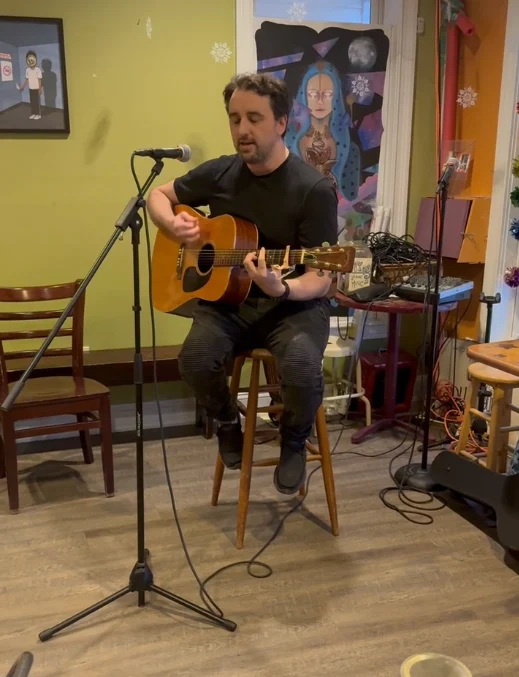
In stark contrast to the labyrinthine, algorithm-driven world of the modern internet, the physical space of an "open mic" event stands as a powerful metaphor for equitable, direct human engagement. At an open mic, the corporate intermediaries, algorithms, and financial barriers that plague online artistic endeavors are rendered irrelevant.
Here, every participant is granted an equal opportunity—typically 3 to 5 minutes—to share their creative output, be it a poem, a musical performance, a stand-up routine, or simply a personal reflection. The environment is inherently democratic and inclusive, welcoming individuals from all walks of life, regardless of age, background, physical appearance, or socioeconomic status. The shared space fosters a unique spirit of curiosity and mutual respect. There are no algorithms dictating who gets seen, no million-dollar marketing budgets creating artificial buzz, and no corporate conglomerations shaping the content. The only common denominator is the shared presence of individuals in a physical space, united by a desire to experience and share art.
While it is true that much of the broader "IRL" art world is not as egalitarian as an open mic, often featuring its own arbitrary barriers, biases, and commercial influences, the open mic offers a crucial distinction: it is largely detached from significant financial incentives. The absence of substantial monetary gain for performers removes many of the forces that drive corporate interference and market consolidation in other artistic domains. This makes the open mic a potent symbol of what truly open and equitable platforms for creative expression could, and perhaps should, embody.
Reclaiming Connection: The Imperative of Physical Spaces and Digital Reform
The stark contrast between the modern internet and the open mic underscores a growing imperative: to reclaim authentic connection in an increasingly mediated world. While the internet will undoubtedly remain a pervasive force in daily life, there is a compelling argument for demanding its evolution towards principles akin to the open mic—fairness, accessibility, and genuine interaction. Some online platforms, such as certain chat applications, demonstrate that more equitable digital spaces are possible, where all participants have a more equal footing in terms of attention and engagement.
Beyond digital reforms, the emphasis on engaging in real, physical spaces carries broader societal implications. In an era marked by increasing polarization and social fragmentation, actively participating in local communities and physical gatherings serves a dual purpose. It creates opportunities for serendipitous collaboration, inspirational encounters, and mutual support among artists and audience members. More profoundly, being physically present in one’s community strengthens civic bonds and fosters resilient networks—a crucial element for collective action and fostering a more engaged, responsive citizenry in the face of societal challenges. The act of gathering, sharing, and connecting in person is not merely an artistic preference; it is a fundamental act of community building and social cohesion that becomes increasingly vital in a world grappling with complex, often destabilizing, forces.
The journey to building a better internet, one that truly serves the needs of creators and communities, will undoubtedly be long and complex. It requires sustained advocacy for robust regulatory frameworks, a re-evaluation of platform business models, and a renewed commitment to fostering open, accessible digital spaces. Concurrently, nurturing and celebrating physical arenas for artistic and social exchange, like the humble open mic, offers an immediate and powerful antidote to the isolating and gatekept nature of much of the contemporary digital realm, reminding us of the enduring power of direct human connection.
About the Author







