
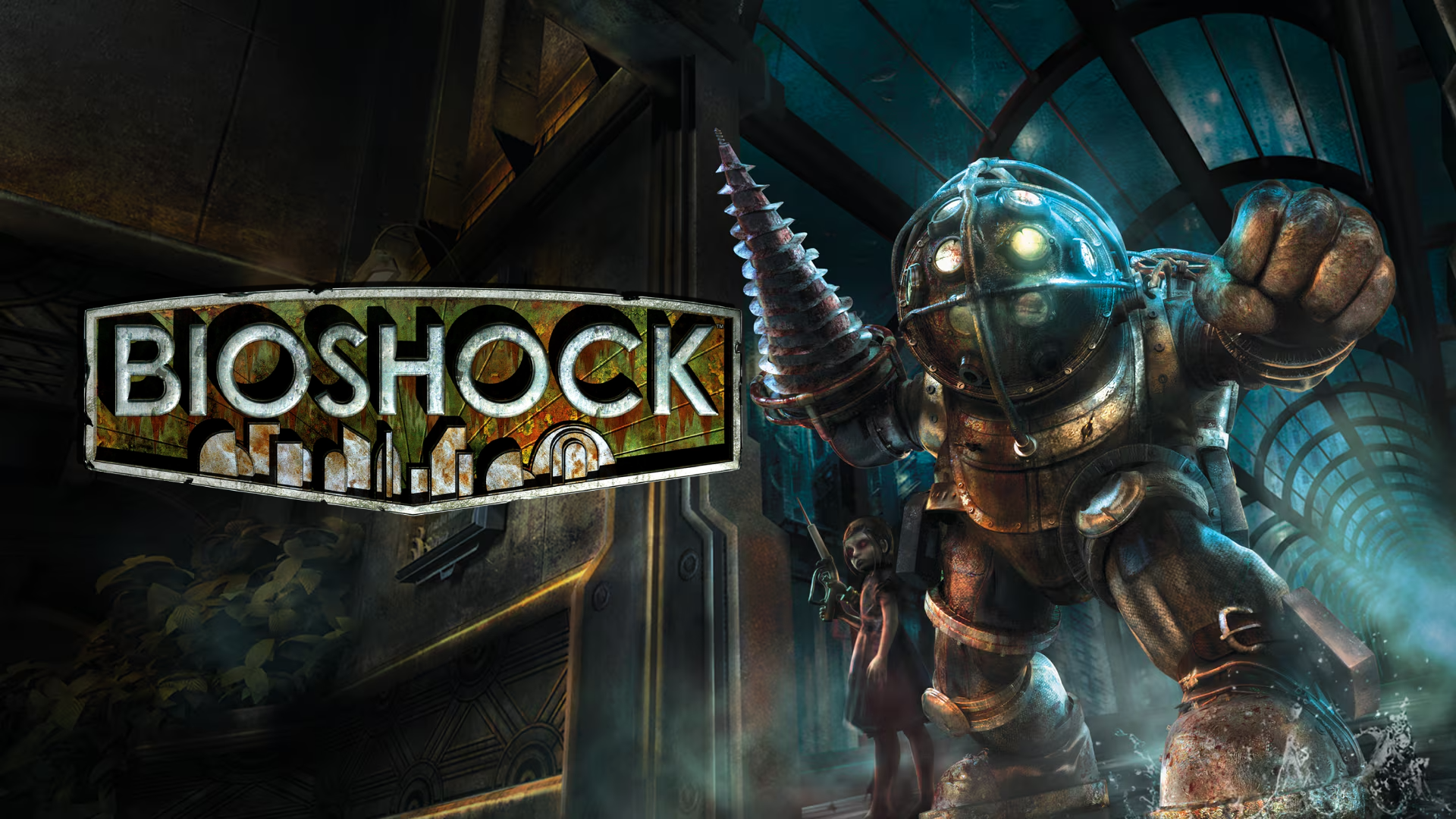
The year 2007 marked a pivotal moment in the video game industry with the release of BioShock, a title from Irrational Games (then known as 2K Boston) that boldly ventured into the uncharted depths of narrative complexity and philosophical inquiry within a digital medium. Unlike the handful of developers who have dared to set their games underwater, BioShock not only embraced this unique setting but also masterfully explored the consequences of unchecked ambition and the pursuit of an ideological utopia at the bottom of the ocean. The consensus among critics and players alike is unequivocally clear: BioShock stands as one of the most essential and influential titles ever produced, largely propelled by its groundbreaking narrative. Its profound story, sophisticated writing, and memorable dialogue garnered numerous individual awards, solidifying its place as a benchmark for interactive storytelling and delivering some of the most utterly captivating lines in gaming history. As fans anticipate a potential fourth installment in this iconic first-person shooter franchise, revisiting the original game’s indelible mark, particularly through its profound narrative and evocative dialogue, offers a timely reflection on its enduring significance.
Conception and Development: Crafting an Underwater Dystopia
The genesis of BioShock can be traced back to the creative minds at Irrational Games, a studio renowned for its previous work on critically acclaimed titles such as System Shock 2. The team, led by creative director Ken Levine, sought to build upon the immersive simulation principles of their past projects while pushing boundaries in narrative and thematic depth. Development for BioShock began in the early 2000s, with a clear ambition to create a "spiritual successor" to System Shock 2, focusing on atmospheric horror, player choice, and a rich, detailed world.
Levine’s vision for BioShock was heavily influenced by the objectivist philosophy of Ayn Rand, particularly her novels Atlas Shrugged and The Fountainhead. This philosophical underpinning formed the ideological bedrock for Rapture, the game’s iconic underwater city. The concept was to explore what might happen if a brilliant individual, unfettered by governmental or moral limitations, attempted to create a perfect society based on self-interest and radical individualism. The setting itself, a sprawling Art Deco metropolis submerged beneath the Atlantic Ocean, presented significant technical and artistic challenges. Developing the game for the nascent Xbox 360 and PC platforms of the mid-2000s required pushing graphical fidelity and environmental design to new heights, ensuring that Rapture felt both grand in its ambition and tragically decayed in its execution. The meticulous attention to detail in the architecture, propaganda posters, and scattered environmental clues was crucial in building the game’s immersive atmosphere and conveying its backstory without relying solely on exposition.
The Unveiling of Rapture: Release and Initial Reception
BioShock officially launched in North America on August 21, 2007, for Xbox 360 and PC, with a PlayStation 3 version following in October 2008. The anticipation leading up to its release was substantial, fueled by impressive previews and the pedigree of Irrational Games. Upon its debut, BioShock was met with near-universal critical acclaim, achieving an average Metacritic score of 96 out of 100 for both its Xbox 360 and PC versions, placing it among the highest-rated games of all time. Critics lauded its innovative narrative, stunning art direction, atmospheric sound design, and the philosophical depth it brought to the gaming medium. Publications worldwide hailed it as a landmark achievement, often citing its ability to transcend the typical boundaries of video game storytelling.
Commercially, BioShock also performed exceptionally well, selling over one million units worldwide within its first two weeks of release. By June 2009, it had sold over 3 million units globally, demonstrating that a thematically rich, story-driven game could also achieve significant commercial success. This strong performance, combined with its critical accolades, cemented BioShock‘s status as a cultural phenomenon and a major contributor to the growing recognition of video games as a legitimate art form. The game received numerous "Game of the Year" awards from various media outlets and industry organizations, including Spike TV’s Video Game Awards, the British Academy Games Awards (BAFTA), and the Game Developers Choice Awards. These awards often specifically highlighted its exceptional narrative, writing, and artistic achievement.
Narrative Masterpiece: The Story of Jack and the City Below
BioShock‘s narrative unfolds through the eyes of Jack, the playable protagonist, whose plane mysteriously crashes into the Atlantic Ocean in 1960. He discovers a lighthouse housing a bathysphere that transports him to Rapture, an elaborate Art Deco metropolis built beneath the sea. This society was conceived by Andrew Ryan, a visionary industrialist who sought to create a haven for the world’s greatest minds, free from the perceived oppression of governments, religions, and moral conventions of the surface world. Jack’s arrival is immediately met with chaos; he receives a desperate plea for help over the radio from a man named Atlas, who guides him through the dilapidated city on what appears to be a rescue mission. However, Jack is quickly embroiled in the violent civil conflict that has torn Rapture apart, all while desperately seeking a way back to the surface.
The initial journey through Rapture is a fight for survival, characterized by exploration of the city’s decaying grandeur, intense battles against the mutated inhabitants known as Splicers, and the collection of weapons and genetic enhancements called Plasmids. As Jack follows Atlas’s instructions, the game gradually reveals the tragic history of Rapture’s downfall, meticulously detailing the ideological schism between Andrew Ryan’s objectivist ideals and Frank Fontaine’s ruthless capitalism, which eventually led to widespread societal collapse and rampant genetic mutation.
This intricate backstory culminates in one of gaming’s most celebrated and shocking plot twists: the revelation of the phrase "Would you kindly?" as a post-hypnotic suggestion that has controlled Jack’s actions from the very beginning. This twist not only recontextualizes the entire game but also forces players to confront uncomfortable questions about free will, manipulation, and the illusion of choice within interactive media. BioShock is, at its core, a profound exploration of who truly holds the reins of power and influence. It delves into the motivations of those who issue commands and the often-unquestioning obedience of those who follow, compelling players to critically examine their own agency, both within the game and in broader life. The game masterfully uses its narrative structure to convey its central themes, making the player an active participant in its philosophical discourse.
The Voices of Rapture: Iconic Characters and Their Philosophical Echoes
Jack, the silent protagonist, rarely speaks, placing the heavy burden of storytelling and thematic exposition on the diverse and unforgettable cast of characters he encounters. Their dialogue is not merely functional but serves as the conduit for BioShock‘s deep philosophical currents, embodying the various ideals and perversions of Rapture.
Andrew Ryan
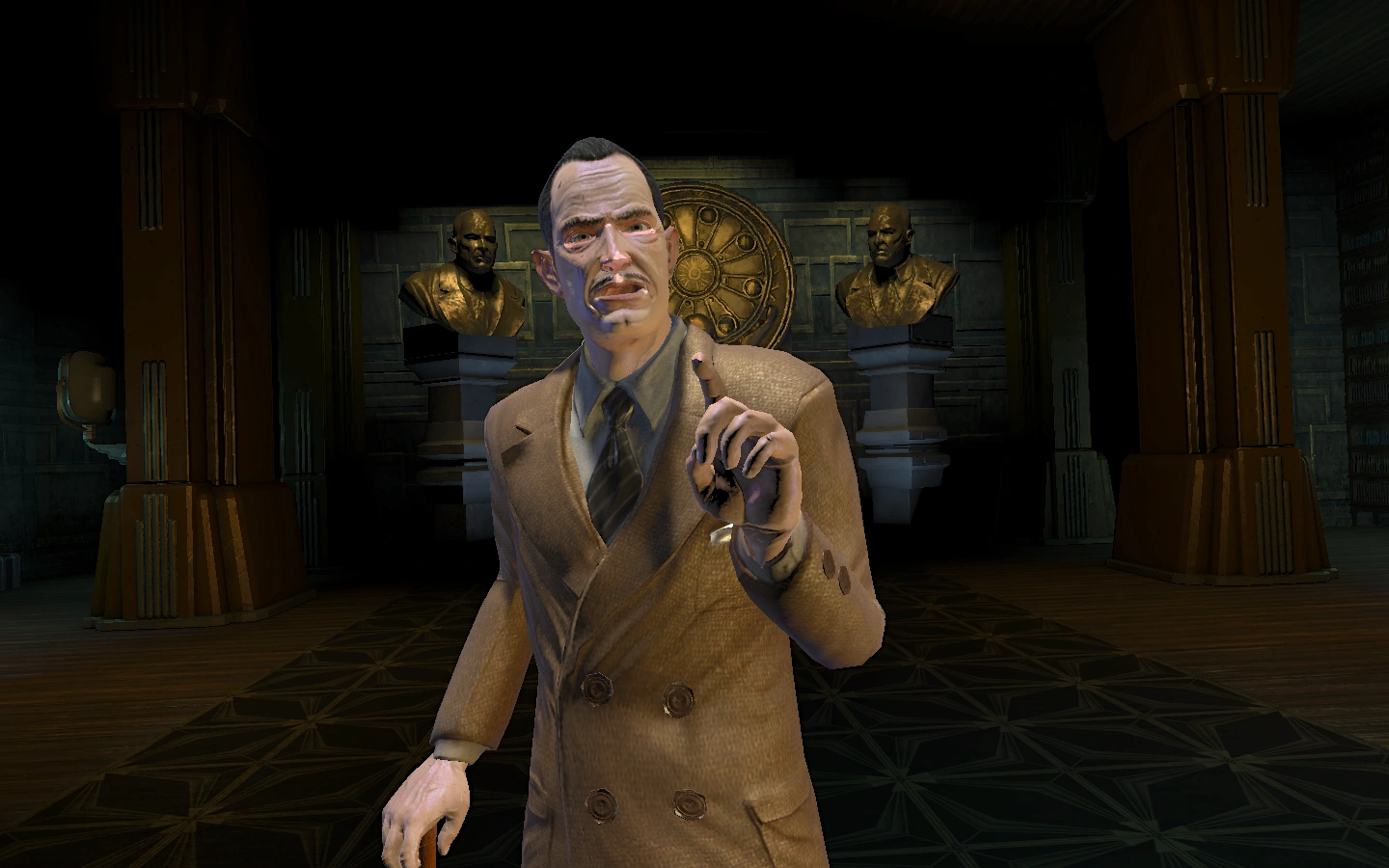
Rapture’s creator, Andrew Ryan, is the embodiment of uncompromising objectivism. His dialogue is characterized by unwavering confidence and philosophical conviction, reflecting his belief that he had built a superior society. Even as Rapture descends into madness, Ryan remains resolute in his ideals, expressing profound disdain for altruism, collectivism, and anything he perceives as weakness. His speeches, often delivered through audio diaries or direct confrontations, highlight his fierce individualism and his unyielding will to overcome perceived parasitic forces. He is a tragic figure, a brilliant but ultimately paranoid madman whose vision crumbled under its own weight, yet his voice remains one of the most powerful and important in the game, challenging players to consider the extreme implications of his philosophy.
Atlas / Frank Fontaine
Initially appearing as Jack’s empathetic guide and ally, Atlas quickly establishes himself as a seemingly trustworthy figure, providing instructions and motivation. His working-class Irish accent and pleas for his family evoke sympathy, positioning him as a voice of reason amidst Rapture’s chaos. However, the game’s pivotal twist reveals Atlas to be the criminal mastermind Frank Fontaine in disguise, a ruthless opportunist who manipulated Jack from the outset to seize control of Rapture. Fontaine represents the dark side of ambition and the corrupting influence of power, exploiting Ryan’s ideals for his own gain. His transformation from a seemingly benevolent figure to a calculating villain underscores the game’s themes of deception and control, forcing players to re-evaluate every interaction and instruction.
Sander Cohen
Sander Cohen is perhaps the most bizarre and unsettling character Jack encounters, an eccentric artist who has transformed Fort Frolic into his personal, macabre playground. A composer, playwright, poet, and sculptor, Cohen embodies the artistic excess and psychological breakdown within Rapture. His dialogue is theatrical, dramatic, and often deeply disturbing, reflecting his descent into madness and his obsession with "art." Cohen’s interactions are a chilling exploration of creativity warped by an environment devoid of moral constraint, where art becomes an expression of torment and control. His demands for Jack to participate in his gruesome "masterpieces" highlight the grotesque beauty and horror that coexist in Rapture.
Other Significant Voices
Beyond these central figures, other characters contribute significantly to the narrative tapestry. Dr. Brigid Tenenbaum, the geneticist responsible for discovering ADAM and creating the Little Sisters, provides a morally ambiguous perspective. Her initial exploitation of children for scientific gain eventually gives way to a maternal protectiveness, highlighting themes of redemption and the ethical dilemmas of scientific advancement. Dr. J.S. Steinman, a plastic surgeon driven mad by ADAM, represents the grotesque vanity and medical malpractice that flourished in Rapture, his dialogue a chilling reflection of aesthetic obsession gone awry. Even the enigmatic Little Sisters and their protectors, the Big Daddies, communicate profound emotional depth through their actions and guttural sounds, serving as a constant reminder of the city’s lost innocence and the ethical costs of its scientific breakthroughs.
Art Direction and Atmosphere: Visualizing a Submerged Dream
BioShock‘s narrative power is inextricably linked to its unparalleled art direction and immersive atmosphere. The choice of the Art Deco architectural style, prevalent in the 1930s and 40s, lends Rapture an aesthetic of decadent grandeur that perfectly contrasts with its decaying reality. The opulent ballrooms, grand halls, and intricate sculptures speak to Andrew Ryan’s initial utopian vision, while the pervasive water damage, overgrown flora, and flickering lights illustrate the city’s dramatic fall from grace. This environmental storytelling is a masterclass in visual narrative, allowing players to piece together Rapture’s history and tragedy simply by observing their surroundings.
The game’s sound design further enhances this immersive quality. The constant creaking and groaning of the underwater structure, the distant cries of Splicers, the haunting musical scores, and the disembodied voices from audio diaries create a pervasive sense of isolation and dread. These auditory cues are crucial in building tension and drawing players deeper into Rapture’s unsettling embrace. Character designs, particularly for the iconic Big Daddies and the grotesque Splicers, are instantly recognizable and contribute significantly to the game’s unique identity, merging horror with a distinct artistic sensibility.
Impact and Legacy: Redefining Narrative in Gaming
BioShock‘s influence on the video game industry is profound and far-reaching. It raised the bar for narrative design, demonstrating that mainstream games could tackle complex philosophical themes, explore nuanced character motivations, and deliver emotionally resonant stories without sacrificing engaging gameplay. Its innovative approach to player agency, particularly through the "Would you kindly?" twist, sparked extensive discussions within the gaming community and academia about the nature of choice in interactive narratives.
The game’s success paved the way for future installments, including BioShock 2 (2010) and the critically acclaimed BioShock Infinite (2013), each of which continued to explore ambitious narrative concepts and philosophical questions in different settings. Beyond its direct sequels, BioShock‘s legacy can be seen in numerous other narrative-driven titles that have since prioritized storytelling and world-building as core components of their design. It cemented its place in the pantheon of critically acclaimed video games, frequently appearing on "greatest games of all time" lists.
Discussions surrounding BioShock‘s philosophical underpinnings, from objectivism to free will and the ethics of genetic manipulation, continue to this day, solidifying its role as a cultural touchstone that encourages critical thinking. It undeniably played a significant role in elevating video games as an art form capable of delivering profound and thought-provoking experiences, challenging perceptions of what interactive entertainment can achieve. The anticipation for any future installment underscores its continued relevance and the deep impact it has had on an entire generation of players and developers.
In essence, BioShock remains a masterclass in interactive storytelling—a philosophical, unsettling, and bizarre journey into the depths of human ambition and failure. Its quotes and characters, imbued with distinct voices and personalities, are merely facets of a larger, intricately woven narrative that continues to resonate. More than just a game, BioShock is an experience that challenged conventions, provoked thought, and ultimately cemented itself as one of gaming’s most memorable and influential titles.
About the Author






