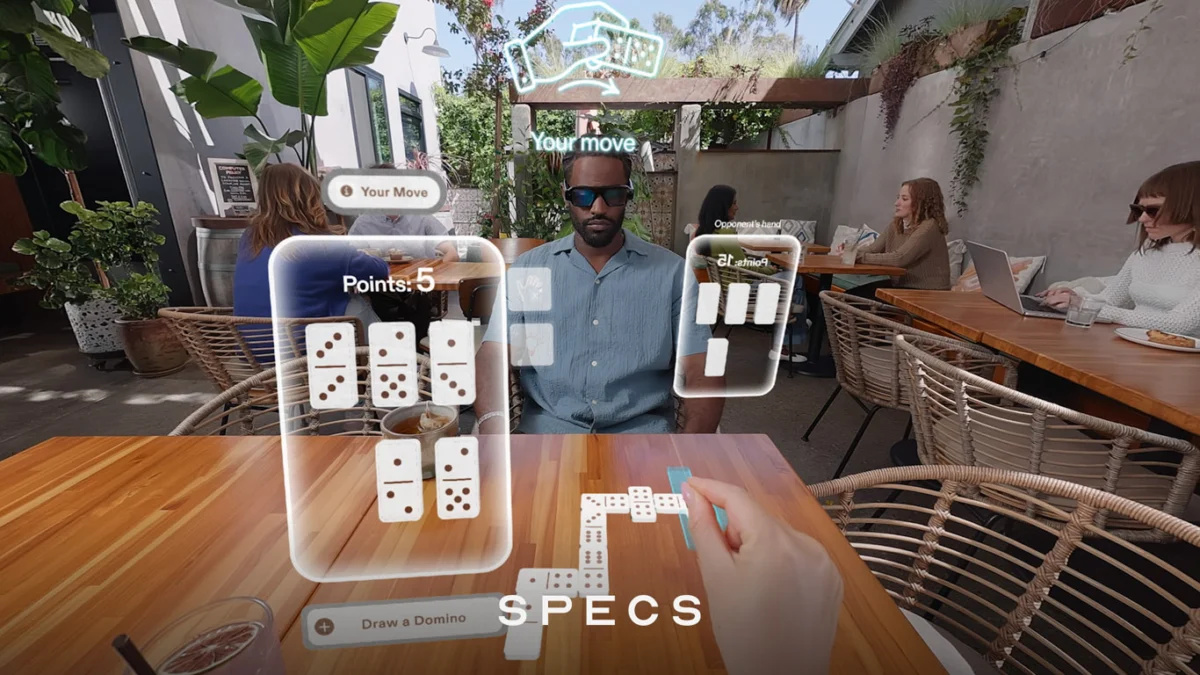
Snap Inc. has officially transitioned its wearable strategy from consumer-grade camera glasses to a sophisticated augmented reality (AR) platform with the formal launch of its latest "Specs" hardware. Following an initial preview at the Augmented World Expo (AWE), the company has now disclosed comprehensive details regarding the device’s technical capabilities, pricing structures, and a significant strategic pivot toward enterprise applications. The launch marks a critical moment for the company as it seeks to compete in a high-end spatial computing market currently occupied by players such as Meta and Apple, while maintaining its unique focus on lightweight, wearable forms.

Hardware Innovation and the Cellular Connectivity Breakthrough
One of the most significant technical advancements introduced with the new Specs is the specialized Charging Case with Cellular. Unlike existing AR and VR headsets that typically rely on local Wi-Fi or direct tethering to a smartphone, Snap’s new accessory provides the glasses with an independent high-speed data connection. This "Connected Case" serves a dual purpose: it acts as a portable power station capable of recharging the glasses up to four times and functions as a dedicated network hub.

In the United States, Snap has secured a primary partnership with Verizon to facilitate this connectivity. The SPECS Connected Case bundle is priced at $2,395, with Verizon offering 36-month financing plans for qualified customers. Data plans for the wearable are structured at $10 per month for existing Verizon subscribers and $20 per month for non-customers. Internationally, Snap has confirmed partnerships with major carriers including Orange in France and EE in the United Kingdom, with localized pricing expected to be announced closer to the regional shipping dates.

This hardware configuration addresses a persistent challenge in AR development: the trade-off between battery life, thermal management, and connectivity. By offloading the cellular modem to the case, Snap can maintain a thinner profile for the glasses themselves while ensuring the user remains connected to cloud-based AI and AR services regardless of Wi-Fi availability.

Strategic Shift Toward Enterprise Solutions
Recognizing that the $2,195 base price point positions the Specs beyond the reach of the average casual consumer, Snap has announced a robust suite of enterprise-oriented partnerships. This move aligns the company with the "B2B" (Business-to-Business) trajectories previously established by Microsoft’s HoloLens and Magic Leap.

Snap has collaborated with industry leaders including Salesforce, Amazon Web Services (AWS), NVIDIA, HoloLight, and Trifork to develop professional-grade AR tools. These solutions focus on three primary areas:

- Remote Assistance: Allowing off-site experts to see through the wearer’s eyes and provide real-time guidance.
- Hands-Free Documentation: Enabling technicians and factory workers to visualize manuals, schematics, and checklists in their field of view while operating machinery.
- Secure AI Integration: A partnership with NVIDIA brings the XR AI framework to Specs, allowing companies to connect the glasses to local AI assistants hosted on internal workstations. This ensures that sensitive corporate data remains within the company’s private network rather than being processed on public cloud servers.
To support these professional deployments, Snap is also introducing compatibility with Mobile Device Management (MDM) systems, allowing IT departments to manage, update, and secure fleets of Specs across an organization.

Specs Intelligence: The Cross-Platform AI Assistant
Central to the user experience is "Specs Intelligence," a new artificial intelligence assistant designed to provide persistent support throughout the day. In a departure from closed-loop ecosystems, Snap has designed the assistant to be multi-platform, operating across Mac and iOS devices in addition to the glasses.

The assistant utilizes the spatial context provided by the glasses’ cameras and sensors to understand the user’s environment. By integrating with a user’s calendar and personal apps, the AI can offer proactive reminders, summarize daily activities, assist with travel bookings, and answer contextual questions about objects the user is seeing.

Addressing the inevitable privacy concerns associated with "always-on" AI, Snap has issued a formal privacy statement. The company asserts that personal content from connected accounts will not be used to train Snap’s AI models or to serve personalized advertisements. Furthermore, the system employs on-device processing and secure cloud infrastructure to minimize data exposure. A preview of the Specs Intelligence interface is currently available via the Specs app for iOS, allowing prospective users to interact with the AI logic before the hardware arrives.

Consumer Content and Interactive Lenses
Despite the enterprise push, Snap continues to leverage its strengths in social and entertainment AR. The company has announced a diverse array of "Lenses" developed in collaboration with global brands and high-profile creators:

- Athletic Training: In partnership with the NBA and WNBA, Snap has developed interactive basketball Lenses. These use computer vision to track a real ball and hoop, providing visual guidance and drills to help players improve their shooting and dribbling. Similar Lenses are being developed for soccer and golf, the latter of which was designed with input from PGA Professionals to analyze swing mechanics.
- Entertainment: To coincide with the upcoming HBO Original Series, Harry Potter and the Philosopher’s Stone, a dedicated Harry Potter Lens will allow fans to cast spells and experience iconic moments from the franchise in AR.
- Media and Productivity: The Specs browser supports streaming from platforms like YouTube and HBO Max, projecting a virtual 115-inch screen. For productivity, a "Whiteboard" app allows for spatial brainstorming, and the glasses support Bluetooth peripherals like keyboards for document editing.
- Utility: Partnerships with Spotify for music, TripAdvisor for restaurant discovery, and Shopify for "try-before-you-buy" home product visualization further expand the device’s daily utility.
Technical Specifications and Privacy Safeguards
The new Specs feature a 51-degree diagonal field of view (FOV) and weigh approximately 134 grams. While heavier than standard eyewear, the frames house dual Snapdragon processors to distribute the computational load and manage heat. The display utilizes a waveguide system to overlay digital content onto the physical world with high transparency.

To mitigate social friction and privacy concerns regarding public recording, Snap has integrated a prominent external LED into the center of the frames. This light activates whenever the device is capturing photos, video, or audio, providing a clear signal to bystanders. The company has also explicitly stated that the device does not employ facial recognition technology to identify individuals.

Market Context and Availability
The launch comes at a time when the "smart glasses" market is bifurcating into two segments: lightweight camera glasses (like the Ray-Ban Meta) and high-power spatial computers (like the Apple Vision Pro). Snap’s Specs represent an attempt to find a middle ground—a standalone AR device that offers true spatial overlays without the bulk of a traditional headset.

Industry observers note that Snap’s decision to bypass common development engines like Unity or Unreal in favor of its proprietary Lens Studio remains a double-edged sword. While it ensures optimization for Snap’s hardware, it may present a barrier for enterprise developers accustomed to industry-standard tools.

Snap will open its first "SPECS First Look" experience center at Westfield Century City in Los Angeles on October 1. This facility will allow the public to test the hardware and interact with company representatives. Shipping is scheduled to begin later this fall in the United States, United Kingdom, and France. Interested parties can currently secure a pre-order with a $200 refundable deposit toward the $2,195 purchase price.
About the Author