

In an era where straightforward narratives often challenge even seasoned game designers, Bungie’s Halo 2, released in 2004, achieved the seemingly impossible: an intricately interweaving story that not only succeeded but excelled, setting a new benchmark for narrative depth in the first-person shooter genre. This ambitious sequel transcended the conventional "humanity fighting an alien invasion" trope, diving into complex themes of belief, loyalty, and doubt through a groundbreaking dual-protagonist structure. Its compelling character writing and poignant dialogue have cemented its place as one of the most celebrated campaigns in video game history, frequently lauded by fans and critics alike for its storytelling prowess.
The Context of Innovation: Gaming in 2004
The landscape of video game storytelling in the early 2000s was largely characterized by linear, often simplistic narratives, particularly within the booming first-person shooter market. While games like Half-Life had pushed boundaries with environmental storytelling, the expectation for console shooters, especially those with multiplayer emphasis, was often less about intricate plotlines and more about immediate action. Halo: Combat Evolved, released in 2001, had already established a strong foundation with its iconic protagonist, Master Chief, and the mysterious Halo ring. However, its narrative, while effective, remained largely a direct conflict between humanity and the alien Covenant.
The anticipation for Halo 2 was immense, following the original’s critical and commercial success, which had firmly established the Xbox as a formidable contender in the console wars. Bungie, the developer, faced immense pressure to not only deliver a technically superior game but also to expand upon the nascent universe they had created. It was within this environment that the studio made a bold decision: to dramatically deepen the narrative complexity, risking alienating players accustomed to more conventional fare.
A Tale of Two Warriors: Forging a Dual Narrative
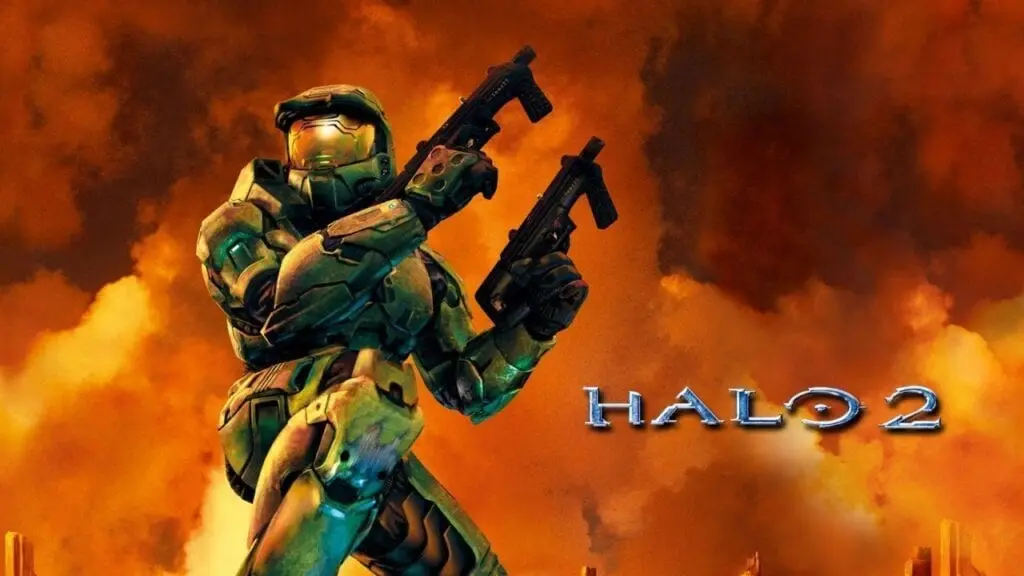
Halo 2 picks up directly after the events of humanity’s victory at Installation 04. The story immediately plunges players into a high-stakes scenario with the Covenant launching a full-scale assault on Earth. However, the true genius of its narrative structure emerges through its decision to follow two distinct, yet ultimately intertwined, protagonists: Master Chief, humanity’s stoic hero, and the Arbiter, a disgraced Elite warrior within the Covenant.
Master Chief’s journey sees him defending Earth against overwhelming odds before pursuing the Covenant armada into deep space, uncovering further secrets of the enigmatic Halo rings and the ancient Forerunners. Simultaneously, players are thrust into the perspective of the Arbiter, Thel ‘Vadam, a former commander stripped of his rank and forced into a role of suicidal atonement by the Covenant’s ruling Prophets. His missions, deemed "dangerous" and effectively a death sentence, slowly unravel the deep-seated corruption and political machinations within the Covenant hierarchy.
This unprecedented dual narrative shattered the monolithic perception of the Covenant established in the first game. No longer a united alien army, they were revealed as a complex society rife with competing beliefs, political factions, and internal conflicts, all fueled by a fanatical religious devotion to the "Great Journey." This narrative choice was a significant gamble for Bungie, as it required players to empathize with a character from the opposing side, challenging preconceived notions of heroism and villainy.
Development Challenges and Visionary Execution
The creation of Halo 2‘s ambitious narrative was not without its difficulties. The game’s development cycle was famously intense, marked by significant "crunch" and the challenge of realizing such a grand vision within tight deadlines. Reports from developers at the time hinted at numerous scrapped ideas, including more expansive Earth city levels and an originally planned ending that was ultimately cut short, leading to the game’s now-iconic cliffhanger.
Despite these pressures, Bungie’s commitment to its narrative vision remained steadfast. Joseph Staten, the game’s lead writer and cinematic director, played a pivotal role in crafting the intricate plot and memorable dialogue. The decision to delve into the Covenant’s internal struggles was a deliberate attempt to add layers of moral ambiguity and political intrigue that were rare in the genre. This move allowed Halo 2 to explore themes that resonated far beyond typical sci-fi shooter tropes.
Thematic Depth: Blind Obedience and Shared Truth
At its core, Halo 2 is a profound exploration of how blind obedience can destroy civilizations and how shared truth offers a path through crisis. The Arbiter’s arc is a masterclass in character development, as he gradually sheds his fanatical devotion to the Prophets and begins to question the very foundations of his faith. Through his eyes, players witness the manipulation and deceit at the heart of the Covenant’s leadership, realizing that the war is being fought over a lie that neither side fully comprehends.
This revelation forces players into an uncomfortable immersion within a predetermined story, where the lines between good and evil blur. The game subtly critiques propaganda and religious extremism, suggesting that understanding and empathy, even with a former enemy, are crucial for survival. The eventual, albeit fragile, Human-Covenant alliance forged between Master Chief and the Arbiter represents a pivotal shift, setting up significant changes for the future of both species. This thematic richness resonated deeply with players, elevating Halo 2 beyond mere spectacle.
Character Writing and Unforgettable Dialogue
The strength of Halo 2‘s narrative is inextricably linked to its brilliant character writing and the dialogue that brings them to life. The game is replete with lines that have become iconic within the gaming community, reflecting the personalities, motivations, and evolving relationships of its diverse cast.
- Master Chief: Though known for his stoicism and economy of words, Master Chief’s few lines are incredibly impactful. His focus on the mission, his unwavering resolve, and his growing bond with Cortana reveal a deeper humanity beneath the armor. His calm and determined responses in the face of overwhelming odds underscore his legendary status, making his moments of direct communication particularly resonant.
- The Arbiter (Thel ‘Vadam): The Arbiter’s journey is punctuated by dialogue that showcases his fierce honor, his initial blind religious devotion, and his eventual profound disillusionment. His interactions with the Prophets, his Sangheili brethren, and later, even his human adversaries, are central to the game’s exploration of faith, betrayal, and redemption. His lines often carry the weight of a warrior questioning his entire existence.
- Cortana: The famous smart artificial intelligence is a critical voice in Halo 2. Her bond with Master Chief is deepened through their witty banter, mutual reliance, and moments of shared vulnerability. Cortana’s intelligence, sarcasm, and willingness to challenge, rather than merely follow, orders provide a crucial counterpoint to Chief’s quiet demeanor, and her dialogue often serves to clarify complex plot points or inject moments of levity and emotional depth.
- Other Key Figures: The game’s supporting cast also contributes significantly to its memorable dialogue. The manipulative Prophets (Truth, Mercy, and Regret) deliver speeches laced with religious fervor and political cunning. Sergeant Johnson provides comic relief and relatable human grit, while the Gravemind, the Flood’s collective intelligence, offers philosophical and terrifying pronouncements that further deepen the lore. Even minor characters contribute to the immersive atmosphere, often with lines that underscore the grim reality of the war or the alien perspectives.
These exchanges are not just exposition; they are character revelations, plot drivers, and moments of genuine emotional impact. They illustrate the depth of the world and the struggles of its inhabitants, both human and alien.

Critical Acclaim and Commercial Success
Upon its release on November 9, 2004, Halo 2 was met with universal critical acclaim. It achieved an average score of 95/100 on Metacritic, signifying "universal acclaim." Critics lauded nearly every aspect of the game, from its stunning graphics and refined gameplay to its robust multiplayer. However, it was the narrative that frequently garnered particular praise. Reviewers highlighted the ambitious storytelling, the dual-protagonist mechanic, the deeper exploration of the Covenant, and the exceptional voice acting.
Commercially, Halo 2 was an undisputed blockbuster. It broke sales records, selling 2.4 million copies and generating $125 million on its first day of release in North America alone, making it the fastest-selling game in North American history at the time. By June 2006, it had sold over 8 million copies worldwide, solidifying its status as a cultural phenomenon and a tentpole title for the Xbox brand. This commercial success underscored that players were not just ready for, but actively embraced, more complex and mature storytelling in their video games.
Broader Impact and Enduring Legacy
Halo 2‘s influence extends far beyond its impressive sales figures and critical praise. It fundamentally altered the trajectory of the Halo franchise, expanding its universe and setting the stage for the epic conclusion of the original trilogy in Halo 3. Its narrative innovations, particularly the playable antagonist and the exploration of moral ambiguities, inspired subsequent games to experiment with more complex storytelling techniques.
The game’s cliffhanger ending, which left both Master Chief and the Arbiter in precarious positions, sparked immense discussion and anticipation, demonstrating the power of narrative to captivate an audience and drive future engagement. It also played a crucial role in establishing Xbox Live as a premier online gaming service, with its groundbreaking multiplayer features.
Years later, Halo 2 remains a touchstone in gaming history. Its willingness to challenge players with a morally complex, character-driven story within a genre often associated with simpler premises marked a significant evolutionary step for video game narratives. The lasting impact of its storytelling, character arcs, and unforgettable dialogue continues to be celebrated, proving that spectacle alone cannot sustain a legacy; brilliant writing, concerned with deeper questions, is equally vital. Halo 2 didn’t just deliver huge battles and thrilling missions; it delivered a narrative that resonated, endured, and ultimately enriched the very definition of what a video game story could be.
About the Author






