The strategic integration of C++ Blueprint Function Libraries in Unreal Engine 5 represents a pivotal advancement for developers seeking to optimize performance and expand functionality within their projects without sacrificing the agility offered by visual scripting. This hybrid approach allows teams to harness the raw power and efficiency of C++ for demanding tasks while maintaining the accessibility and rapid iteration capabilities of Unreal Engine’s popular Blueprint system.
The Blueprint Paradigm: Strengths and Emerging Challenges
Since its inception, Unreal Engine’s Blueprint visual scripting system has revolutionized game development by democratizing access to complex engine functionalities. Its intuitive, node-based interface allows designers, artists, and even non-programmers to create intricate game logic, interactive systems, and entire gameplay mechanics without writing a single line of traditional code. This accessibility has fostered rapid prototyping, accelerated development cycles, and empowered multidisciplinary teams to contribute directly to game logic. Projects ranging from indie darlings to large-scale AAA productions frequently rely on Blueprints for the bulk of their gameplay implementation.
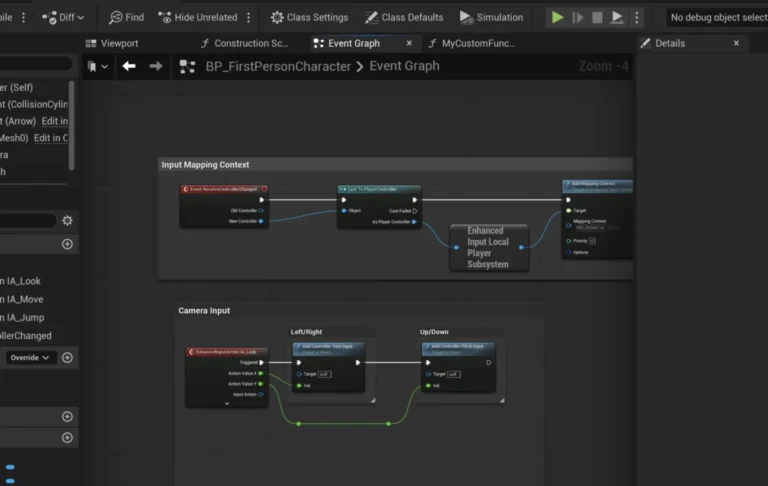
However, as projects grow in scope and complexity, the inherent limitations of Blueprint scripting often become apparent. While highly efficient for many tasks, Blueprint code, being an interpreted visual language, can introduce performance bottlenecks, particularly in scenarios requiring intensive computation, rapid iteration over large datasets, or intricate algorithms. Tasks such as complex AI pathfinding, real-time physics simulations, advanced procedural generation, or high-frequency data processing can push Blueprint to its limits, leading to noticeable frame rate drops, increased load times, or general system sluggishness. Furthermore, Blueprint’s abstraction layer, while beneficial for ease of use, can sometimes limit direct access to low-level engine features, specific hardware functionalities, or external libraries that are readily available in C++. For developers aiming to extract every ounce of performance or implement highly specialized functionalities, these limitations necessitate a more robust solution.
The C++ Advantage: Unleashing Raw Power
C++, as the foundational language of Unreal Engine itself, offers unparalleled performance, granular control over system resources, and direct access to the engine’s core architecture. Code written in C++ compiles directly into machine instructions, resulting in significantly faster execution speeds compared to interpreted or virtual machine-based languages like Blueprint. This raw speed is critical for performance-intensive operations, where milliseconds can dictate the difference between a smooth, immersive experience and a frustrating, laggy one. C++ provides direct memory management, allowing developers to meticulously optimize resource usage, and grants access to a vast ecosystem of highly optimized libraries for everything from linear algebra to networking. For critical game systems, where every clock cycle counts, C++ remains the undisputed champion.
Historically, fully integrating C++ into a Blueprint-heavy project often presented its own set of challenges. Migrating existing Blueprint logic entirely to C++ could require a complete restructuring of project architecture, incurring significant development costs and potentially disrupting established workflows. The steeper learning curve associated with C++, coupled with longer compilation times compared to Blueprint’s immediate feedback, could also deter teams from making the transition. The perceived "friction" between the two environments often led to a stark choice: either commit fully to Blueprint for speed of development or fully to C++ for performance, rarely achieving a harmonious blend.
The Hybrid Solution: C++ Blueprint Function Libraries as a Catalyst
The C++ Blueprint Function Library emerges as a powerful and elegant solution to this long-standing dilemma. It is a specialized Unreal Engine class designed to bridge the gap, allowing developers to write optimized C++ code and then expose specific functions from that code directly to the Blueprint editor. This means that performance-critical logic, custom algorithms, or access to C++ exclusive features can be encapsulated within a C++ Blueprint Function Library and then called upon as standard nodes within any Blueprint graph, as if they were native Blueprint functions.
The primary benefit of this hybrid approach is its ability to combine the best of both worlds: the development speed and designer-friendliness of Blueprint with the execution efficiency and low-level power of C++. Developers can identify performance bottlenecks in their Blueprint graphs and selectively refactor those specific problematic sections into C++ functions within a dedicated library. This targeted optimization ensures that only the most demanding parts of the code are handled by C++, minimizing the need for extensive refactoring while maximizing performance gains. It also unlocks a treasure trove of C++ features that may not have direct Blueprint equivalents, providing developers with a comprehensive toolkit for advanced game development.
Historical Context and Epic Games’ Vision
The evolution of C++ and Blueprint interoperability has been a cornerstone of Unreal Engine’s development philosophy, particularly since the release of Unreal Engine 4. Epic Games recognized early on the need to cater to diverse development teams and skill sets, striving to make the engine accessible without compromising its professional-grade capabilities. Early iterations of Blueprint offered basic C++ integration, but with each subsequent release, and especially with the advent of Unreal Engine 5, the tools for seamless interoperability have been significantly refined.
Epic Games’ ongoing commitment to a robust hybrid development environment reflects a broader industry trend towards modularity and specialized roles within development teams. As games become increasingly complex, requiring highly optimized systems alongside intricate visual design and gameplay scripting, the ability for programmers to deliver high-performance modules that can be easily consumed by designers via Blueprint is invaluable. An Epic Games spokesperson, in discussions surrounding engine design philosophies, has often highlighted the importance of empowering all team members, stating that "Unreal Engine is designed to scale with your project’s needs, from rapid prototyping in Blueprint to shipping AAA titles with performance-critical C++." The C++ Blueprint Function Library is a direct manifestation of this vision, providing a structured pathway for efficient collaboration and optimization.

Implementing the Integration: A Technical Overview
Creating and utilizing a C++ Blueprint Function Library in Unreal Engine 5 is a streamlined process, provided developers have a foundational understanding of C++ within the Unreal Engine context. The prerequisites typically include basic C++ knowledge and a compatible Integrated Development Environment (IDE) such as Visual Studio on Windows or Xcode on macOS, which are essential for compiling the C++ code into the project.
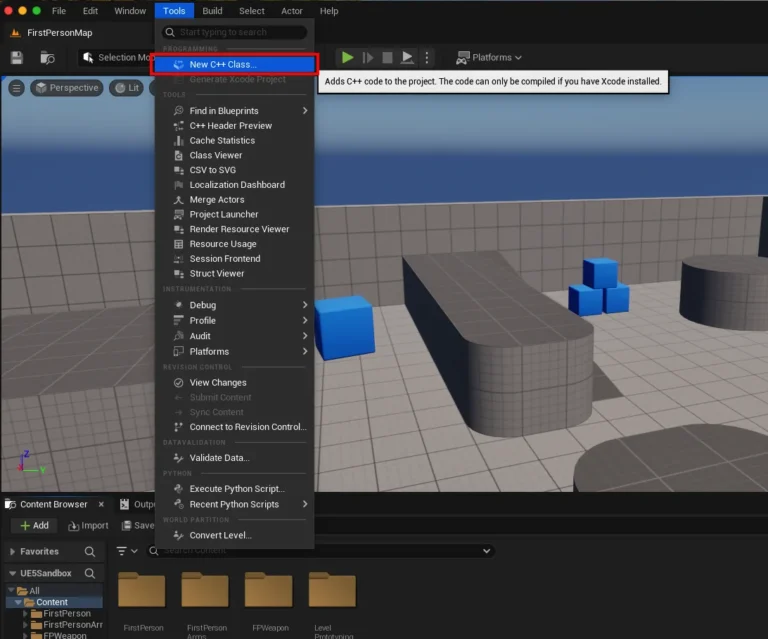
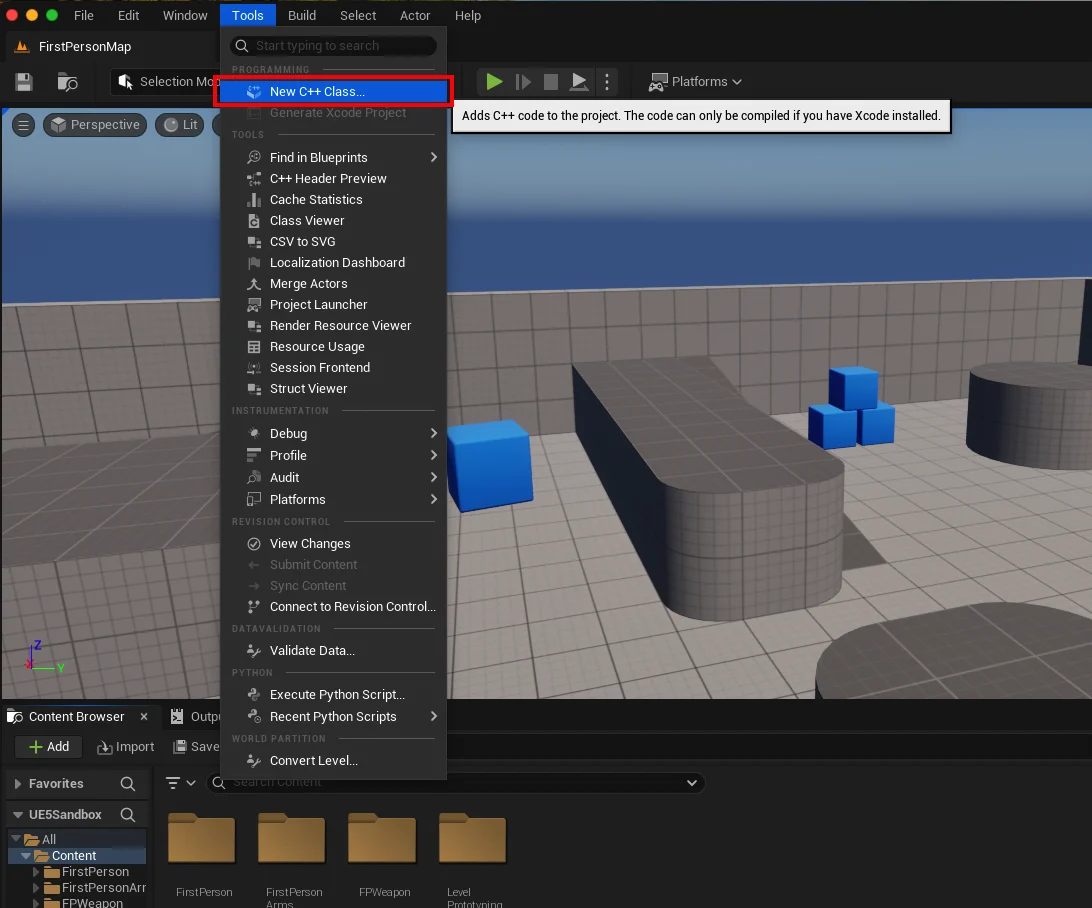
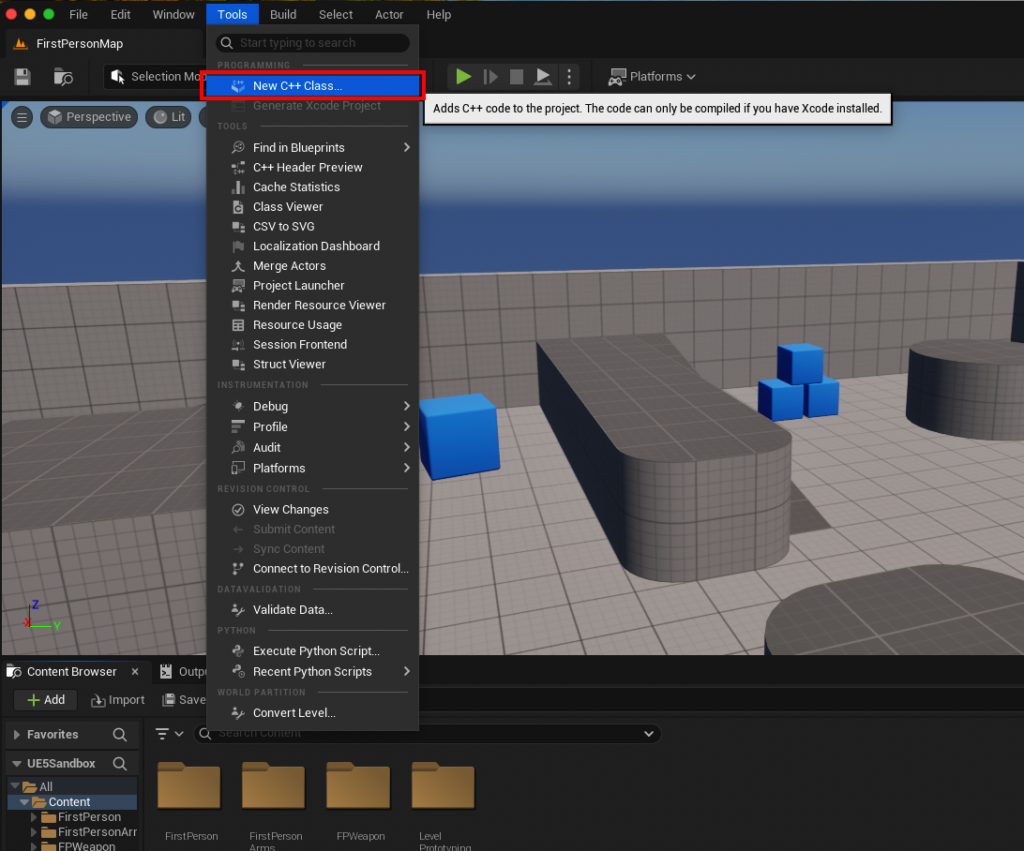
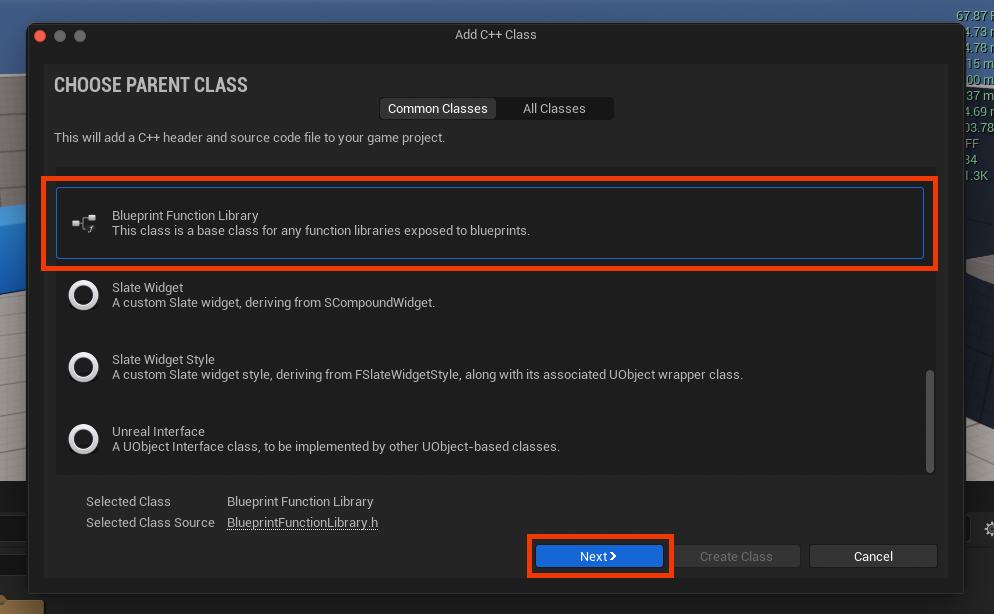
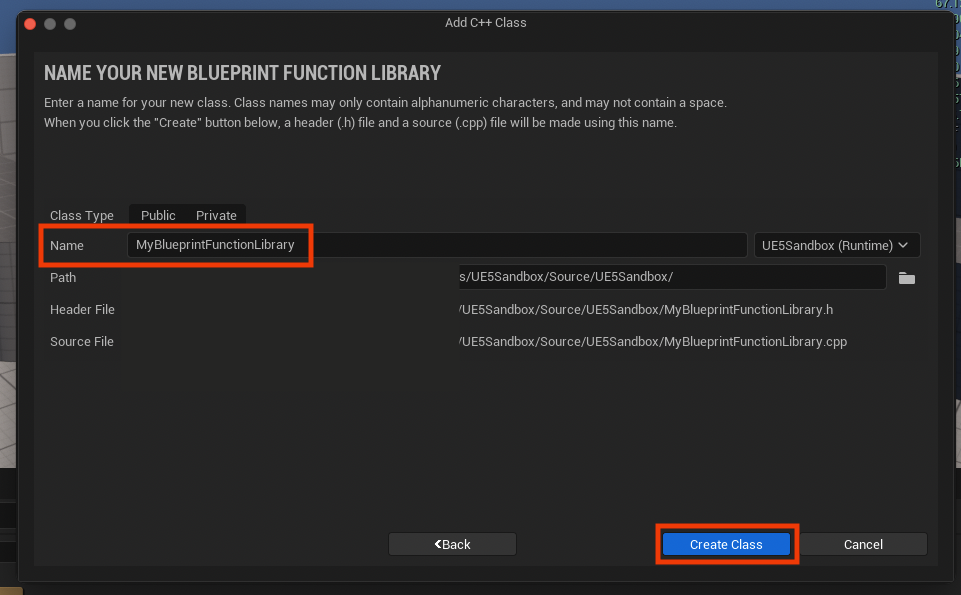
The process begins within the Unreal Editor itself. By navigating to the ‘Tools’ dropdown and selecting ‘New C++ Class’, developers initiate the creation of a new C++ class. If a C++ enabled project hasn’t been established, the engine will guide the user through setting up the necessary development environment. Crucially, when prompted to select a ‘Parent Class’, developers must choose ‘Blueprint Function Library’ from the available options. This selection ensures that the newly created C++ class inherits the necessary properties to expose its functions to Blueprint. Following Unreal Engine’s naming conventions, a clear, capitalized name like MyBlueprintFunctionLibrary is recommended for the new class. Once named and created, the engine compiles the new C++ files, integrating them into the project structure.
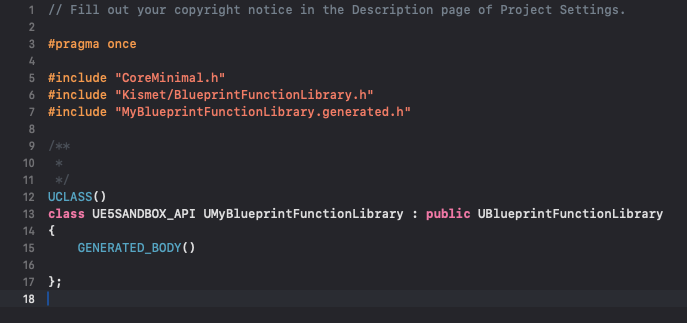
Upon successful compilation, the IDE will reveal two newly generated files: a .h header file for function declarations and a .cpp source file for function implementations. The core of exposing C++ functionality to Blueprint lies in two key elements within the header file: the static keyword and the UFUNCTION macro.
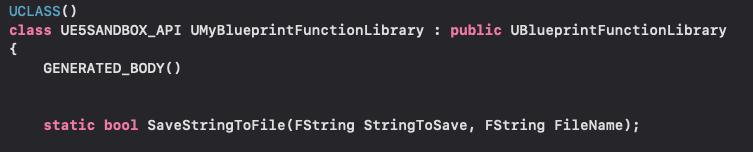
The static keyword is paramount as it declares the function as belonging to the class itself, rather than to an instance of the class. This makes the function globally accessible within Blueprints without requiring an object reference, meaning it can be called from anywhere, similar to a static utility function.
The UFUNCTION macro, provided by Unreal Engine’s reflection system, is placed directly above the function declaration. This macro is what signals to the Unreal Editor that this C++ function should be exposed and made callable within Blueprint graphs. Various specifiers can be added to the UFUNCTION macro to control its behavior, such as BlueprintCallable (to make it callable from Blueprints), Category (to organize it within the Blueprint editor’s context menu), and DisplayName (to provide a user-friendly name).
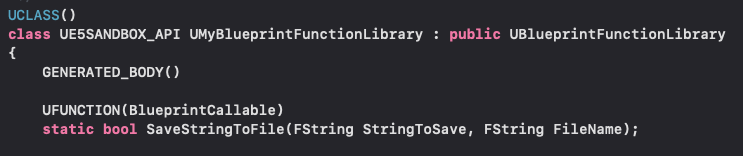
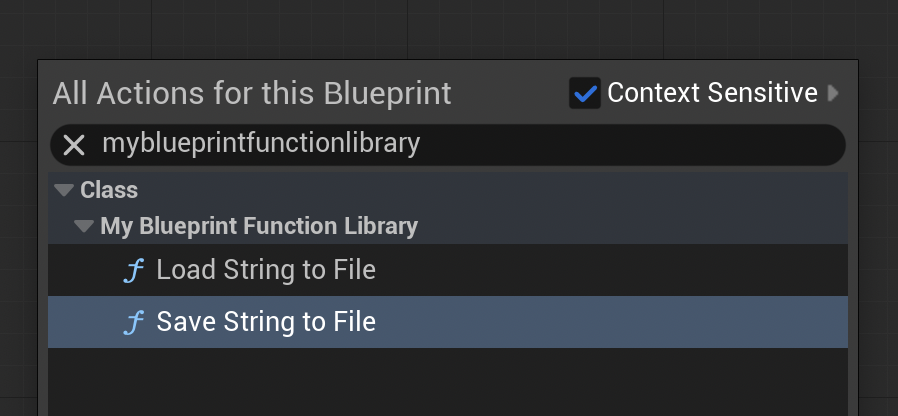
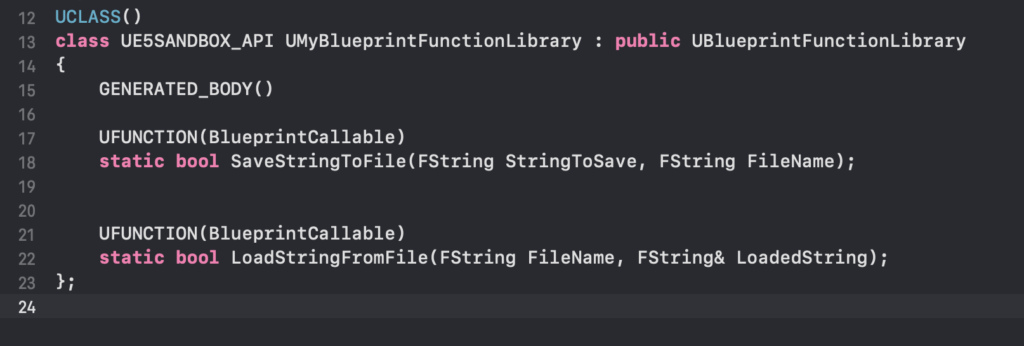
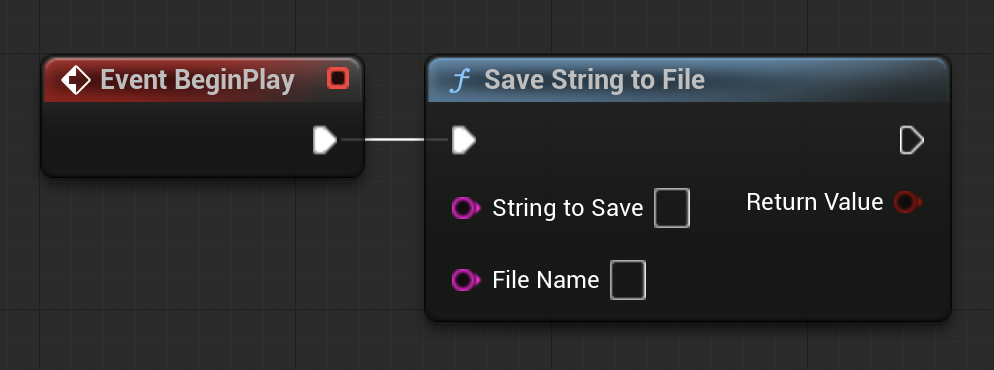
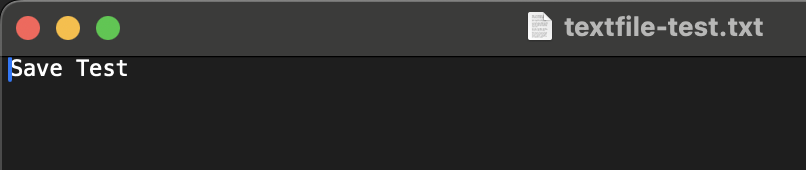
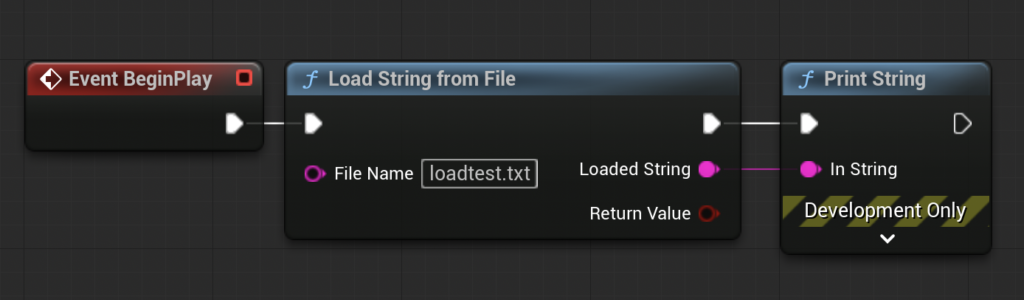
For instance, a simple string read/write system, as demonstrated in practical applications, involves declaring static functions with UFUNCTION macros in the header file for saving a string to a file and loading a string from a file. The implementation of these functions in the .cpp file would then leverage Unreal Engine’s FFileHelper library, which provides robust and efficient file I/O operations. Once these C++ functions are defined, declared with static and UFUNCTION, and the project is recompiled, they become immediately discoverable and usable as nodes within any Blueprint graph. This seamless integration allows developers to drag and drop these high-performance C++ functionalities directly into their visual scripts, creating a powerful, hybrid workflow.
Real-World Application: Performance-Critical Scenarios
The utility of C++ Blueprint Function Libraries extends across a multitude of performance-critical scenarios in game development. Consider complex mathematical calculations, such as those found in advanced physics systems or intricate procedural generation algorithms. Implementing these directly in C++ can yield orders of magnitude performance improvement over their Blueprint counterparts. Similarly, tasks involving heavy data processing, such as parsing large configuration files, managing intricate inventory systems, or processing player statistics, benefit immensely from C++’s efficiency.
For artificial intelligence, particularly in games with numerous agents or complex decision-making trees, C++ can significantly speed up AI pathfinding, behavior tree evaluations, and state machine transitions. Custom physics interactions, advanced graphics effects requiring direct manipulation of rendering pipelines, or sophisticated networking logic are other prime candidates for C++ optimization via Blueprint Function Libraries.
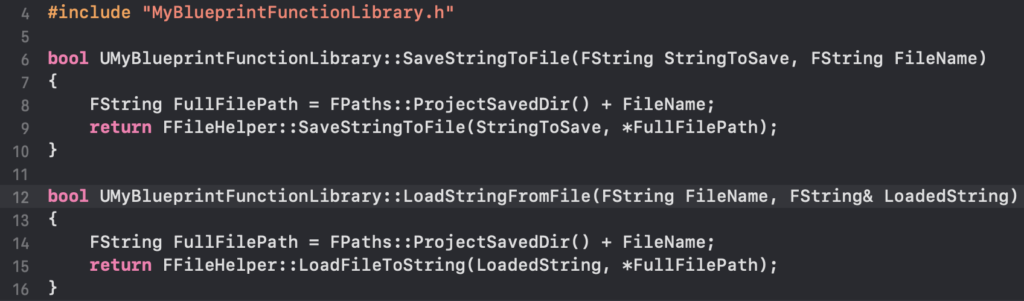
The demonstrated file I/O system, while seemingly simple, serves as an excellent practical example. Reading and writing data to disk can be a bottleneck, especially when dealing with frequent saves, loading large game states, or managing persistent world data. By offloading these operations to an optimized C++ function library, developers ensure that file system interactions are handled as efficiently as possible, minimizing hitches and maintaining a smooth user experience. This allows designers to easily integrate file saving/loading into their Blueprint gameplay flows without needing to worry about the underlying performance implications, as the heavy lifting is handled by the C++ backend.
Strategic Implications for Development Teams
The adoption of C++ Blueprint Function Libraries carries significant strategic implications for development teams, fostering a more efficient, scalable, and collaborative environment. This hybrid approach empowers multidisciplinary teams by allowing artists and designers to continue working within the familiar and intuitive Blueprint environment for gameplay logic, UI, and event handling. Simultaneously, programmers can focus their efforts on optimizing the most demanding core systems in C++, without forcing a complete paradigm shift for the entire team. This clear separation of concerns leads to increased productivity and specialized contributions.
For project scalability, C++ Blueprint Function Libraries provide a vital tool. As games grow, the initial rapid prototyping phase often gives way to a need for rigorous optimization. Rather than undertaking a costly and time-consuming rewrite, teams can incrementally optimize performance-critical sections using C++ libraries, ensuring that the project remains performant as its complexity increases. This also contributes to better maintainability; well-encapsulated C++ functions are easier to debug, test, and update than sprawling Blueprint graphs attempting to handle complex computations inefficiently. The ability to integrate advanced C++ features without a complete refactoring means that ambitious game designs can be realized more effectively, pushing the boundaries of what is possible within the engine.
Industry Perspectives and Best Practices
Leading game developers and engine architects frequently emphasize the importance of judicious application of C++ optimization. The consensus within the industry is not to abandon Blueprint entirely, but rather to leverage C++ strategically. "Profiling is your best friend," noted a veteran engine programmer from a major studio. "Before you even think about writing a line of C++, identify your actual performance bottlenecks. Often, a simple Blueprint refactor or a different approach can solve the issue. But for truly CPU-bound tasks, C++ is indispensable, and Blueprint Function Libraries make that integration far less painful."

Best practices advocate for identifying specific performance-critical sections of Blueprint code that are executed frequently or involve heavy computation. These sections are then refactored into C++ functions within a Blueprint Function Library, tested thoroughly, and integrated back into the Blueprint workflow. This targeted approach ensures that development resources are focused where they yield the greatest return on investment, maximizing performance gains without over-engineering or introducing unnecessary complexity. The goal is always to strike a balance between development velocity and runtime performance.
Conclusion
In the dynamic landscape of modern game development, where both rapid iteration and uncompromising performance are paramount, C++ Blueprint Function Libraries in Unreal Engine 5 offer an indispensable solution. By effectively bridging the gap between visual scripting and high-performance programming, these libraries empower development teams to optimize critical systems in C++ while retaining the agility and accessibility of Blueprints. This hybrid approach not only provides tangible performance improvements and unlocks hidden engine functionalities but also fosters a more efficient and collaborative development environment. For any developer looking to push the boundaries of their Unreal Engine projects, mastering the integration of C++ Blueprint Function Libraries is a vital step towards achieving both technical excellence and creative ambition.
About the Author