
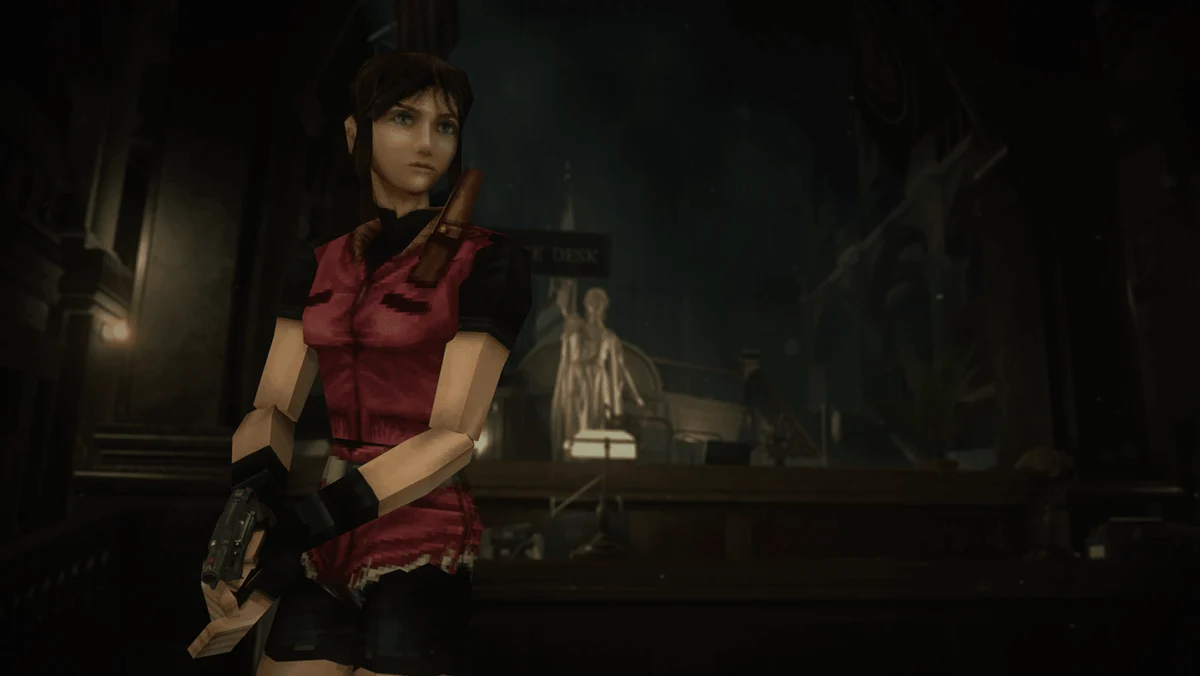
The enduring appeal of a video game often manifests years, even decades, after its initial release through the demand for a contemporary reimagining. The successful 2019 remake of Resident Evil 2, released over two decades after its 1998 predecessor, stands as a powerful testament to the original’s groundbreaking design and lasting cultural impact. This longevity is further underscored by the original’s impressive commercial performance, having sold 4.96 million units globally, firmly establishing it as a cornerstone of the survival horror genre and a key title in Capcom’s storied history. The game’s influence extends far beyond mere sales figures, resonating with successive generations of players who are drawn to its unique blend of tense gameplay, atmospheric horror, and a narrative driven by memorable, if sometimes unconventional, dialogue.
The Genesis of a Survival Horror Icon
Resident Evil 2‘s journey to critical and commercial acclaim was not without its challenges. Following the unexpected success of the original Resident Evil in 1996, which largely defined the survival horror genre for a generation, Capcom quickly greenlit a sequel. The initial iteration, often referred to by fans as "Resident Evil 1.5," underwent significant development before being famously scrapped at an estimated 60-80% completion. Director Hideki Kamiya and producer Shinji Mikami made the difficult decision to restart development from scratch, feeling that the existing version failed to meet their high standards for quality and horror. This arduous process, though costly and time-consuming, ultimately paved the way for the masterpiece released in 1998.
The game launched into a vibrant late-90s gaming landscape, dominated by consoles like the PlayStation. It arrived at a time when 3D graphics were rapidly evolving, allowing for more immersive environments and character models, though still constrained by technical limitations that would inadvertently contribute to its distinctive atmosphere. Resident Evil 2 built upon the foundation of its predecessor, retaining the fixed camera angles, limited resources, and puzzle-solving elements that characterized survival horror, while expanding the scope of its narrative and character interactions. Its release was a pivotal moment, solidifying the Resident Evil franchise as a global phenomenon and influencing countless games that followed, contributing significantly to Capcom’s reputation as a leader in the nascent survival horror genre.
Raccoon City’s Descent into Chaos: Narrative and Thematic Depth
The narrative of Resident Evil 2 plunges players into the heart of a bio-organic catastrophe. Set two months after the events of the first game, the T-virus, a mutagenic biological agent developed by the nefarious Umbrella Corporation, has unleashed itself upon Raccoon City. The game masterfully introduces two protagonists, Leon S. Kennedy, a rookie police officer arriving for his first day on the job, and Claire Redfield, a college student desperately searching for her missing brother, Chris Redfield, a member of the elite S.T.A.R.S. unit. Their paths converge amidst the chaos, forcing them to navigate a city overrun by zombies and grotesque biological experiments, each with their own urgent motivations.
A groundbreaking feature for its time was the "Zapping System," which offered players two distinct scenarios for each character (A and B), where events and puzzles could dynamically change based on the actions taken in the preceding scenario. This innovative design encouraged multiple playthroughs, deepened the narrative, and provided a comprehensive view of the unfolding disaster from different perspectives. Players were tasked with solving intricate environmental puzzles, judiciously conserving scarce ammunition, and evading terrifying adversaries, most notably the relentless Tyrants, whose ominous footsteps became synonymous with dread. The design ensured that players would not get very far before discovering the layers of the game’s story and its gradual expansion beyond a mere zombie outbreak.
Beneath the immediate terror of the zombie outbreak, Resident Evil 2 weaves a darker tale of corporate malfeasance and institutional corruption. The Umbrella Corporation’s insidious experiments and the city officials’ complicity in covering up the unfolding disaster serve as a powerful backdrop. This depiction of unchecked corporate greed and its devastating human impact lends a profound thematic weight to the game, elevating it beyond a simple monster flick. This combination of visceral survival horror and a gripping conspiracy narrative gives the game’s dialogue its unusual and highly distinctive tone—a blend of raw emotion, desperate pronouncements, and moments of darkly humorous absurdity that reflect the surreal nightmare the characters inhabit.
The Unforgettable Voices: Character and Dialogue Analysis
The dialogue in Resident Evil 2 is often described as stiff, stilted, and sincere, yet it possesses a raw, almost unfiltered quality that makes it profoundly memorable. Unlike the more polished, cinematic scripts of modern games, the original’s voice acting and writing captured a unique essence of 90s gaming, where technological limitations and stylistic choices converged to create an unintended charm. This rawness is precisely why fans continue to quote its lines decades later, finding both tension and an endearing, almost campy, quality in its exchanges.
Leon S. Kennedy: The Rookie’s Ordeal
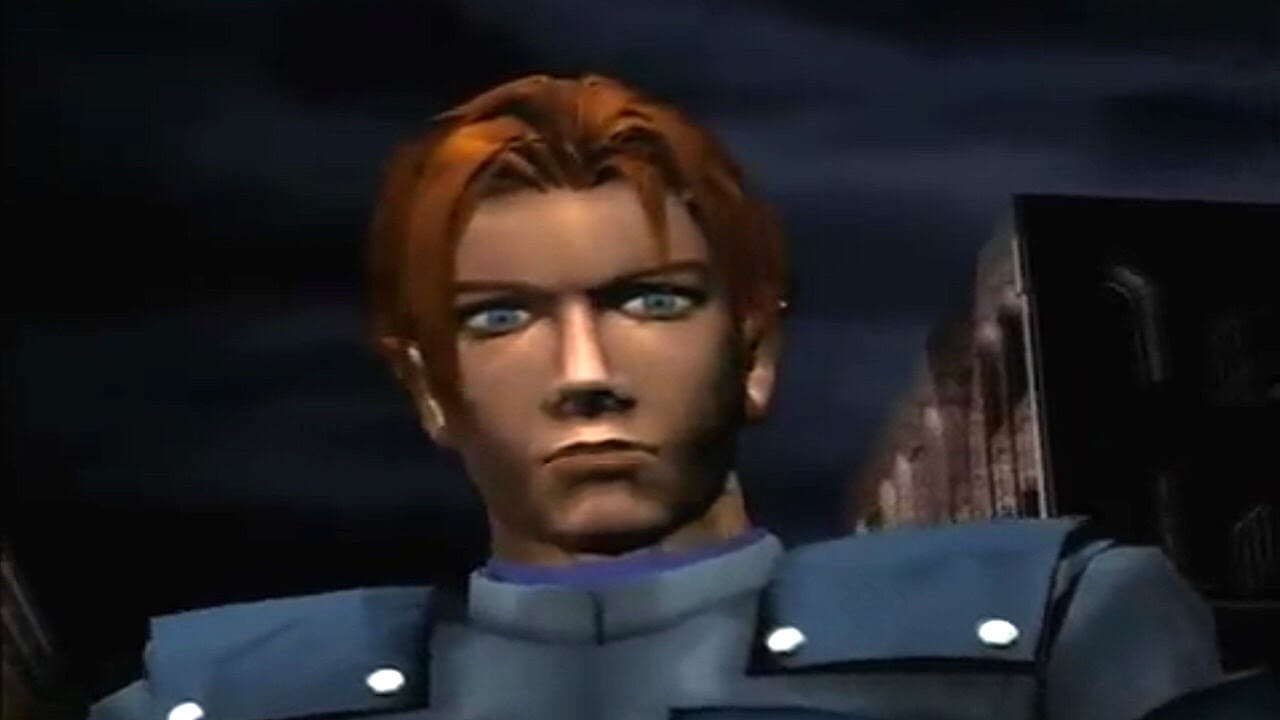
Leon S. Kennedy begins his journey as an idealistic, bright-eyed rookie, eager to make a difference. His dialogue frequently underscores this initial naivety, which quickly gives way to confusion, determination, and growing disillusionment as he confronts the horrific reality of Raccoon City. His lines are often a blend of desperate calls for help, attempts to assert authority in a world gone mad, and expressions of sheer disbelief. This "stiff" delivery, far from being a flaw, accentuates his character’s overwhelmed state, making his moments of bravery all the more impactful. Players feel his struggle to process the nightmare around him, mirroring their own disorientation. His journey through the Raccoon City Police Department, a once-proud symbol now infested with the undead, is marked by his unwavering resolve to protect others, even as his world crumbles.
Claire Redfield: Compassion and Resilience
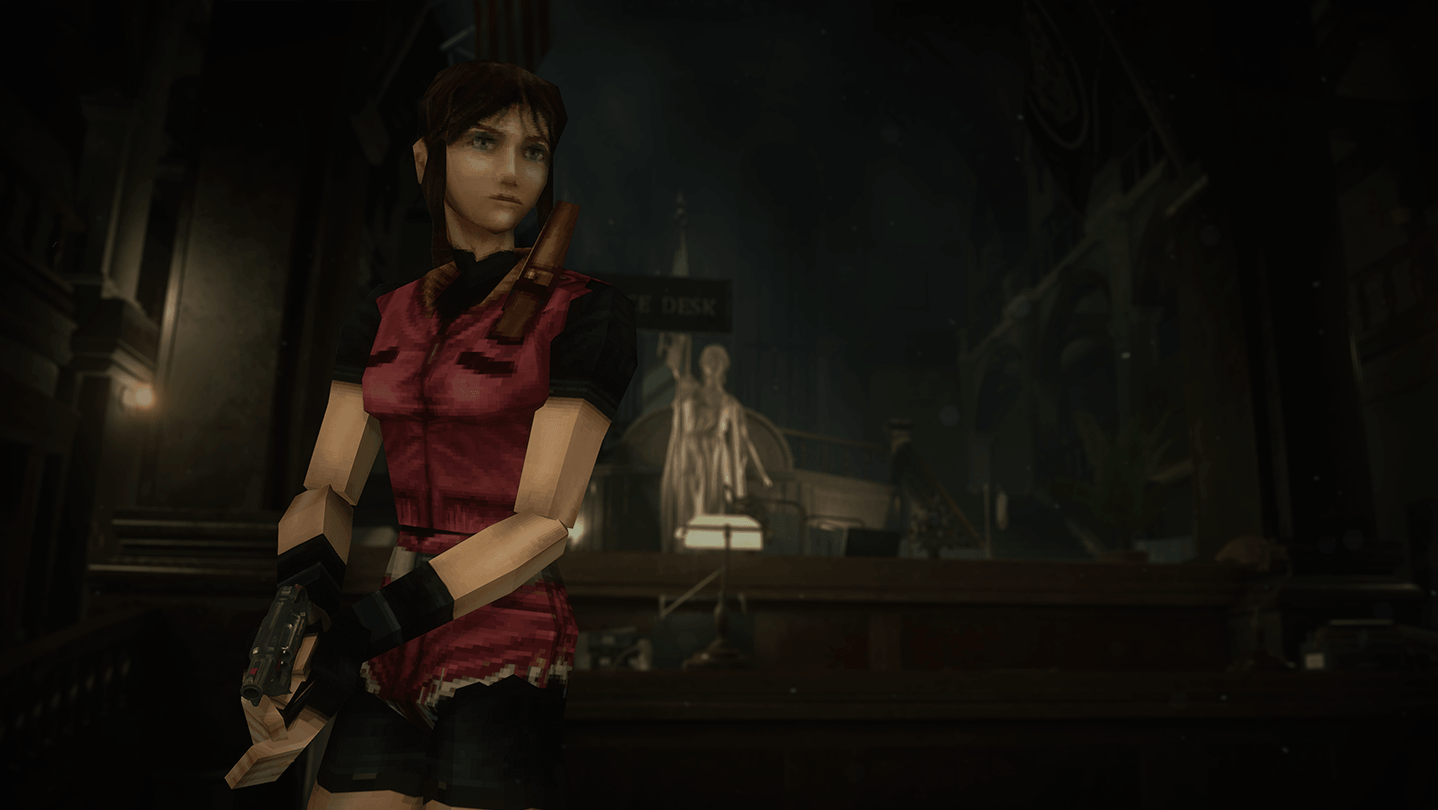
Claire Redfield stands as the other main protagonist, driven by a powerful sense of purpose: finding her brother, Chris. Her dialogue reflects a personality defined by independence, confidence, and a deep well of compassion, particularly evident in her interactions with the young Sherry Birkin. Unlike Leon, Claire arrives in Raccoon City already understanding the dangers associated with Umbrella, giving her a more grounded, yet equally urgent, perspective. Her lines often convey a pragmatic approach to survival, coupled with fierce protectiveness. She speaks with a directness that showcases her resilience, often offering comfort or issuing determined challenges to the horrors she faces. Her dialogue underscores her strength and resourcefulness, cementing her status as a formidable and empathetic hero.
Ada Wong: Enigma and Moral Ambiguity
Ada Wong is introduced as a mysterious and enigmatic figure, a professional agent whose true allegiances remain ambiguous throughout much of the game. Her dialogue is characterized by a cool, calculating demeanor, often laced with subtle manipulation and a professional detachment that hints at a complex moral compass. Ada’s lines are sparse but impactful, designed to keep both Leon and the player guessing about her intentions. She embodies a seductive blend of danger and allure, her words carefully chosen to serve her hidden agenda. Her exchanges frequently showcase a pragmatic worldview, contrasting sharply with Leon and Claire’s more overt heroism, and adding layers of espionage and intrigue to the survival horror narrative.
The Supporting Cast: Fleeting, Yet Impactful
Even the supporting characters, despite their limited screen time, contribute significantly to the game’s memorable dialogue. Characters like Chief Brian Irons, the corrupt police chief whose descent into madness is chillingly conveyed through his deranged monologues, or the brilliant but tragically misguided Annette Birkin, whose frantic explanations of her family’s dark legacy reveal both scientific genius and maternal desperation. Marvin Branagh, the wounded but steadfast R.P.D. officer, offers crucial guidance with his dying breaths, his words carrying the weight of a city’s fall. These exchanges, whether filled with panic, conspiracy, or moments of genuine human connection amidst the terror, collectively form the tapestry of Resident Evil 2‘s distinctive narrative voice. The occasional cheesy one-liners, often delivered with earnest sincerity, also contribute to the game’s enduring charm and cult status, providing moments of unexpected levity in an otherwise grim experience.
The Remake’s Evolution and the Original’s Enduring Charm
The 2019 Resident Evil 2 remake, developed using Capcom’s highly acclaimed RE Engine, achieved both critical acclaim and commercial success, selling over 10 million units worldwide by 2023. It masterfully reimagined the original’s claustrophobic environments and intense gameplay with modern graphics, an over-the-shoulder camera perspective, and refined controls. The remake also updated the dialogue, opting for a more contemporary, less "stilted" delivery that aligned with modern cinematic gaming standards, offering a more realistic and polished voice acting performance.
While the remake received widespread praise for its technical prowess and terrifying atmosphere, the original’s dialogue continues to hold a special place in the hearts of many fans. The rawness and sincerity of the 1998 version, including its occasional "cheesy one-liners" and earnest, sometimes awkward, pronouncements, have become an integral part of its identity. These elements, which might be seen as imperfections by modern standards, contributed to the original’s unique charm and cult status, creating moments of unintentional levity or profound impact that resonate precisely because of their unfiltered quality. The stark contrast between the characters’ often stiff delivery and the horrific reality they faced amplified the game’s sense of dread and desperation, fostering a distinct emotional connection that newer, more polished versions might struggle to replicate.
A Lasting Legacy: Influence and Impact
Resident Evil 2‘s impact on the gaming industry, and particularly the survival horror genre, cannot be overstated. It refined and expanded upon the mechanics established by its predecessor, setting new benchmarks for narrative complexity, atmospheric design, and replayability through its innovative "Zapping System." The game’s success solidified Capcom’s position as a leading developer of mature, story-driven experiences and cemented the Resident Evil franchise as one of the most important in gaming history.
The characters of Leon S. Kennedy, Claire Redfield, and Ada Wong became iconic figures, their archetypes influencing subsequent character designs across the medium. Their individual journeys, fraught with peril and moral dilemmas, offered players compelling reasons to push through the horrors of Raccoon City. The game’s themes of corporate malfeasance and biological warfare remained chillingly relevant, resonating with broader societal anxieties. It helped define what a successful sequel could achieve, building upon an original while forging its own identity.
Decades after its initial release, Resident Evil 2 continues to be a subject of academic study, fan discussion, and speedrunning challenges. Its enduring legacy is a testament to the power of a well-crafted narrative, innovative gameplay, and a distinctive artistic vision – even one that embraces the quirks of its era. Leon’s determination, Claire’s compassion, Ada’s secrecy, and the collective struggle of Raccoon City’s inhabitants, all conveyed through its uniquely memorable dialogue, ensure that the 1998 Resident Evil 2 remains a revered masterpiece, well worth revisiting roughly 28 years later. For those interested in exploring further memorable gaming dialogue, an examination of quotes from Resident Evil 4 offers another deep dive into the franchise’s evolving narrative voice.
About the Author






