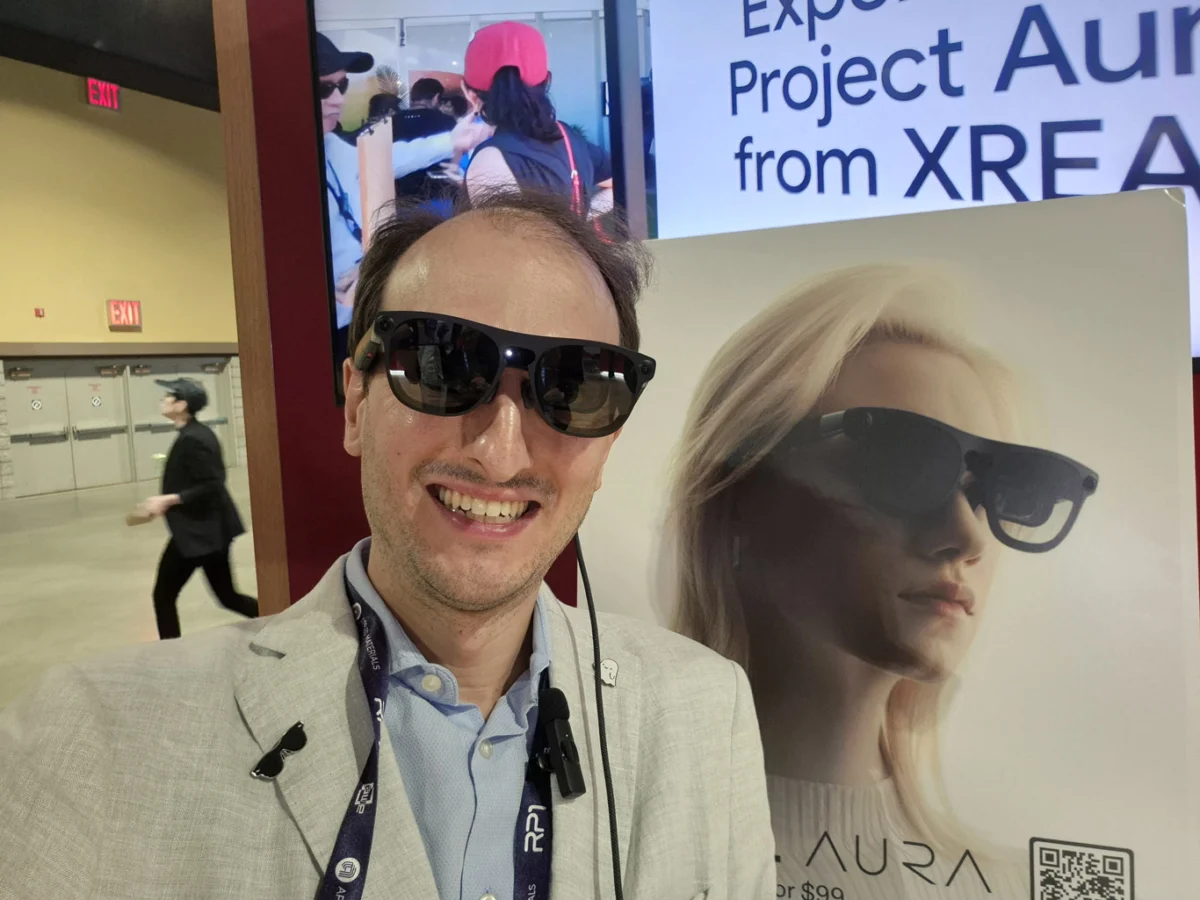
The extended reality (XR) hardware market has reached a critical inflection point as XREAL, a leading developer of augmented reality (AR) eyewear, officially disclosed the pricing and availability of its highly anticipated Aura glasses. The announcement, which positions the device at a premium price point of $1,279 for the 12GB RAM/256GB storage model and $1,499 for the 16GB RAM/512GB storage variant, underscores a broader industry trend toward high-performance, standalone spatial computing. However, the launch is marked by significant geographic restrictions and a shifting competitive landscape that includes new hardware from Pimax and evolving enterprise strategies from Meta.
XREAL Aura Launch and the European Market Exclusion
XREAL’s decision to begin shipping the Aura headset before the upcoming winter holiday season follows months of speculation regarding its market positioning. While reservation holders in the United States, Canada, Japan, and Korea are now permitted to finalize their purchases, consumers in the European Union and Australia have been informed that the device will not be available in their regions for the foreseeable future. XREAL has initiated a refund process for reservation holders in these excluded territories, citing a need for "regional optimization."
Industry analysts suggest that this "optimization" likely refers to the complex regulatory environment within the European Union, specifically concerning the EU AI Act and data privacy regulations. The XREAL Aura utilizes advanced AI features, including integration with Google’s Gemini, which may require further compliance adjustments to meet European standards. This geographic bifurcations highlights a growing challenge for global hardware manufacturers who must navigate diverging international standards for artificial intelligence and biometric data processing.

Pimax Crystal Pro and the Spation Ecosystem
In a direct response to the growing demand for high-end PC-tethered and wireless VR, Pimax has unveiled the Crystal Pro. This announcement appears strategically timed to compete with the rumored Steam Frame and other high-fidelity PCVR solutions. The Crystal Pro features dual 2,880 x 2,880 pixel displays, a 110-degree horizontal field of view (FOV), and a refresh rate of up to 120Hz. To maintain a lightweight form factor, the device utilizes a pocket-mounted external battery.
A significant technical highlight of the Pimax ecosystem is the 60G AirLink antenna, a third-generation wireless solution priced at $599. The technology utilizes the 60GHz frequency band to deliver near-uncompressed video streaming with a reported latency of just 2ms, addressing one of the primary hurdles in high-performance wireless VR. Furthermore, Pimax introduced "Spation," a specialized mini-PC equipped with high-end graphics cards, such as the NVIDIA RTX 5070 Ti or AMD RX 9070 XT. This "Steam Machine" alternative is designed to provide a turnkey solution for enthusiasts seeking the highest possible graphical fidelity in a compact footprint.
The Evolution of VR Content: Ported vs. Native Development
The software landscape is undergoing a similar transition, evidenced by the critical acclaim received by the recent VR mod for the AAA title Titanfall 2. Despite not being a native VR title, the mod’s success has sparked a debate within the community regarding the necessity of VR-native design. The mod offers the depth, narrative length, and graphical polish often missing from smaller, native VR "experiences."
This trend suggests that the "flatscreen-to-VR" pipeline may be a viable short-term solution for the "content drought" often cited as a barrier to VR adoption. While native VR games allow for more intuitive hand interactions and physics-based mechanics, the success of ports like Titanfall 2 and Resident Evil 4 VR indicates that a large segment of the user base prioritizes high-budget production values and deep gameplay systems over perfect VR-centric ergonomics.

Shifts in Industry Media and Corporate Leadership
The XR industry’s maturity is also reflected in the evolution of its dedicated media outlets. Road to VR, a premier publication in the space, recently celebrated its 15th anniversary. Founded by Ben Lang prior to the landmark Oculus Rift Kickstarter, the site has documented the industry’s trajectory from a niche hobby to a multibillion-dollar sector.
In a notable leadership transition, Ben Lang has stepped down as Executive Editor to join Viture, a competitor in the smartglasses market, in a strategic corporate role. Scott Hayden, a longtime contributor to the publication, has assumed the role of Executive Editor. This move mirrors a broader trend of veteran XR journalists and analysts transitioning into internal roles at hardware startups, bringing decades of industry perspective to product development.
Enterprise Expansion and Regulatory Hurdles
Meta has continued its push into the professional and enterprise sectors with the announcement of a safety-rated version of its Oakley Meta Vanguard glasses. These clear-lens smartglasses meet Z87 and Z87+ standards for impact resistance, making them suitable for industrial environments, construction sites, and medical settings. By targeting the Business-to-Business (B2B) market, Meta is attempting to diversify its revenue streams beyond social media and consumer gaming, though the long-term success of "Meta for Work" remains contingent on consistent software support and enterprise-grade security.
Simultaneously, the industry faces new legislative challenges. In Norway, lawmakers have proposed a temporary ban on the use of smartglasses in public places, citing privacy concerns regarding the discreet recording of bystanders. If enacted, such a ban could set a precedent for other European nations, potentially stifling the adoption of "all-day wear" AR devices.

Supply Chain Constraints and Technical Logistics
The high-end PCVR market faces potential headwinds due to shifts in the semiconductor industry. Reports indicate that NVIDIA may have halted or slowed the production of the GeForce RTX 5090 to prioritize the manufacturing of AI-focused data center chips, which offer significantly higher profit margins. This pivot toward AI infrastructure could lead to a "supply drought" for enthusiasts, driving up the costs of the hardware required to run next-generation VR headsets like the Pimax Crystal Pro.
Furthermore, Valve’s Steam Frame continues to experience logistical delays. While some customers have begun receiving reservation invites, others are reporting estimated delivery windows stretching into 2027. This suggests that even established players in the hardware space are struggling with the complexities of manufacturing and global distribution in the current economic climate.
Conclusion and Future Outlook
The XR industry in late 2024 and early 2025 is characterized by a "push and pull" between ambitious hardware specs and the realities of global logistics and regulation. XREAL’s Aura pricing confirms that high-end AR remains a luxury commodity, while Pimax’s aggressive spec-chasing caters to a dedicated but niche enthusiast market. As Meta pivots toward enterprise and AI-integrated eyewear, the success of these devices will likely depend less on technical specifications and more on the ability of manufacturers to navigate international privacy laws and provide compelling, deep content libraries. The upcoming Apple events for immersive storytellers and the scheduled Upload VR Showcase in December will serve as further indicators of whether the software ecosystem can finally catch up to the rapidly advancing hardware.
About the Author