

In a significant philanthropic announcement, renowned tech entrepreneur Jeff Atwood, co-founder of Stack Overflow and Discourse, has committed to donating half of his remaining personal wealth over the next five years to initiatives aimed at revitalizing the American Dream. The pledge, disclosed in a recent statement, is rooted in Atwood’s deep concern over the erosion of core American ideals, exacerbated by rising economic disparities, escalating costs of essential services, and increasing political polarization. This long-term commitment follows an immediate allocation of eight $1 million donations to nonprofit organizations addressing urgent needs across the United States.
A Call to Action Amidst National Uncertainty
Atwood’s declaration arrives at what he describes as an "unprecedented point in American history," expressing a profound worry that the nation is losing sight of the fundamental promise of the American Dream – the belief that every individual, regardless of background, can achieve success and prosperity through hard work and determination. His call to action is two-pronged: immediate relief for those in dire need and a sustained investment in systemic changes to ensure future generations have equitable access to opportunity.
The initial phase of the Atwood family’s philanthropic endeavor saw $8 million distributed to various nonprofit groups. While specific recipients were not detailed in his public statement, the focus was explicitly on organizations "effectively helping those most currently in need here in America." This immediate support underscores the urgency Atwood perceives in addressing present-day hardships. Looking ahead, the pledge of half his remaining wealth within the next five years signifies a substantial, proactive effort to tackle deeply entrenched societal issues, moving beyond traditional, end-of-life philanthropic models.
From Humble Beginnings to Tech Trailblazer
Atwood’s personal journey stands as a testament to the very American Dream he now seeks to protect. Born to parents from rural West Virginia and North Carolina, he recounts a challenging upbringing marked by financial struggles and the pervasive issue of alcoholism within his family. Despite these adversities, his parents’ unconditional love and their eventual healing, spurred by their divorce when Atwood was 16, instilled in him a profound understanding of empathy and connection.
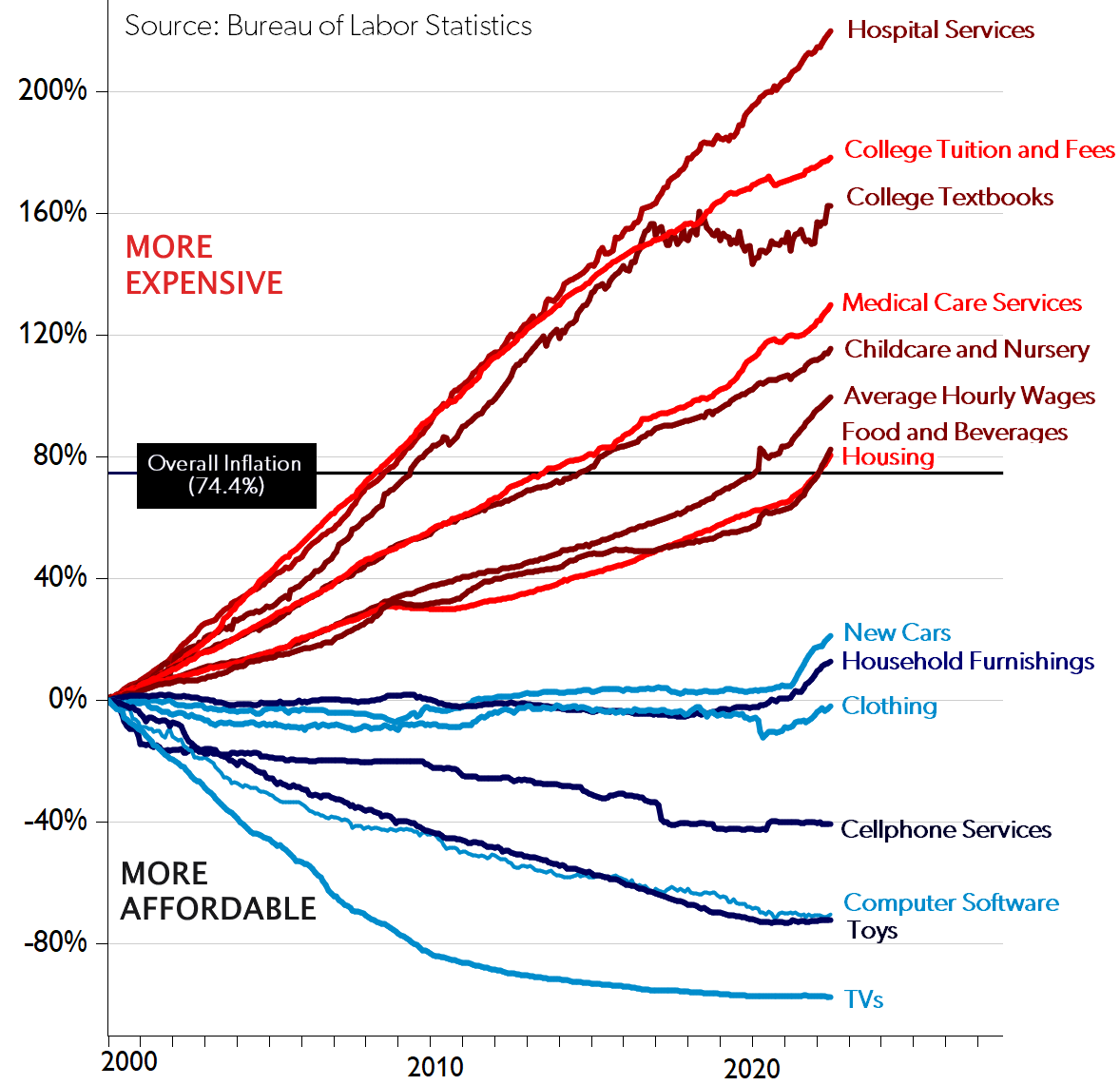
He attended public schools in Chesterfield County, Virginia, and later graduated from the University of Virginia in 1992, an institution founded by Thomas Jefferson, whose words on "Life, Liberty and the pursuit of Happiness" form a cornerstone of the American ideal. During his college years, Atwood worked part-time as a cashier at Safeway, earning the federal minimum wage, and relied on Pell grants and scholarships to cover his tuition. This firsthand experience with financial precarity during his education provides a crucial lens through which he views the current challenges facing aspiring students. He notes that the annual in-state tuition at his alma mater, a manageable $3,000 in 1992, has surged to $23,000 today – an eightfold increase in three decades. This drastic escalation in education costs, alongside rising expenses in healthcare and housing, he argues, makes the American Dream increasingly unattainable for many.

Building Digital Democracies: Stack Overflow and Discourse
Atwood’s career as a software developer and entrepreneur provided him with a unique platform to champion democratic ideals in the digital sphere. In 2008, he co-founded Stack Overflow with Joel Spolsky, a groundbreaking Q&A website that became an indispensable resource for programmers worldwide. Stack Overflow embodied a "digital democracy," where users collectively ranked questions and answers, and community moderators were elected through ranked-choice voting. This model fostered a shared, Creative Commons knowledge base, demonstrating the power of collective intelligence and democratic governance in a digital context. The platform’s success culminated in an $1.8 billion acquisition in 2021, underscoring its immense value and impact on the global software community.
Building on this success, Atwood co-founded Discourse, an open-source tool designed for constructive and empathetic community discussions. Discourse extends the principles of digital democracy by empowering communities to establish and enforce boundaries, fostering respectful dialogue even amidst disagreement. This emphasis on "digital democracy and empathy" highlights Atwood’s belief in the necessity of human connection and understanding, particularly in an increasingly digital world where anonymity can often lead to dehumanized interactions. He posits that extending kindness through screens is crucial as society becomes more interconnected online.
The Philanthropic Vision: "Sharing the American Dream"

Atwood views both Stack Overflow and Discourse as projects for the public good, albeit structured as corporations. He acknowledges that his financial success, a combination of "hard work and good luck," is a direct outcome of the American Dream’s promise. However, his understanding of this dream evolved beyond personal achievement after attending a high school theater performance of S.E. Hinton’s "The Outsiders." The play’s enduring message, particularly the famous line "stay gold," resonated deeply with him, leading to a profound realization: the true meaning of "staying gold" is "sharing the American Dream."
This epiphany forms the philosophical bedrock of his philanthropic pledge. He cites the director’s program notes from "The Outsiders," emphasizing that "strength lies not just in overcoming hardships but in staying true to ourselves and lifting up those around us," and highlighting themes of "resilience, empathy, and unity." For Atwood, true prosperity is not measured by individual wealth but by the absence of poverty, the prevalence of health, the efficiency of public schools, and the widespread access to knowledge, echoing the sentiments of W.E.B. Du Bois.
Beyond Traditional Philanthropy: A Proactive Stance
Atwood’s approach to philanthropy also represents a departure from conventional models. While he admires figures like Warren Buffett and his Giving Pledge, which commits billionaires to donate the majority of their wealth, Atwood points to the critical question of when that wealth is transferred. He notes Buffett’s recent amendment to his pledge, directing his entire fortune at death to a charitable trust run by his adult children. Atwood, conversely, feels compelled to act now, stating, "It is now time to allocate half the wealth I was so fortunate to be dealt within the next five years, not just for my own family, but for all my fellow Americans." He asserts that he is retaining only enough wealth to ensure his own children can afford college and a home, reflecting his concern for their future amidst current economic realities.
His decision is partly galvanized by the political landscape following the November 2024 elections, which he describes as having "raised the stakes." He expresses concern that a significant portion of the electorate voted for interpretations of the American Dream that he struggles to comprehend.
Challenges to Democracy and the Pursuit of Equality
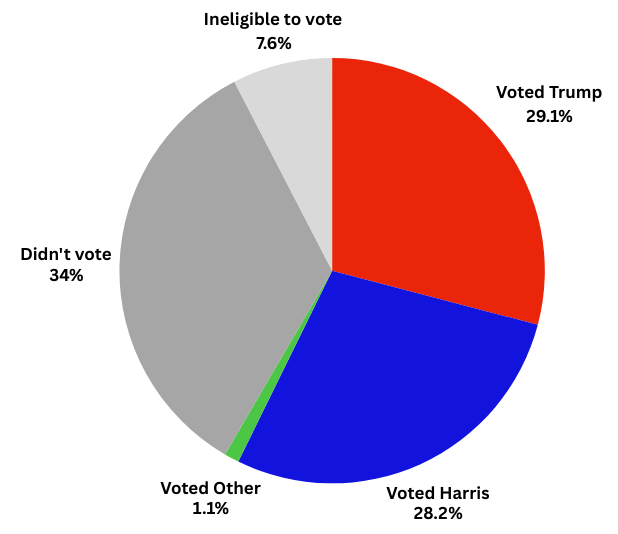
Atwood’s analysis extends to the state of American democracy itself. He highlights the alarming rates of non-participation in the 2024 elections, where 34% of eligible adults did not vote, and another 7.6% were ineligible due to citizenship status or felony convictions. This means approximately 42% of adults had no say in the election, raising questions about voter suppression, gerrymandering, and a pervasive sense that individual votes do not matter.
He contends that many Americans who did vote are signaling a belief that the government is failing to "keep America fair for everyone," jeopardizing the nation’s standing as a leading democracy. To address this, Atwood proposes electoral reforms, including making Election Day a national holiday, implementing universal mail-in voting, and adopting ranked-choice voting to ensure broader representation and greater weight for every vote. He also advocates for strengthening democratic institutions such as state and local election boards and the Federal Election Commission.
The issue of wealth inequality is central to Atwood’s critique. He observes that having attained significant wealth has unintentionally distanced his family from the struggles of ordinary Americans, making him acutely aware of the vast disparities. He cites data showing that the top 1% of Americans increased their share of the nation’s wealth from 24% in 2012 to 30% by 2021, and globally, the richest 1% now hold nearly twice as much wealth as the rest of the world combined. He starkly labels this level of wealth concentration "unamerican."
Political Polarization and the Path Forward
Atwood also attributes the slowdown in governmental change to the escalating political polarization within the two-party system. He points out that the last meaningful constitutional amendment in the U.S. in the past 60 years was the 26th Amendment in 1971, which lowered the voting age to 18. Political polarization is currently at historically high levels, mirroring periods like the Gilded Age, and he warns that in a two-party system, such division is not only counterproductive but potentially dangerous. This raises a fundamental question for Atwood: "Do we all still believe in the same American Dream?"
He acknowledges the inherent tension within the American Dream, capable of leading down "the path of hate" or "the path of love," referencing Martin Luther King Jr.’s philosophy. His pledge is unequivocally directed towards an "American Dream founded on love."
A Collaborative Endeavor for a Shared Future
While the immediate $8 million donations have been completed, the allocation of the remaining half of his family’s wealth over the next five years will focus on longer-term systemic efforts. Atwood emphasizes that "there is no single solution" and invites collaboration, offering to "advise and empower others working towards the same goal." This collaborative spirit is reflective of his tech ventures, where open-source principles and community contributions were paramount.
In a follow-up, Atwood has indicated that further details on the specific long-term efforts his family has chosen to support will be shared in an upcoming blog post, "Let’s Talk About The American Dream," and a joint presentation with Alexander Vindman at Cooper Union on March 20th. His message is a potent blend of urgency, personal accountability, and an enduring belief in the foundational ideals of the United States, urging all Americans to "Stay gold." His initiative serves as a powerful reminder that the American Dream, while often individually pursued, finds its true fulfillment in collective responsibility and shared prosperity.
About the Author







