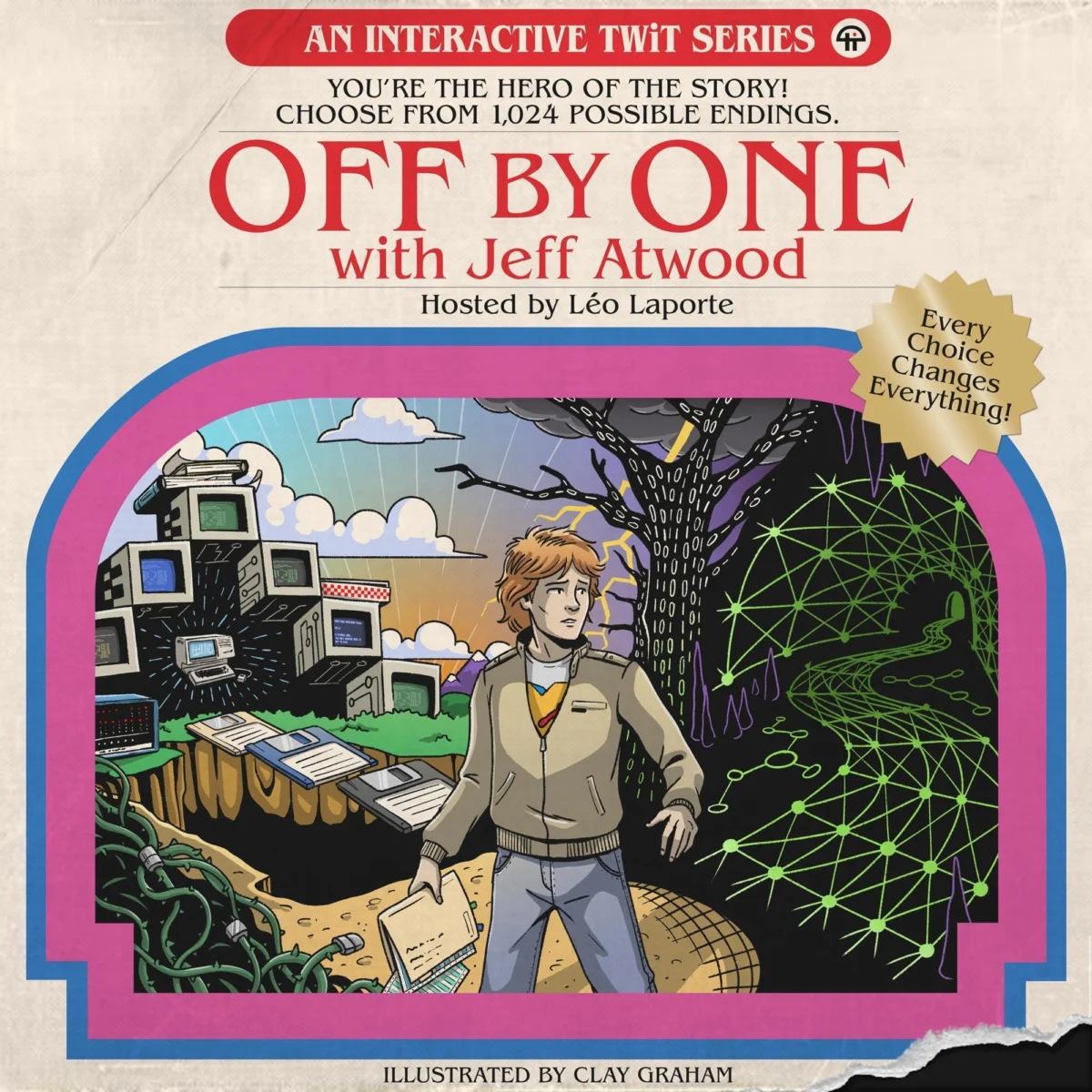
Veteran technologist and entrepreneur Jeff Atwood, widely recognized as the co-founder of Stack Overflow and Discourse, has launched a new monthly program titled "Off By One with Jeff Atwood" on the prominent TWiT network, co-hosted by tech broadcasting pioneer Leo Laporte. The series, which debuted its second episode recently, aims to offer an expansive and often unconventional exploration of technology, computing history, and broader societal issues, diverging from typical tech discussions with a distinctive blend of humor and critical insight. The show’s title itself is a clever nod to a classic programmer’s jest, hinting at its idiosyncratic yet deeply informed perspective.
The Genesis of a New Tech Dialogue
The collaboration between Atwood and Laporte stems from an initial guest appearance by Atwood on TWiT’s "Intelligent Machines #859" on February 25th. This appearance, which also featured Paris Martineau and Jeff Jarvis, served as a catalyst, demonstrating a dynamic on-air chemistry that prompted the creation of a dedicated series. Wesley Faulkner is credited with facilitating this connection, introducing Atwood to Laporte and recommending his participation, thereby paving the way for "Off By One." The first episode of the new show was recorded approximately three weeks prior to the announcement of the second, establishing a monthly cadence for the series.
The TWiT network, founded by Leo Laporte, has been a cornerstone of independent tech journalism and commentary since its inception in 2005. Known for its extensive catalog of podcasts and video shows covering a vast array of technology topics, TWiT has cultivated a dedicated global audience. Its platform provides an ideal environment for "Off By One," allowing Atwood and Laporte to leverage a well-established infrastructure and engaged community.
Unpacking the A Nod to Programming Lore
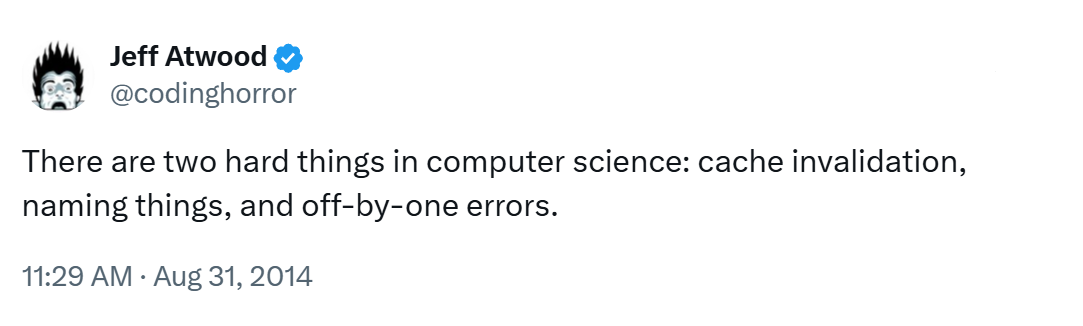
The chosen title, "Off By One with Jeff Atwood," is particularly significant for those within the programming community. It directly references the "off-by-one error," a common mistake in computer programming where a loop iterates one time too many or too few. This specific error is humorously incorporated into a well-known variation of a quote attributed to computer scientist Phil Karlton (often misattributed to Martin Fowler), which states: "There are two hard things in computer science: cache invalidation, naming things, and off-by-one errors." The addition of "off-by-one errors" to Karlton’s original "two hard things" (cache invalidation and naming things) is a long-running inside joke among developers, highlighting the subtle complexities and frustrations inherent in software development. Atwood himself acknowledged the humor, stating, "Naming things is hard… but we quickly landed on Off By One with Jeff Atwood — which is funny for so many reasons, but mainly because of this programmer joke." This self-aware naming choice immediately signals the show’s intention to delve into the nuances of computing culture while maintaining a lighthearted, approachable tone.
A Deep Dive into the Discourse: Themes from Early Episodes
The first two episodes of "Off By One" have provided a window into the eclectic and thought-provoking discussions that characterize the show. The program aims for "pure joy end to end," emphasizing "low-level insanity and… mandatory fun," a clear departure from the often serious or critical tone prevalent in much of tech media. The show’s official description on twit.tv/obo highlights its meandering yet insightful nature: "Jeff Atwood… joins Leo Laporte monthly for a conversation that follows its own logic. Prop comedy, computing history, the open web, wealth inequality, yo-yos. Off by one topic at all times, in the best possible way."
Atwood’s Philosophy on Code and Engineering
A recurring theme in the discussions revolves around Atwood’s unique philosophy on software development. Despite his monumental contributions to the tech world through platforms like Stack Overflow, which serves an estimated 100 million users monthly and is an indispensable resource for developers, Atwood humbly asserts, "I am not an elite coder by any stretch of the imagination… I am very persistent." Laporte countered this, recognizing Atwood’s influence as "one of the chief voices, in coding." Atwood clarified his stance, advocating for "code that doesn’t kill you in so many different ways. You know, survivable code. Ideally, no code at all." This "zen statement" posits that the best code is often the code that doesn’t need to be written, emphasizing good engineering practices, robust processes, and a collaborative, human-centric approach to development. His advocacy extends beyond mere technical proficiency to encompass the human element, stressing that developers "should do this together, and we should actually kinda like each other, even." This perspective resonates deeply with his work on Discourse, an open-source discussion platform designed to foster civil and productive online communities.
Reflections on "Winning Capitalism" and Societal Responsibility
The conversations also touch upon deeply personal and societal issues. Atwood shared a poignant anecdote about his father, humorously referring to his passing as "the last season of the John Atwood show," which "was, it f***** was, it really was! Because we won capitalism, and then we went back and made it better for everyone." This reflection, while personal, carries broader implications about individual success and the subsequent responsibility to contribute positively to society. It subtly introduces a theme of ethical responsibility, particularly for those who have achieved significant financial or professional success within the capitalist system.
Addressing Wealth Inequality and Poverty

One of the most impactful discussions, highlighted by Atwood, centered on wealth inequality. He presented a stark claim: "If we simply collected a fair tax from Billionaires, we could literally eliminate all poverty in this country at the 100% FPL [Federal Poverty Level] level, which is $15,000 per year. All poverty. We would have zero poverty. We have the means to do it. We lack the will." This statement, which Atwood has reportedly shared on platforms like Mastodon and LinkedIn, underscores a critical societal debate. According to various reports, including those from Oxfam and the Congressional Budget Office, wealth concentration has indeed reached historic levels. For example, a 2023 Oxfam report indicated that the richest 1% globally owned nearly two-thirds of all new wealth created since 2020. While the specific mechanism for eliminating poverty through billionaire taxation is a complex policy debate, Atwood’s assertion brings a vital social justice component to the tech-focused show, encouraging listeners to consider the broader ethical responsibilities of wealth and innovation.
Examining Artificial Intelligence: "JPEG for Words"
The show also delved into contemporary tech topics, notably the rise of Large Language Models (LLMs). Atwood offered a compelling analogy, describing LLMs as "JPEG for words." He explained: "I mean.. have you seen some of the stuff LLMs will do when you tell them to optimize? It’s like, optimize this for 95% and it’s like okay, ‘return true.’ Well, because it doesn’t know what it’s doing. It has no actual understanding. It’s playing a game of global brain statistics and copy paste." This observation highlights a critical distinction between true understanding and sophisticated pattern matching, a subject of intense debate within the AI community.
Atwood acknowledged the practical utility of LLMs, particularly in summarization. He recounted his skepticism regarding their implementation in Discourse but was impressed by their ability to accurately summarize complex internal discussions, capturing key points "without much loss." This "JPEG for that conversation" metaphor effectively communicates both the efficiency and inherent limitations of current LLM technology. The analogy further resonates with the concept that while JPEG compression is effective for many images, it is not universally optimal, as demonstrated by his humorous example: "Now does JPEG work on EVERY image? No. Garfield is a bad choice, for, yknow, JPEG." This nuanced view reflects the current consensus among many AI experts: LLMs are powerful tools for specific tasks but lack genuine comprehension or common sense reasoning.
The Second Gilded Age and the Call to Action
The discussion extended to the concept of a "second Gilded Age," drawing parallels between contemporary wealth disparity and the late 19th-century era of industrial magnates. Atwood asserted, "Ok, the first gilded age, we’re deep in the second one now. I mean, just look up the numbers. More money in the hands of fewer people than in any other period of time. In the first gilded age, that was basically the railroad barons. Guess who it is in the second gilded age? I’m in this picture and I don’t like it. So like, what are we gonna do about it?" This self-aware commentary, acknowledging his own position within the tech industry, serves as a direct challenge to the audience and to those within the tech sector to consider their role and responsibility in addressing systemic inequalities. The Gilded Age, characterized by rapid economic growth alongside extreme social stratification, provides a historical lens through which to examine current socio-economic trends, particularly the concentration of wealth in the hands of tech billionaires.
Community Engagement and the Future of "Off By One"
Atwood emphasized that "sharing is crucial" for him, stating, "My happiness only becomes real when I share it with all of you." He views "Off By One" as an extension of this philosophy, allowing him and Laporte to "make our happiness real in a completely different dimension than writing alone — via the expressions on our faces, the tone of our voices, our body language. In other words, you can see and hear how we feel." This highlights the intimate and personal connection fostered by video podcasting, contrasting it with the more solitary act of blogging.
The show actively encourages audience participation. The next episode is scheduled for recording in four days, with a live stream exclusively available for Club TWiT Members. To further engage the community, Atwood has initiated a unique offer: the first 10 individuals who watch the entire second episode, enjoy it, and fill out a specific form will receive a full year of Club TWiT membership, covered personally by Atwood. Club TWiT offers ad-free content, access to live streams, and participation in the TWiT Discord community.
Beyond the live streams, Atwood encourages engagement on the TWiT community Discourse forum, accessible at twit.community. He playfully suggested that active participants on the Discourse forum might receive a "super cool little token of appreciation in the postal mail from some user named ‘Junk’," adding a layer of mystery and reward for dedicated community members. This emphasis on community interaction aligns perfectly with Atwood’s work on Discourse, advocating for structured and meaningful online conversations as a means of fostering better communication and even improving "overall writing and communication skills… Or your life, even."
"Off By One with Jeff Atwood" represents a compelling new addition to the tech media landscape. By blending deep technical insights with broader societal commentary and a generous dose of humor, Atwood and Laporte are crafting a unique platform for exploring the multifaceted world of technology and its human implications. The show’s commitment to fostering a positive, engaging, and thought-provoking dialogue positions it as a significant voice in the ongoing conversation about the future of tech and society.
About the Author