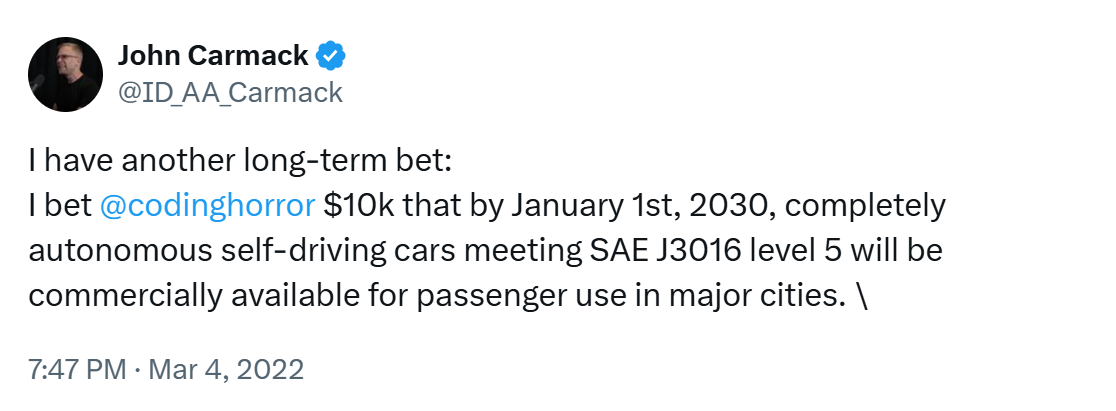
The tech world is abuzz following the announcement of a high-stakes, long-term wager between two of its most influential figures: Jeff Atwood, the widely respected software developer behind Coding Horror and co-founder of Stack Overflow, and John Carmack, the legendary programmer responsible for groundbreaking titles like Doom and Quake, and a pioneer in virtual reality. The friendly bet, set at $10,000 to be donated to a 501(c)(3) charity of the winner’s choice, centers on a pivotal question for the future of transportation: will completely autonomous self-driving cars, meeting SAE J3016 Level 5 standards, be commercially available for passenger use in major U.S. cities by January 1st, 2030? Atwood takes the position against this outcome, while Carmack confidently bets for it, setting the stage for a compelling technological race against time.
The wager’s terms are meticulously defined, leaving little room for ambiguity. "Completely autonomous" refers specifically to the Society of Automotive Engineers (SAE) J3016 Level 5 definition. This highest level of automation signifies a vehicle capable of performing all driving tasks under all conditions, with the sole exceptions being natural disasters or emergencies. Critically, Level 5 operation demands zero human attention or interaction during the journey; a passenger simply enters the vehicle, selects a destination, and the car handles every aspect of navigation, perception, and control. This contrasts sharply with currently available systems, which, even in their most advanced forms, typically fall into Level 2 (partial automation requiring constant driver supervision) or, in limited deployments, Level 3 (conditional automation allowing hands-off driving in specific conditions but demanding driver readiness to intervene).
The geographical scope of the bet is also precise: "major cities" are explicitly defined as any of the top 10 most populous cities in the United States. As of recent census data, this list typically includes New York City, Los Angeles, Chicago, Houston, Phoenix, Philadelphia, San Antonio, San Diego, Dallas, and San Jose. For Carmack to win, Level 5 vehicles must be commercially available for passenger use in at least one of these bustling urban environments by the deadline. The monetary stake, while substantial, is intended to be adjusted for inflation by mutual agreement in 2030, ensuring its impact remains relevant and significant for the chosen charity.
Decoding SAE J3016 Level 5 Autonomy: The Ultimate Benchmark
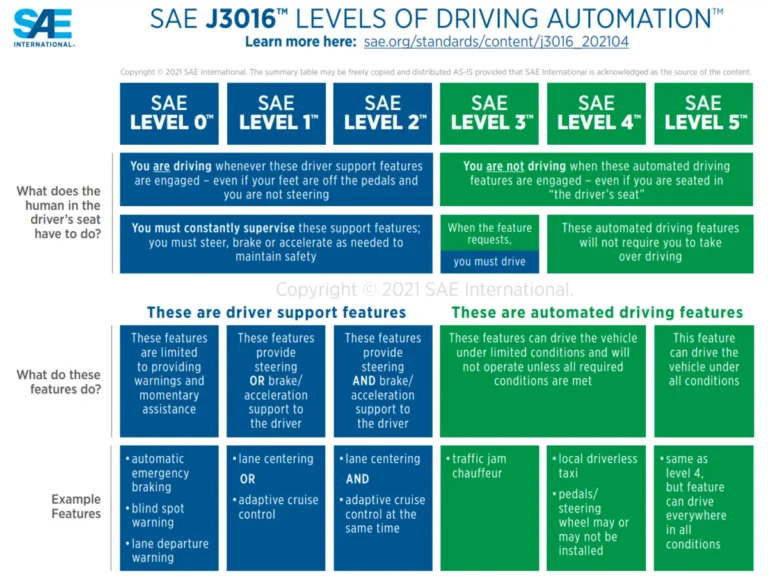
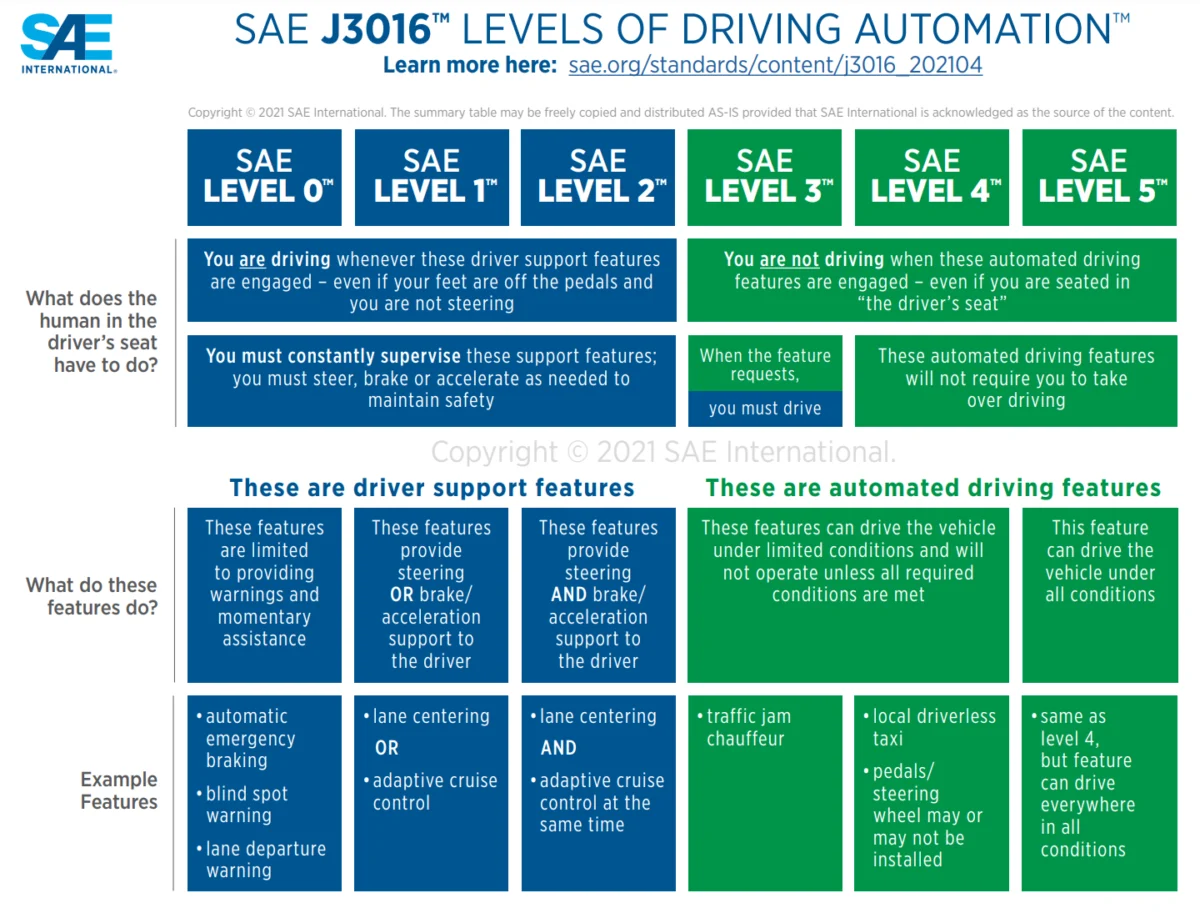
To fully grasp the magnitude of this bet, it’s essential to understand the SAE J3016 classification system for driving automation. This international standard, widely adopted by the automotive industry and regulators, categorizes driving systems into six levels, from Level 0 (no automation) to Level 5 (full automation).
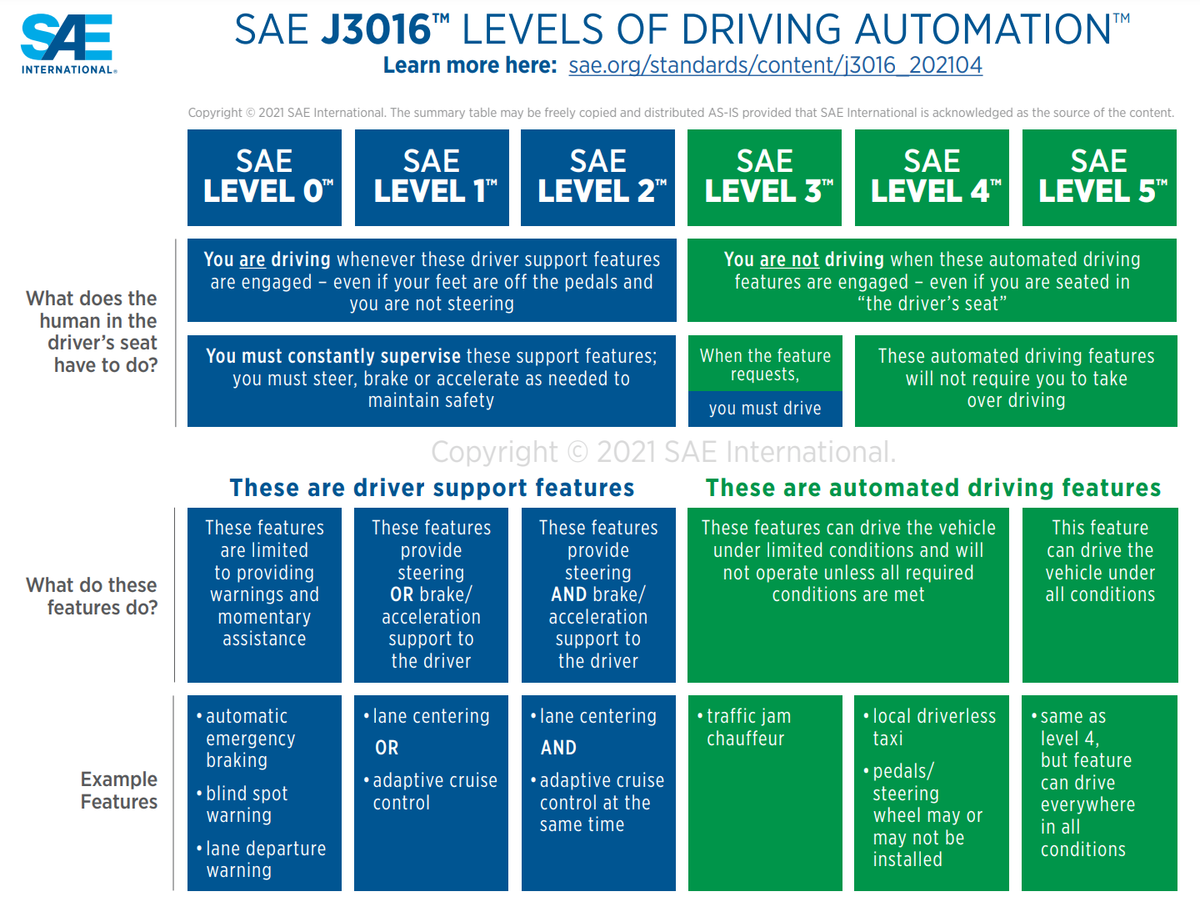
- Level 0 (No Automation): The human driver performs all driving tasks.
- Level 1 (Driver Assistance): The vehicle has either steering or acceleration/deceleration support (e.g., adaptive cruise control or lane keeping assistance).
- Level 2 (Partial Automation): The vehicle can control both steering and acceleration/deceleration simultaneously in certain conditions, but the human driver must constantly monitor the environment and be ready to take over. Most advanced driver-assistance systems (ADAS) on the market today, including Tesla’s Autopilot and GM’s Super Cruise, fall into this category.
- Level 3 (Conditional Automation): The vehicle can perform all driving tasks under specific conditions, and the human driver is not required to monitor the environment. However, the system will request the driver to intervene if it encounters a situation it cannot handle, and the driver must be ready to take over within a few seconds. Mercedes-Benz Drive Pilot is one of the first systems to achieve this, albeit with strict operational design domains (ODDs) like specific highways at low speeds.
- Level 4 (High Automation): The vehicle can perform all driving tasks and monitor the driving environment under specific conditions (e.g., within a geofenced area, specific weather conditions). If the system encounters a situation it cannot handle, it will safely bring the vehicle to a minimal risk condition (e.g., pull over). Human intervention is not required. Robotaxi services like Waymo and Cruise operate at Level 4 within their defined ODDs.
- Level 5 (Full Automation): This is the holy grail of autonomous driving. The vehicle can perform all driving tasks and monitor the driving environment under all conditions that a human driver could manage. It requires no human intervention, period. The vehicle is effectively a robot chauffeur, capable of navigating any road, in any weather, at any time, without human oversight.
The leap from Level 4, as currently demonstrated by leading robotaxi companies in limited areas, to Level 5, as defined by the wager, is monumental. Level 4 systems, while impressive, still operate within highly constrained operational design domains, often limited by geography, speed, weather, and specific road types. Level 5 removes these constraints entirely, demanding a level of robustness and adaptability that has proven extraordinarily difficult to achieve.
The Clash of Titans: Carmack’s Optimism vs. Atwood’s Pragmatism
The personalities and career trajectories of the two participants offer insight into their differing stances. John Carmack, a visionary known for consistently pushing the boundaries of technology, embodies a relentless pursuit of innovation. His work at id Software revolutionized 3D graphics, and his subsequent ventures into rocketry and virtual reality (Oculus VR) demonstrate a deep belief in humanity’s capacity to overcome seemingly insurmountable engineering challenges through sheer ingenuity and iterative development. For Carmack, the exponential growth in computing power, advancements in artificial intelligence, and the rapid pace of sensor technology likely fuel his conviction that Level 5 autonomy is not just possible but imminent within the decade. His willingness to make such a public wager underscores his confidence in the industry’s ability to solve these complex problems.
Jeff Atwood, while equally passionate about technology, often approaches new frontiers with a healthy dose of pragmatism and a keen eye for the practical difficulties of implementation. As a software developer and blogger, he has a history of dissecting complex technical problems and identifying the often-underestimated "last mile" challenges that prevent theoretical breakthroughs from becoming widespread realities. His explicit statement, "I am betting against because I think everyone is underestimating how difficult fully autonomous driving really is," summarizes his position. Atwood views Level 5 autonomy not as an inevitability by 2030, but as an "incredibly challenging computer science problem" that, despite enormous investment and talent, still faces fundamental hurdles. His perspective is not one of opposition to the technology itself—he expresses a personal desire for self-driving cars to free up his commute time—but rather a realistic assessment of the timelines involved in achieving such a profound technological paradigm shift. He even uses his skepticism about the widespread impact of VR in "our lifetimes" as a comparative example of his cautious outlook on certain technologies, suggesting a broader pattern in his analysis.
The Current Landscape: A Reality Check on Autonomous Progress
The journey toward self-driving cars has been long and fraught with both immense progress and significant setbacks. The seeds were sown decades ago with research initiatives, notably the DARPA Grand Challenges in the mid-2000s, which spurred significant advancements in autonomous navigation. Google’s Waymo project, founded in 2009, emerged as an early leader, accumulating millions of miles in simulated and real-world driving. Other major players, including General Motors’ Cruise, Amazon’s Zoox, Apple, and a host of startups, have invested billions into the race.
Today, the most advanced deployments are predominantly Level 4 robotaxi services operating within highly constrained geofenced areas. Waymo, for instance, offers fully driverless rides to the public in parts of Phoenix, Arizona, and San Francisco, California, accumulating millions of autonomous miles. Cruise had also expanded its driverless operations in San Francisco, Austin, and Phoenix before facing significant regulatory scrutiny and a temporary suspension of its driverless permits in California following a severe incident in October 2023. These real-world deployments, while groundbreaking, highlight the persistent challenges:

- Perception in Edge Cases: While AI excels in common scenarios, rare and unpredictable "edge cases" remain problematic. Distinguishing between a plastic bag and a tumbleweed, navigating construction zones with ambiguous signage, or reacting to unexpected human behavior (e.g., jaywalking, erratic cycling) requires superhuman perception and prediction capabilities. Adverse weather conditions—heavy rain, snow, fog, or even direct sunlight glare—continue to severely hamper sensor performance.
- Prediction and Intent: Human driving involves nuanced social cues and intentions that are difficult for machines to interpret. Predicting the behavior of pedestrians, cyclists, and other human drivers in complex urban environments, especially in busy intersections or during rush hour, is a massive challenge.
- Planning and Decision-Making: Autonomous vehicles must make split-second decisions that prioritize safety while also being efficient and compliant with traffic laws. These decisions become exponentially complex in dynamic, unpredictable urban settings. The sheer computational power required to process vast amounts of sensor data and execute real-time decision-making in a Level 5 scenario is immense.
- Safety Validation and Regulatory Approval: Proving the safety of Level 5 systems to regulators and the public demands billions of miles of validated data, both simulated and real-world, far exceeding current capabilities. The ethical and legal frameworks for liability in the event of an accident are still evolving and vary significantly across jurisdictions.
- Infrastructure Requirements: While Level 5 theoretically requires no special infrastructure, the current reality is that many advanced systems benefit from highly detailed, up-to-date HD maps. Maintaining these maps across vast urban landscapes and ensuring their accuracy in real-time is an ongoing challenge.
The recent struggles of companies like Cruise serve as a stark reminder of the technical and regulatory hurdles. The incident in San Francisco, where a Cruise robotaxi dragged a pedestrian after a separate human-driven vehicle initially struck them, led to the suspension of Cruise’s driverless operations in California and a significant reevaluation of its technology and safety protocols. Such events underscore the extreme caution required when deploying technology designed to operate without human intervention in public spaces.
Data, Investment, and Public Perception
The autonomous vehicle industry has attracted staggering levels of investment, with venture capitalists and corporate giants pouring tens of billions of dollars into research and development over the past decade. Companies like Waymo and Cruise have individually secured multi-billion-dollar funding rounds. Despite this capital infusion, profitability and widespread commercialization remain distant for most.
Public perception also plays a crucial role. Surveys consistently show a mixed bag of enthusiasm and skepticism. While many express excitement about the potential benefits of autonomous driving—increased safety, reduced traffic congestion, greater accessibility for the elderly and disabled—a significant portion of the public remains hesitant to trust a driverless vehicle. High-profile incidents, even if rare compared to human-driven accidents, tend to erode public confidence and fuel skepticism, further complicating the path to mass adoption and regulatory approval for Level 5 systems. A 2023 AAA survey, for instance, found that 68% of U.S. drivers are afraid to ride in a self-driving vehicle, a figure that has remained stubbornly high for several years.
Industry analysts offer a range of projections. While some foresee Level 4 systems becoming commonplace in geofenced urban areas by the end of the decade, the consensus on Level 5 is far more conservative. Many experts believe that true Level 5 autonomy, capable of operating everywhere a human can, will not arrive before the mid-2030s or even 2040s, if at all in a universal form. The sheer variability of the world—unmarked roads, unexpected construction, extreme weather events, and unpredictable human behavior—presents a "long tail" of problems that current AI and sensor technologies struggle to handle without human fallback.
Broader Implications and the Road to 2030
Beyond the financial stake, the Atwood-Carmack wager carries significant implications. As Carmack himself suggested, it serves as a powerful publicity tool for STEM (Science, Technology, Engineering, and Mathematics) fields, igniting public discourse and inspiring a new generation of engineers and computer scientists to tackle one of the most complex challenges of our era. The bet establishes a concrete, high-profile benchmark for progress in the autonomous vehicle industry, forcing a re-evaluation of current trajectories and capabilities. It underscores the difficulty of the problem, elevating it beyond mere engineering and into the realm of profound artificial intelligence and robotics.
If Carmack wins, it would signify a monumental leap in AI and robotics, potentially ushering in a new era of transportation with profound societal impacts, including drastically reduced traffic accidents, increased mobility for non-drivers, and reimagined urban planning. If Atwood wins, it will highlight the persistent complexities of real-world AI deployment and the long, arduous road to achieving truly human-level autonomy, reaffirming his assessment of the industry’s optimistic timelines.
The coming years will see intense efforts focused on refining sensor fusion, developing more robust and generalizable AI models, enhancing predictive capabilities, and navigating the intricate web of regulatory and public acceptance challenges. The industry may well see the expansion of Level 4 services into more cities and under broader conditions. However, the step to Level 5, which demands an absolute relinquishment of human oversight in all conditions, represents a qualitative jump rather than a mere quantitative improvement. It requires systems that are not just highly competent, but virtually infallible, capable of handling every conceivable scenario with the same adaptability and common sense that humans (imperfectly) apply.
As the clock ticks towards January 1st, 2030, the tech world will be watching closely. Regardless of the outcome, the wager between Jeff Atwood and John Carmack has successfully framed a critical technological debate, pushing the boundaries of ambition and realism in the quest for a fully autonomous future. The ultimate beneficiary, beyond the chosen charity, will be the ongoing public conversation and the continued innovation driven by this extraordinary challenge.
About the Author