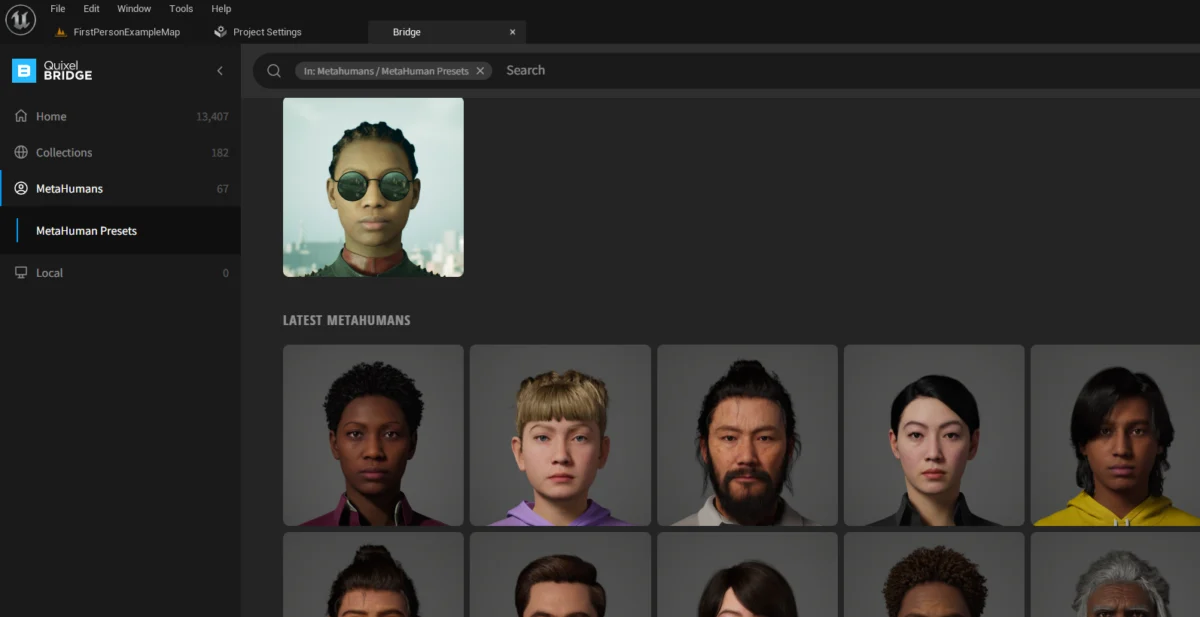
The advent of Unreal Engine 5 (UE5) has marked a significant leap forward in real-time 3D creation, offering developers and artists unparalleled tools for crafting immersive digital experiences. Central to this revolution is the MetaHuman character library, a collection of high-fidelity, photorealistic digital humans now freely accessible for integration into various projects. This guide delves into the practical steps of deploying MetaHumans within a UE5 environment, while also exploring the broader implications of this groundbreaking technology on game development, virtual production, and the future of digital content.
The Dawn of Digital Realism: Understanding MetaHumans
MetaHumans represent a new frontier in digital character design, offering an unprecedented level of detail and realism previously unattainable without extensive time and resources. Developed by Epic Games, the creators of Unreal Engine, in collaboration with companies like 3Lateral (a Serbian company specializing in digital humans, acquired by Epic Games in 2019) and Quixel (renowned for its Megascans library of photogrammetry assets), MetaHumans are built upon a foundation of cutting-edge technology. They leverage high-resolution scans, intricate rigging systems, and physically based rendering to deliver characters that are virtually indistinguishable from real people. Each MetaHuman comes fully rigged, complete with detailed facial animation systems, hair, clothing, and the underlying skeletal meshes necessary for animation and interaction. The library’s core appeal lies in its democratization of this complex process, allowing creators of all scales to access and deploy production-ready digital characters without the need for specialized 3D modeling, sculpting, texturing, or rigging expertise. This accessibility effectively removes a major barrier to entry for achieving cinematic-quality visuals in real-time applications.

Unreal Engine 5: The Ecosystem for Advanced Digital Creation
Unreal Engine 5 serves as the ideal platform for MetaHumans, providing the necessary technological backbone to render and animate these highly detailed assets efficiently. Key features within UE5, such as Nanite and Lumen, are particularly synergistic with MetaHumans. Nanite, UE5’s virtualized micro-polygon geometry system, allows for the import and rendering of film-quality art assets composed of millions or even billions of polygons without significant performance degradation. This is crucial for MetaHumans, which are inherently polygon-dense. Lumen, UE5’s fully dynamic global illumination and reflections system, ensures that MetaHumans are lit realistically within any scene, reacting naturally to changes in lighting conditions and environment. The combination of these technologies enables MetaHumans to shine, maintaining their photorealistic fidelity even in complex, dynamic environments. The integration of Quixel Bridge directly within the Unreal Engine editor further streamlines the workflow, acting as the central hub for accessing not only MetaHumans but also the vast Quixel Megascans library, providing a cohesive content ecosystem for creators.
A Timeline of Innovation: The Evolution of MetaHumans
The journey towards MetaHumans began several years prior to their public release. Epic Games’ acquisition of 3Lateral in 2019 was a pivotal moment, bringing their expertise in capturing and recreating realistic digital humans into the Unreal Engine fold. This was followed by the initial announcement and early access release of the MetaHuman Creator in February 2021, a cloud-based application designed to allow users to create bespoke MetaHumans from scratch or by blending pre-existing digital identities. The subsequent integration of a pre-configured MetaHuman library directly into Unreal Engine 5 through Quixel Bridge solidified their accessibility, making it possible for developers to quickly download and implement these assets without needing to go through the full creation process initially. This phased rollout demonstrated Epic Games’ commitment to not only providing advanced tools but also making them incredibly user-friendly and widely available, further cementing Unreal Engine’s position as a leading engine for high-end digital content creation.
Accessing the MetaHuman Library: A Step-by-Step Integration Guide
For developers eager to incorporate these sophisticated characters into their Unreal Engine 5 projects, the process is streamlined and intuitive, facilitated by the integrated Quixel Bridge.
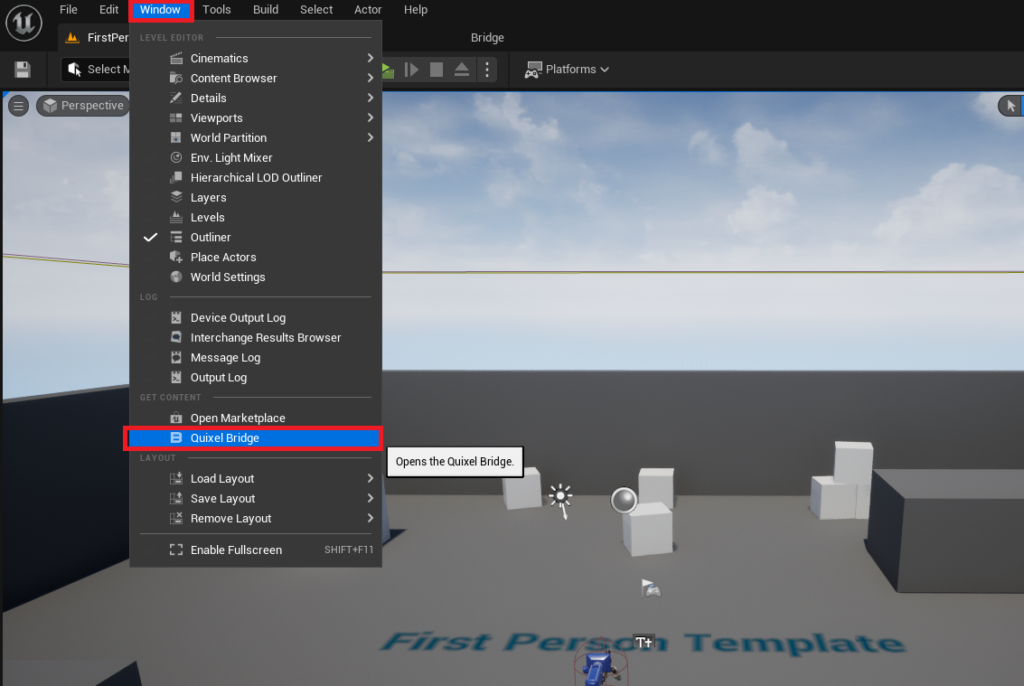
The initial step involves launching the Unreal Engine editor and navigating to the "Window" tab located in the top menu bar. From the dropdown menu, selecting "Quixel Bridge" will open a dedicated panel within the editor interface. This embedded application serves as the gateway to Epic Games’ extensive library of high-quality assets, including the MetaHuman collection.
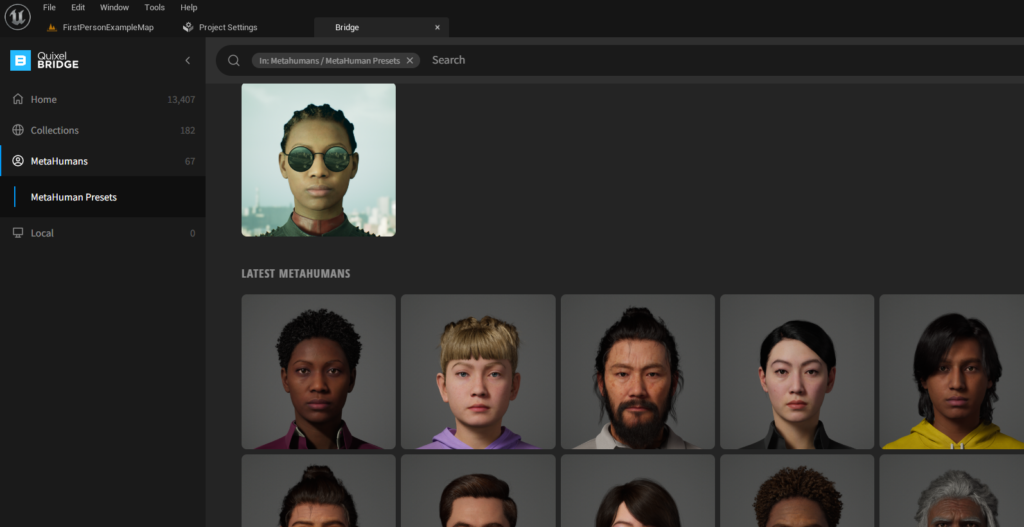
Once the Quixel Bridge window has successfully loaded within the editor, users will observe several tabs categorizing the available assets. To locate the digital human characters, click on the "MetaHumans" tab. This action will populate the display with a diverse array of pre-configured MetaHumans, showcasing a range of appearances, ages, and ethnicities. These are the ready-to-use digital avatars available for immediate download and deployment into any Unreal Engine 5 project.
Before any MetaHuman can be downloaded, an authentication step is required. Users must click on one of the displayed MetaHuman avatars within the grid. This action will typically reveal a "Sign In" button, often located in the bottom-right corner of the Quixel Bridge window. Proceeding with this prompt will direct users to log into their Epic Games account. This login process is essential as it grants access to the full breadth of the Quixel Megascans and MetaHuman libraries, ensuring that only authenticated users can leverage these valuable assets, which are tied to the Epic Games ecosystem.
Adding the Character to Your Project: From Library to Live Scene
With successful authentication completed, the next phase involves selecting and importing a chosen MetaHuman into the active Unreal Engine project.
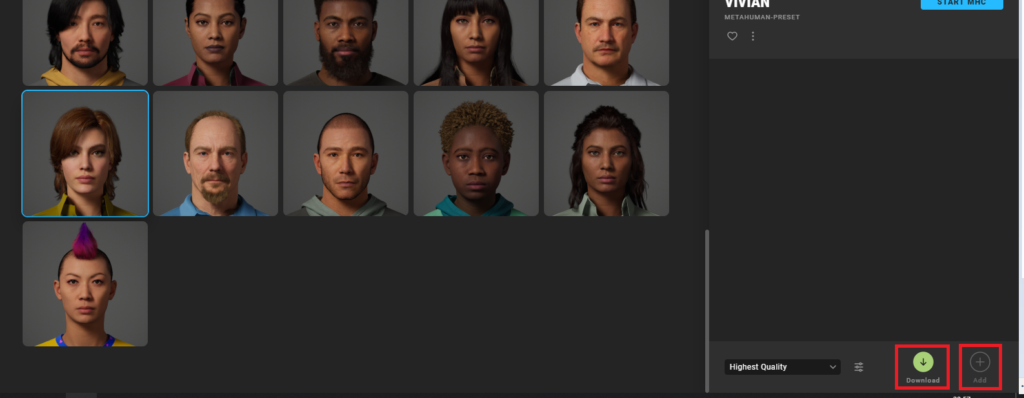
From the MetaHumans library displayed in Quixel Bridge, select the desired avatar. Upon selection, options for download and addition will become visible. Click the "Download" button to initiate the transfer of the MetaHuman’s high-fidelity assets to your local machine. The download size can be substantial due to the intricate detail of these characters, encompassing high-resolution textures, complex meshes, and extensive rigging data. Once the download process concludes successfully, a prominent "Add" button will appear. Clicking this button will begin the automatic integration of the MetaHuman into your currently opened Unreal Engine project.

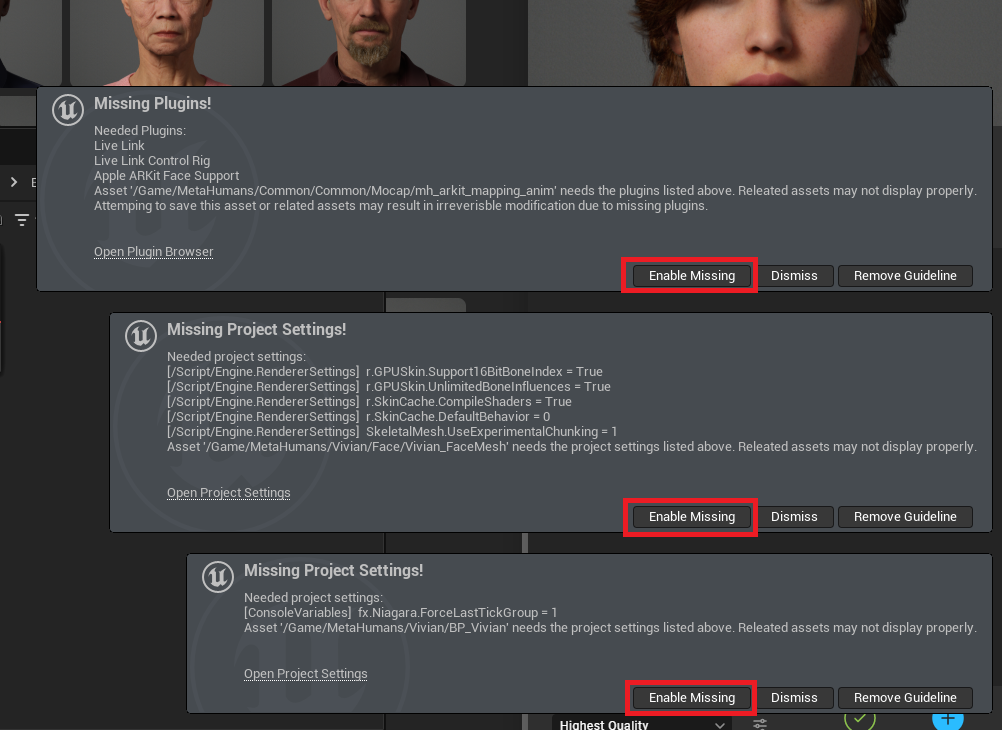
During the import process, the Unreal Engine editor may detect that certain plugins or project settings crucial for MetaHuman functionality are either missing or not correctly configured. Should any notifications appear, typically in the bottom-left corner of the editor, indicating these requirements, it is imperative to respond by pressing "Enable Missing." This action prompts the editor to automatically activate the necessary plugins and adjust project settings to properly support the MetaHuman assets. These configurations often include enabling plugins related to facial animation, hair rendering, and advanced shading models that are integral to MetaHumans’ realistic appearance and behavior.
After enabling the missing settings and plugins, the editor will require a restart to apply these changes effectively. A "Restart Now" button will typically appear, prompting the user to close and reopen the Unreal Engine editor. This restart ensures that all newly enabled functionalities and adjusted settings are properly initialized, allowing the MetaHuman assets to function as intended within the project environment.
Upon the successful restart of the editor, the newly imported MetaHuman can be located within the project’s Content Drawer. Navigate to the "MetaHumans" folder, which is automatically created during the import process. Inside, you will find a subfolder named after the specific MetaHuman character that was chosen. Within this folder, the core asset representing your downloaded MetaHuman will be identified by a blueprint asset, typically prefixed with "BP_". This blueprint asset encapsulates all the necessary components of the MetaHuman, including its multiple meshes (body, face, hair, clothing), skeletal rig, and associated animation data, making it ready for immediate use in the project. Developers can then drag and drop this blueprint into their scene, spawn it as a player character, or integrate it into complex cinematic sequences.
Technical Underpinnings and Performance Considerations

While MetaHumans offer unprecedented visual quality, it is important to acknowledge their technical demands. Each MetaHuman is comprised of numerous individual meshes, often utilizing multiple Levels of Detail (LODs) to optimize performance depending on the camera’s distance. These LODs are crucial for maintaining fluidity, especially when multiple MetaHumans are present in a scene. Hair, rendered using advanced strand-based systems, and detailed clothing, often simulated for realistic movement, also contribute to the computational load. Unreal Engine 5’s Nanite technology, however, largely mitigates the polygon count issue, allowing for the rendering of cinematic-quality assets in real-time. Despite this, developers must still consider the overall scene complexity, texture resolutions, and animation requirements when integrating MetaHumans, particularly for target platforms with limited hardware resources. Careful optimization of LODs, judicious use of high-resolution textures, and efficient animation blueprints remain key practices for ensuring optimal performance without sacrificing visual fidelity.
Industry Impact and Future Implications: A Paradigm Shift
The introduction of MetaHumans and their accessibility via Unreal Engine 5 represents a profound paradigm shift across multiple creative industries.
Democratization of High-Fidelity Content: Perhaps the most significant impact is the democratization of high-fidelity character creation. Previously, crafting a photorealistic digital human was a task reserved for large studios with substantial budgets and highly specialized artists. MetaHumans lower this barrier significantly, enabling indie developers, small studios, and even individual creators to produce visually stunning characters that rival those seen in AAA games or Hollywood blockbusters. This empowers a broader range of voices and visions to be realized with cutting-edge visual quality.
Accelerated Production Workflows: For larger studios, MetaHumans dramatically accelerate production workflows. Instead of spending months on character design, sculpting, texturing, and rigging, teams can now rapidly prototype and deploy highly detailed characters, freeing up artists to focus on more unique elements or creative problem-solving. This efficiency is particularly beneficial in fast-paced sectors like game development, virtual production for film and television, and real-time architectural visualization. Epic Games’ CEO, Tim Sweeney, has often emphasized the company’s commitment to providing tools that empower creators, and MetaHumans stand as a testament to this philosophy.
Cross-Industry Applications: The utility of MetaHumans extends far beyond traditional gaming. In virtual production, they can serve as digital doubles for actors, background characters, or even fully synthetic performers in virtual sets. For architectural visualization, they can populate scenes with realistic human figures, adding a sense of scale and life. In marketing and advertising, MetaHumans offer new avenues for creating compelling digital campaigns and virtual influencers. The potential for educational content, medical simulations, and even the burgeoning metaverse is immense, as they provide believable avatars and interactive characters for virtual spaces.
Challenges and Considerations: While transformative, the integration of MetaHumans is not without its considerations. Performance overhead, particularly on lower-end hardware, remains a factor requiring careful optimization. Furthermore, while the library offers a diverse range, achieving truly unique, custom character designs beyond the MetaHuman Creator’s capabilities still necessitates additional artistic input. The challenge lies in striking a balance between leveraging the efficiency of the library and infusing characters with distinctive personalities and styles that avoid a "cookie-cutter" aesthetic.
Conclusion
The availability and ease of integration of MetaHumans within Unreal Engine 5 mark a pivotal moment in digital content creation. By providing free access to a library of photorealistic, fully rigged digital characters, Epic Games has not only elevated the visual fidelity achievable by a wider range of creators but also streamlined complex production pipelines. From the initial access via Quixel Bridge to the final deployment of a MetaHuman blueprint in a project, the process is designed for efficiency. As Unreal Engine continues to evolve, and with ongoing advancements in the MetaHuman Creator tool, the potential for creating custom, believable digital humans will only expand. This technology is poised to redefine standards across games, film, virtual reality, and beyond, paving the way for more immersive, realistic, and accessible digital experiences in the years to come.
About the Author