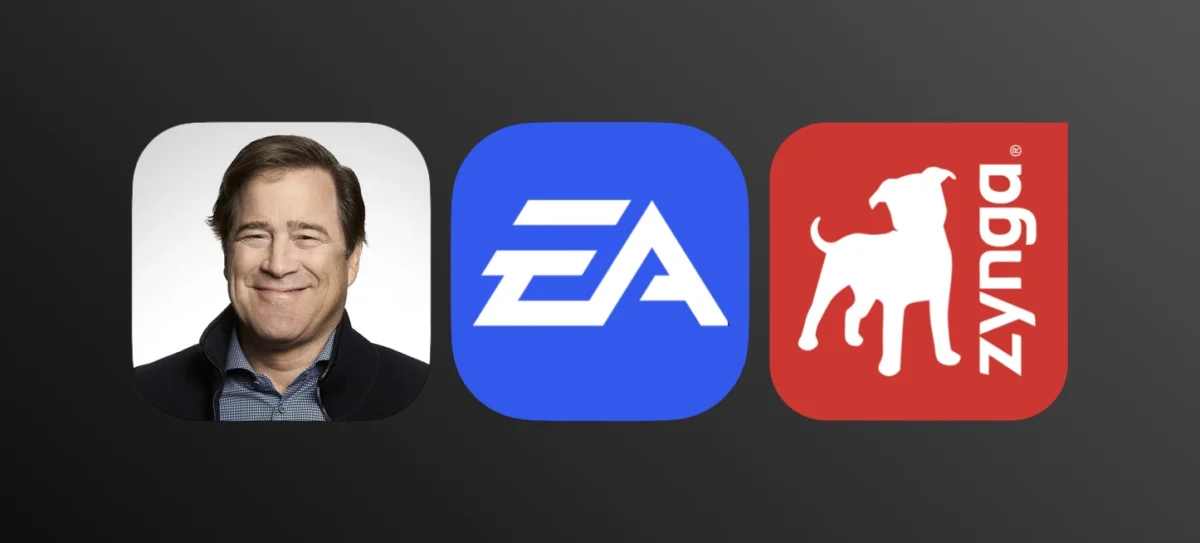
Bing Gordon, the co-founder of Electronic Arts and a central figure in the evolution of the modern interactive entertainment industry, has issued a candid retrospective on the strategic missteps that allowed legacy publishers to be eclipsed during the mobile gaming revolution. Speaking on the eve of the release of his new book, Everybody Wins: What games teach us about making products people love, co-authored with Chloe Gordon, the industry veteran detailed how institutional risk aversion and a failure to grasp the velocity of social platforms left established giants like Electronic Arts (EA) watching from the sidelines as startups like Zynga redefined the market in the early 2010s.
Gordon’s career trajectory provides a unique vantage point from which to analyze these shifts. After co-founding EA in 1982 and serving as its Chief Creative Officer for over two decades, he transitioned to the venture capital sector as a partner at Kleiner Perkins in 2008. His subsequent tenure on the board of Zynga, lasting until its $12.7 billion acquisition by Take-Two Interactive in 2022, placed him at the epicenter of the transition from "packaged goods" software to the "games-as-a-service" (GaaS) model that dominates the industry today.
The Cultural Divide: Packaged Goods vs. Live Services
The primary friction point for legacy publishers during the rise of mobile and social gaming was a fundamental misunderstanding of development cycles. Gordon notes that during his final years at EA, the company remained tethered to a traditional retail mindset. Games were conceived, developed, and marketed as discrete units on a yearly or multi-year basis. This "packaged goods" philosophy was ill-suited for the rapid iteration required by platforms like Facebook and the burgeoning iOS App Store.
While Gordon attempted to steer EA toward a future defined by mobile, social, and "freemium" models—which he describes as "instrumented" gaming—the internal culture of the company favored incrementalism. Small-scale experiments led by executives like Neil Young and Luc Barthelet were conducted within the safety of EA’s existing infrastructure. These projects occasionally achieved modest success, reaching peaks of 20,000 Daily Active Users (DAUs), but they lacked the scalability and permanence required to build a sustainable ecosystem.
In contrast, Mark Pincus and the founding team at Zynga operated with a philosophy of radical experimentation. Rather than testing a single project at a time, Zynga tested dozens of ideas simultaneously, utilizing real-time data to pivot or double down on successful mechanics. Gordon recalls that while EA was struggling to maintain five-figure DAU counts, Zynga’s early titles were amassing millions of active users within months of launch. This data-driven approach allowed Zynga to capture the "social graph" of Facebook, creating a dominant position that traditional publishers found impossible to replicate through internal development alone.
The Retention Secret: The Power of Active Friendships
One of the most significant insights Gordon shares involves the psychological drivers of player retention. He argues that the broader industry, including both AAA developers and major social networks, has failed to fully internalize the importance of social loops. While many platforms prioritize virality—the ability to spread content rapidly—or ad impressions, Gordon contends that "active friendships" are the single most important metric for long-term engagement.
"The original social networks ended up focusing on virality and ad views," Gordon observed. "Once they’ve got your network, they don’t really care if people stay in touch with each other or not."
In the gaming context, this manifests as features that encourage relationship-building and mutual reliance among players. Zynga’s data early on proved that players who engaged with friends within a game were significantly more likely to remain active over months and years. This "social glue" is what transformed casual experiences into multi-billion-dollar franchises. Gordon suggests that even today, many adjacent industries and tech platforms miss this nuance, treating social interaction as a means of distribution rather than the core value proposition of the product.
The Crisis of Product Management in AAA Development
A recurring theme in Gordon’s analysis is the disparity in product management capabilities between mobile-first companies and traditional AAA studios. He asserts that the mobile sector’s survivors—citing Zynga, Scopely, and Playrix—are those that elevated product managers to "power players."
In these organizations, product managers are highly analytical figures who constantly test variables, from monetization hooks to difficulty curves. In the traditional AAA space, however, the role is often secondary to creative leads or technical directors, leading to a disconnect between the artistic vision and the operational realities of maintaining a live-service game.
This lack of robust product management is cited as a key reason why companies with vast intellectual property (IP) portfolios, such as EA, have struggled to translate console and PC success into the mobile arena. Gordon points out a recurring pattern where successful companies "repeatedly learn the wrong lessons from success." The fear of jeopardizing a multi-million-dollar franchise leads to a conservative approach that dismisses new trends as "not real games," a sentiment Gordon says was prevalent at EA during the rise of casual social gaming.
Strategic M&A as a Path to Competency
The difficulty of building mobile expertise internally has led to a wave of massive consolidations within the industry. Gordon highlights Take-Two Interactive’s acquisition of Zynga as a prime example of a company recognizing its internal limitations and buying its way into a new market.
This acquisition was not merely about acquiring IP but about acquiring talent and operational frameworks. Gordon notes that Frank Gibeau, the CEO of Zynga, is a rare executive who has successfully navigated both the high-fidelity AAA world (having previously served as President of EA Labels) and the data-driven mobile world. This cross-pollination of leadership is seen as essential for the next generation of "mega-publishers" who must operate across all platforms simultaneously.
EA has attempted similar moves, notably through the acquisitions of Glu Mobile for $2.1 billion and Playdemic for $1.4 billion in 2021. However, the integration of these different corporate cultures remains a significant challenge for the industry at large.
The Shifting Landscape of Venture Capital and AI
Beyond the internal dynamics of game publishers, Gordon addressed the changing environment for investment. As a partner at Kleiner Perkins, he has witnessed a significant retreat of venture capital from the consumer technology sector. Investors are increasingly moving toward enterprise solutions, infrastructure, and tools, which offer more predictable stages of growth compared to the "hit-driven" nature of consumer games.
For new game startups to secure funding in the current climate, Gordon suggests they must either demonstrate existing revenue growth or present a compelling "AI story." However, he warns against the hype of "one-shot" AI game design, where a simple text prompt is expected to generate a finished product.
Instead, Gordon envisions AI as a tool for "constant iteration and layered ideation." By allowing teams to test ten times as many first drafts in the same amount of time, AI can accelerate the creative process. Yet, the final decision-making remains a uniquely human endeavor. "You still need the judgment to work out which ones will work and which to double down on," Gordon said. "That’s human."
He advocates for the hiring of "AI-fluent" staff in new studios. The goal is to collapse the distance between the "idea generators" and the "idea builders." In traditional setups, a designer might wait days for an engineer to prototype a mechanic; an AI-fluent designer can use tools to prototype the idea themselves, leading to a more fluid and efficient development cycle.
Implications for the Future of Interactive Entertainment
As Gordon’s new book, Everybody Wins, prepares for its October 29 release, his reflections serve as a cautionary tale for the industry. The transition from the 2010s mobile boom to the 2020s AI revolution suggests that the same pitfalls—slowness, risk aversion, and a failure to understand new social dynamics—could once again sideline established players.
The industry is currently facing a period of correction. Following the pandemic-era surge in gaming activity, many companies have faced layoffs and project cancellations as they grapple with rising development costs and a saturated market. Gordon’s emphasis on product management and social retention metrics suggests that the path forward lies in operational efficiency and a deeper understanding of player psychology rather than simply increasing graphical fidelity.
Ultimately, Gordon’s analysis suggests that the "winners" in the next decade of gaming will be those who can bridge the gap between the prestige of AAA production and the analytical rigors of mobile live services, all while leveraging AI to empower individual creators. As the boundaries between platforms continue to blur, the lessons of the Zynga-EA rivalry remain more relevant than ever for a global market now worth over $180 billion.
About the Author