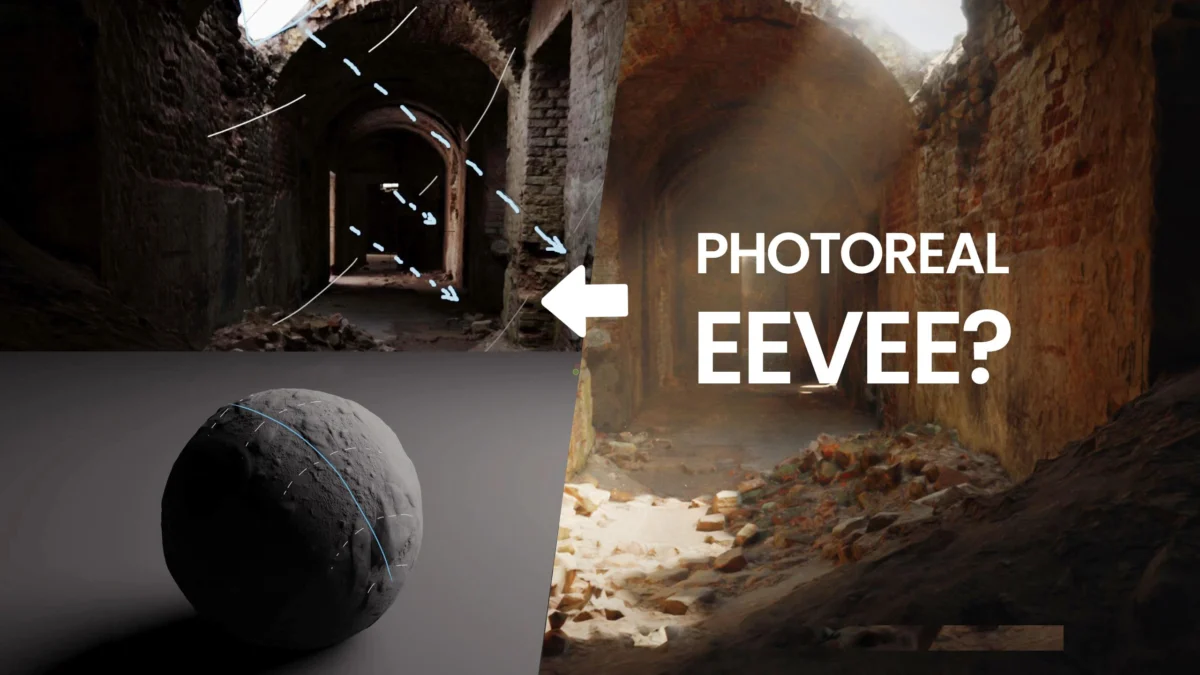
Gleb Alexandrov, a prominent figure in the 3D visualization and artistic community, has recently unveiled a comprehensive two-part tutorial series focusing on the nuanced art of lighting 3D environments, specifically within the Eevee rendering engine. This in-depth educational resource utilizes a photogrammetry-scanned monastery dungeon as its central case study, aiming to underscore a fundamental principle often overlooked: the distinct challenges and creative considerations involved in illuminating an expansive space compared to a singular object. Alexandrov’s work addresses a critical aspect of 3D art production, offering practical guidance and theoretical insights for artists seeking to elevate the visual storytelling capabilities of their digital creations.
The tutorial series, released on Alexandrov’s Creative Shrimp platform, is structured to guide users through both the foundational principles and the practical application of cinematic lighting techniques. The chosen environment, a meticulously recreated monastery dungeon, provides a rich and complex setting to explore how light can sculpt form, define atmosphere, and guide the viewer’s eye through a scene. This choice of subject matter is particularly relevant given the increasing adoption of Eevee, Blender’s real-time rendering engine, for a wide range of projects from game development to architectural visualization and animated shorts, where efficient yet visually compelling lighting is paramount.
The Theoretical Foundation: Understanding Light’s Role in Environment Illumination
Part 1 of the series, titled "Interior Lighting: Theory," clocks in at approximately 21 minutes and delves into the formal, theoretical underpinnings of effective environmental lighting. Alexandrov systematically breaks down key concepts that are essential for any 3D artist aiming for professional-level results. These concepts include:
- Light Falloff: This fundamental principle governs how the intensity of light diminishes with distance. Understanding falloff is crucial for creating realistic depth and controlling the mood of a scene. In a dungeon environment, controlled falloff can emphasize claustrophobia or, conversely, create pools of inviting light amidst darkness.
- Light Directionality: The angle from which light strikes surfaces dramatically impacts perceived form and texture. Alexandrov likely explores how to use directional light to define the architectural details of the dungeon, highlighting the rough-hewn stone, the textures of decay, and the overall sense of age.
- Compositional Lighting: Beyond merely illuminating, light can be used as a powerful compositional tool. This involves strategically placing light sources to draw attention to specific areas, create leading lines, and establish a visual hierarchy within the scene. For a dungeon, this could mean using shafts of light to guide the viewer towards an unseen objective or to reveal hidden details.
- Front vs. Back Lighting: The tutorial likely examines the distinct effects of illuminating a scene from the front (which can flatten details) versus from behind (which can create dramatic silhouettes and rim lighting). This understanding is vital for adding depth and dimension to environmental elements.
- Organizing Space with Light: Perhaps the most critical takeaway from this theoretical segment is how light can be used to delineate and organize the spatial relationships within an environment. In a flat, unlit scene, a large dungeon can feel like an undifferentiated void. Alexandrov’s approach demonstrates how to use variations in light intensity, color, and direction to define distinct areas, create a sense of scale, and prevent the environment from appearing "flat" and unengaging. This is a crucial distinction from lighting a single object, where the focus is on its form and material properties, rather than its integration within a larger, interactive space.
This theoretical grounding is vital for artists transitioning from object-centric lighting to environment-centric lighting. The complexity of a 3D environment, with its multiple surfaces, objects, and potential viewpoints, demands a more holistic and strategic approach to illumination. Eevee’s real-time capabilities allow for rapid iteration on these theoretical principles, making this tutorial particularly timely for those working within its ecosystem.
The Practical Application: Building a Cinematic Lighting Scheme
Following the theoretical exposition, Part 2, "Interior Lighting: Cinematic Setup," shifts to a more extensive, 49-minute practical demonstration. This segment is where Alexandrov applies the learned principles to the monastery dungeon, meticulously building a motivated lighting scheme layer by layer within Eevee. The emphasis here is on translating abstract concepts into tangible visual results, showcasing a workflow that is both instructive and inspiring.
The process likely involves:
- Establishing a Primary Light Source: This might be a simulated window, a torch, or a magical emanation, providing the core illumination and setting the overall mood.
- Adding Secondary and Fill Lights: These lights are used to refine the illumination, reduce harsh shadows, and enhance details. They are crucial for creating a sense of depth and preventing the scene from appearing overly dark or contrasty.
- Implementing Accent and Rim Lights: These are often used for dramatic effect, highlighting edges and silhouettes to further define objects and add visual interest. In a dungeon, rim lighting could emphasize the imposing architecture or the texture of damp stone.
- Utilizing Volumetric Lighting: This technique simulates the scattering of light through a medium, such as dust or fog, adding atmosphere and depth to the scene. It is particularly effective in ancient, enclosed spaces like a dungeon, enhancing the sense of mystery and age.
- Color Grading and Post-Processing: While Eevee handles much of the real-time rendering, Alexandrov may also touch upon how subtle color adjustments and post-processing effects can further refine the cinematic quality of the lighting.
The "motivated" aspect of the lighting scheme is critical. This means that the lights should appear to originate from plausible sources within the environment, even if those sources are themselves stylized or exaggerated for artistic effect. This believability is key to immersing the viewer in the digital world. Alexandrov’s step-by-step approach demystifies this complex process, making it accessible to artists at various skill levels.
The Significance of Eevee and Photogrammetry in Modern 3D Art
The choice of Eevee as the rendering engine for this tutorial is significant. Eevee’s real-time rendering capabilities offer a substantial advantage for lighting artists. Unlike traditional path-tracing renderers, which require extensive render times for each frame, Eevee provides near-instantaneous feedback. This allows for rapid experimentation with different lighting setups, color palettes, and atmospheric effects, significantly accelerating the creative iteration process. This speed is invaluable for environment artists who often need to explore numerous lighting scenarios to achieve the desired mood and visual fidelity.
Furthermore, the use of a photogrammetry-scanned monastery dungeon highlights the growing trend of incorporating real-world data into digital environments. Photogrammetry, the process of creating 3D models from photographs, allows for incredibly detailed and realistic assets. By combining these high-fidelity scanned assets with advanced lighting techniques in Eevee, artists can achieve a level of realism that was once only achievable with much more time-consuming methods. This approach is becoming increasingly prevalent in video game development, virtual reality experiences, and even film production.
Broader Implications for the 3D Industry
Gleb Alexandrov’s tutorial series addresses a fundamental gap in many artists’ skill sets: the ability to translate object-based lighting knowledge to the complexities of environmental lighting. The implications of this are far-reaching:
- Enhanced Visual Storytelling: Effective environmental lighting is crucial for conveying mood, emotion, and narrative in 3D projects. This tutorial empowers artists to use light as a storytelling tool, making their environments more engaging and immersive.
- Improved Workflow Efficiency: By focusing on Eevee, Alexandrov is promoting workflows that prioritize speed and interactivity. This is particularly beneficial for independent artists and small studios who may not have access to extensive rendering farms.
- Bridging the Gap Between Art and Technical Skill: The series elegantly blends theoretical understanding with practical application, demonstrating that artistic intuition can be informed and enhanced by a solid grasp of technical principles.
- Democratization of High-Quality Rendering: With accessible tools like Blender and efficient renderers like Eevee, tutorials like this can help democratize the creation of visually stunning 3D content, enabling a wider range of individuals to achieve professional-grade results.
The release of this tutorial series by Gleb Alexandrov represents a valuable contribution to the 3D art community. It not only provides practical, actionable advice for lighting complex environments but also underscores the evolving landscape of 3D creation, where real-time rendering, photogrammetry, and a deep understanding of light are becoming increasingly integral to producing compelling digital experiences. Artists who engage with this material are likely to find themselves better equipped to tackle the challenges and opportunities presented by modern 3D production pipelines.
About the Author