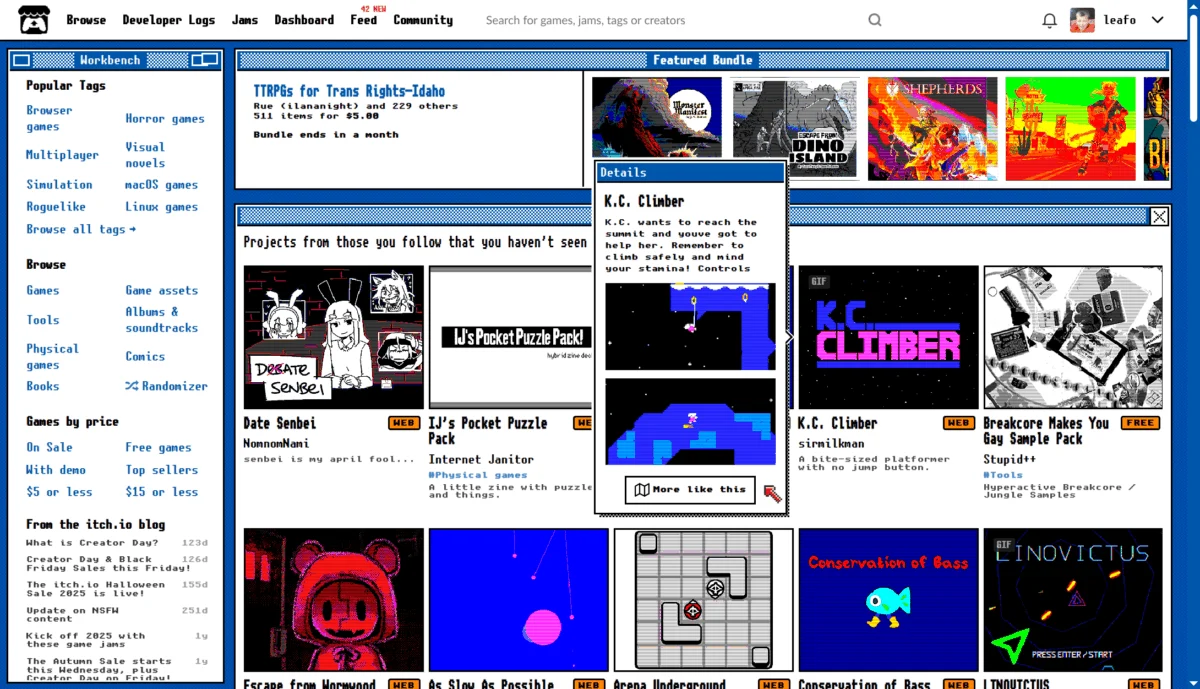
The indie game marketplace itch.io recently concluded its "Ameyega mode," an April Fool’s Day prank that transformed the platform’s homepage into a retro, ASCII-art-inspired interface, drawing a wide spectrum of responses from its engaged user base. Initially launched on April 1st, the temporary visual overhaul was extended beyond the traditional prank day, as acknowledged by the platform’s administrators who noted its late deployment. This playful, yet impactful, experiment not only showcased itch.io’s penchant for engaging with its community in unconventional ways but also ignited important conversations about user experience, nostalgia, and accessibility in digital design.
The Genesis of "Ameyega Mode": A Nod to Retro Computing
April Fool’s Day has long been a tradition within the technology and gaming industries, with companies often leveraging the occasion to introduce humorous, often elaborate, fictional products or temporary website alterations. These pranks serve as a lighthearted break from routine, a way to engage with audiences, and sometimes even a subtle means of testing reactions to new concepts or design philosophies. For itch.io, a platform celebrated for its independent spirit and diverse collection of games, an April Fool’s initiative often resonates deeply with its community of developers and players, many of whom harbor a strong appreciation for gaming history and retro aesthetics.
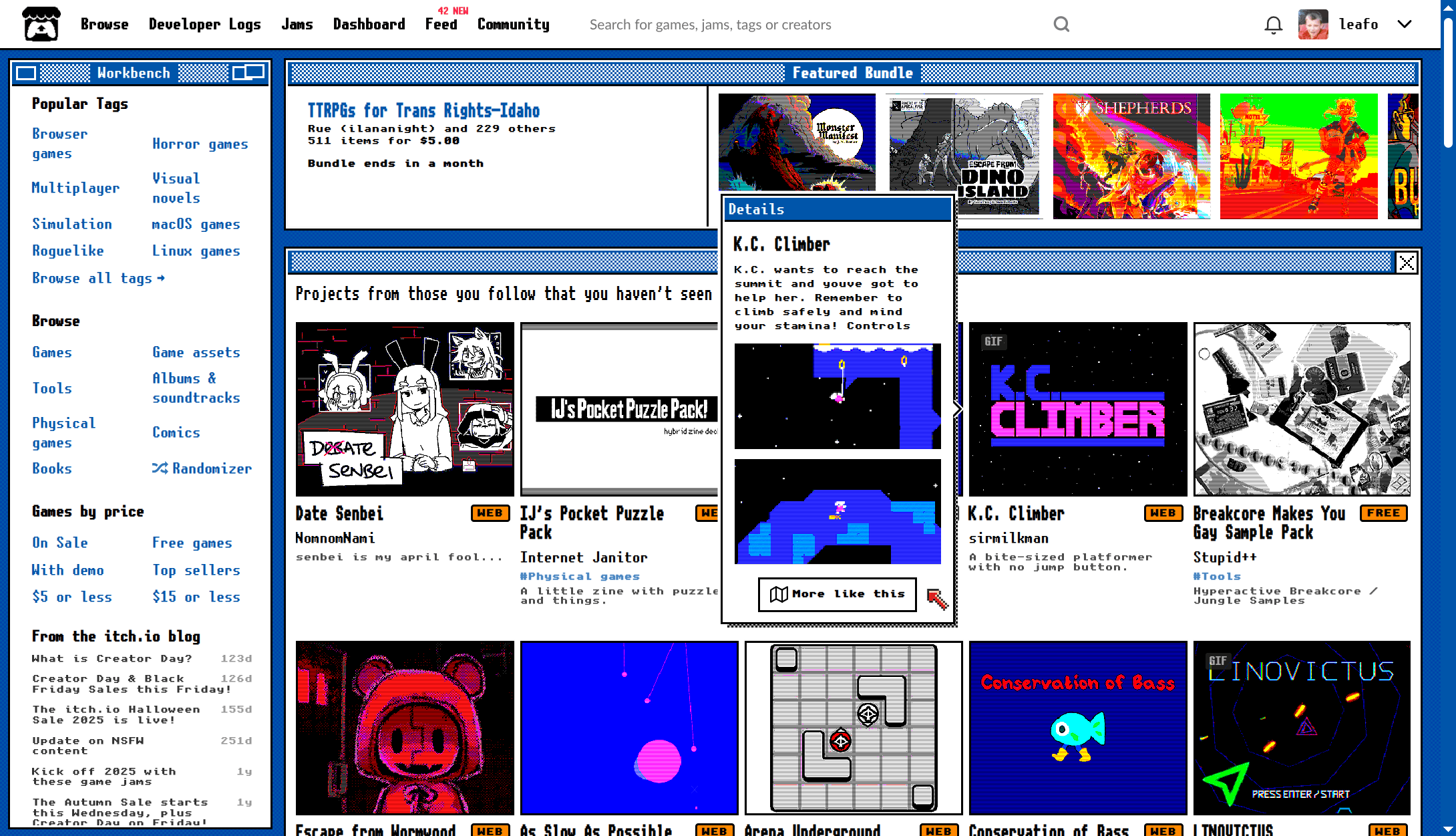
"Ameyega mode" was conceived as a visual tribute to the computing and gaming eras of the 1980s and early 1990s, specifically evoking the distinctive graphical styles of platforms like the Amiga and Sega Mega Drive (Genesis). The term itself, "Ameyega," is a portmanteau clearly designed to invoke this nostalgic imagery. The most striking feature of the mode was its complete transformation of the itch.io homepage into an ASCII art rendition. Instead of traditional graphics and web elements, users were greeted with a display composed entirely of text characters, emulating the pixelated, character-based interfaces of early computers. This choice was a deliberate throwback, designed to elicit a sense of nostalgia for those who grew up with or appreciate the aesthetic of early digital interfaces. The implementation notably credited http://viznut.fi/unscii/ for the fonts used, highlighting the technical and artistic considerations involved in achieving an authentic retro look. Unscii is a collection of monospace pixel fonts, widely recognized for its utility in creating genuine vintage computing interfaces, further underscoring the prank’s commitment to historical accuracy in its aesthetic.
Chronology of an Experiment: From Launch to Lingering Presence
The "Ameyega mode" officially went live around April 1st, consistent with the tradition of April Fool’s Day pranks. However, the itch.io team acknowledged that its deployment was somewhat delayed, prompting the decision to keep the mode active for a longer duration than a typical one-day joke. This extension allowed more users to experience the retro interface, potentially amplifying both positive and negative feedback.
Upon activation, the homepage transformed dramatically. Gone were the sleek, modern web elements, replaced by chunky, character-based representations of buttons, menus, and even images. The limited color palette and blocky typography were unmistakable hallmarks of the retro aesthetic. For a period, visiting https://itch.io presented users with this unique, temporary design. The platform’s announcement regarding the mode’s conclusion specified that users, when logged in, could still revisit the "Ameyega mode" at https://itch.io/?ameyega, a thoughtful provision for those who either missed it or wished to experience the nostalgia once more. This link is promised to remain active "until the next time we make substantial changes to the homepage," indicating a potential for future design iterations that might permanently remove or alter the availability of this historical snapshot.
Community Engagement and Diverse Reactions
The "Ameyega mode" quickly became a focal point for discussion within the itch.io community, eliciting a wide range of passionate responses that underscored the varied preferences and expectations of its users. The comment section of the official announcement post served as a direct conduit for this feedback, revealing a clear dichotomy in user sentiment.
On one side, a significant portion of the community embraced the prank with enthusiasm. Users expressed delight at the nostalgic trip, praising the creativity and unique charm of the ASCII art homepage. Comments such as "The ASCII art homepage was a delightful throwback – it actually made browsing feel nostalgic and charming. Kudos to the team for the creativity, and props for keeping it available a little longer. Would love to see it return as an optional theme someday!" from a user named "windflash" highlighted the appreciation for the aesthetic and the desire for it to become a permanent, optional feature. Another user, "mauisland," explicitly stated, "I would like for itch.io to change to it permanently. I was sad to find out it was a joke." These sentiments underscore a strong community segment that values retro aesthetics and finds joy in such playful diversions. Some users even found the new interface more accessible or easier to read, with "katt-kirsch" commenting, "Please please please make an option to keep this, it’s SO much easier to read for me wow I love love love it." This unexpected accessibility benefit for some users adds another layer to the discussion, suggesting that alternative visual styles, even if unconventional, can cater to diverse user needs.
Conversely, a vocal segment of the community found the "Ameyega mode" to be a frustrating and inconvenient experience. The primary complaints revolved around usability and accessibility. Many users found the ASCII art interface difficult to navigate and read, leading to a sense of disorientation and inefficiency. "omg please change it back thus is so hard to navigate and there is no option in my feed to see new updates I follow. I hate thisssss" was a common refrain, exemplifying the struggle some faced with the altered layout. Beyond general usability, specific technical issues arose, particularly concerning the platform’s "Dark mode" setting. Several users reported that the "Ameyega mode" interfered with or completely disabled their Dark mode preferences, forcing them to view the site in a bright, high-contrast retro style that was jarring and uncomfortable for prolonged use. "it’s over but dark mode is not working now…" commented "emanoelmelo," while "raidenslayer" stated, "Yeah, and never do it again, please. Because you messed up, Dark mode and I can’t get it to work." These technical glitches compounded the frustration for users who rely on Dark mode for visual comfort or accessibility reasons.
One comment, while not directly related to "Ameyega mode," highlighted broader platform issues, with "dabbit-the-rabbit" asking, "when are you guys going to fix the problem where a huge portion of the community cannot post anything on anyones game pages? ive been asked multiple time to play and review games and leave links but you have locked people out of forming community and engagement around the games people release here? that was kind of the WHOLE point of this site." This demonstrates how official announcements, even about lighthearted pranks, often become a forum for users to voice other, more serious, concerns about the platform’s functionality and community features. While external to the "Ameyega mode" itself, it underscores the dynamic and multi-faceted nature of user feedback on a platform like itch.io.
Technical and Design Implications
The implementation of "Ameyega mode," while temporary, showcased the technical capabilities and creative potential within itch.io’s development team. Transforming a modern, graphically rich website into a fully functional ASCII art interface is not a trivial task. It involves sophisticated rendering techniques that map standard web elements onto a limited character set, often requiring custom stylesheets and JavaScript to override default browser rendering. The reliance on unscii fonts further points to a dedicated effort to achieve an authentic retro look, rather than a mere superficial overlay.
However, the technical challenges also manifested in the aforementioned Dark mode conflicts. Modern web design often relies on cascading style sheets (CSS) and user preferences to dynamically adjust themes. The retro mode likely introduced a new set of styles that, at least initially, overwrote or conflicted with the existing Dark mode configurations, leading to a suboptimal user experience for those affected. The quick resolution of these issues, as noted by "clypsiphaya" ("EDIT: four hours after posting this, the front page is showing Dark mode correctly"), indicates a responsive development team that was actively monitoring and addressing immediate post-launch issues, even for a prank.
From a design perspective, the "Ameyega mode" served as an interesting, albeit extreme, case study in user interface flexibility. While some users found it charming, others found it severely lacking in modern UI/UX principles, which prioritize clarity, ease of navigation, and accessibility. The stark contrast between the nostalgic appeal and the practical difficulties highlights the delicate balance designers must strike between aesthetic experimentation and functional usability, especially for a platform that serves a broad and diverse user base.
Broader Impact and Future Considerations
The "Ameyega mode" prank, though fleeting, had several broader implications for itch.io and its community. Firstly, it reinforced itch.io’s identity as a platform that is not afraid to be playful and experimental, aligning with its indie ethos. This willingness to deviate from conventional norms helps cultivate a unique brand image and fosters a sense of community that appreciates such endeavors.
Secondly, the diverse feedback offers valuable insights for future design decisions. The strong desire from some users for an optional retro theme suggests that itch.io could explore offering customizable interface options. Providing users with the choice to switch between different visual themes, including potentially a permanent "Ameyega-lite" mode or other retro styles, could enhance user satisfaction and personalize the browsing experience without imposing a universally disliked design. This approach would cater to both the nostalgic enthusiasts and those who prefer a modern, accessible interface.
Thirdly, the issues raised about Dark mode and general readability underscore the critical importance of accessibility in web design. Even for temporary features or pranks, developers must consider how visual changes impact users with different needs, including those with visual impairments or specific preferences for screen display settings. Ensuring that such experiments do not inadvertently create barriers to access is paramount for maintaining an inclusive platform.
Finally, the "Ameyega mode" serves as a reminder of the power of community feedback. The open dialogue in the comment section, both positive and negative, provides itch.io with direct, unfiltered insights into what its users value, what frustrates them, and what they hope to see in the future. This continuous feedback loop is vital for the iterative improvement and evolution of any digital platform.
Conclusion
The "Ameyega mode" on itch.io was more than just an April Fool’s prank; it was a vibrant, if temporary, re-imagining of a digital space that resonated deeply with its community. While it successfully evoked nostalgia for a bygone era of computing and showcased the platform’s creative spirit, it also inadvertently highlighted the complexities of user experience and accessibility in a diverse online environment. As itch.io continues to evolve, the lessons learned from this retro experiment – the appreciation for choice, the imperative of accessibility, and the enduring value of community feedback – will undoubtedly inform its future endeavors, ensuring that both playful innovation and user satisfaction remain at the forefront of its development philosophy. The option to revisit the "Ameyega mode" online serves as a digital artifact, a testament to a brief but memorable chapter in itch.io’s ongoing story.
About the Author