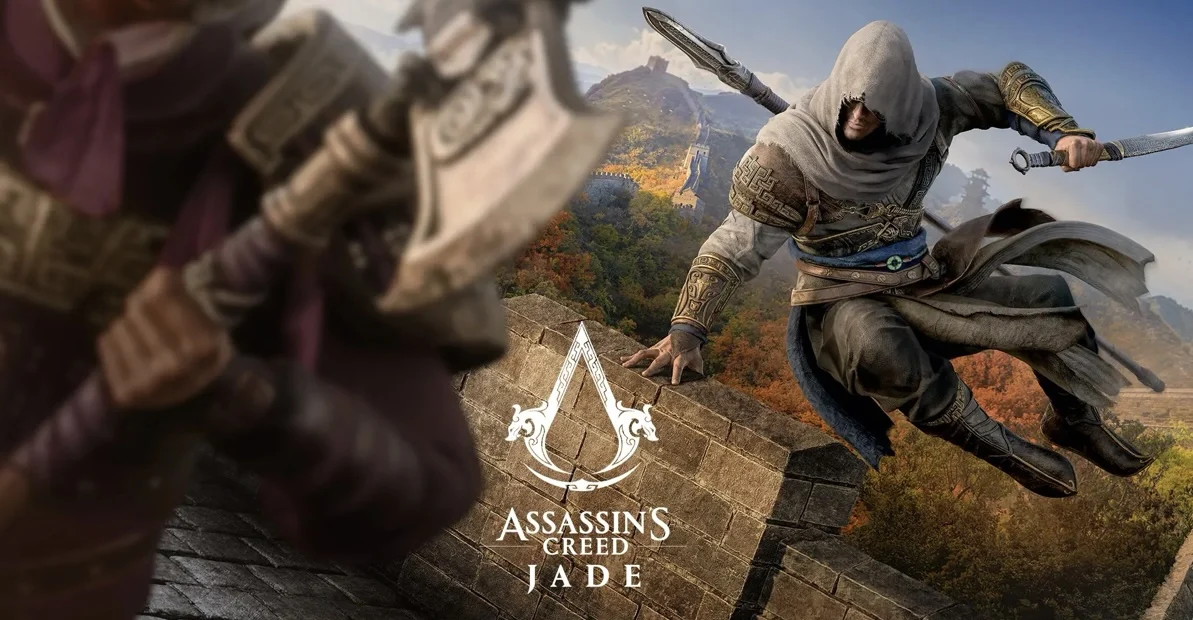
In a comprehensive franchise update that detailed the roadmap for several high-profile projects, Ubisoft has notably omitted any mention of Assassin’s Creed Jade, the highly anticipated mobile-exclusive entry set in ancient China. The update, published on the official Ubisoft blog, provided news on various installments including the Black Flag Resynced project, Assassin’s Creed Valhalla, the multiplayer-focused Codename Invictus, and the horror-themed Codename Hexe. It also offered a brief progress report on the forthcoming live-action Netflix series based on the intellectual property. However, the complete absence of Jade—a project once positioned as a cornerstone of Ubisoft’s mobile expansion—has sparked industry-wide speculation regarding the game’s current development status and its eventual release.
This silence marks a significant departure from Ubisoft’s communication strategy earlier this year. In a previous franchise update released in March, the company made a point of namechecking Jade, signaling that the title remained a part of its mid-to-long-term plans. The exclusion from the latest update is particularly striking given the game’s ambitious scope. First revealed in September 2022 during a Ubisoft Forward event, Assassin’s Creed Jade was promised as a "AAA" experience for mobile devices, featuring an open-world recreation of the Qin Dynasty, complete with the series’ signature parkour, stealth, and combat mechanics. Developed in partnership with Tencent’s Level Infinite, the title was intended to capture the lucrative mobile gaming markets in both the West and East.
A Timeline of Diminishing Visibility
The trajectory of Assassin’s Creed Jade has been characterized by an initial burst of marketing activity followed by a steady decline in public updates. Following its 2022 announcement, development appeared to be progressing at a standard pace. In August 2023, Ubisoft and Tencent launched a closed beta test, allowing a select group of players to experience the early-game content. The feedback from this period was generally positive, with many praising the technical achievement of bringing an Assassin’s Creed open world to mobile hardware.
During the 2023 Gamescom trade fair, Level Infinite featured the game prominently at its booth, offering hands-on demos and high-quality cinematic trailers. At that time, industry analysts viewed Jade as a high priority for both Ubisoft and Tencent. However, the momentum shifted in 2024. By the time Gamescom 2024 arrived, Assassin’s Creed Jade was entirely absent from the show floor. This disappearance coincided with reports from financial analysts noting that Ubisoft had ceased mentioning the game in its quarterly earnings reports and investor calls. While other mobile projects like The Division Resurgence and Rainbow Six Mobile continued to appear in financial documentation, Jade transitioned into a state of "missing in action."
The silence deepened in May 2024, when Ubisoft’s fiscal reports focused heavily on the upcoming Assassin’s Creed Shadows and the company’s efforts to stabilize its live-service pipeline. The lack of updates on Jade has led to internal and external questions about whether the partnership between the French publisher and the Chinese tech giant has encountered strategic or technical friction.
Strategic Realignment and Internal Reorganization
The uncertainty surrounding Assassin’s Creed Jade comes at a time of immense structural change within Ubisoft. In January 2024, the company announced a massive reorganization of its global operations, segmenting its various studios and intellectual properties into "creative houses." This move was designed to streamline production and focus resources on the company’s most profitable "mega-brands."
As part of this shift, Ubisoft established "Creative House 5," a division dedicated to casual and mobile titles. This house absorbed studios and IPs such as Kolibri Games, Ketchapp, and the Hungry Shark franchise. Notably, the reorganization also led to the closure of Ubisoft’s specialist mobile studio in Halifax, Canada. This studio was the primary developer for Assassin’s Creed Rebellion, a mobile RPG that had been a consistent, if modest, performer for the company. Following the Halifax closure, Ubisoft announced that Rebellion would no longer receive updates and is scheduled to be permanently shut down on January 12, 2027.
The consolidation of mobile efforts into a single creative house suggests a more conservative approach to the mobile market. While Jade is being developed primarily by Tencent, the oversight from Ubisoft’s side would fall under this new structure. Analysts suggest that Ubisoft may be re-evaluating the ROI (return on investment) of high-budget mobile titles following a period of financial volatility for the firm, which has seen its stock price fluctuate amid the lukewarm reception of Star Wars Outlaws and the tactical delay of Assassin’s Creed Shadows to early 2025.
The Challenges of the AAA Mobile Market
Ubisoft’s recent experiences in the mobile sector provide a somber context for the silence on Jade. The company has struggled to find a foothold with high-fidelity mobile experiences. In early 2024, Ubisoft admitted that both The Division Resurgence and Rainbow Six Mobile had experienced "slow starts" during their soft-launch phases. The situation worsened for Rainbow Six Mobile, which was reportedly shuttered or put on indefinite hold just seven months after its initial limited release.
Furthermore, Ubisoft’s attempt to port full-scale console experiences to mobile hardware has met with limited commercial success. In late 2023 and early 2024, Ubisoft released a native port of Assassin’s Creed Mirage for high-end iOS devices, such as the iPhone 15 Pro. Despite the technical feat of running a current-gen console game on a smartphone, market data indicated that the port "bombed" in terms of sales. The high entry price for a mobile game, combined with the limited install base of hardware capable of running the title, resulted in revenue figures that failed to justify the porting costs.
This trend suggests a growing divide in the mobile market. While native mobile games built on "Gacha" mechanics or microtransaction-heavy live services (such as Genshin Impact or Honor of Kings) generate billions, the "AAA port" or "AAA-lite" model that Assassin’s Creed Jade represents is proving more difficult to monetize. Industry experts believe that Tencent may be recalibrating Jade’s monetization or gameplay loop to better align with current market realities, which could explain the extended development time and lack of public updates.
Tencent’s Shifting Priorities
The role of Tencent in the development of Assassin’s Creed Jade cannot be overstated. As the majority partner in the project’s development via its Level Infinite label, Tencent’s internal strategy heavily influences the game’s fate. Recent reports from the Chinese tech sector indicate that Tencent has been shifting its focus away from licensing Western IPs. Historically, Tencent found massive success by adapting franchises like Call of Duty and PUBG for mobile. However, the high cost of licensing fees and revenue-sharing agreements with Western publishers like Ubisoft has made these projects less attractive.
Instead, Tencent is reportedly pivoting toward developing its own wholly-owned intellectual properties, where it can retain 100% of the profits. This shift in strategy has already impacted several high-profile collaborations. If Assassin’s Creed Jade is perceived as a high-risk, lower-margin project compared to Tencent’s internal titles, it may have been deprioritized within the company’s massive production pipeline.
Broader Implications for the Assassin’s Creed Franchise
For the Assassin’s Creed franchise as a whole, the potential delay or cancellation of Jade would represent a missed opportunity to tap into the massive Chinese gaming market. Ancient China has long been one of the most requested settings by the series’ fanbase. While the franchise did explore China in the 2.5D side-scroller Assassin’s Creed Chronicles: China, Jade was intended to be the first full 3D open-world realization of the setting.
The omission of Jade from the franchise update leaves a hole in the "Assassin’s Creed Infinity" ecosystem. Infinity is Ubisoft’s planned hub that will connect various Assassin’s Creed experiences, including Shadows and Hexe. Jade was originally expected to be a part of this broader ecosystem, providing a mobile touchpoint for the brand. Without Jade, Ubisoft’s mobile presence for its flagship brand is currently limited to legacy titles and the underperforming Mirage port.
As of now, Ubisoft and Tencent have not issued an official statement regarding the omission of Jade from the latest blog post. Requests for comment sent to both companies have yet to receive a formal response. Until an official update is provided, the fate of the Qin Dynasty’s brotherhood remains in a state of uncertainty, reflecting the broader challenges facing the intersection of AAA gaming and the mobile platform.
Conclusion and Future Outlook
The disappearance of Assassin’s Creed Jade from Ubisoft’s official communications serves as a cautionary tale for the ambitious "AAA-on-mobile" movement. While the technical capabilities of mobile devices have reached a point where such games are possible, the economic and strategic hurdles remain significant. Ubisoft’s ongoing internal reorganization and Tencent’s shifting corporate priorities have created a "perfect storm" of conditions that could lead to the quiet shelving of once-promising projects.
Investors and fans alike will be watching for Ubisoft’s next quarterly earnings report for any mention of the title. Should the silence continue into 2025, it may signal that the ambitious vision of a mobile-first, open-world ancient China has been scaled back or abandoned in favor of more predictable revenue streams. For a franchise that prides itself on "Leaping into the Dark," the current status of Assassin’s Creed Jade is an uncomfortably literal interpretation of that motto.
About the Author