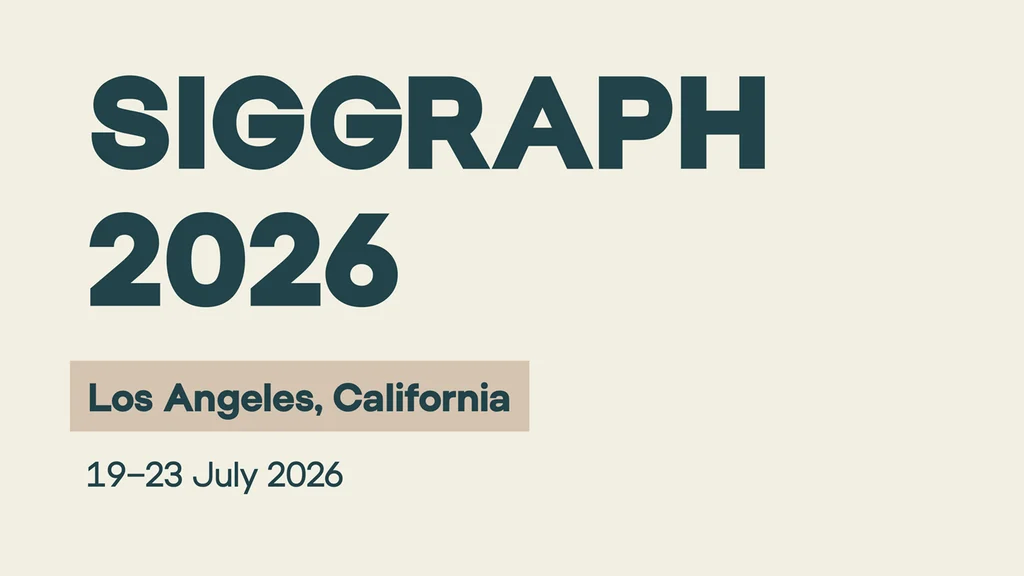
The Blender team is set to be a prominent presence at the prestigious SIGGRAPH 2026 conference, a leading event in computer graphics and interactive techniques. The annual gathering, scheduled to run from Sunday, July 19, to Thursday, July 23, will provide a crucial platform for Blender developers, contributors, and users to connect, share insights, and explore the latest innovations within the open-source 3D creation suite. This year’s engagement promises a comprehensive overview of Blender’s ongoing development, its robust community support, and its increasing influence in professional workflows, particularly with a focused discussion on its support for OpenPBR.
SIGGRAPH: A Cornerstone of Graphics Innovation
SIGGRAPH, often referred to as the "Olympics of Computer Graphics," has a rich history dating back to 1974. Organized by the ACM SIGGRAPH organization, it serves as a vital nexus for researchers, artists, developers, and industry leaders to present cutting-edge advancements in areas such as rendering, animation, virtual reality, augmented reality, and visual effects. The conference is renowned for its highly selective technical papers, immersive exhibitions, and numerous opportunities for professional development and networking. For a project like Blender, which thrives on community collaboration and open development, SIGGRAPH represents an unparalleled opportunity to connect with a global audience of potential users, contributors, and industry partners. The event’s evolution mirrors the rapid progress in digital content creation, from early research prototypes to the sophisticated tools that power blockbuster films, AAA video games, and immersive virtual experiences today.
Blender’s Multifaceted Presence at SIGGRAPH 2026
The Blender Foundation and the core development team have a consistent and valued presence at SIGGRAPH, underscoring the software’s growing significance in the professional graphics landscape. This year, attendees can anticipate a multifaceted engagement that includes a dedicated community booth, a series of informative "Birds of a Feather" (BoF) sessions, and a focused presentation on Blender’s evolving support for the Open Physically Based Rendering (OpenPBR) standard.
The community booth will serve as a central hub for all things Blender. It will be staffed by members of the Blender development team, community managers, and active contributors, offering live demonstrations of new features, answering technical questions, and providing guidance on how to get involved with the project. This interactive space allows for direct feedback and fosters a sense of camaraderie among the diverse Blender user base, ranging from hobbyists to professionals in film, animation, and game development. Historically, these booths have been instrumental in showcasing the rapid pace of Blender’s development and its increasing adoption by major studios.
The "Birds of a Feather" sessions are a unique SIGGRAPH tradition, providing informal, attendee-driven gatherings focused on specific topics. For Blender, these sessions are expected to cover a wide array of subjects, potentially including advanced modeling techniques, character animation workflows, real-time rendering with Eevee, scientific visualization applications, and the development of add-ons and custom tools. These gatherings are crucial for fostering specialized communities within the broader Blender ecosystem, allowing users with shared interests to exchange knowledge, collaborate on projects, and identify future development directions. Past BoF sessions have often led to the formation of new development initiatives and the strengthening of existing community networks.
A key highlight of Blender’s presence this year will be a dedicated talk exploring the project’s robust support for OpenPBR. This initiative represents a significant step towards standardizing material definitions and rendering pipelines across different software packages and render engines. OpenPBR aims to simplify the process of creating and sharing assets by providing a common language for describing how light interacts with surfaces. Blender’s commitment to OpenPBR signifies its dedication to interoperability and its alignment with industry-wide efforts to streamline asset creation and exchange in complex production environments. The presentation is expected to detail the technical implementation within Blender, showcase examples of OpenPBR materials rendered in the software, and discuss the implications for artists and studios seeking to integrate Blender into their existing pipelines.
A Deeper Dive into OpenPBR and Blender’s Role
OpenPBR is an open standard designed to define physically based rendering materials in a standardized way. Its development has been driven by the need for greater consistency and predictability in how materials appear across different applications, renderers, and hardware. Before standards like OpenPBR, artists often faced challenges ensuring that a material created in one software package would render identically in another, leading to time-consuming adjustments and potential visual discrepancies.
Blender’s integration with OpenPBR is not merely a technical feature; it is a strategic move that positions the open-source software as a more viable and seamless option for professional pipelines that often rely on a diverse set of tools. By embracing OpenPBR, Blender is demonstrating its commitment to industry best practices and its willingness to collaborate with other software vendors and organizations to foster a more connected and efficient digital content creation ecosystem. This move is particularly significant given the increasing demand for photorealistic rendering in film, television, and game development, where material accuracy is paramount. The ability to reliably import and export OpenPBR-defined materials from Blender to other industry-standard software, such as those used in architectural visualization, product design, and visual effects, can dramatically reduce production time and costs.
The presentation at SIGGRAPH 2026 will likely delve into the technical aspects of how Blender’s Cycles and Eevee renderers interpret and utilize OpenPBR material descriptions. This could include discussions on the underlying shader nodes, texture mapping conventions, and the handling of various surface properties like roughness, metallicness, and subsurface scattering. Furthermore, the Blender team may share insights into the ongoing development of OpenPBR itself and how Blender’s contributions are helping to shape its future evolution. The implications of this support extend beyond individual artists, potentially influencing how entire studios manage their asset libraries and collaborate on large-scale projects.
Historical Context and Community Growth
Blender’s journey to SIGGRAPH has been one of remarkable growth and transformation. Originating in the early 1990s as an in-house animation package for the Dutch animation studio NeoGeo, Blender was later spun off as a commercial product. However, its most pivotal moment came in 2002 when NaN (Not a Number), the company behind Blender, filed for bankruptcy. Through a groundbreaking crowdfunding campaign, the Blender Foundation successfully raised €100,000 in just seven weeks, allowing the source code to be acquired and released under the GNU General Public License (GPL). This act of open-sourcing was a watershed moment, transforming Blender from a niche commercial product into a powerful, free, and open-source alternative for 3D artists worldwide.
Since its open-sourcing, Blender has experienced exponential growth in its user base and development. The community, driven by passion and a shared vision, has contributed significantly to its feature set, stability, and performance. This collaborative spirit is what makes events like SIGGRAPH so important for Blender. It provides a physical space for the global community to converge, share their work, and connect with the developers who are shaping the software’s future. The evolution of Blender from a relatively basic 3D tool to a comprehensive production suite capable of competing with proprietary software in many areas is a testament to the power of open-source development and community engagement. The increasing sophistication of its rendering capabilities, animation tools, and simulation systems has led to its adoption in professional settings for projects ranging from independent short films and animated features to visual effects in Hollywood productions and game development.
The Significance of Community Engagement
The "Birds of a Feather" sessions, in particular, represent the democratic and community-driven nature of Blender’s development. Unlike formal presentations, these sessions are initiated and led by users, addressing specific interests and challenges. This organic approach allows for grassroots innovation and ensures that the development roadmap remains responsive to the evolving needs of the community. For instance, a BoF session on real-time rendering might lead to new feature requests for Eevee, or a discussion on character rigging could highlight the need for improved tools in that area. This direct channel of communication between users and developers is invaluable for maintaining Blender’s relevance and agility in the fast-paced world of digital art and technology.
The community booth, as mentioned, acts as a central point of contact. Here, experienced users can share their workflows, demonstrate how they leverage Blender for professional projects, and inspire newcomers. It’s also an opportunity for the Blender Foundation to gather feedback on upcoming features, identify bugs, and foster a sense of ownership and shared purpose among its global user base. The success of Blender is intrinsically linked to the active participation of its community, and SIGGRAPH provides a prime venue for nurturing these vital connections.
Looking Ahead: Broader Impact and Implications
Blender’s enhanced support for OpenPBR and its continued strong presence at SIGGRAPH signal a maturing of the software and its increasing integration into professional workflows. As more studios and artists recognize Blender’s capabilities and its commitment to industry standards, its adoption is likely to accelerate. This trend has broader implications for the digital content creation industry. The availability of a powerful, free, and open-source tool like Blender can democratize access to high-end 3D creation, empowering independent artists, smaller studios, and educational institutions.
The success of Blender also challenges the dominance of proprietary software in certain sectors. By offering comparable or even superior features in some areas, and by fostering a vibrant community that contributes to its rapid development, Blender is forcing the industry to innovate and potentially reconsider pricing models. The focus on interoperability through standards like OpenPBR further solidifies Blender’s position as a collaborative partner rather than an isolated solution.
The SIGGRAPH 2026 conference will undoubtedly provide further evidence of Blender’s ascendance. The discussions, demonstrations, and networking opportunities that will unfold at the event are crucial for the continued growth and evolution of this pivotal open-source project. The Blender team’s participation underscores their dedication to transparency, community collaboration, and the advancement of digital art and technology on a global scale. The insights gained and the connections forged at SIGGRAPH will undoubtedly contribute to the future trajectory of Blender, further solidifying its role as a leading force in the world of 3D creation.
About the Author