For enthusiasts immersed in the dynamic world of online crypto casinos, the concept of "crash games" has become a staple, offering a unique blend of immediate gratification and strategic decision-making. While titles such as Aviator, JetX, and Spaceman frequently dominate discussions, an earlier pioneer, Bustabit, holds a significant place in the genre’s history, often credited with popularizing the format. Launched in 2014, Bustabit predates many of its contemporary counterparts, establishing itself as a foundational element within the nascent crypto gambling landscape. It operates on a straightforward yet compelling premise: players wager on a rising multiplier, aiming to cash out before the inevitable "crash" brings the round to an abrupt end. This core mechanic, combined with a remarkably low house edge of just 1% and integrated social features, has allowed Bustabit to not only endure but thrive over a decade, attracting a dedicated community of players. This analysis delves into the mechanics, historical context, unique features, and broader implications of Bustabit within the rapidly evolving crypto casino industry.
The Genesis of a Genre: Bustabit’s Origins and Impact
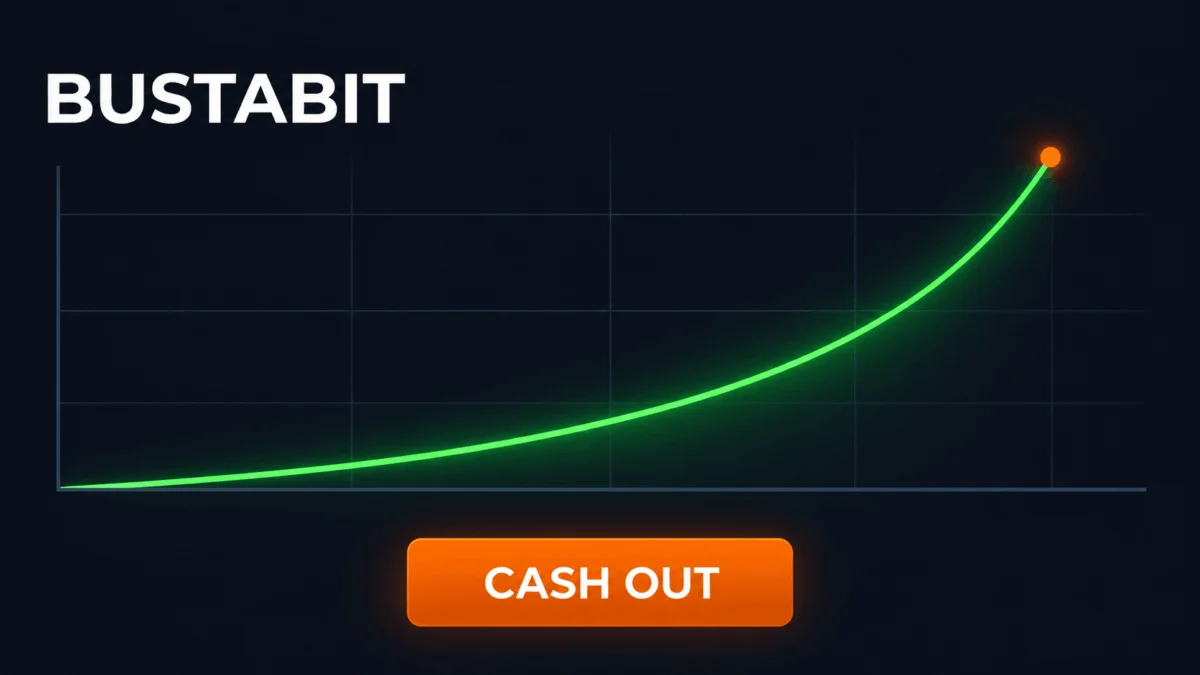
The emergence of Bustabit in 2014 marked a pivotal moment for online gambling, particularly within the burgeoning cryptocurrency ecosystem. At a time when Bitcoin was still a niche asset and the concept of decentralized finance (DeFi) was years from mainstream recognition, Bustabit offered a novel application for digital currencies. Traditional online casinos were characterized by complex interfaces, elaborate graphics, and often opaque game mechanics. Bustabit, conversely, embraced a minimalist design philosophy, presenting a stark dark screen featuring only the ascending multiplier, a representation of the game’s progress, and a chat box. This deliberate simplicity was revolutionary, cutting through the visual clutter prevalent in the gaming industry at the time.
Industry analysts suggest that Bustabit’s success stemmed from its ability to distil the gambling experience to its most fundamental elements: risk, reward, and timing. Its direct engagement with cryptocurrency, primarily Bitcoin in its early days, resonated with a tech-savvy audience eager to explore new applications for digital assets. The game’s longevity underscores its robust design and the intrinsic appeal of its core gameplay loop. While many early crypto projects have faded, Bustabit’s continuous operation since 2014 speaks volumes about its stability and community trust, cementing its status as a "classic" within the crash game genre.
Core Mechanics and Design Philosophy
At its heart, Bustabit exemplifies the quintessential crash game. Each round commences with a multiplier of 1x, which steadily increases. Players place their wagers and must decide when to "cash out" their bet to secure a profit before the game "crashes," at which point all active bets are lost. For instance, cashing out at 2.5x on a $10 wager would yield $25, representing a $15 profit. The challenge lies in the unpredictable nature of the crash point, which can occur at any multiplier, from just above 1x to several thousand x. This dynamic creates a constant tension between greed and caution, a psychological battle that defines the player experience.
The minimalist aesthetic of Bustabit is not merely an artistic choice; it is a fundamental aspect of its functionality and appeal. In an era saturated with rich graphics and intricate animations, Bustabit’s pared-back interface ensures that player focus remains squarely on the multiplier and the critical decision-making process. This design also contributes to its perceived professionalism and trustworthiness, as there are no extraneous elements to distract or potentially mislead. The absence of complex visual distractions means even novice players can grasp the mechanics almost instantly, fostering immediate engagement. This deliberate design choice reflects a deep understanding of user experience, prioritizing clarity and essential information over decorative flourishes.
Beyond the Basic Bet: Enhanced Features and Community Engagement
Bustabit distinguishes itself from many other crash games through a suite of advanced features designed to enhance both gameplay and community interaction. One prominent offering is the robust autobet system, which allows players to configure sophisticated betting strategies. This includes setting automatic cash-out points, stop-loss limits, and even implementing martingale-style sequences or other progressive betting patterns. The platform also offers a "test strategy" mode, enabling users to simulate complex strategies without risking real funds, a feature particularly valued by analytical players seeking to optimize their approach.
The integrated chat feature is another significant draw, fostering a vibrant social environment. Players can communicate in real-time, sharing their excitement, frustrations, and insights during rounds. This communal aspect transforms an otherwise solitary online gaming experience into a shared event, building a sense of camaraderie and competition. This social dimension is a key factor in player retention and engagement, transforming individual participation into a collective experience. Industry studies on online gaming indicate that social interaction significantly boosts player loyalty and overall satisfaction, a principle Bustabit leverages effectively.
Furthermore, Bustabit incorporates a "vault" feature, which serves multiple purposes related to responsible gaming and financial management. Players can set time-out limits to prevent excessive play, promoting responsible gambling habits. The vault also allows for secure storage of funds, providing an additional layer of financial control. Perhaps one of Bustabit’s most unique and innovative features is the "be the bankroll" option. This allows players to invest in the game’s overall bankroll, effectively becoming a fractional owner of the house. In this capacity, investors share in the game’s collective wins and losses, introducing an element akin to decentralized finance (DeFi) investment. While this advanced feature primarily appeals to seasoned crypto traders and investors, it highlights the platform’s pioneering spirit in exploring novel ways to integrate crypto economics into leisure activities, potentially generating passive income for those willing to assume the associated risks.
The Provably Fair Paradigm: Trust and Transparency
A cornerstone of Bustabit’s enduring appeal, and indeed of most reputable crypto casino games, is its commitment to provable fairness. The game’s outcomes are generated using a transparent, cryptographic algorithm that allows players to independently verify the randomness and integrity of each round. This is achieved by publishing cryptographic hashes of server seeds and client seeds, which, combined with a nonce, determine the crash point. After a round concludes, players can use open-source verification tools to confirm that the result was genuinely random and not manipulated.
This provably fair system is crucial for building trust in an unregulated or loosely regulated online gambling environment. Unlike traditional casinos where the house’s algorithms are proprietary and opaque, crypto-native games offer an unprecedented level of transparency. For players, this means that while the outcome of any single round remains unpredictable, the underlying mechanism is demonstrably unbiased. This commitment to transparency directly addresses concerns about fairness, a common point of contention in conventional online gaming. It reinforces the idea that success or failure is purely a function of chance and timing, not rigged mechanics.
Navigating Volatility: Cash-Out Decisions and Strategy Misconceptions
The central challenge in Bustabit revolves around the "when to cash out" decision. This single choice dictates whether a player secures a profit or loses their wager. While the game’s provably fair nature guarantees randomness, it also introduces a significant psychological dimension. Players often grapple with the allure of higher multipliers versus the risk of losing everything. Some adopt a conservative approach, aiming for frequent, small wins by cashing out at low multipliers (e.g., 1.5x or 2x). Others chase elusive high multipliers, hoping for a substantial payout, but accepting the higher probability of a total loss.
A common misconception among players, particularly in games of chance, is the belief in discernible patterns or "hot" and "cold" streaks. While Bustabit provides a history of past rounds, including crash points, it is critical to understand that each round is an independent event. The game’s provably fair algorithm ensures that previous outcomes have no bearing on future ones. Therefore, observing a series of low multipliers does not statistically increase the probability of a subsequent high multiplier, nor does a run of high multipliers guarantee another. This adherence to true randomness means that traditional betting "strategies" designed to predict outcomes, such as the Martingale system or pattern recognition, are fundamentally ineffective in altering the house edge or guaranteeing long-term success.
Responsible crypto casino strategy, as emphasized by gambling experts, focuses not on predicting outcomes but on managing risk and bankroll. Setting clear limits for wagers, losses, and session duration is paramount. Players who view Bustabit primarily as a form of entertainment, rather than a reliable source of income, are better positioned to enjoy the experience without succumbing to potentially damaging financial habits. The inherent randomness of crash games means that while large wins are possible and frequently highlighted on leaderboards, these represent outlier events. A balanced perspective acknowledges that the aggregate outcome for most players, over time, will reflect the game’s house edge.
Industry Context and Broader Implications
Bustabit’s enduring presence and innovative features have had a notable impact on the broader crypto gambling industry. Its minimalist design proved that engaging gameplay doesn’t require complex graphics, influencing subsequent crash game development. The successful integration of social features highlighted the importance of community in online crypto gaming, a lesson adopted by many newer platforms. Moreover, its "be the bankroll" feature, while niche, offered an early glimpse into the possibilities of intertwining gaming with decentralized investment models, foreshadowing elements of play-to-earn (P2E) and GameFi ecosystems.
The 1% house edge offered by Bustabit is notably competitive, often lower than many traditional casino games and even some other crypto-native options. This aggressive house edge positions Bustabit as an attractive option for players seeking to minimize the statistical disadvantage over the long term, although it does not negate the inherent risk of individual rounds.
As the crypto gambling market continues to mature, Bustabit remains a significant benchmark. Its foundational principles—simplicity, transparency (provably fair), community, and innovative financial mechanics—continue to resonate with a global audience. The game’s success story serves as a testament to the power of well-executed, crypto-native gaming experiences, demonstrating how a decade-old concept can continue to captivate and innovate within a rapidly evolving digital landscape. Its journey from an early Bitcoin experiment to a sustained industry player offers valuable insights into the resilience and potential of decentralized entertainment.
About the Author