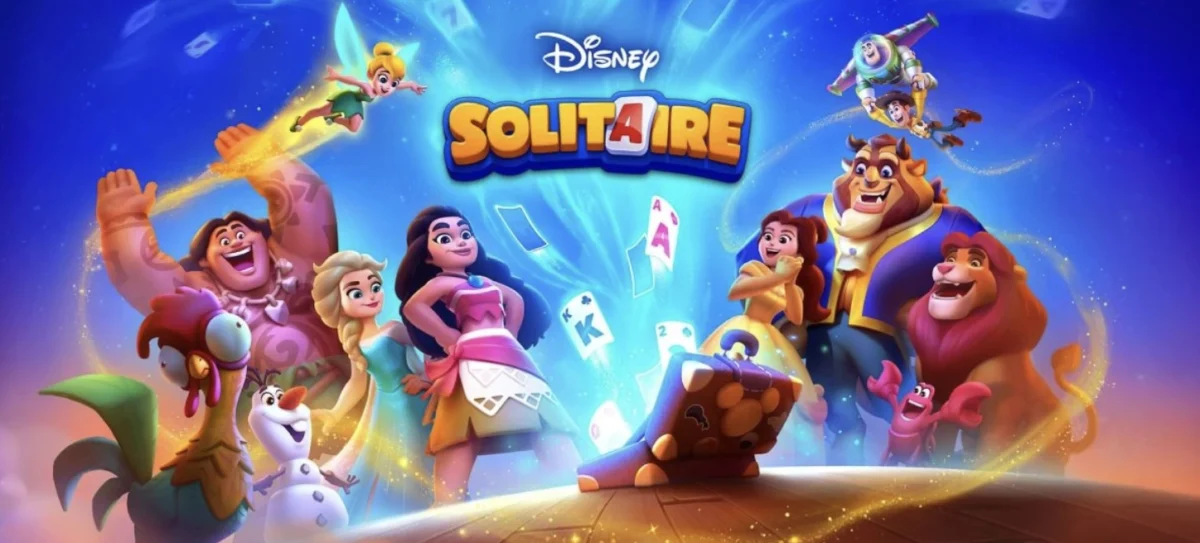
Playtika Holding Corp. has reported a significant financial recovery in its second-quarter results for 2026, swinging back to profitability following a challenging first quarter. The primary catalyst for this turnaround was the explosive growth of Disney Solitaire, a title developed by SuperPlay, which saw its year-over-year revenue climb by a staggering 288.6%. Despite this momentum, the company’s leadership has signaled a pivot in its operational strategy, confirming plans to slash marketing expenditures for the title by approximately 70% in the latter half of the year. This move comes amid persistent industry rumors regarding the potential sale of SuperPlay to the Chinese conglomerate Tencent, highlighting a complex period of transition for the mobile gaming giant.
Financial Performance and the Q2 Turnaround
The second quarter of 2026 marked a pivotal moment for Playtika as it successfully navigated out of the net loss recorded in Q1. Total revenue for the quarter reached $731.1 million, representing a 5% increase compared to the same period in the previous year. While this figure was slightly lower than the revenue generated in the first quarter, the decline was attributed to a deliberate and strategic pullback in marketing investments across the portfolio.
The most notable improvement was seen in the company’s bottom-line metrics. Adjusted EBITDA (Earnings Before Interest, Taxes, Depreciation, and Amortization) rose to $206.1 million, a 23.4% increase year-on-year and a massive 64.6% increase sequentially from the first quarter. This surge in profitability pushed the company’s adjusted EBITDA margin to 28.2%, a significant expansion from the 16.8% margin reported in Q1. This margin growth reflects Playtika’s intensified focus on operational efficiency and the high-margin nature of its maturing game titles.
The Disney Solitaire Phenomenon and Marketing Pivot
Disney Solitaire has emerged as the standout performer in Playtika’s current lineup. The game’s nearly 290% revenue growth has validated the company’s 2024 acquisition of SuperPlay. However, the announcement that marketing spend on the title would be reduced by 70% in the second half of 2026 raised eyebrows among investors and industry analysts.
Playtika’s Chief Financial Officer, Tae Lee, addressed these concerns during the earnings call, explaining that the reduction is a calculated move to maximize margins rather than a sign of the game’s decline. Lee noted that while the marketing investment is being cut drastically, the expected revenue decline is "nowhere close" to that percentage. This suggests that Disney Solitaire has reached a level of organic stability and player retention where aggressive user acquisition (UA) is no longer the primary driver of its financial success.
Robert Antokol, CEO of Playtika, reinforced this sentiment, suggesting that the durability of the game’s player base allows for such a reduction. Antokol emphasized that the game continued to grow even as the company began tapering its marketing spend earlier in the year. "It only happens when the players you have added continue to stay with you when they keep playing and they keep spending," Antokol stated, framing the decision as a testament to the game’s quality and the company’s disciplined execution.
The SuperPlay Acquisition and the Tencent Divestment Rumors
The strategic shift regarding Disney Solitaire cannot be viewed in isolation from the ongoing narrative surrounding SuperPlay. Playtika acquired the developer in 2024 for an initial consideration of $700 million, a deal that included significant performance-based earnouts. At the time of the acquisition, Disney Solitaire had not yet reached its current heights of commercial success.
Recent reports have suggested that Playtika may be exploring the sale of SuperPlay to Tencent in a deal that could be valued at up to $1.5 billion. Analysts speculate that the massive success of Disney Solitaire has significantly increased the earnout obligations Playtika owes to SuperPlay’s original founders. If Playtika finds these obligations difficult to meet within its current capital structure, a divestment to a cash-rich entity like Tencent could provide a strategic exit that stabilizes Playtika’s balance sheet while rewarding SuperPlay’s creators.
The reduction in marketing spend could be interpreted in two ways: as a method to "clean up" the profit and loss statement ahead of a potential sale, or as a necessary step to manage the cash flow required for upcoming earnout payments. While Playtika executives did not comment directly on the Tencent rumors during the call, the emphasis on "margin expansion" and "disciplined execution" aligns with a company preparing for a major corporate action or a more conservative fiscal phase.
Portfolio Overview: Bingo Blitz and June’s Journey
While Disney Solitaire provided the growth narrative for the quarter, Playtika’s legacy titles showed signs of a maturing market. Bingo Blitz, long the flagship of the company’s social casino and casual offerings, saw revenue fall to $145.1 million. This represented a 9.5% decline year-on-year and a 5.6% drop from the previous quarter. The decline in Bingo Blitz suggests that even the most established mobile titles face pressure from shifting player preferences and a highly competitive UA landscape.
In contrast, June’s Journey, the hidden-object hit from Playtika’s Wooga studio, remained a pillar of stability. The game generated $74.7 million in revenue, an 8.1% increase year-on-year. Although it experienced a minor sequential dip, its consistent performance underscores the value of Playtika’s diversified portfolio, which balances high-growth newcomers with steady, long-term earners.
Key Performance Indicators and User Metrics
A deeper look at Playtika’s operational data reveals a trend common across the mobile gaming industry: a shrinking total user base but a more highly monetized one. The average daily paying users (DPU) fell by 2.9% year-on-year to 367,000. However, the efficiency of the company’s monetization funnels improved. The average payer conversion rate—the percentage of daily active users who make a purchase—rose to 4.6%, up from 4.3% in the same period last year.
This shift indicates that Playtika is successfully identifying and retaining "whales" or high-value players, even as broader user acquisition becomes more expensive due to privacy changes in mobile advertising (such as Apple’s IDFA) and increased competition. By focusing on conversion and retention over raw download numbers, Playtika is prioritizing the quality of its user base over its quantity.
Future Outlook and Market Caution
Looking ahead to the remainder of 2026, Playtika has reaffirmed its full-year guidance, projecting revenue between $2.75 billion and $2.85 billion, with adjusted EBITDA expected to fall between $750 million and $790 million. However, management added a note of caution, stating that results are likely to land toward the lower end of these ranges.
This conservative outlook is driven by two factors: a "more cautious view of consumer spending" globally and the planned step-down in second-half marketing investments. The mobile gaming sector is currently navigating a macroeconomic environment where discretionary spending is under pressure from inflation and economic uncertainty. By signaling a lower-end finish to the year, Playtika is managing investor expectations while preparing for a leaner operational model.
Strategic Implications and Industry Context
Playtika’s current trajectory reflects a broader "flight to profitability" within the gaming industry. The era of "growth at any cost," fueled by cheap capital and low UA costs, has largely ended. Companies are now being judged by their ability to generate consistent cash flow and expand margins.
The potential sale of SuperPlay, if it occurs, would be one of the most significant M&A events in the mobile space in 2026. It would signal Tencent’s continued appetite for high-performing Western mobile assets while allowing Playtika to refocus on its core portfolio or pursue new acquisitions that fit a different risk profile.
Furthermore, the success of Disney Solitaire highlights the enduring power of strong IP in the mobile market. By leveraging the Disney brand through SuperPlay’s mechanics, Playtika was able to achieve growth levels that are increasingly rare for new titles in a saturated market. The decision to then "harvest" that growth by cutting marketing spend is a classic private equity-style move, focusing on extracting maximum value from an established asset.
Conclusion
Playtika’s second quarter of 2026 was a study in strategic pivot and financial resilience. By capitalizing on the extraordinary success of Disney Solitaire, the company was able to reverse its Q1 fortunes and deliver a quarter defined by margin expansion and profitability. However, the drastic reduction in marketing spend and the looming possibility of a SuperPlay sale suggest that Playtika is entering a new phase of its corporate life—one where discipline, retention, and strategic divestment take precedence over aggressive expansion. As the company moves into the second half of the year, all eyes will be on whether Disney Solitaire can maintain its momentum without its massive marketing engine and whether the rumored deal with Tencent will reshape the company’s future.
About the Author