The GB Pixel Art Jam 2024, an annual digital art challenge that summons artists to craft visuals within the iconic constraints of the classic Game Boy handheld, has successfully concluded, marking another impressive demonstration of creative ingenuity facilitated by itch.io’s versatile "Jams" feature. Participants were tasked with adhering to a strictly limited color palette and specific technical requirements reminiscent of Nintendo’s groundbreaking portable console, resulting in 378 unique submissions. Following the event’s culmination, the community eagerly anticipates the release of a compiled ROM containing all the artwork, allowing enthusiasts to experience the diverse creations in an authentic Game Boy environment. This initiative underscores the enduring appeal of retro aesthetics and the vibrant community dedicated to exploring their artistic potential.
The Enduring Legacy of the Game Boy Aesthetic
The Game Boy, originally launched by Nintendo in 1989, revolutionized the portable gaming landscape and left an indelible mark on visual culture. Its distinctive monochrome (or later, limited color for Game Boy Color) display, characterized by four shades of greenish-grey, was not merely a technical limitation but a defining aesthetic. This restricted palette, coupled with low screen resolution (160×144 pixels), forced developers and artists to innovate, conveying complex ideas and rich environments through minimalist pixel arrangements. The resulting art style is instantly recognizable and has cultivated a dedicated following that persists decades after the console’s heyday.
The GB Pixel Art Jam taps directly into this nostalgic reverence while simultaneously pushing contemporary artistic boundaries. For many participants, the challenge is not just about mimicking a retro style, but understanding and mastering the principles of visual communication under severe constraint. Artists must meticulously consider every pixel, every shade, to evoke mood, form, and narrative with unparalleled efficiency. This process sharpens artistic skills, fostering a deeper appreciation for composition, color theory (even with limited colors), and the art of implication. The revival of such specific retro aesthetics in modern art and independent game development speaks to a broader trend of valuing foundational design principles and finding new avenues for creativity within historical frameworks.
Itch.io’s Role in Fostering Creative Communities
Itch.io has established itself as a pivotal platform for independent game developers and digital artists, largely through its robust and flexible "Jams" system. Since its inception, the platform has consistently impressed observers with the wide range of events and creative challenges that communities have organized using its tools. These jams range from game development competitions lasting a few days to month-long art challenges, each designed to inspire creation, foster collaboration, and provide a structured environment for skill development. The platform’s infrastructure supports everything from submission management and community forums to voting systems and content hosting, making it an ideal incubator for niche creative endeavors like the GB Pixel Art Jam.
The philosophy behind itch.io Jams is rooted in accessibility and empowerment. By providing free and easy-to-use tools, itch.io lowers the barrier to entry for aspiring creators, allowing them to participate in organized events without significant technical hurdles. This fosters a diverse and inclusive community where both seasoned professionals and complete novices can contribute, receive feedback, and grow. The sheer volume of submissions, often numbering in the hundreds or even thousands for popular jams, demonstrates the platform’s effectiveness in mobilizing creative energy globally. For events like the GB Pixel Art Jam, itch.io acts as a central hub, connecting artists who share a passion for a very specific, technically demanding art form, enabling them to collectively celebrate and expand upon it.
Chronology and Mechanics of the GB Pixel Art Jam 2024
The GB Pixel Art Jam 2024 commenced on January 19, 2024, at 12:00 PM (GMT+0), initiating a two-week period of intense creative activity. Participants were given until February 2, 2024, 12:00 PM (GMT+0) to conceptualize, design, and submit their Game Boy-inspired pixel art creations. The relatively short timeframe is a characteristic feature of game and art jams, designed to encourage rapid ideation and execution, pushing artists to make decisive creative choices.
The core challenge lay in adhering to the Game Boy’s strict technical specifications. While the original Game Boy famously utilized a 4-shade grayscale palette, later iterations like the Game Boy Color expanded this, yet still within highly limited parameters. For this jam, artists were generally expected to work within a palette that evoked the original console’s aesthetic, often translating to specific color limitations (e.g., 4 colors, or a very restricted set of colors if simulating GBC). Beyond color, artists had to consider tile-based graphics, sprite limitations, and the overall resolution of the Game Boy screen (160×144 pixels), which dictates how much detail can realistically be rendered. These constraints are not arbitrary; they are the very essence of the Game Boy’s visual identity, and mastering them is central to producing authentic-looking art. The jam’s structure encourages artists to delve into the history of game development, understanding how early pioneers crafted compelling visuals despite significant technical hurdles. The prompt served as a catalyst for both technical proficiency and imaginative storytelling, all within the strict confines of a nostalgic canvas.
A Glimpse into the Submissions: Innovation within Constraint
With 378 submissions, the GB Pixel Art Jam 2024 showcased an impressive breadth of artistic interpretation within its narrow technical framework. Each piece represents a unique solution to the challenge of conveying mood, narrative, and detail using only a handful of colors and a grid of pixels. The curated selections highlight the diverse approaches artists took:
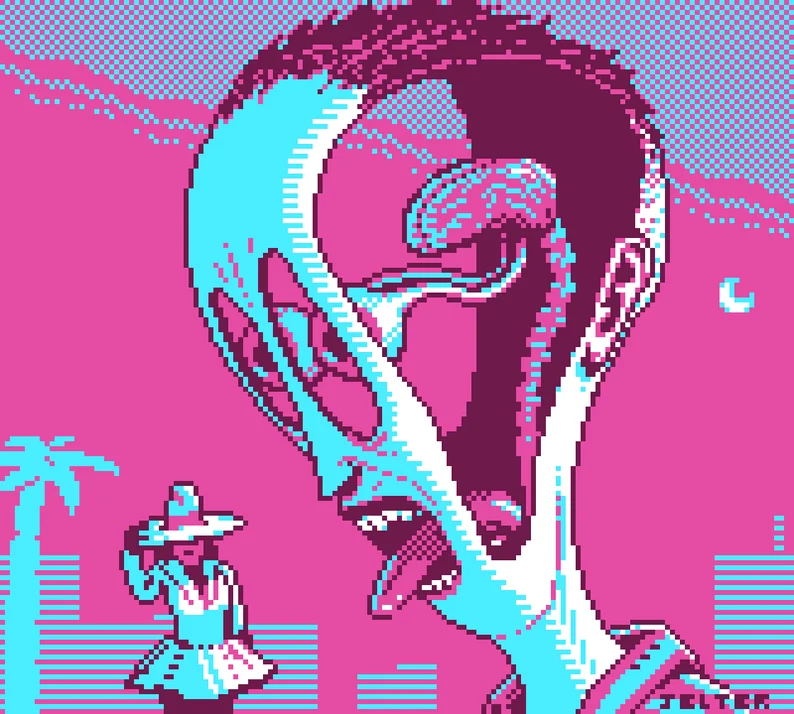
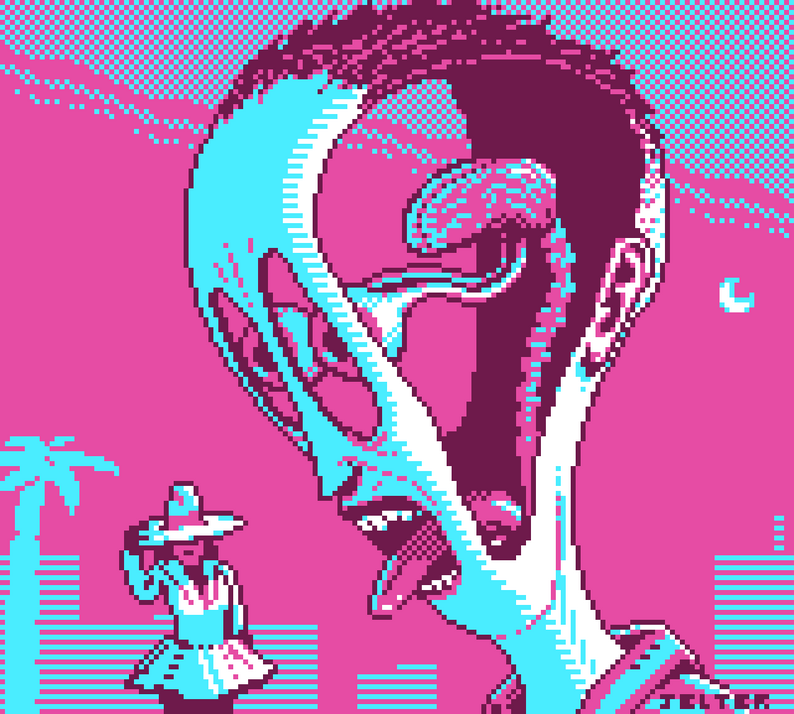
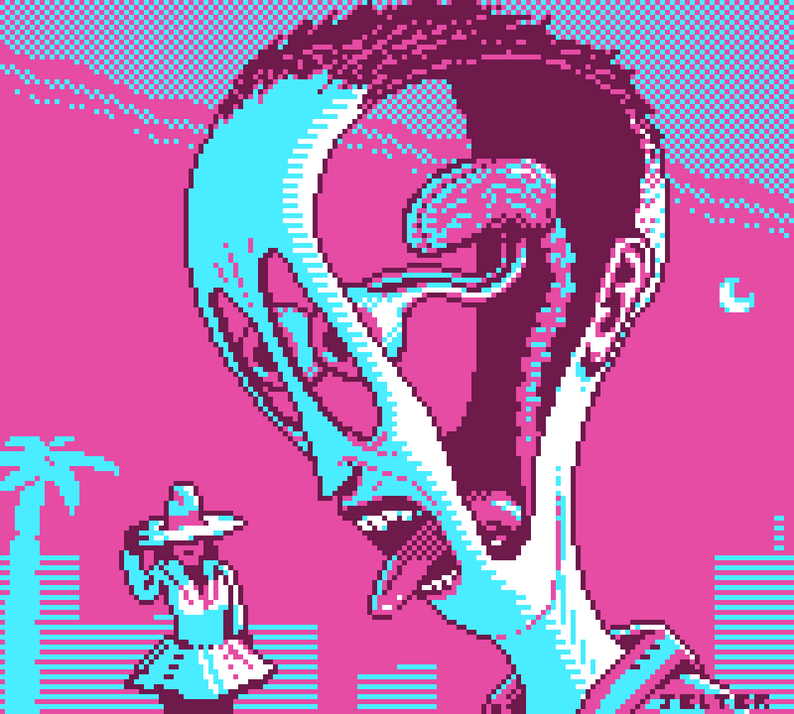
- "Malibu Dream" by BenJelter: This piece exemplifies how a limited palette can evoke a vibrant, almost ethereal atmosphere. The choice of minimal colors creates a sense of depth and luminosity, painting a serene yet dreamlike scene that perfectly captures a "Malibu" vibe without needing photorealistic detail. It demonstrates masterful use of shading and implied textures to convey complex visual information.
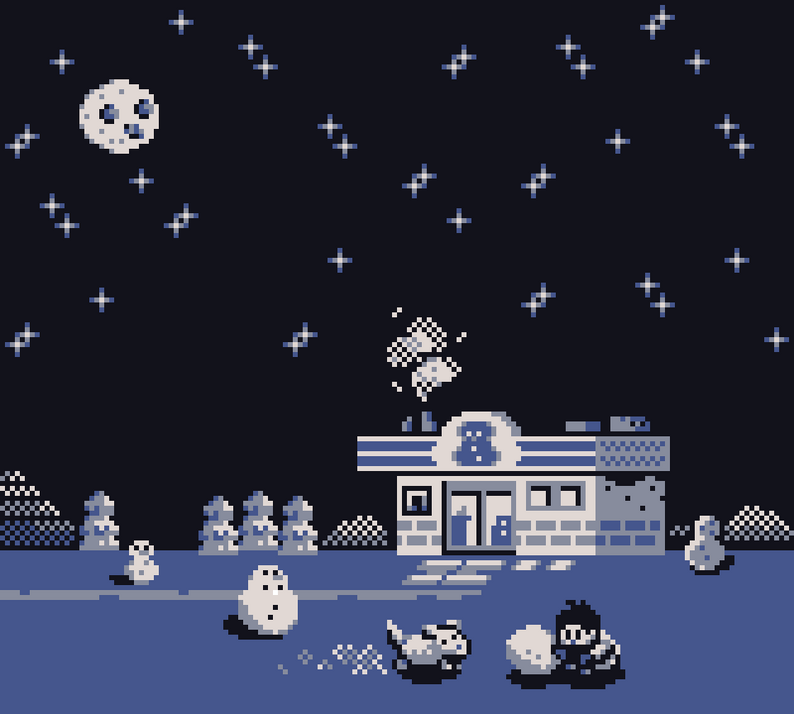
- "Night time at Snowball Conbini" by howdy riceball: This artwork transports viewers to a cozy, nocturnal scene, cleverly utilizing the Game Boy aesthetic to enhance the sense of quiet solitude. The depiction of a convenience store at night, often a mundane subject, is elevated by the charming pixel art style, with careful attention to lighting and reflections. The limited palette is expertly used to differentiate between interior and exterior lighting, creating a warm contrast against the cool night.
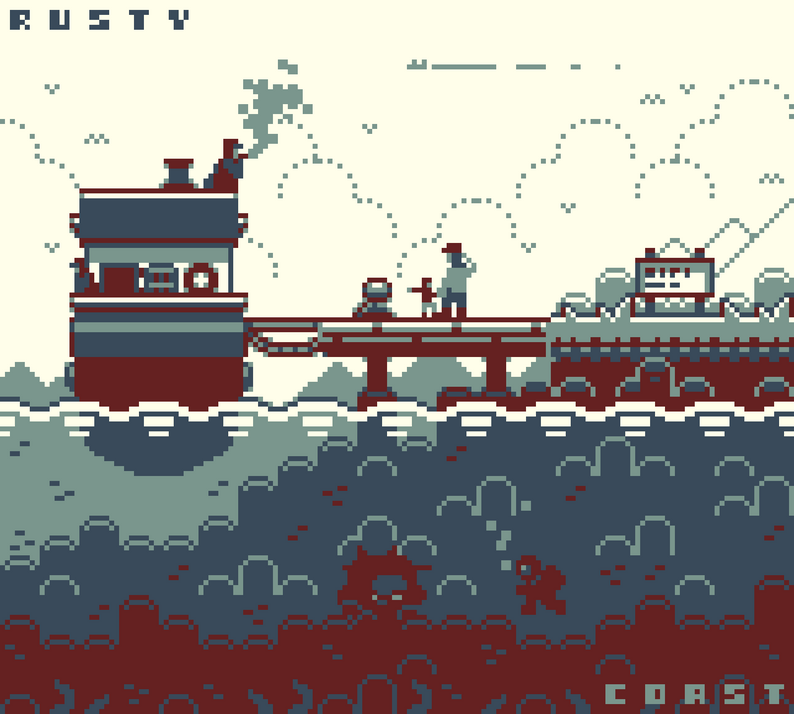
- "Rusty Coast" by Birds Probably: This submission stands out for its environmental storytelling. The artist effectively uses the Game Boy’s visual language to depict a rugged, weathered landscape, conveying a sense of age and decay through subtle variations in shade and texture. The composition guides the eye through the scene, suggesting a narrative beyond the static image itself, demonstrating how even simple pixel art can evoke rich backstories.
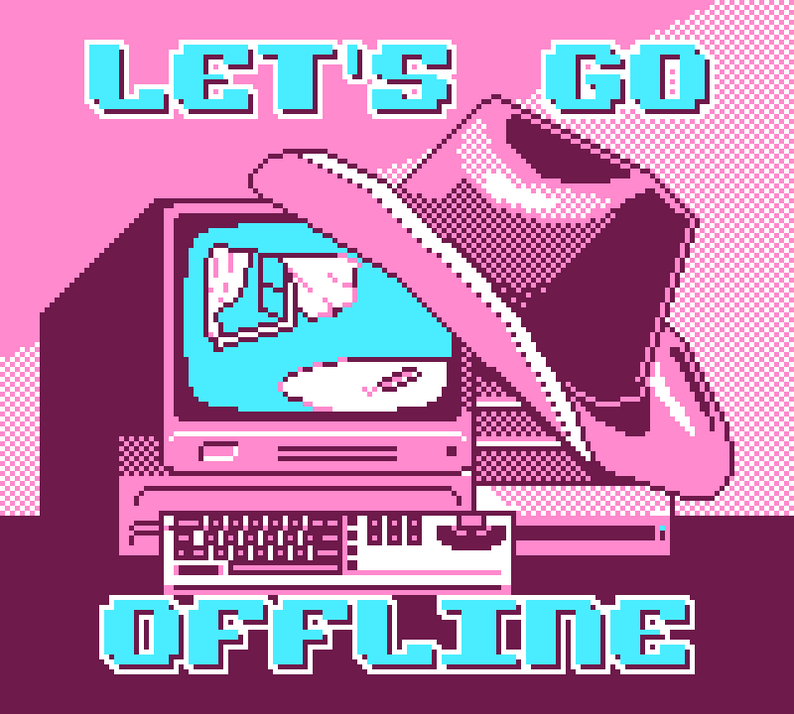
- "Let’s Go Offline" by Robert Doman: This piece offers a thoughtful commentary on modern life through a retro lens. The title itself suggests a yearning for simplicity, which is mirrored in the clean, evocative pixel art style. The artwork likely features elements that subtly critique or comment on our digital-first existence, rendered in a medium that harks back to an era of simpler technology. It’s an example of how the jam allows for deeper conceptual engagement.
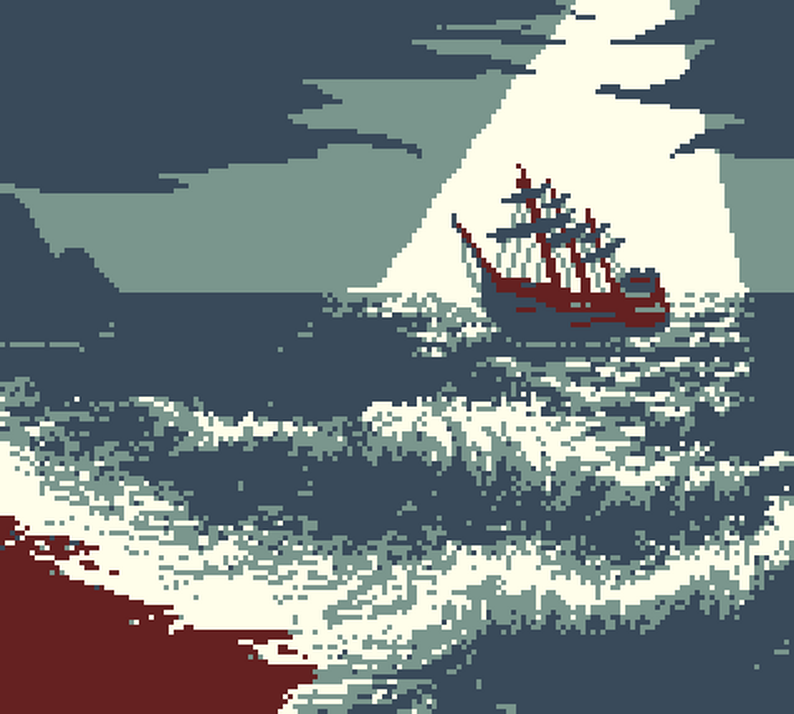
- "A Lament for Forgotten Souls" by Annagmo: This artwork delves into more evocative and perhaps melancholic themes. The Game Boy’s inherent simplicity can lend itself well to atmospheric and emotionally resonant imagery, and this piece likely leverages the limited palette to create a somber, reflective mood. The artistic choices in character design and background elements would contribute to a narrative of remembrance or loss, proving the versatility of the format for profound expression.
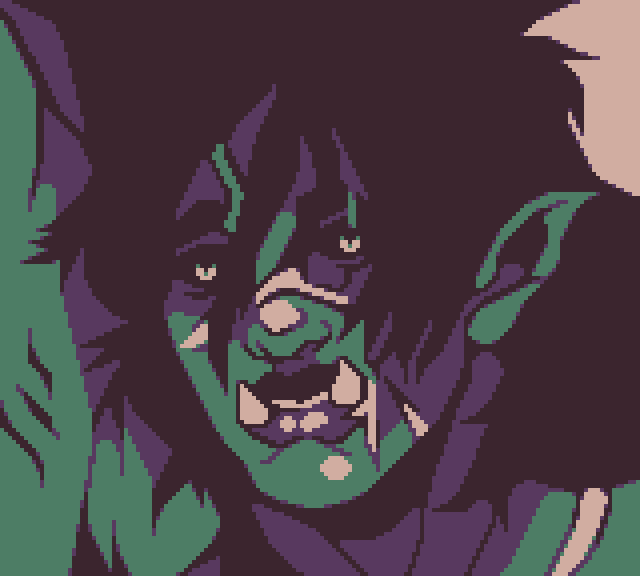
- "Aren, Orc Warrioress" by Rohezk: A strong example of character design within the constraints. Rohezk’s "Aren" showcases how robust and dynamic characters can be rendered with minimal pixels. The artist effectively uses the limited shades to define musculature, armor, and facial features, giving the warrioress a formidable presence. This piece highlights the importance of strong silhouette and efficient detailing in pixel art.
- "Swamps’ witch" by BifStek: This submission creates an intriguing sense of mystery and atmosphere. The portrayal of a "swamp witch" suggests a blend of fantasy and natural elements, rendered with a palette that emphasizes dampness and shadows. The artist’s ability to create a compelling character and setting with such limited tools speaks to their understanding of visual hierarchy and storytelling through elemental design.
These examples, representing just a fraction of the total submissions, collectively demonstrate the vibrant creativity and technical skill present within the pixel art community. Each artist, in their own way, has taken the spirit of the Game Boy and reinterpreted it through a modern lens, proving that limitations can indeed foster boundless innovation.
Participation, Community, and Broader Implications
The participation of 378 artists in the GB Pixel Art Jam 2024 underscores the significant and active community surrounding retro gaming and pixel art. This number not only reflects enthusiasm for the Game Boy aesthetic but also highlights a global interest in artistic challenges that push creators to master specific technical styles. Jams like this provide invaluable opportunities for artists to hone their skills in a structured yet creative environment, receive peer feedback, and build portfolios. For many, it’s a chance to experiment with new techniques or revisit beloved art forms from their past.
From an educational standpoint, the jam serves as a practical masterclass in constraint-based design. Understanding how to communicate effectively with a minimal toolset is a foundational skill applicable across many design disciplines, not just pixel art. The detailed requirements compel artists to think critically about composition, form, and how to maximize the impact of every single pixel.
The upcoming compiled ROM containing all the artwork is more than just a gallery; it’s an archive. This playable artifact allows the art to be experienced in its intended context—on a Game Boy emulator or even flashed onto a physical cartridge—providing an authentic and immersive viewing experience. This act of compilation ensures the longevity of the submissions, turning a transient event into a permanent, interactive exhibition. It also reinforces the idea that digital art, especially within specific technical constraints, can be preserved and appreciated as cultural heritage.
Organizers of such events, including the team behind the GB Pixel Art Jam, consistently express satisfaction with the high quality and diversity of submissions. While no direct "official statements" are provided in the original text beyond itch.io’s general impression of jam diversity, the success of the event itself speaks volumes. The consistent engagement and the high volume of submissions indicate that these challenges resonate deeply with the creative community, fulfilling a need for both structured artistic expression and communal engagement.
Looking ahead, the success of the GB Pixel Art Jam 2024 reinforces the viability and importance of niche art challenges. These events not only celebrate historical technology and aesthetics but also contribute to the ongoing evolution of digital art. The skills developed, the connections forged, and the artworks created during such jams often influence broader trends in indie game development and contemporary pixel art. They demonstrate that creativity thrives not just in boundless freedom, but often within thoughtfully imposed limitations, continuing the legacy of pioneering artists and developers who shaped the early days of digital entertainment. The ongoing conversation in the comments section about "unique twists on using itch.io’s Jam system" further signifies a healthy, engaged community constantly seeking new ways to innovate and collaborate.
About the Author