The GB Pixel Art Jam 2024, a celebrated annual event that challenges digital artists to craft visuals within the strictures of the iconic Nintendo Game Boy handheld, has officially concluded, drawing an impressive 378 submissions from a global community of creators. Participants were tasked with translating contemporary and imaginative concepts into the classic 8-bit, four-color grayscale aesthetic, adhering to specific technical requirements reminiscent of the beloved portable console. This year’s jam, hosted on the versatile itch.io platform, underscored the enduring appeal of retro aesthetics and the innovative spirit thriving within the independent art and game development communities. Following the successful close of the submission period, organizers have announced plans to compile all submitted artworks into a playable ROM, preserving this collective digital art exhibition for posterity and offering a unique interactive gallery for enthusiasts.
The Enduring Legacy of the Game Boy and the Art of Pixelation
The Nintendo Game Boy, first released in 1989, revolutionized portable gaming and left an indelible mark on popular culture. Its distinctive green-tinted monochrome screen, limited to just four shades (often perceived as green, dark green, lighter green, and white), and a modest resolution of 160×144 pixels, necessitated a unique artistic approach. Far from being a hindrance, these technical constraints fostered a specific brand of creativity, compelling developers and artists to convey complex ideas and detailed visuals with remarkable economy and ingenuity. This historical context forms the very bedrock of the GB Pixel Art Jam, which seeks to reignite and celebrate this particular artistic discipline.
Pixel art, defined by its conscious manipulation of individual pixels as the fundamental building blocks of an image, predates the Game Boy but found a golden age during the 8-bit and 16-bit eras. In contemporary digital art, it serves as both a nostalgic nod to gaming’s past and a challenging medium in its own right, valued for its precision, clarity, and ability to evoke a specific stylistic mood. Artists participating in jams like the GB Pixel Art Jam must master techniques such as dithering (using patterns of pixels to simulate more colors or shades), anti-aliasing (smoothing jagged lines by subtly blending colors), and efficient composition to create legible and aesthetically pleasing images within severe limitations. The resurgence of pixel art in modern independent video games further validates its artistic merit and widespread appeal, demonstrating that restrictive palettes and low resolutions can still convey rich narratives and atmospheric depth.
Itch.io’s Role in Fostering Creative Jams
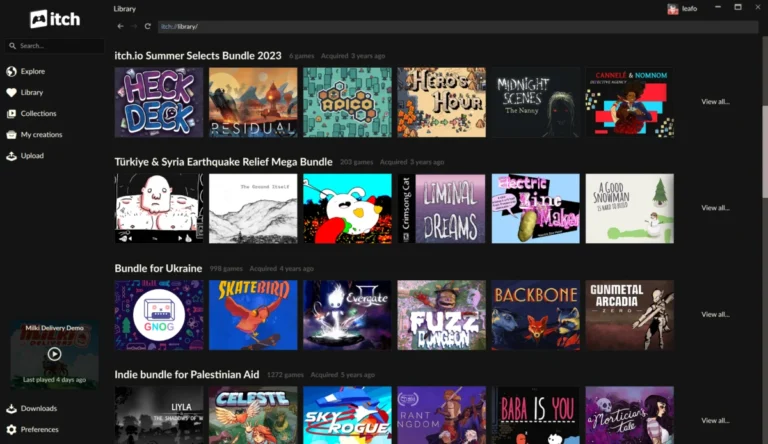
Itch.io, an open marketplace for independent digital creators, has become a pivotal platform for hosting "jams" of all kinds. These events, ranging from game development challenges to art creation sprints, serve as incubators for creativity, skill-building, and community engagement. The platform’s robust "Jams" feature allows organizers to set themes, rules, timelines, and submission guidelines with ease, attracting a diverse array of participants globally. Itch.io’s commitment to supporting independent creators aligns perfectly with the ethos of events like the GB Pixel Art Jam, providing a welcoming and accessible space for artists to experiment, share their work, and receive feedback. The wide range of events hosted on itch.io, from those focusing on specific game engines or genres to highly conceptual art challenges, showcases the platform’s versatility and its critical role in nurturing grassroots creative movements. The success of the GB Pixel Art Jam 2024 is a testament to the effectiveness of itch.io’s infrastructure in bringing niche artistic challenges to a broad audience.
The GB Pixel Art Jam 2024: A Chronology of Creativity
The GB Pixel Art Jam 2024 commenced on February 1st, 2024, inviting artists from around the world to participate in a month-long creative sprint. The official guidelines stipulated that all submissions must be original pixel art creations inspired by the Game Boy aesthetic. Key technical requirements included adherence to the Game Boy’s native resolution (typically 160×144 pixels) and, most crucially, the use of a four-color palette, meticulously chosen to emulate the classic monochrome display. While the specific shades were left to the artists’ interpretation, the spirit of the constraint was clear: convey depth and detail with extreme color economy.
Throughout February, artists diligently worked on their submissions, sharing progress, techniques, and encouragement within the jam’s dedicated community forums on itch.io. This collaborative environment is a hallmark of successful jams, allowing participants to learn from one another, troubleshoot technical issues, and draw inspiration from their peers. The submission deadline was set for February 29th, 2024, providing artists with a full calendar month to conceptualize, design, and execute their pixel art pieces. Upon the deadline, the jam officially concluded, with organizers commencing the process of reviewing and compiling the vast array of submissions. The announcement of the forthcoming compiled ROM quickly followed, generating considerable excitement among participants and followers eager to experience the collective output in its intended format.
Diverse Visions Within Strict Constraints: Exemplary Artworks
The 378 submissions to the GB Pixel Art Jam 2024 represent a remarkable spectrum of artistic interpretations, demonstrating how stringent limitations can paradoxically unleash boundless creativity. From evocative landscapes to intricate character designs and poignant narrative scenes, each piece showcased a unique vision filtered through the lens of Game Boy aesthetics.
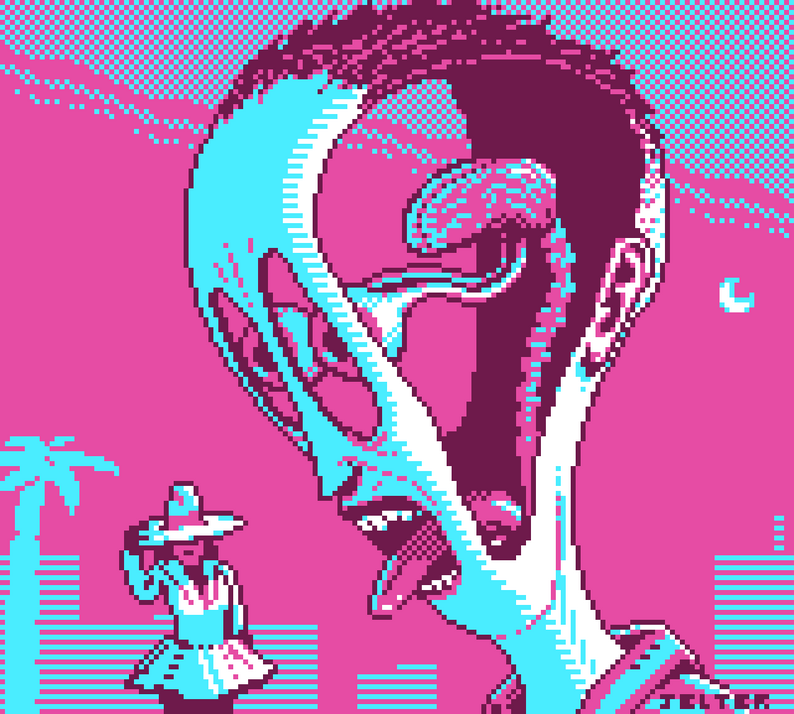
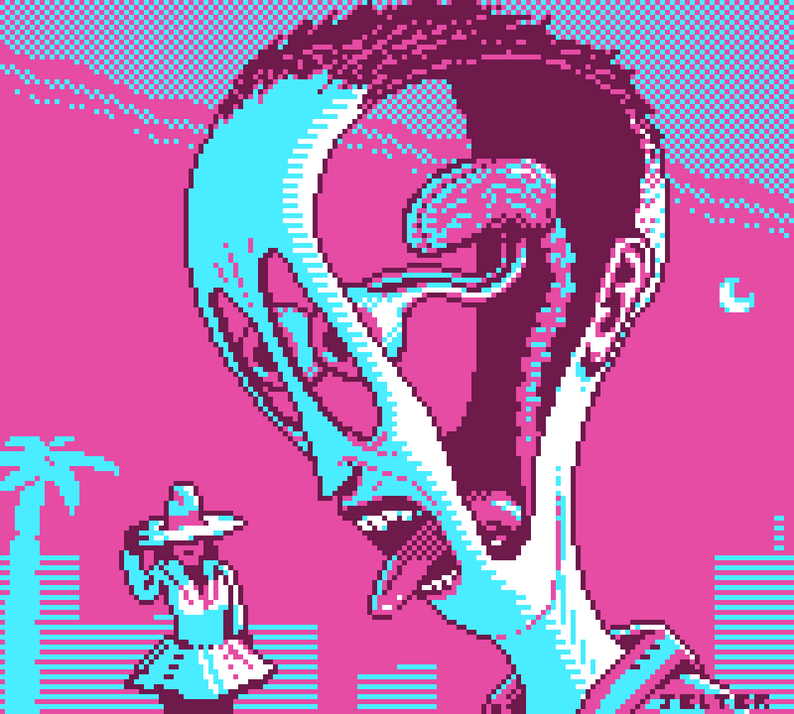
Among the standout submissions, "Malibu Dream-Game Boy Art" by BenJelter transported viewers to a sun-drenched, retro-futuristic beach scene. The artwork skillfully utilizes the limited palette to render subtle gradients in the sky and water, creating a serene yet vibrant atmosphere that perfectly encapsulates a dreamlike coastal escape. The careful placement of palm trees and distant structures demonstrates a mastery of composition within the low-resolution environment, proving that detail can be implied even when not explicitly rendered.
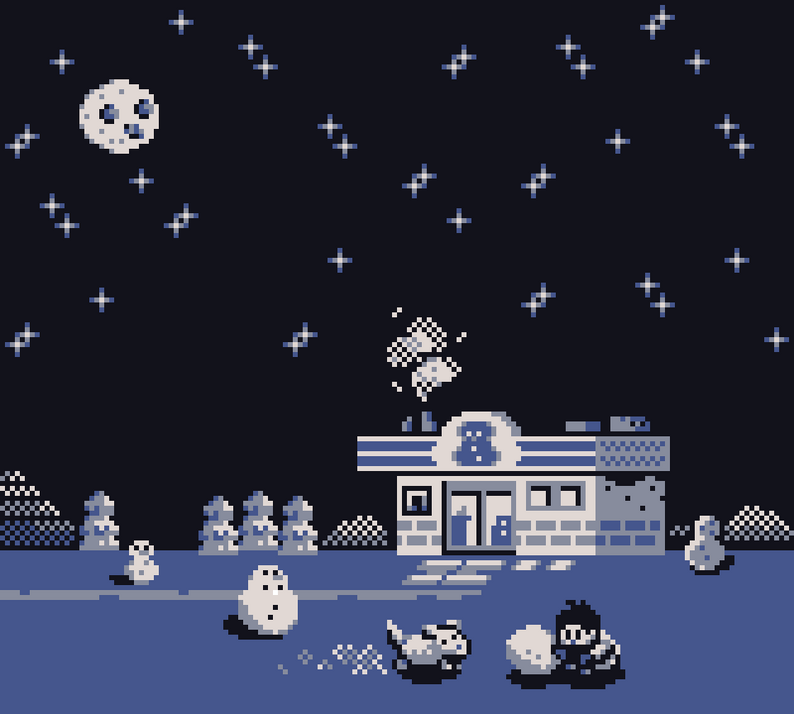
"Night time at Snowball Conbini" by howdy riceball offered a charming slice-of-life scene, depicting a cozy convenience store under a snowy night sky. This piece excelled in its atmospheric depiction, using contrasting shades to highlight the warm glow emanating from the store against the cold, dark exterior. The artist’s attention to small environmental details, such as the texture of the snow and the subtle signs of urban life, brought the scene to life, evoking a sense of nostalgic comfort often associated with pixel art.
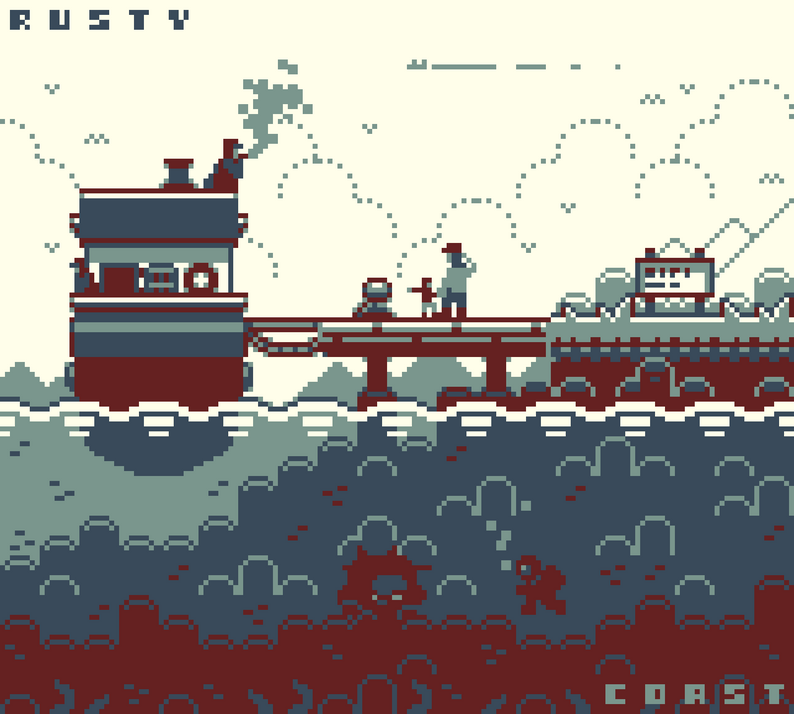
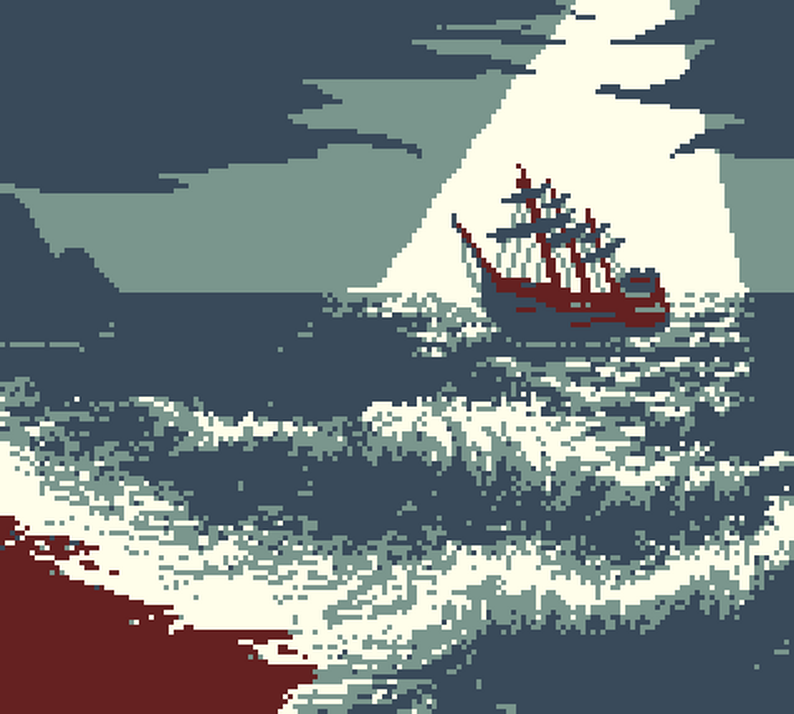
Birds Probably’s "Rusty Coast" presented a more rugged and dramatic landscape. The artwork captured the raw beauty of a weathered coastline, with waves crashing against craggy rocks and a stark sky overhead. The use of the four-color palette here was particularly effective in conveying texture and depth, with distinct shades delineating the rough surfaces of rocks, the turbulent sea, and the expansive horizon, showcasing a powerful command of light and shadow in monochrome.
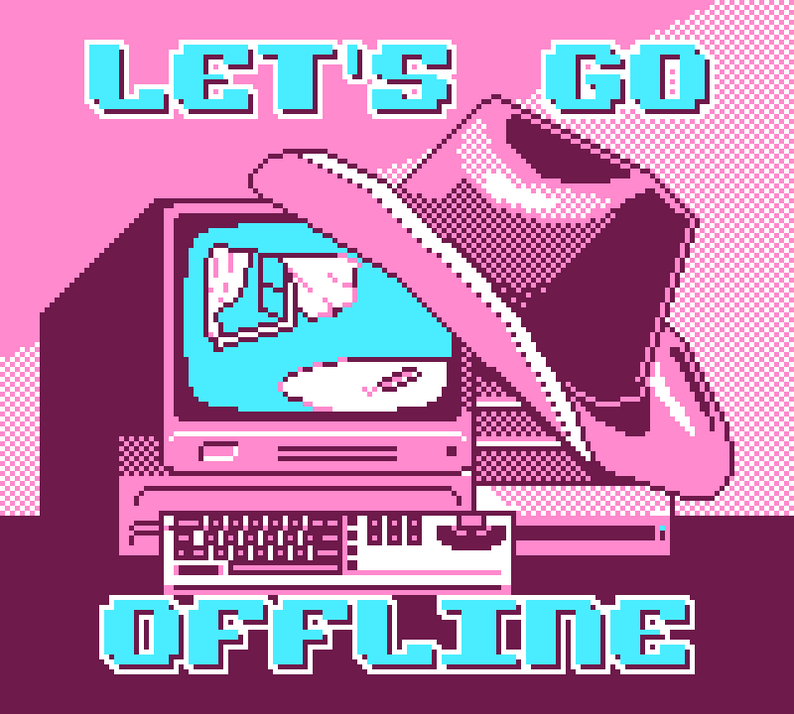
"Let’s Go Offline" by Robert Doman explored a thematic concept, portraying a solitary figure engaged with a Game Boy-like device in a somewhat contemplative setting. This piece’s strength lay in its narrative potential and emotional resonance. The composition guided the viewer’s eye to the central figure and their interaction with the handheld, prompting reflection on themes of connection, escapism, and the enduring allure of retro technology in an increasingly digital world. The artist cleverly used simple shapes and minimal detail to convey a profound sense of introspection.
"A Lament for Forgotten Souls" by Annagmo delved into a more somber and ethereal realm. This artwork showcased the palette’s capacity for conveying mystery and melancholy. The subtle interplay of shades created a ghostly, atmospheric scene, with spectral figures and abstract forms emerging from the background. The piece’s artistic merit was in its ability to evoke strong emotions and suggest a deeper narrative without relying on vibrant colors, proving the versatility of monochrome art.
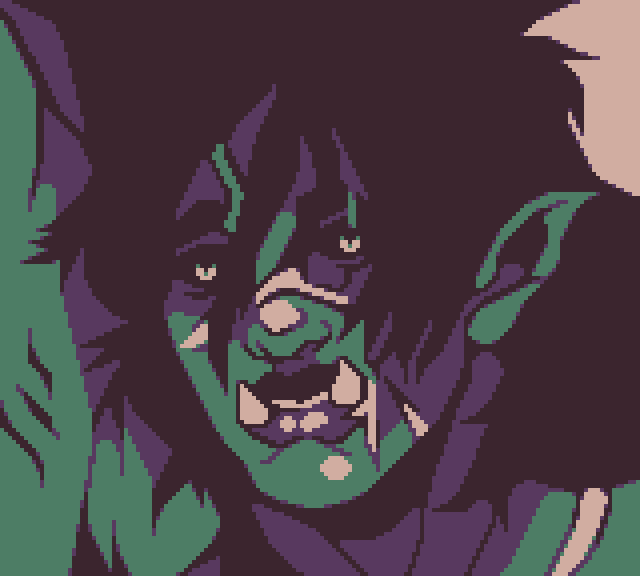
Rohezk’s "Aren, Orc Warrioress" provided a compelling character portrait. The artist meticulously crafted the details of the warrior’s armor, weapon, and facial expression, demonstrating how even within pixelated form, personality and strength can be powerfully communicated. The sharp lines and distinct shading techniques brought a heroic quality to the character, a testament to the artist’s ability to imbue pixels with dynamic energy and iconic presence.
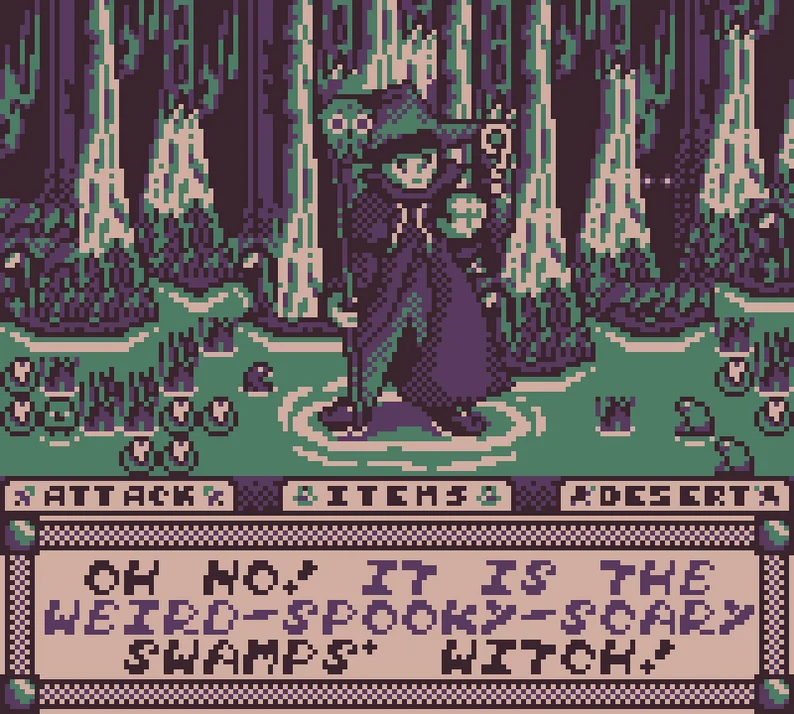
Finally, "Swamps’ witch" by BifStek transported viewers into a fantastical, mystical environment. This piece masterfully blended character design with environmental storytelling, depicting a witch figure surrounded by the murky, atmospheric elements of a swamp. The artist used the limited colors to create a sense of depth and eerie beauty, with intricate details in the witch’s attire and the surrounding flora contributing to a rich, immersive scene. The effective use of dark and lighter tones conveyed the shadowy nature of the swamp while highlighting key elements of the witch’s design.
These examples, alongside the hundreds of other submissions, collectively paint a vibrant picture of artistic diversity and technical prowess, all united by a shared appreciation for the Game Boy’s unique aesthetic.
Insights from the Community and Organizers
While no official statements from itch.io or the jam organizers were explicitly provided in the initial release, the successful execution and high participation rates inherently speak volumes. It can be logically inferred that itch.io views the GB Pixel Art Jam 2024 as another success story for its "Jams" feature, reinforcing the platform’s mission to empower and connect independent creators. An itch.io representative would likely emphasize the platform’s dedication to fostering creative communities and providing accessible tools for unique artistic challenges. The sheer volume of high-quality submissions serves as robust data supporting the vitality of these community-driven events.
From the perspective of the GB Pixel Art Jam organizers, the enthusiasm and talent displayed by participants would undoubtedly be a source of immense satisfaction. The challenge of creating within such specific, retro-inspired constraints often leads to unexpected and innovative solutions, which is a primary goal of such events. The forthcoming compilation of all artworks into a single ROM is a significant endeavor, reflecting the organizers’ commitment not just to hosting a competition, but to creating a lasting artifact of collective creativity. This move also serves as a direct nod to the Game Boy’s heritage, transforming the digital gallery into a format reminiscent of classic game cartridges. Participants themselves have often lauded such jams for the opportunity to hone skills, connect with peers, and receive constructive feedback, highlighting the community-building aspect as a significant draw.
Broader Impact and Future Implications
The GB Pixel Art Jam 2024 is more than just an art competition; it represents a significant cultural phenomenon with broader implications for digital art, community building, and the preservation of retro aesthetics. Its success underscores several key trends:
Firstly, it highlights the enduring power of creative constraints. In an age of limitless digital tools and infinite color palettes, purposefully restricting artistic freedom often paradoxically leads to greater innovation. The Game Boy’s limitations, rather than stifling artists, forced them to think more critically about composition, form, and emotional conveyance through minimal means, proving that "less is often more" in artistic expression.
Secondly, the jam strengthens the argument for the continued relevance of retro art styles. Far from being relegated to history, pixel art, particularly that inspired by early console aesthetics, continues to captivate audiences and artists alike. It speaks to a shared nostalgia for a simpler era of gaming, while also offering a distinct visual language that stands apart from the photorealism often pursued in modern graphics. Such jams ensure these styles remain alive, evolve, and inspire new generations of artists.
Thirdly, the event reinforces the crucial role of platforms like itch.io in democratizing creation and fostering global artistic communities. By providing accessible tools and a supportive environment, itch.io enables niche interests, like Game Boy-specific pixel art, to find a large and engaged audience. These platforms are essential for connecting artists across geographical boundaries, facilitating knowledge exchange, and providing a launchpad for emerging talent.
Finally, the initiative to compile all submissions into a playable ROM is a visionary step. It transforms what could merely be a transient online exhibition into a tangible, interactive archive. This ROM will serve as both a historical record of the jam’s output and an inspiring gallery for future artists and retro enthusiasts. It embodies the spirit of preservation and celebration that underpins the entire event, ensuring that the collective creativity of the GB Pixel Art Jam 2024 will be accessible and appreciated for years to come. The success of this year’s jam undoubtedly paves the way for future iterations, potentially inspiring even more specialized retro-themed art and game development challenges, further cementing itch.io’s reputation as a hub for digital innovation and community engagement.
About the Author