The landscape of virtual reality hardware is undergoing a significant shift as Hypervision, a specialized startup focusing on advanced optical architectures, unveiled its latest high-performance optical systems at the United XR Europe conference. While the consumer VR market has largely stagnated at a horizontal field of view (FOV) between 90 and 110 degrees for the past decade, Hypervision’s new prototypes demonstrate a leap toward matching the natural breadth of human vision. The company’s flagship demonstration featured a Micro-OLED-based system capable of achieving a horizontal FOV of up to 220 degrees, effectively covering the static peripheral range of the human eye.

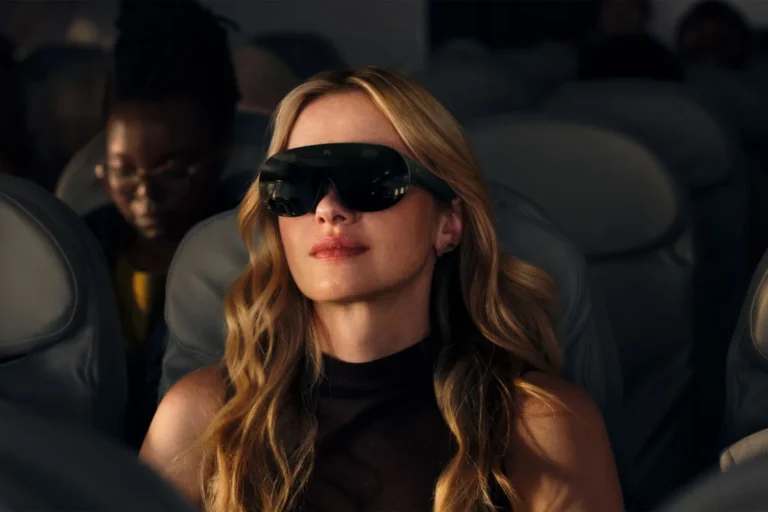
The United XR Europe event serves as a critical junction for European and international XR (Extended Reality) developers, hardware manufacturers, and investors to evaluate emerging technologies before they reach mass production. Hypervision’s presence at the event was highlighted by its recent collaboration with Lynx; the newly announced Lynx R2 mixed reality headset utilizes lenses designed by Hypervision to achieve the widest FOV currently available in a standalone MR device. However, the prototypes showcased at the event represent even more ambitious targets for the professional, enterprise, and military sectors.
Evolution of Hypervision’s Optical Prototypes
The progression of Hypervision’s technology can be traced through a series of iterative prototypes that have addressed the dual challenges of resolution and immersion. Approximately 18 months ago, the company introduced an optical system utilizing Fast-LCD displays manufactured by BOE. This system offered a resolution of 2.1K per eye and a field of view of 160 degrees horizontally by 120 degrees vertically. Technical evaluations of this early model noted high brightness levels and a significant reduction in the "goggle effect" that plagues standard VR headsets.

Following the BOE-based model, Hypervision developed a secondary iteration employing displays from TCL. While maintaining the 160-degree horizontal FOV, this version upgraded the resolution to 2.73K per eye and integrated local dimming technology. Local dimming allows for higher contrast ratios and deeper black levels, addressing a common criticism of standard LCD panels. However, industry analysis of this prototype noted a trade-off: while contrast improved, the overall peak brightness was lower compared to the BOE equivalent, resulting in colors that appeared slightly less vibrant in high-luminance scenes.
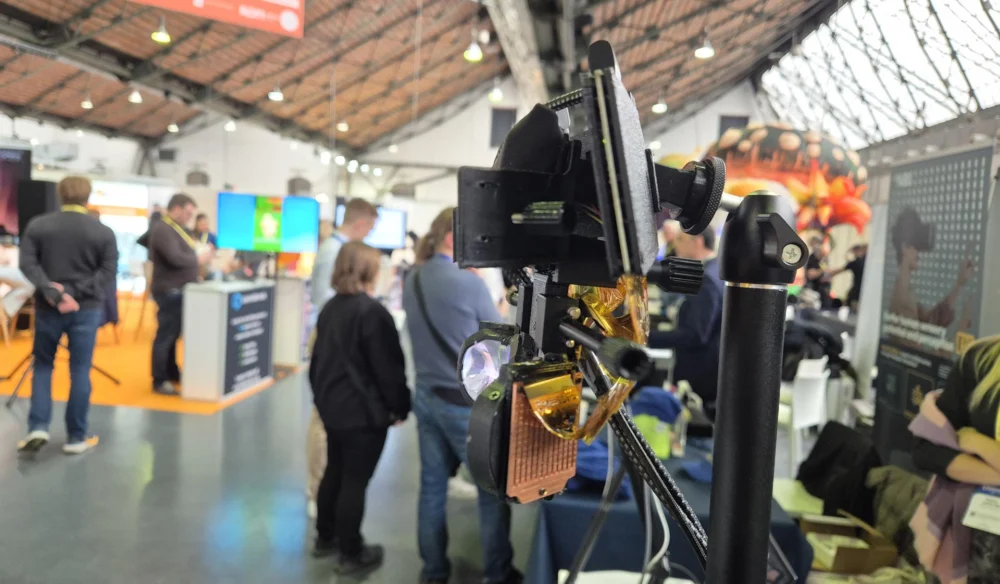
The most significant advancement revealed at United XR Europe is the transition to Micro-OLED technology combined with a proprietary dual-display architecture known as VRDom (Virtual Reality Dome Projection Room). Unlike traditional headsets that use one display and one lens per eye, the VRDom system employs two canted 1.3-inch Micro-OLED displays per eye, paired with a specialized optical unit that resembles two lenses seamlessly fused together.

The VRDom Architecture and Human Vision Parity
The technical objective of the VRDom system is to replicate the full horizontal span of human sight. In a static position, the human eye possesses a horizontal FOV of approximately 210 degrees. When accounting for eye movement (the ability to look left or right without turning the head), this range expands to 270 degrees. Hypervision’s latest prototype achieves a horizontal FOV between 220 and 240 degrees, marking the first time a compact Micro-OLED system has reached these specifications.
Micro-OLED displays are highly sought after in the XR industry for their high pixel density, low power consumption, and exceptional color accuracy. However, due to their small physical size, they are traditionally difficult to pair with wide-FOV optics. Hypervision’s "canted" dual-display approach bypasses the physical limitations of single-panel designs. By tiling two displays per eye, the system provides a panoramic image that fills the user’s entire peripheral vision.

While the horizontal FOV is industry-leading, the vertical FOV of the VRDom prototype is currently measured at 94 degrees. This is slightly narrower than the vertical range found in some consumer devices like the Meta Quest 3, which offers approximately 96 to 100 degrees. In professional applications, vertical FOV is considered secondary to horizontal breadth for situational awareness, though Hypervision engineers have indicated that future iterations may seek to expand this vertical dimension.
Technical Refinement and the "Seam" Challenge
One of the primary engineering hurdles in dual-lens or dual-display systems is the visible "seam" or artifact where the two optical paths meet. In previous iterations of wide-FOV prototypes, users often reported a distracting vertical line or distortion when moving their eyes across the junction point.

The latest Micro-OLED prototype shown at United XR Europe demonstrates significant progress in optical blending. Reports from the event indicate that the seam is nearly invisible under standard operating conditions. Artifacts are limited to a very slight dark vertical line that only becomes apparent during rapid eye movement between the inner and outer displays. Hypervision CEO Arthur Rabner stated that the company is currently refining the mechanical precision of the lens housing and developing advanced software algorithms to perform real-time image correction to eliminate the remaining 100% of these artifacts.
Market Implications and Economic Viability
Despite the technological success of the VRDom system, its path to the consumer market remains obstructed by high manufacturing costs. The current Bill of Materials (BOM) for the displays alone is estimated at $1,500 USD, given that the system requires four high-resolution Micro-OLED panels. This price point excludes the technology from mainstream consumer devices like the Meta Quest or Valve Index series for the foreseeable future.

Instead, Hypervision is positioning these reference designs for the "prosumer," enterprise, and defense markets. High-fidelity flight simulators, medical training environments, and military situational awareness systems require the level of immersion and peripheral data that only a 220-degree FOV can provide. For these sectors, the cost of the optical stack is a justifiable investment for the increased efficacy of the training or operational environment.
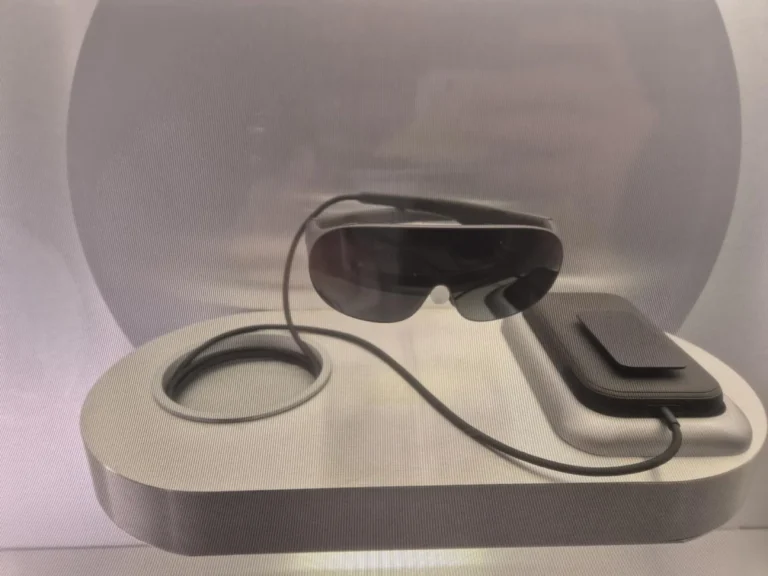
Regarding the Lynx R2, which uses Hypervision-designed optics, Rabner clarified that the requirements for mixed reality (MR) differ from pure VR. Because the Lynx R2 features an open-periphery design, the user’s natural peripheral vision is provided by the real world, reducing the need for an ultra-wide digital FOV. This allows the Lynx R2 to use a more cost-effective, narrower FOV optical system while still benefiting from Hypervision’s clarity and distortion-correction expertise.

Future Roadmap and Industry Collaboration
Hypervision’s strategic plan for 2026 focuses on transitioning from hand-made, custom prototypes to mass-producible reference designs. By creating standardized optical modules, the company aims to lower the barrier to entry for other headset manufacturers who wish to integrate wide-FOV capabilities without undergoing the immense R&D costs of developing proprietary optics.
To align these reference designs with industry needs, Hypervision has launched a global survey targeting VR developers and hardware engineers. The data collected will influence the final specifications of the 2026 production models, ensuring they meet the requirements for weight, focal distance, and software compatibility.

The development of 220-degree FOV optics represents a critical milestone in the pursuit of "presence"—the psychological state where a user forgets they are inside a simulated environment. As the industry moves toward 2026, the success of companies like Hypervision will likely determine whether wide-FOV becomes a standard feature of high-end XR or remains a niche luxury for specialized industrial applications. For now, the prototypes at United XR Europe serve as a definitive proof of concept that the "goggle effect" in virtual reality is a solvable engineering challenge rather than a permanent limitation of the medium.
About the Author