The itch.io desktop application has received a substantial upgrade through the release of two major updates, v26.15.0 and v26.17.0, followed by a critical hotfix, v26.18.0, aimed at resolving a crashing issue on MacOS. These updates collectively address a range of long-standing user requests and technical challenges, significantly improving the app’s functionality, particularly in handling large game bundles, offering granular per-game launch customization, and expanding cross-platform game accessibility. The overarching goal of these enhancements is to provide a more streamlined, powerful, and user-friendly experience for the platform’s extensive community of indie game enthusiasts and creators.
A New Era for Bundle Ownership and Discovery
Among the most impactful changes is the complete overhaul of how the itch.io app recognizes and manages game bundles within a user’s library. Previously, despite having purchased massive bundles containing hundreds or even thousands of games, users would not see these titles appear in their desktop app library until each individual game was manually "claimed" on the itch.io website. This often led to a cumbersome discovery process, leaving vast digital libraries unexplored.
The technical complexity behind this limitation stemmed from the sheer scale of some of itch.io’s most successful initiatives. The platform has, over the years, hosted several record-breaking charity bundles that raised millions for various causes. Two notable examples underscore the challenge: the "Bundle for Racial Justice and Equality," released in June 2020, featured an astonishing 1,741 items and was purchased over 800,000 times. Similarly, the "Bundle for Ukraine," launched in March 2022, offered nearly 1,000 items and garnered over 400,000 buyers. If the platform were to generate an individual download key for every item for every buyer, it would translate into billions of database entries for a single bundle, an unsustainable data management burden. Consequently, ownership for these colossal collections was recorded as a single bundle purchase, with individual game keys only materializing upon a user’s specific request.
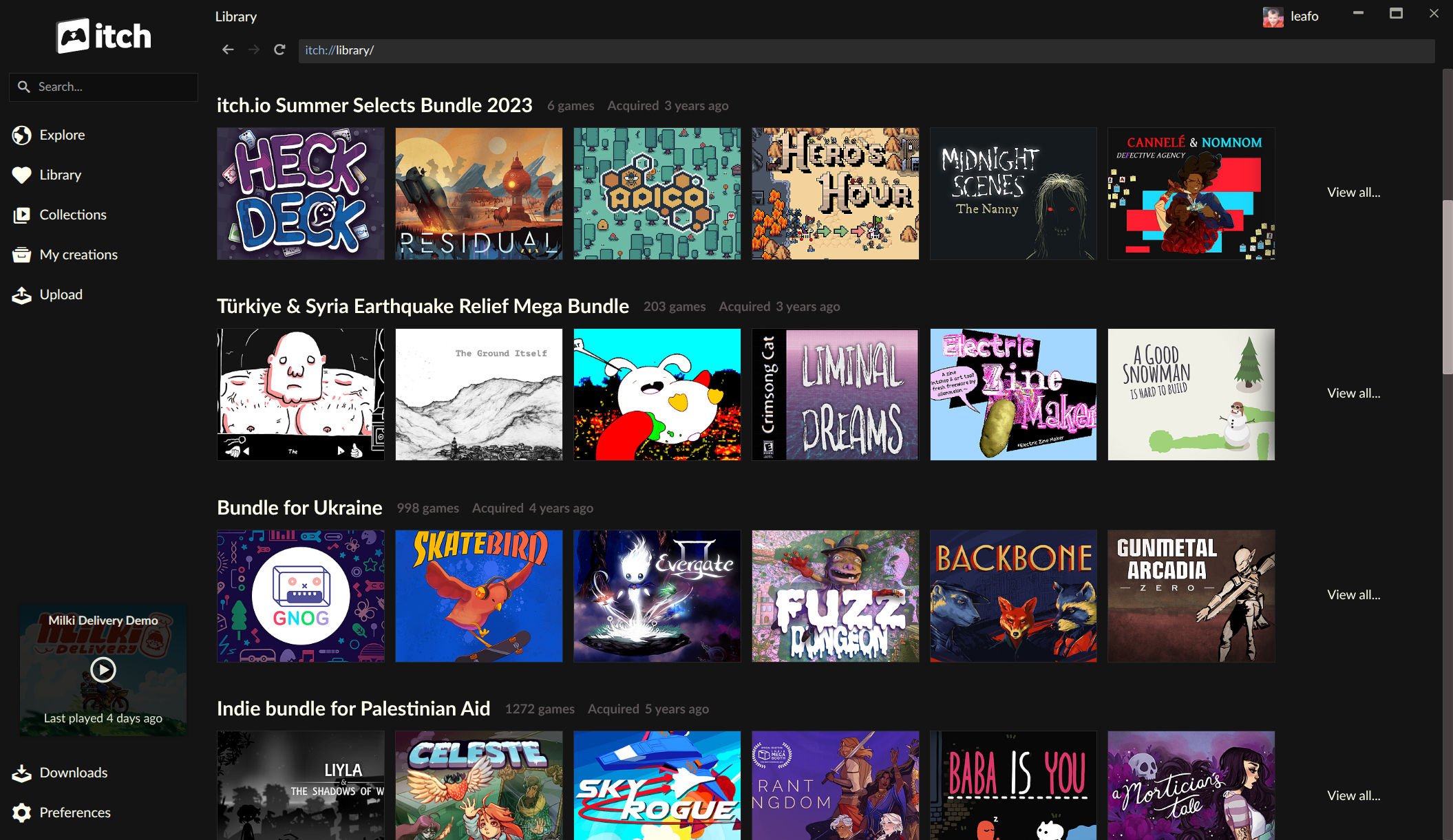
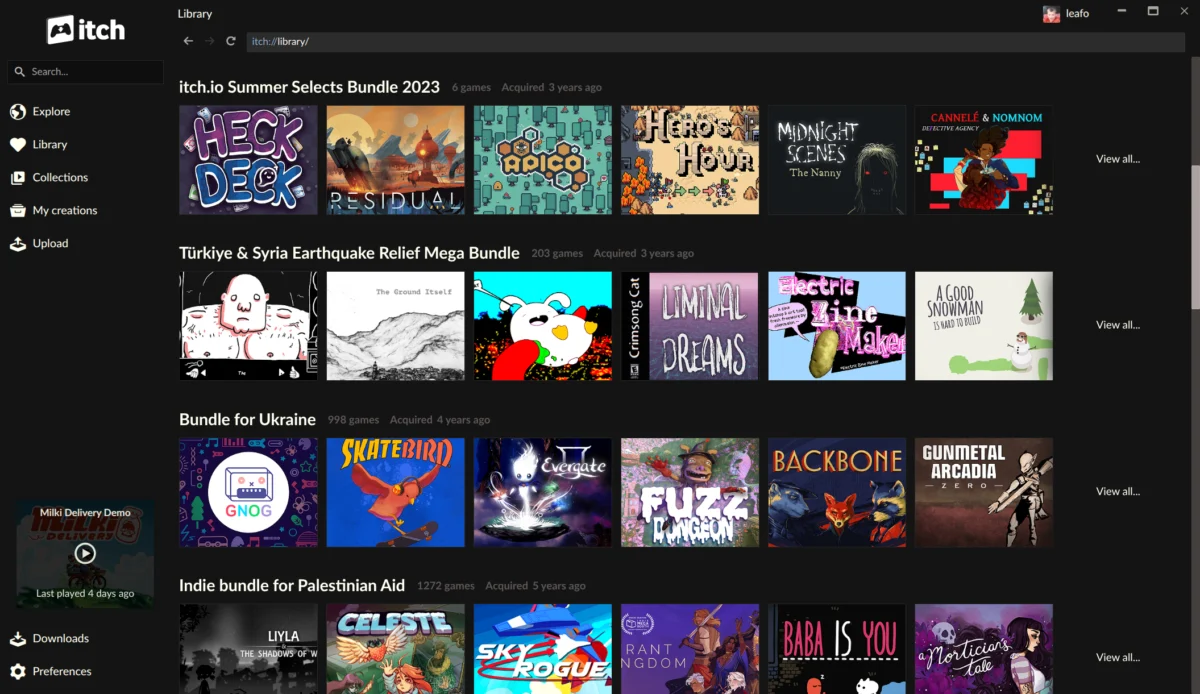
The latest updates to the itch.io app circumvent this limitation by directly understanding and interpreting bundle ownership. Now, bundles a user owns appear as distinct entries in their library, each featuring its own dedicated page. These bundle pages are equipped with robust organizational tools, including sorting capabilities, title-based search functionality, and filters for platform compatibility, game classification, and installation status. This means users can now effortlessly browse, search, and install any game from even the largest bundles they’ve acquired, directly within the app, without the need for prior web-based claiming. This improvement is particularly significant for users who supported the aforementioned charity bundles, providing them with unprecedented access to their vast digital collections and encouraging greater engagement with the diverse range of indie titles they now own.
Empowering Users with Advanced Launch Customization
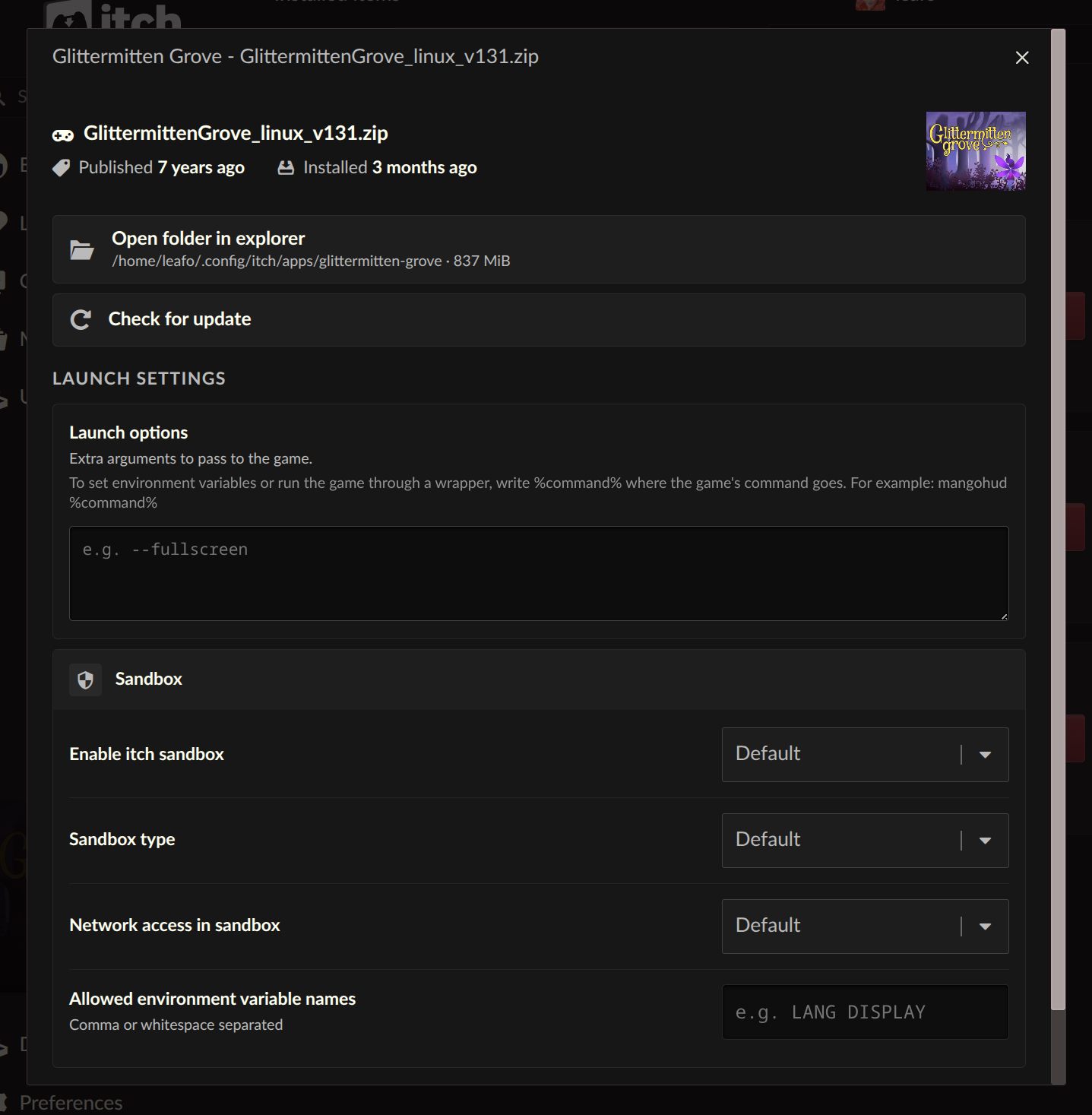
Another significant addition is the introduction of per-game launch settings, accessible via a new "Launch settings" area within each installed game’s manage dialog. This feature provides a new level of control for users, allowing them to configure critical operational parameters on an individual game basis. Options now available include sandbox restrictions, network access controls, and environment variables.
Sandbox restrictions offer an enhanced layer of security and isolation, allowing users to limit what a game can access on their system. Network access controls provide the ability to dictate a game’s internet connectivity, which can be useful for privacy-conscious users or for troubleshooting network-dependent issues. Environment variables, a tool typically leveraged by developers and power users, enable the injection of specific system-level configurations before a game launches, facilitating debugging or tailoring performance.
Furthermore, a highly anticipated feature, the "Command pattern" option for launch arguments, has been implemented. This allows users to not only pass plain arguments directly to a game executable but also to utilize a %command% pattern. This pattern enables the wrapping of a game’s launch within another command, effectively allowing users to launch games through compatibility layers like Wine or Proton on Linux, or to integrate debugging tools, performance monitors, or custom scripts. This flexibility significantly broadens the app’s utility for advanced users, developers, and those operating outside standard operating system environments, fostering a more adaptable and customizable gaming ecosystem.
Breaking Down Platform Barriers: Installing Untagged Downloads
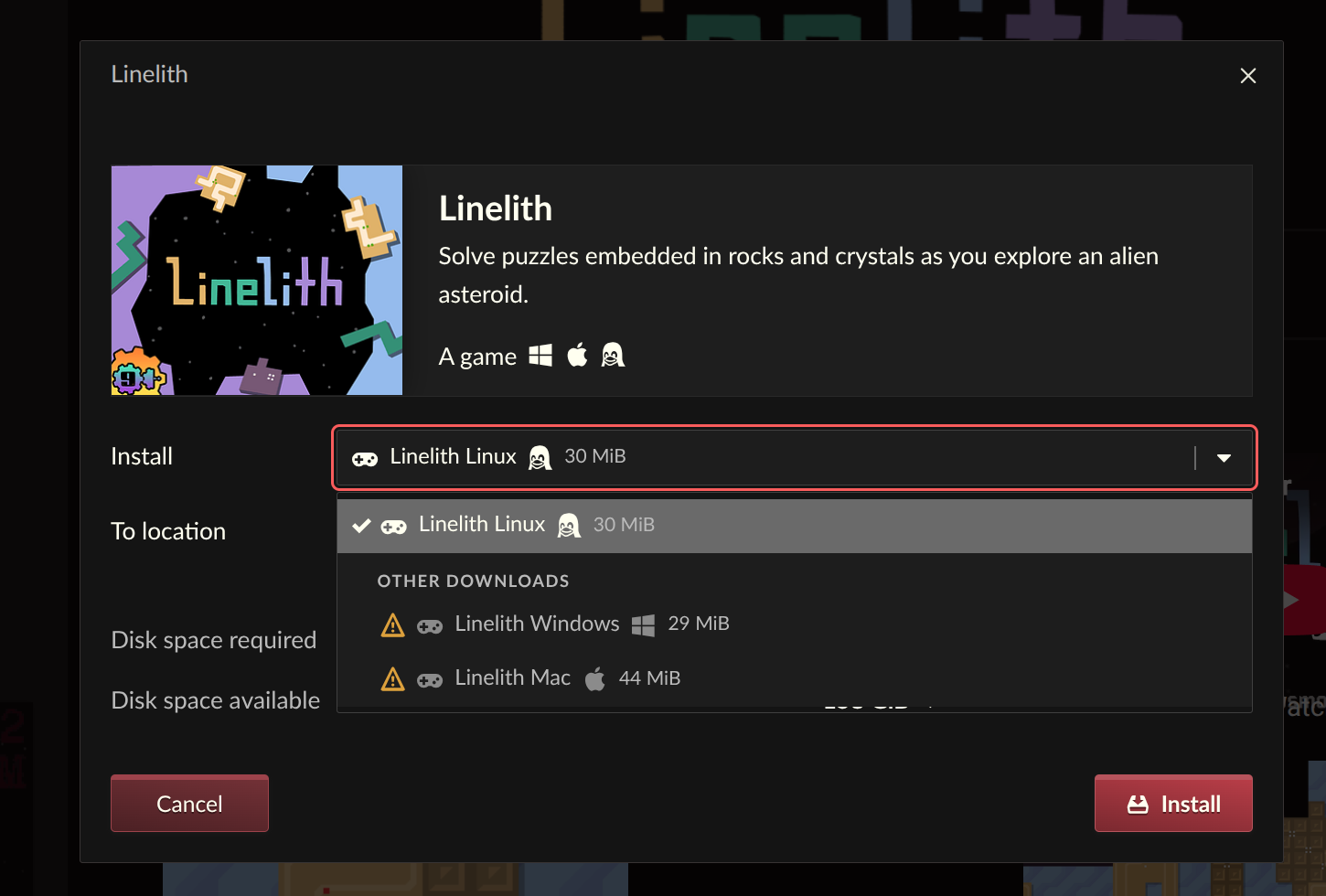
In a move that significantly enhances cross-platform accessibility, the itch.io app now allows users to reveal and install downloads that are not explicitly tagged for their current operating system. Previously, if a developer failed to tag an upload for a specific platform, or if a user wished to intentionally download a build for a different OS (e.g., a Windows build to run via a compatibility layer on Linux), the app would not present that option.
This update directly addresses scenarios where developers might unintentionally omit platform tags or where users leverage advanced compatibility technologies. For instance, a Linux user can now easily access and install a Windows game build, facilitating its execution through tools like Wine or Proton. This feature acknowledges the growing trend of cross-platform gaming and the increasing sophistication of compatibility layers, particularly within the Linux gaming community. By removing this barrier, itch.io is making its vast library of indie games more accessible to a wider audience, empowering users to experiment with different builds and configurations, and ultimately expanding the playable content available to them regardless of their primary operating system.
Streamlined Navigation with a Revamped Sidebar Search
The desktop app’s sidebar search functionality has also undergone a significant revision, moving away from its previous implementation. The old search mechanism relied on the itch.io API’s autocomplete feature, which often presented results in a confusing or non-intuitive order, making it difficult for users to efficiently locate specific titles within their library or discover new content.
The updated sidebar search aims to provide a more direct and effective discovery experience. While the specifics of the new search mechanism were not fully detailed, the emphasis is on directing users to the site’s full search experience for comprehensive results. This strategic shift suggests an optimization for relevance and accuracy, ensuring that users can quickly find what they are looking for, whether it’s an owned game or a new title to explore. This refinement contributes to a smoother overall user interface, enhancing the app’s usability and navigation.
Technical Evolution and Community Responsiveness
These substantial updates, tracked under versions v26.15.0 and v26.17.0, reflect itch.io’s ongoing commitment to continuous improvement and its responsive development philosophy. The platform has consistently engaged with its community, frequently drawing insights and priorities from its public issues tracker on GitHub. This collaborative approach ensures that updates directly address the most pressing concerns and highly requested features from its user base.
The rapid deployment of a hotfix, v26.18.0, to resolve a critical MacOS crashing issue further exemplifies this responsiveness. Users experiencing a crash loop on MacOS after the update were advised that they might need to reinstall the app from the official setup program. This swift action underscores itch.io’s dedication to maintaining a stable and reliable user experience across all supported platforms. The full changelogs for these updates are publicly available on GitHub, providing transparency into the development process and detailing all modifications.
Beyond the app itself, itch.io has also been actively enhancing its underlying infrastructure. Concurrent with these app improvements, the platform recently revamped its bundle hosting tools for developers. This parallel development suggests a holistic approach to improving the bundle ecosystem, benefiting both the creators who host these collections and the players who purchase them.
Implications and Future Outlook
The comprehensive nature of these itch.io app updates carries significant implications for various stakeholders within the indie gaming ecosystem. For end-users, the enhanced bundle management transforms what was once a daunting digital backlog into an accessible and browsable library. This change is particularly vital for those who contributed to major charity bundles, ensuring that their generous purchases translate into a more tangible and enjoyable collection. The advanced launch settings empower a segment of users who demand greater control over their gaming environment, while the ability to install untagged downloads significantly broadens the playable content for cross-platform users and those experimenting with compatibility layers.
For developers, these updates contribute to a more robust and attractive platform. While the app enhancements primarily benefit users, the improved discoverability of games within bundles could lead to increased engagement with titles that might otherwise have remained hidden. The platform’s ongoing commitment to addressing community feedback also reinforces its reputation as a developer-friendly space. The revamped bundle hosting tools further simplify the creation and management of bundles, potentially encouraging more developers to participate in this popular sales model.
From a broader industry perspective, itch.io continues to solidify its position as a vital, community-driven alternative in the digital game distribution landscape. By focusing on user experience, technical flexibility, and direct engagement with its community, itch.io differentiates itself from larger, more centralized platforms. These updates are not merely incremental improvements but represent a strategic evolution of the platform’s core functionalities, designed to better serve its unique audience and foster a thriving independent game scene.
As the itch.io app continues to evolve, its development team signals an ongoing commitment to refining the user experience. Users are encouraged to download the latest version of the app from itch.io/app, which automatically updates itself, to experience these new features firsthand. The platform’s iterative development cycle, driven by community input and a dedication to addressing technical challenges, promises further enhancements in the future, cementing itch.io’s role as a dynamic and indispensable hub for independent games.
About the Author