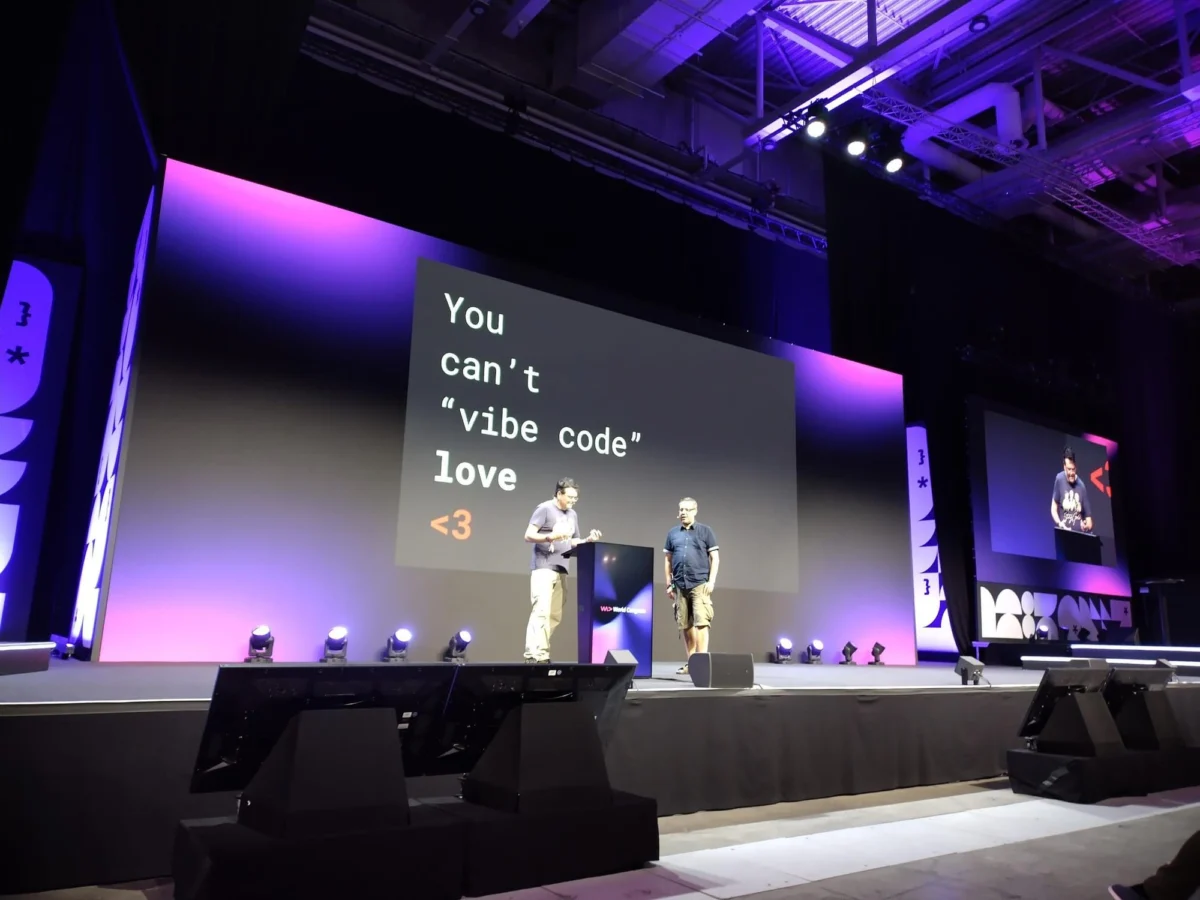
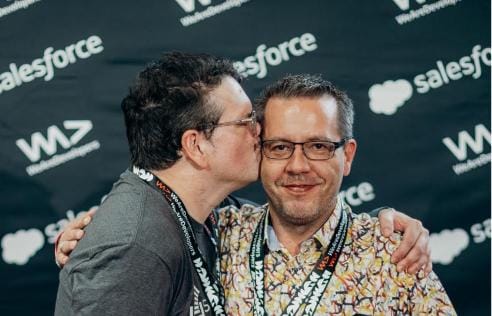
The indispensable role of human community and shared knowledge in software development, particularly in an era increasingly dominated by Large Language Models (LLMs), was the central theme of a compelling presentation delivered by Jeff Atwood, co-founder of Stack Overflow and author of the influential "Coding Horror" blog, alongside early Stack Overflow community pioneer Ben Dumke-von der Ehe. Their joint address, titled "None of Us Is As Dumb As All of Us: Community And Knowledge Go Hand In Hand," took place on Friday, July 10, 2025, at the prestigious WeAreDevelopers World Congress held at the CityCube in Berlin. The presentation underscored a critical duality: while LLMs offer unprecedented efficiencies in problem-solving, they simultaneously pose an existential threat to the collaborative "commons" that has historically fostered innovation, learning, and human connection within the global developer community.
The Berlin Congress: A Global Stage for Tech Dialogue
The WeAreDevelopers World Congress stands as one of the largest and most significant gatherings for developers globally, attracting thousands of professionals, industry leaders, and innovators from around the world. Held annually in major tech hubs, its 2025 iteration in Berlin provided a fitting backdrop for a discussion on the evolving landscape of developer knowledge and community. Berlin, a vibrant center for technology and startups, mirrors the dynamic and interconnected nature of the global software development ecosystem. The congress serves as a crucial platform for exchanging ideas, showcasing cutting-edge technologies, and debating the future trajectory of the industry. Atwood’s decision to participate, a rare occurrence for the seasoned speaker, signaled the profound importance of the topic at hand. His condition for speaking—that Berlin-based Ben Dumke-von der Ehe join him—highlighted the deeply personal and collaborative nature of their message, emphasizing that the human element remains paramount even amidst technological disruption.
A Decade of Collaboration: The Stack Overflow Legacy and Personal Connection
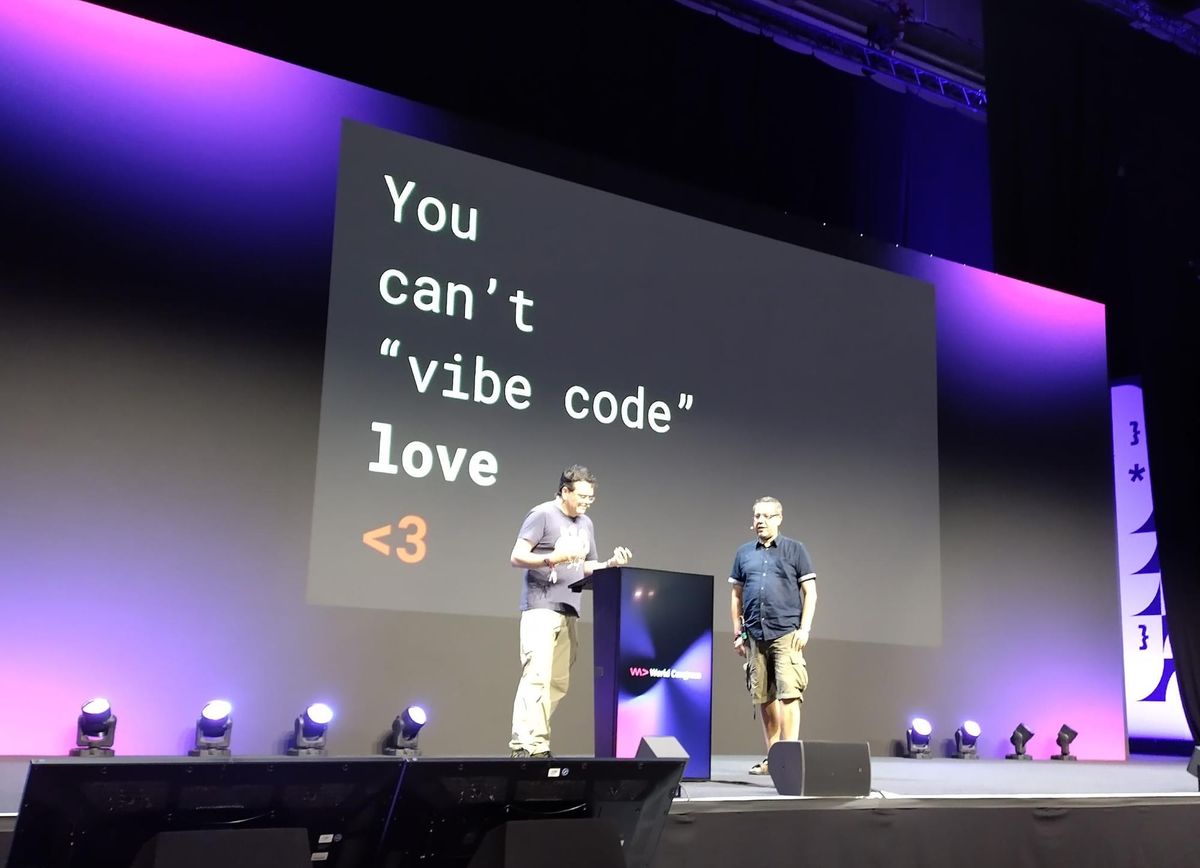
The genesis of their joint presentation was rooted in a shared history and a profound mutual respect forged during the formative years of Stack Overflow. Atwood recounted that his acceptance of the speaking engagement, particularly an international one, was contingent upon Ben’s involvement. Ben Dumke-von der Ehe, an early community hire at Stack Overflow, played a pivotal role in shaping the platform’s community culture from his base in Berlin. The presentation, as Atwood articulated, was not merely a technical discourse but a deeply human narrative of how two individuals, with slightly different opinions and perspectives, found common ground in their commitment to fostering a vibrant developer community.
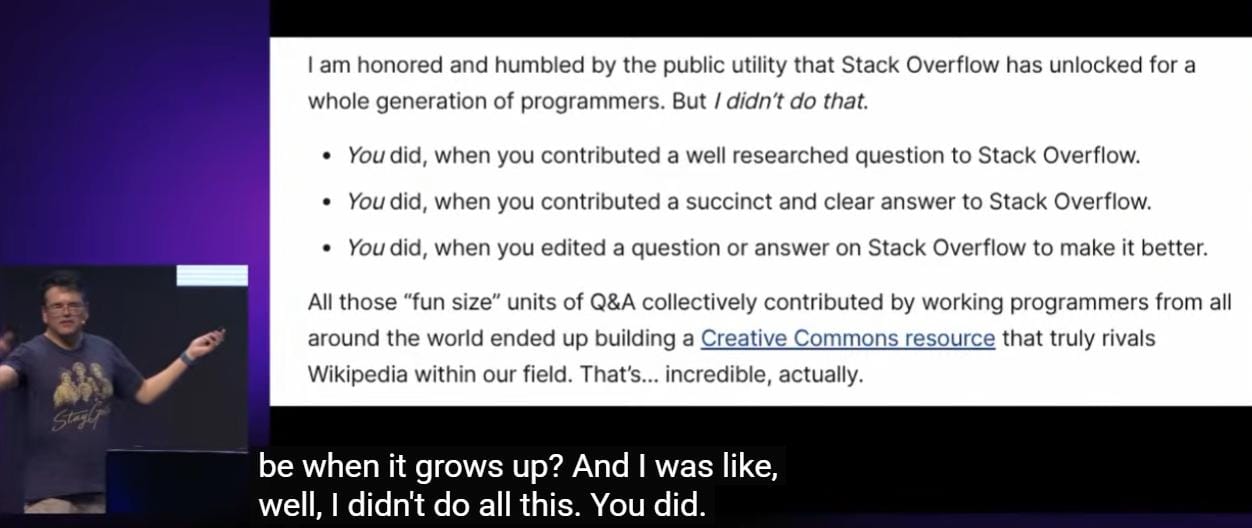
"The long version of this story is that we changed each others’ lives. The short version is: unicorns," Atwood shared on stage, hinting at the profound impact of their collaboration. Ben’s journey with Stack Overflow is itself emblematic of the dynamic nature of tech careers: he initially joined the company, later departed, only to return, and subsequently left again. This unconventional path, detailed in his own words on platforms like CoRecursive, speaks to the unique blend of passion and professional evolution that defines many in the tech sphere. Atwood openly acknowledged his immense gratitude, stating, "I told Ben, I’m mostly doing this presentation because I owe you so much." This sentiment extended beyond Ben to encompass every individual who contributed to Stack Overflow, collectively building what Atwood described as a "hugely influential Stack Overflow dataset" under a foundational Creative Commons license. This license was crucial, ensuring that the collective effort to build this "commons" was respected and preserved for the benefit of all. The platform, since its inception in 2008, has accumulated tens of millions of questions and answers, becoming an indispensable resource for programmers worldwide. Its success wasn’t merely in aggregating information, but in fostering a culture of peer-to-peer learning and mutual aid, creating a digital space where novices could find guidance and experts could hone their knowledge by teaching.
The Double-Edged Sword of Large Language Models (LLMs)
The core of Atwood and Dumke-von der Ehe’s discussion pivoted to the transformative, yet potentially perilous, advent of Large Language Models. They acknowledged the undeniable benefits LLMs bring to the developer workflow, particularly in addressing long-standing challenges within community-driven platforms.

LLMs as a Solution to Old Problems
One of the most significant advantages of LLMs, as highlighted by the speakers, is their efficiency in intercepting and resolving common programming questions. This aligns perfectly with Stack Overflow’s long-term strategic vision, articulated by Atwood in his "What Does Stack Overflow Want To Be When It Grows Up?" blog post. The platform’s ultimate goal, he argued, was to enable "98% of programmers [to] get all the answers they need from reading search result pages and wouldn’t need to ask or answer a single question in their entire careers." LLMs, by providing instant, context-aware answers, accelerate this process dramatically. Data from various developer surveys in late 2024 and early 2025 consistently showed that a significant percentage of developers (often exceeding 70%) were regularly using AI tools for coding assistance, debugging, and information retrieval, validating the efficiency gains.
Furthermore, LLMs offer a revolutionary solution to the "Gordian knot" of duplicate questions—a persistent and escalating problem on platforms like Stack Overflow. As Atwood elaborated, "When you’re asking a question on a site that doesn’t allow duplicate questions, the problem space of a site with 1 million existing questions is rather different from a site with 10 million existing questions… or 100 million." The sheer volume of existing content made asking a truly unique question "mission almost impossible," requiring users to navigate a "vast, enormous field of prior art questions without stepping on any of the vaguely similar looking landmines." LLMs, with their sophisticated natural language processing capabilities, can discern semantic similarities even when questions are phrased entirely differently, effectively mapping new inquiries to existing, well-answered topics. This ability is "incredibly transformative, and a huge net positive," leading to less duplication and faster access to validated answers, thereby optimizing the knowledge retrieval process.
The Unforeseen Challenge: Erosion of the Commons
Despite these clear advantages, Atwood and Dumke-von der Ehe raised a profound concern about the long-term impact of LLMs on the very fabric of knowledge creation and community building. The central question they posed resonated deeply: "But what happens to the commons when everyone is privately whispering to LLMs?"
The concern isn’t about the individual seeking information, but about the collective loss when those interactions shift from public forums to private AI interfaces. Stack Overflow, like many other open-source projects and online communities, thrives on the active participation and visible exchange of knowledge. Programmers learn not just from answers, but from the process of asking, refining questions, debating solutions, and engaging in collaborative problem-solving. This "vibe code love," as Atwood metaphorically put it, encompasses the joy of shared discovery, mentorship, and the serendipitous learning that occurs in a vibrant community. Ben Dumke-von der Ehe’s own experience, where he found enjoyment in "becoming a programmer" and even securing employment by "doing things he loved" within the Stack Overflow community, exemplifies this irreplaceable human element.
The shift to private LLM interactions risks diminishing the publicly accessible pool of new questions and answers, which are the lifeblood of these "commons." If fewer developers contribute to public knowledge bases because they get instant, personalized answers from AI, where will the next generation of LLMs acquire their training data? This creates a feedback loop dilemma: LLMs train on existing human-generated data, but if their widespread adoption reduces the creation of new public data, the quality and currency of future AI models could stagnate. This leads to a critical existential question for the digital commons: "Where exactly will the LLMs get their next set of training data from, if we don’t build for and protect the commons together?" The presentation served as a stark reminder that while AI can process and disseminate knowledge, it cannot, at least not yet, replicate the innate human drive to create, share, and foster a love of learning—the essence of a "philomath."
Stack Overflow in the AI Era: Navigating the Future
The concerns voiced by Atwood and Dumke-von der Ehe reflect a broader industry-wide debate about the symbiotic, yet sometimes challenging, relationship between AI and human-centric platforms. Stack Overflow itself has been proactive in addressing the rise of AI. Recognizing the inevitability and utility of these tools, the platform has had to adapt its policies regarding AI-generated content, initially imposing strict rules against unverified AI answers to maintain data quality, and subsequently exploring its own AI integrations, such as "OverflowAI," designed to assist users while still valuing human expertise.
This delicate balancing act underscores the economic and structural implications for platforms built on user-generated content. As user engagement patterns shift, these platforms must find innovative ways to incentivize human contribution and maintain community vitality. The challenge extends beyond mere traffic numbers; it concerns the very identity and purpose of these digital spaces. Experts in AI ethics and digital community management have echoed these sentiments, emphasizing the need for hybrid models that leverage AI for efficiency while simultaneously cultivating spaces for genuine human interaction and knowledge co-creation. The conversation around AI’s impact is not just about technology, but about societal choices concerning how we learn, interact, and evolve our collective intelligence.
Protecting the Digital Commons: A Call to Action
The presentation by Jeff Atwood and Ben Dumke-von der Ehe was more than a critique; it was a potent call to action. It underscored the imperative to consciously nurture and protect environments where programmers can openly interact, learn from each other, and contribute to a shared reservoir of knowledge. The value of serendipitous learning, the nuanced insights gained from collaborative debugging sessions, and the social bonds forged within developer communities are aspects that AI, in its current form, cannot replicate.
The future of knowledge sharing, particularly in specialized fields like software development, depends on a proactive commitment to sustaining human-centric knowledge commons. This requires not only robust platforms but also a cultural understanding that technological advancement should not inadvertently erode the very human connections and collective intelligence that fuel innovation. The Berlin address served as a vital reminder to the global tech industry: as we embrace the efficiencies of AI, we must also redouble our efforts to preserve and nourish the collaborative spirit and "love of learning" that truly enables "None of Us Is As Dumb As All of Us." The continued existence and growth of these human-driven communities are not just beneficial; they are essential for the ongoing evolution of both human and artificial intelligence.
About the Author