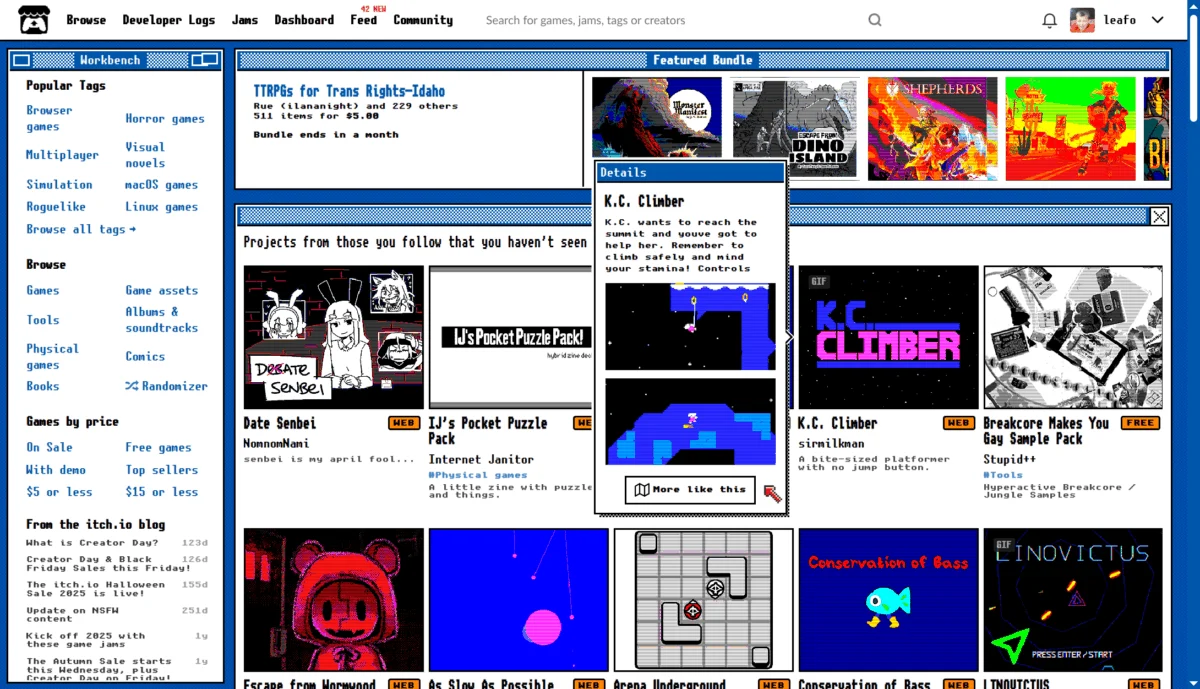
The independent game marketplace itch.io has concluded its "Ameyega Mode" April Fools’ Day activation, a temporary visual overhaul that transformed the platform’s homepage into a retro, ASCII-art inspired interface. While the experimental display has been officially retired, itch.io has made it available for a limited period via a dedicated URL for logged-in users, allowing those who missed it or wish to revisit the nostalgic aesthetic to do so before the next substantial homepage update. The initiative, initially launched later than the traditional April 1st date, garnered significant, albeit polarized, attention from its diverse user base, sparking discussions on nostalgia, user interface design, and accessibility.
Background: Itch.io’s Role in Indie Gaming and the Tradition of April Fools’
Itch.io, founded in 2013 by Leaf Corcoran, has established itself as a pivotal digital storefront and community platform for independent video game developers. Distinguishing itself from larger commercial platforms, itch.io is renowned for its flexible revenue sharing model, emphasis on creator control, and a vibrant community that fosters experimental and niche game development. With millions of monthly active users and tens of thousands of developers uploading content, the platform serves as a crucial ecosystem for innovation and artistic expression within the gaming industry.
The tradition of April Fools’ Day pranks is deeply ingrained within the tech and gaming sectors. Companies often leverage this day to showcase their playful side, engage their communities with lighthearted hoaxes, or even prototype whimsical features. From Google’s various elaborate stunts to game developers announcing outlandish titles or features, these pranks serve as a brief, entertaining diversion from the usual product cycles, often generating significant social media buzz. For itch.io, a platform celebrated for its quirky and community-driven ethos, an April Fools’ intervention aligns well with its brand identity, offering a moment of shared humor with its dedicated audience.
The Genesis of "Ameyega Mode": A Nod to Retro Computing
"Ameyega Mode" was an aesthetic tribute to the graphical interfaces of early personal computers, particularly evoking the look and feel of systems like the Commodore Amiga. The Amiga, popular in the late 1980s and early 1990s, was celebrated for its advanced multimedia capabilities, especially in graphics and sound, making it a beloved machine for gaming and creative applications. By adopting an ASCII art style – a graphic design technique that uses characters from a computer’s ASCII character set to create images – itch.io’s homepage embraced a pixelated, text-based visual language that harkened back to an era of computing before high-resolution graphical user interfaces became ubiquitous.
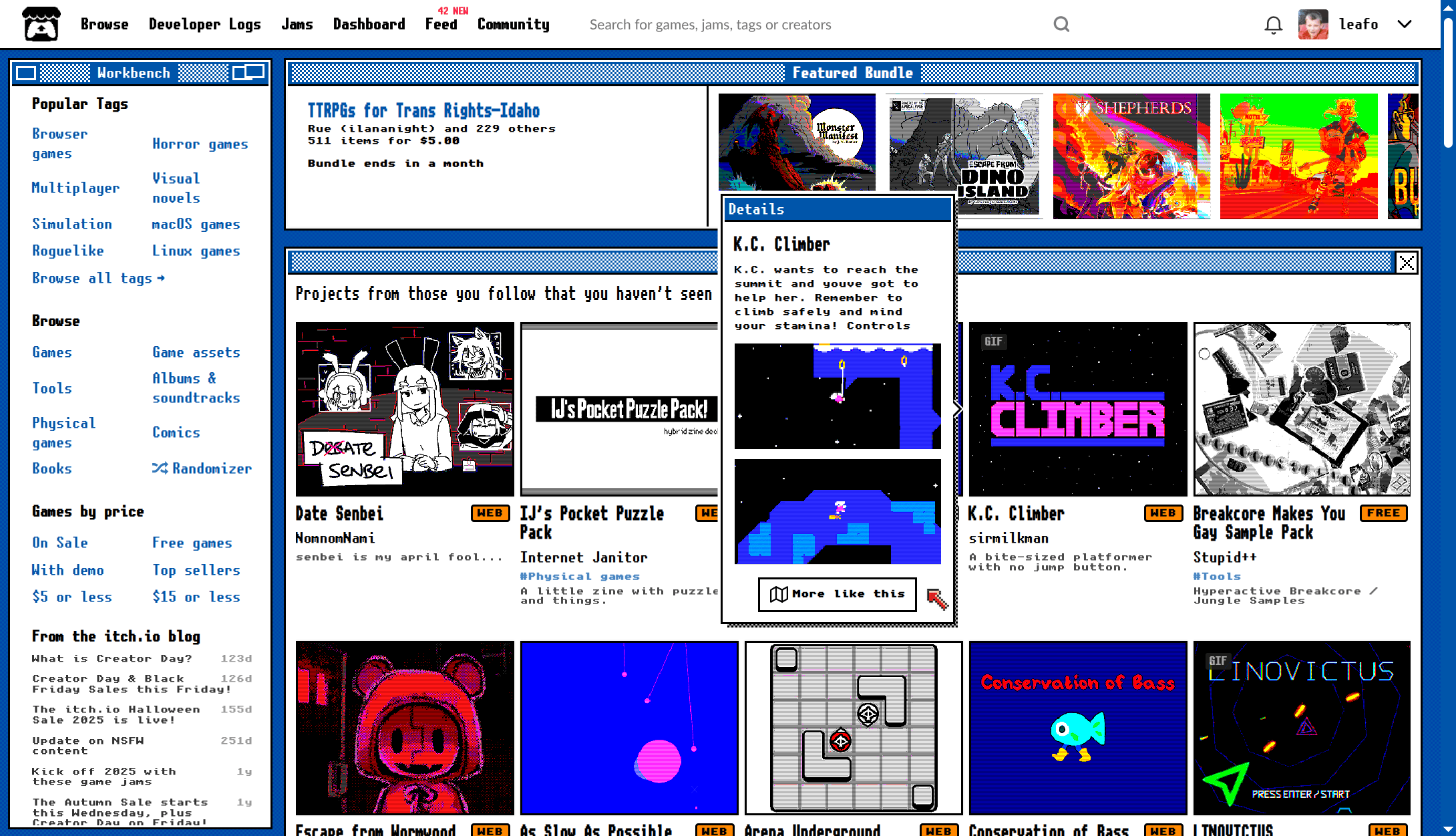
The visual transformation involved rendering the entire homepage, including game listings, navigation elements, and user profiles, using blocky, monochromatic characters. This stark departure from the platform’s standard modern design was a deliberate attempt to infuse a sense of retro charm and digital antiquity. The project explicitly credited "http://viznut.fi/unscii/" for the fonts used, acknowledging the open-source "Unscii" font project, which provides a collection of pixel-perfect ASCII fonts, further solidifying the prank’s authentic retro aesthetic.
Chronology and Limited Availability
The "Ameyega Mode" experience officially commenced on or shortly after April 1st, 2024. As noted by itch.io in their announcement, the rollout was somewhat delayed, leading to a decision to extend its availability beyond the customary 24-hour window for April Fools’ pranks. This extension was intended to ensure that a broader segment of the global user base, accounting for different time zones and late engagement, had the opportunity to encounter the temporary interface.
Upon its conclusion, itch.io provided a specific URL (https://itch.io/?ameyega) which, when accessed by a logged-in user, temporarily reactivated the "Ameyega Mode" display. This decision reflects an understanding of the community’s interest in the unique visual and offers a compromise for those who wished the mode could remain permanent or for users who simply wanted a brief revisit. The platform indicated that this special access would be maintained "until the next time we make substantial changes to the homepage," suggesting an indefinite but ultimately temporary window before significant architectural or design updates render the legacy mode incompatible or redundant.
The "Ameyega Mode" User Experience: Nostalgia vs. Navigation
Upon activation, users were greeted with a dramatically altered homepage. The familiar sleek design of itch.io was replaced by a grid of bold, chunky text characters forming rudimentary images and navigation elements. Game thumbnails became blocky representations, text became monospaced and pixelated, and the overall layout adopted a more segmented, terminal-like appearance. For many, this evoked a powerful sense of nostalgia, reminiscent of early personal computers, text-adventure games, and demoscene productions. It was a tangible link to the formative years of digital culture, eliciting a positive emotional response from users who appreciated the historical reference and artistic execution.
However, the functional impact of "Ameyega Mode" was a subject of considerable debate. While aesthetically intriguing, the radical visual change presented practical challenges for some users. The reduced graphical fidelity and unconventional typography, while intentional, inherently impacted readability and ease of navigation. Information density decreased, and the ability to quickly scan for specific content or distinguish between different sections was diminished for certain individuals. This functional shift was central to the mixed reactions observed across the community.
Community Reactions: A Spectrum of Delight and Discontent
The comments section of itch.io’s announcement post became a vibrant forum for user feedback, illustrating a clear divide in reception. On one hand, a significant segment of the community lauded the "Ameyega Mode" as a delightful and creative prank. Users expressed appreciation for the nostalgia it invoked, with one commenter describing the ASCII art homepage as "a delightful throwback – it actually made browsing feel nostalgic and charming." Others expressed a strong desire for the mode to become a permanent, optional theme, highlighting its unique appeal. One user stated, "I would like for itch.io to change to it permanently. I was sad to find out it was a joke," while another exclaimed, "Please please please make an option to keep this, it’s SO much easier to read for me wow I love love love it." This sentiment underscored a genuine affection for the retro aesthetic and, for some, even a perceived improvement in readability.
Conversely, a substantial portion of the community voiced strong dissatisfaction. Many found the "Ameyega Mode" to be visually jarring and functionally problematic. Complaints ranged from general aesthetic dislike ("Please change it back this is so hard to navigate and there is no option in my feed to see new updates I follow. I hate thisssss") to more severe concerns regarding accessibility. One user explicitly stated, "Oh so cool, i’m disabled and I CAN’T WATCH THIS! How do you get this crap off?!" This critical feedback highlighted that while the mode was a humorous gesture for some, for others it created a significant barrier to using the platform effectively. The drastic visual change, intended as a temporary novelty, inadvertently underscored the diverse visual processing needs within a large user base.
A recurring technical issue reported by multiple users was the apparent conflict between "Ameyega Mode" and the platform’s dark mode setting. Several comments indicated that dark mode functionality was disrupted, leading to an inconsistent or unpleasing visual experience even after the prank was officially over. One user lamented, "it’s over but dark mode is not working now…", with another detailing, "Because you messed up, Dark mode and I can’t get it to work. And it looks like I’m not the only one who’s having that problem." While itch.io reportedly addressed these dark mode issues within hours of users reporting them, the initial oversight added to the frustration for some. The overall sentiment from the negative feedback underscored that for a platform relied upon for discovery and engagement, even a temporary disruption to core usability can be a significant point of contention.
Technical Implications and Accessibility Considerations
The "Ameyega Mode" prank, while lighthearted, inadvertently provided valuable insights into the complexities of user interface design and accessibility. The reports of dark mode functionality being compromised suggested that the retro overlay might have bypassed or interfered with existing CSS rules or theme settings, a common challenge when implementing broad, temporary style changes without exhaustive cross-compatibility testing. The swift resolution by itch.io demonstrated responsiveness to user feedback, but also highlighted the technical debt that can arise from such experimental features.
More profoundly, the polarized reactions regarding readability and navigation brought the nuanced topic of digital accessibility to the forefront. While some users found the high-contrast, blocky text of "Ameyega Mode" to be easier to read – potentially benefiting individuals with certain visual processing conditions or those who prefer minimalist interfaces – others found it actively detrimental. The user identifying as disabled and expressing inability to use the site due to the mode underscored that what might be a whimsical aesthetic choice for some can become an exclusionary barrier for others. This serves as a critical reminder that "accessibility" is not a monolithic concept; different users have different needs, and a design choice that enhances usability for one group might inadvertently hinder another. Future design considerations for optional themes or accessibility settings on itch.io, or indeed any platform, would benefit from a multi-faceted approach to ensure broad inclusivity.
Official Response and Future Outlook
Itch.io’s official communication regarding the conclusion of "Ameyega Mode" was concise and direct. The platform extended thanks to its community and provided the temporary access URL, acknowledging the interest generated. The decision to keep the mode accessible for a period "until the next time we make substantial changes to the homepage" suggests a pragmatic approach: while not a permanent feature, it won’t be immediately removed, offering a grace period for enjoyment before inevitable platform evolution.
The significant volume of community feedback, particularly the strong requests for "Ameyega Mode" to become an optional, permanent theme, could influence future development decisions. While itch.io has not made any explicit commitments, the enthusiasm for customizable aesthetics hints at a potential direction for enhancing user experience. Implementing optional visual themes, whether retro-inspired or otherwise, could offer users greater control over their browsing environment, catering to diverse preferences and potentially addressing some of the accessibility concerns raised. Such features are increasingly common across major digital platforms, empowering users to personalize their digital spaces.
Broader Industry Context: April Fools’ Pranks and Community Engagement
The "Ameyega Mode" prank fits into a broader industry trend where April Fools’ Day serves as a barometer for community sentiment and a testbed for creative ideas. While some pranks are universally enjoyed, others, like YouTube’s "Rickroll" button or Google’s "Mic Drop" Gmail feature (which had serious professional repercussions for some users), have faced backlash for being disruptive or poorly executed. Itch.io’s experience with "Ameyega Mode" lands somewhere in the middle: a largely successful, memorable engagement that nevertheless exposed some friction points regarding usability and accessibility.
The episode underscores the delicate balance companies must strike when engaging in lighthearted activities that modify core user experiences. For a platform like itch.io, which thrives on its community and developer goodwill, understanding and responding to varied feedback is paramount. The "Ameyega Mode" activation, despite its temporary nature, generated valuable data on user preferences, technical integration challenges, and the complex landscape of digital accessibility. It reinforced the notion that while humor and nostalgia are powerful tools for community building, they must be deployed with careful consideration for the diverse needs of a platform’s entire user base.
In conclusion, itch.io’s "Ameyega Mode" April Fools’ prank was a memorable, if divisive, event that captivated its community with a strong dose of retro charm. While officially concluded, its extended temporary availability and the passionate debate it sparked highlight the dynamic relationship between platform developers and their users. The experience serves as a compelling case study on the impact of UI/UX changes, the complexities of digital accessibility, and the enduring power of nostalgia in the ever-evolving landscape of online gaming communities.
About the Author