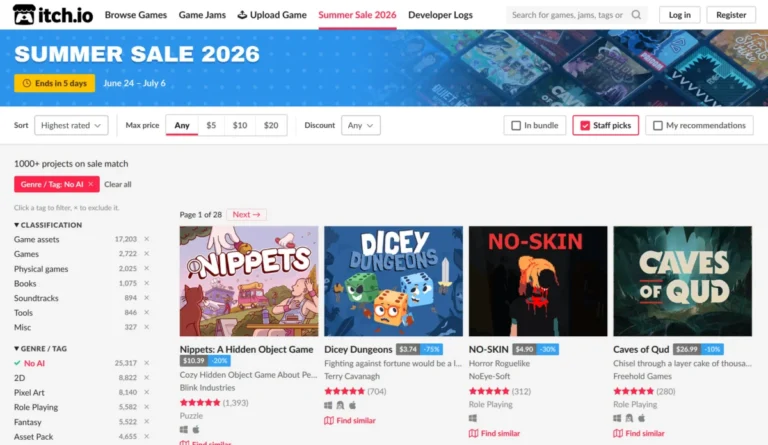
In a sudden and far-reaching move, the independent game marketplace itch.io has deindexed all adult NSFW (Not Safe For Work) content from its browse and search pages, initiating a comprehensive content audit. The drastic action, announced recently, comes as a direct response to intense scrutiny from its payment processors, primarily fueled by an activist campaign launched by the organization Collective Shout. This incident highlights the precarious balance user-generated content (UGC) platforms must maintain between content freedom, creator support, and the critical demands of financial infrastructure.
The platform acknowledged the abrupt and disruptive nature of the change, issuing an apology to its vast community of creators for the frustration and confusion caused. The decision, though sudden, was presented as an urgent measure to safeguard the platform’s core ability to process payments—a function deemed critical for every creator relying on itch.io for their livelihood. Without the cooperation of payment partners like Stripe and PayPal, the entire marketplace’s operation, including the ability to disburse payouts to developers, would be jeopardized.
The Genesis of the Crisis: The ‘No Mercy’ Controversy and Activist Pressure
The catalyst for this platform-wide shift can be traced back to a specific incident involving a game titled No Mercy. This game, which had a temporary presence on itch.io before its removal in April, drew the attention of Collective Shout, an organization known for its campaigns against what it deems exploitative or harmful content. Collective Shout launched a coordinated campaign targeting both Valve’s Steam platform and itch.io, directly lobbying their respective payment processors with concerns regarding the nature of certain content hosted on these sites. The organization’s open letter to payment processors explicitly named various games and content categories it found objectionable, putting immense pressure on financial intermediaries to act.
This kind of pressure from activist groups, when directed at payment processors, often proves highly effective due to the inherent risk aversion of financial institutions. Payment processors operate under strict regulatory frameworks and often have broad "acceptable use policies" designed to mitigate legal, reputational, and financial risks. Even the perception of hosting illicit or controversial content can trigger a review, and non-compliance can lead to severe consequences, ranging from increased processing fees and reserves to outright termination of services. For a digital marketplace, losing the ability to process transactions is akin to a physical store losing its cash registers—it simply cannot operate.
Payment Processors: The Unseen Gatekeepers of Digital Commerce
The role of payment processors as de facto content moderators has become increasingly prominent in the digital age. While often seen as neutral facilitators of transactions, companies like Stripe and PayPal wield immense power over online businesses due to their indispensable position in the financial ecosystem. Their acceptable use policies frequently extend beyond purely illegal activities to include content deemed "objectionable," "harmful," or "reputational risks" – categories that can be interpreted broadly.
For a platform like itch.io, which prides itself on being an open, creator-friendly space, maintaining these relationships is paramount. The platform explicitly stated that its ability to continue operating and providing a marketplace for all developers hinges on prioritizing its relationship with these financial partners and taking immediate steps towards compliance. This situation underscores a growing trend where the technical infrastructure providers (web hosts, CDN providers, domain registrars, and crucially, payment processors) are increasingly becoming the arbiters of what content is permissible online, often bypassing traditional legal or governmental channels.
Itch.io’s Urgent Response and the Deindexing Initiative
The urgency of itch.io’s response was a key aspect of the initial announcement. The platform clarified that the situation developed rapidly, leaving no room for advance notice to creators. This meant that the deindexing of adult NSFW content from public browse and search pages was implemented without prior warning, leading to widespread developer frustration and confusion across social media and developer forums. Many creators woke up to find their projects, which were previously visible, suddenly inaccessible through general browsing, impacting discoverability and sales.
The immediate goal of the deindexing was to provide itch.io with the necessary breathing room to conduct a comprehensive audit of its content library. This audit aims to ensure that the platform can meet the evolving requirements of its payment processors. During this review period, affected pages will remain deindexed. Upon completion, itch.io plans to introduce new compliance measures, which for NSFW pages, will include a new step requiring creators to explicitly confirm that their content adheres to the policies of the payment processors linked to their accounts. This shifts a significant portion of the compliance burden directly onto the creators, holding them accountable for their content’s financial viability.
A Tale of Two Platforms: Itch.io vs. Steam’s Contrasting Responses
A common point of discussion and concern among the community was the perceived difference in response between itch.io and Steam, both of which were targeted by Collective Shout. While Steam also faced scrutiny, its actions appeared more targeted, leading many to question why itch.io’s response was so much broader. Itch.io addressed this directly in an addendum FAQ.
The fundamental difference lies in the operational models of the two platforms. Steam operates as a "closed" platform, where every product page undergoes an approval process before it becomes available in the store. This curated approach means Steam generally has a clearer understanding of the content it hosts and can, therefore, identify and act on specific problematic pages. In contrast, itch.io is an "open," user-generated content (UGC) platform. With over 2 million product pages, it allows anyone to publish content with minimal barriers, relying heavily on user-provided tagging. This open model, while fostering incredible diversity and accessibility for indie developers, makes a targeted approach to content moderation significantly more challenging. Itch.io stated it could not rely on the accuracy of user-provided tags for a precise intervention, necessitating a broader, platform-wide review.
Furthermore, itch.io is a considerably smaller company than Valve, both in terms of team size and transaction volume. This smaller scale translates to limited leverage when negotiating with powerful payment processors. As itch.io explained, losing a major payment partner like PayPal or Stripe would critically impact the ability of all creators to conduct business, including the fundamental function of sending payouts. The broader action was thus a defensive strategy to protect the payment processing capabilities for the vast majority of the platform’s users.
Navigating the Aftermath: Creator Concerns and Platform Clarifications
The initial announcement generated a torrent of questions and concerns from the developer community, prompting itch.io to release an extensive FAQ.
Content Audit and Future Compliance: The comprehensive audit is ongoing, and until it’s complete, the deindexed status will remain. The new compliance measures will require creators of NSFW content to explicitly attest to their content’s adherence to payment processor policies, signaling a shift towards increased creator responsibility in content flagging and self-regulation.
Permanent Removals and Notifications: Itch.io confirmed that some pages would be permanently removed from the platform as a result of the review. Affected account holders would be notified via email from the support address, with an option to reply for follow-up questions. This aspect of the policy is particularly concerning for creators who may lose their primary distribution channel.
Library Access and Ownership: A critical concern was the fate of previously purchased content. Itch.io clarified that pages that are "deindexed" are still accessible to users who own them and have not been removed from personal libraries or collections. For pages that receive a "content notice" (meaning itch.io can no longer support their business), downloadable files remain available in the user’s library, provided the creator hasn’t independently removed the page or files. The platform emphasized its DRM-free philosophy, encouraging users to download and back up their games to maintain control over their owned content, regardless of corporate policy shifts. This stance was widely praised by the community as a reaffirmation of itch.io’s user-centric values.
Payouts and Financial Stability: Concerns about withheld earnings were also addressed. Itch.io clarified that its long-standing policy regarding not processing payouts for infringing accounts typically applies to "bad-actor" scenarios involving blatant violations like content with sexualized minors or real-life imagery. The current situation, however, is considered a "special circumstance," and the platform stated it has no interest in withholding anyone’s legitimate earnings. The measures are solely to preserve relationships with financial partners to ensure continued, uninterrupted payouts for all creators.
Evolving Adult Content Policy: Itch.io’s adult content policy was updated to provide more clarity. While the Terms of Service (TOS) and adult content policy always included a general rule about adhering to payment processor acceptable use policies for monetized content, the platform added a specific list of prohibited themes commonly found in card processing networks. This list, though acknowledged to be open to semantic interpretation, was provided to give creators more information to work with during the review period. The platform intends to refine this part of the site as more clarity emerges from their ongoing discussions with payment partners.
The Search for Sustainable Solutions: Future Outlook
The situation remains dynamic, with itch.io acknowledging that final determinations from its current payment processors (Stripe and PayPal) are still pending, preventing a fixed timeline for these changes. In the interim, itch.io is actively exploring alternative payment processors that may be more willing to accommodate a broader range of content. This search for "adult-friendly" payment solutions is a challenge faced by many businesses in the adult entertainment and content industries, reflecting the uneven landscape of digital financial services. As a temporary measure, the ability to pay with Stripe for 18+ content has been suspended indefinitely.
Beyond payment processors, itch.io’s immediate focus includes rigorous content classification reviews and the implementation of stricter age-gating mechanisms across the site. These measures are designed to enhance compliance and provide more robust controls over access to adult content. The platform’s commitment to providing further updates on its blog if the situation evolves underscores the ongoing uncertainty and the need for continued transparency with its community.
Broader Implications for the Indie Game Ecosystem
This incident on itch.io carries significant implications for the wider indie game development ecosystem. It highlights the vulnerability of platforms that host user-generated content to external pressures, particularly from powerful financial institutions. For many indie developers, especially those creating niche or experimental games, itch.io has been a crucial, open, and accessible platform for distribution and monetization. The sudden deindexing and the looming possibility of permanent content removal create a chilling effect, potentially discouraging creators from developing or hosting content that might fall into ambiguous "adult" categories.
The episode also serves as a stark reminder of the centralized control exercised by payment processors over digital economies. While designed to protect consumers and prevent illicit activities, their broad policies can inadvertently stifle artistic expression and impact the livelihoods of legitimate creators. This tension between content freedom, platform responsibility, and financial viability is a persistent challenge in the digital age. As more platforms face similar pressures, the industry may see a further stratification of content, with mainstream platforms becoming increasingly sanitized and niche platforms struggling to find sustainable financial infrastructure.
In conclusion, itch.io’s deindexing of adult NSFW content is a critical moment for the platform and its community. It underscores the profound influence of payment processors and activist campaigns on digital content distribution. As itch.io navigates this challenging period, balancing the imperative of financial stability with its commitment to creators, the broader implications for open platforms and the future of adult content in gaming will undoubtedly continue to unfold.
About the Author