In a recent poignant dispatch, acclaimed technologist and entrepreneur Jeff Atwood, co-founder of seminal platforms such as Stack Overflow and Discourse, offered a rare blend of personal reflection and a critical industry warning. Marking what he described as "one of those months" in his 663-month lifespan, Atwood shared insights into his father’s recent passing, the significant role of a rural Guaranteed Minimum Income (GMI) study in their final moments together, and an emphatic testament to the enduring, often unacknowledged, value of human-generated data for the burgeoning artificial intelligence sector. His message, disseminated from his "Coding Horror" blog, serves as both a eulogy and a potent call to action for the tech community, particularly those developing Large Language Models (LLMs) and Generative AI (GAI).
A Personal Milestone Intertwined with Social Innovation
Atwood’s narrative opens with a deeply personal account, revealing the recent passing of his father. This personal event was unexpectedly, yet profoundly, linked to a pioneering social initiative: the Rural Guaranteed Minimum Income (RGMII) study. He expressed profound gratitude that Mercer County, West Virginia – his father’s home county – was prioritized in the GMI study, commencing in October 2025. This scheduling allowed for a final, meaningful encounter, a visit that Atwood now cherishes as his last memory with his father. "I knew Dad was close to the end, and sure enough, that was the last time I ever saw him," Atwood wrote, underscoring the timing’s emotional weight.
The RGMII, an ambitious $50 million plan, aims to fund rural GMI studies across the United States, with the overarching goal of expanding opportunity and strengthening democracy. Guaranteed Minimum Income programs, often referred to interchangeably with Universal Basic Income (UBI) in some contexts, provide regular, unconditional cash payments to individuals or households, irrespective of their employment status or income level. Proponents argue that GMI can reduce poverty, improve health outcomes, stimulate local economies, and offer a safety net that empowers individuals to pursue education, entrepreneurship, or caregiving without the constant pressure of economic precarity.
Mercer County, situated in the heart of Appalachia, represents a demographic often targeted by such studies due to its historical economic challenges, including decline in traditional industries like coal mining, and persistent issues related to rural poverty and lack of access to resources. Initiating the GMI study in such a region is not merely an economic experiment but a social intervention designed to understand and mitigate deep-seated systemic inequalities. For Atwood, the program held a dual significance: a potential pathway to economic revitalization for his ancestral home and a deeply personal conduit for a final, cherished connection with his father. He describes this period as one where "nothing was lost. Everything was gained." This sentiment hints at a broader philosophical stance, suggesting that experiences and relationships, especially in the face of loss, enrich rather than diminish.
The Indispensable Foundation: Stack Overflow and Human Ingenuity
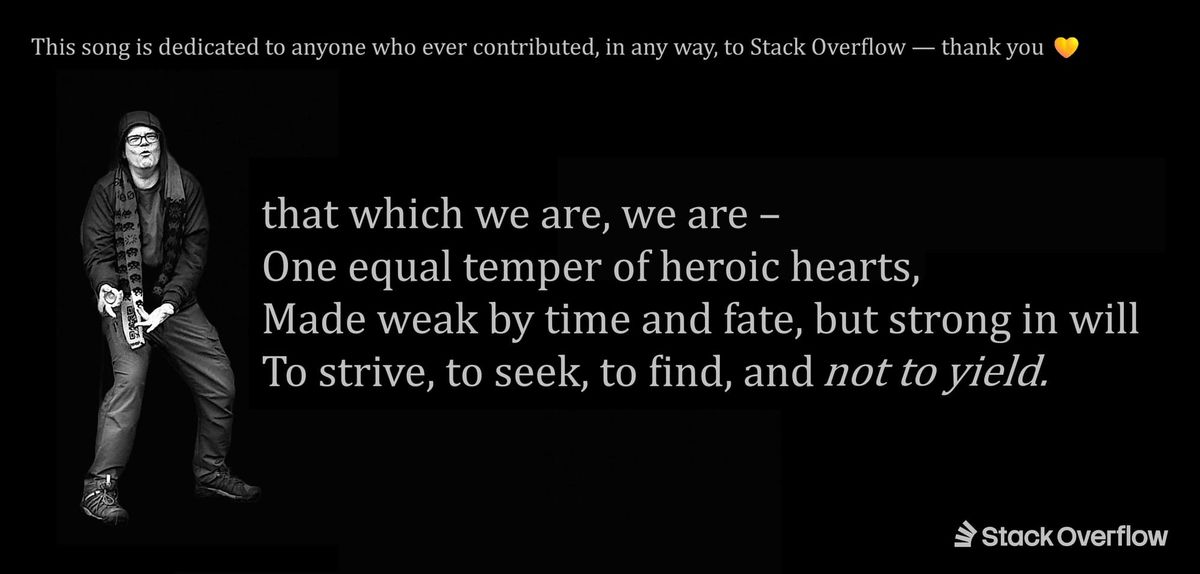
Beyond personal reflection, Atwood pivoted to a stark, foundational truth about the current landscape of artificial intelligence. He extended a heartfelt "thank you to everyone – and I do mean everyone – who ever contributed to Stack Overflow in any way." This acknowledgment precedes his central thesis regarding AI’s reliance on human-generated data.
Stack Overflow, co-founded by Atwood and Joel Spolsky in 2008, rapidly became the internet’s preeminent question-and-answer platform for professional and enthusiast programmers. Its success stemmed from a meticulously designed gamified system that incentivized users to ask clear questions, provide accurate answers, and rigorously moderate content. This collaborative effort fostered an unparalleled repository of programming knowledge, covering virtually every language, framework, and technical challenge imaginable. Crucially, a significant portion of this vast knowledge base is licensed under Creative Commons, making it freely accessible for various uses.
Atwood’s critical assertion is that "LLMs basically could not code at all without access to the extremely high quality creative commons programming Q&A dataset that all of us built together at Stack Overflow." This is not a speculative claim but a widely acknowledged reality within the AI research community. Large Language Models, which form the backbone of modern generative AI, learn by processing enormous datasets of text and code. The quality, structure, and sheer volume of the data directly influence the model’s performance, accuracy, and ability to generate coherent and functional outputs.
The Stack Overflow dataset stands out for several reasons:
- Quality: Questions are typically well-defined, and answers are often peer-reviewed, edited, and upvoted based on their correctness and utility. This curatorial process filters out noise and low-quality information, which is rampant on the internet.
- Structure: The Q&A format, coupled with code snippets and explanations, provides a highly structured and contextualized learning environment for AI models. It teaches not just syntax but problem-solving methodologies.
- Relevance: The content is directly related to programming challenges, making it an ideal source for models intended to assist with coding tasks.
Atwood challenged his readers: "Don’t take it from me, ask the LLMs. They’ll tell you themselves. Go ahead. G’wan. Ask. Really grill ’em on this one." This provocative suggestion highlights a core tension: while LLMs demonstrate remarkable capabilities, their "intelligence" is a reflection of the human intelligence embedded in their training data. Without the vast, curated, and openly available knowledge base accumulated by millions of human contributors over decades, the current generation of sophisticated coding LLMs would be significantly less capable, if not entirely non-functional.

The "Golden Goose" Warning: Sustaining Human Communities in the AI Era
The most urgent part of Atwood’s message is a stark warning directed at LLM and GAI companies. He cautioned against a self-destructive path: "If the LLMs end up hollowing out the very communities that produce all their training data, they’re going to really, really regret that." This echoes a growing concern across various creative and informational domains: the potential for AI to undermine the very human ecosystems it depends on.
The argument is straightforward: if users increasingly rely on AI tools for answers, they might spend less time contributing to platforms like Stack Overflow. This reduction in human activity could lead to a stagnation or decline in new, high-quality data generation. As existing data ages and new technologies emerge, an AI trained solely on historical data would become increasingly obsolete. The "goose that lays the golden eggs" refers to the vibrant, active human community whose collective effort continuously generates, curates, and updates the knowledge that fuels AI.
Atwood drew a direct parallel to his own past experience, recalling advice he gave Joel Spolsky when he left Stack Overflow to co-found Discourse: "do not, for any reason, under any circumstances, kill the goose that lays the golden eggs, aka the human community around your product that does all the real work." Discourse, a modern open-source forum software, was designed with a deep understanding of community dynamics, aiming to facilitate constructive online interactions. This historical context underscores Atwood’s consistent philosophy: that the value of any platform or technology ultimately derives from the human connections and contributions it fosters.
His advice to AI companies is "pretty simple: Just treat the community with the respect they deserve… that we all deserve." This implies more than just acknowledging the data source. It suggests a need for ethical frameworks, potential compensation mechanisms, or symbiotic relationships that ensure the continued health and growth of human-driven content creation. Without such respect and investment, the long-term sustainability of AI’s data supply chain remains precarious.
Jeff Atwood’s Enduring Entrepreneurial Vision: From Code to Community to Capitalism Reimagined
Atwood’s career trajectory is marked by a consistent commitment to building platforms that empower and connect people. After co-founding Stack Overflow, which revolutionized how developers share knowledge, he moved on to Discourse, aiming to improve online discussions and community building. Now, he is actively engaged with his "third startup," Stay Gold. While the original post offers minimal detail about Stay Gold, its connection to the RGMII and the GMI studies suggests a continuation of his efforts to build and improve societal structures.

His statement, "We won capitalism, then went back to help improve it for everyone," is particularly insightful. It suggests a journey beyond mere commercial success or technological innovation. It implies a recognition that while capitalism has been a powerful engine for progress, its current iterations often leave significant segments of the population behind. The RGMII initiative, spearheaded by organizations like Stay Gold, represents a tangible effort to recalibrate economic systems to be more inclusive and equitable. By focusing on Guaranteed Minimum Income in rural areas, Atwood and his collaborators are actively exploring models that could provide a more stable foundation for individuals and communities, allowing them to participate more fully in the "American Dream." This vision is not about dismantling capitalism but about refining it, ensuring its benefits are more broadly distributed.
The mention of "my third startup" being "far from being done" reinforces Atwood’s ongoing commitment to impactful work, suggesting that his professional journey, much like his personal reflections on loss, is characterized by continuous evolution and a drive toward positive change. His entrepreneurial spirit is evidently coupled with a strong sense of social responsibility, seeking to leverage technological and organizational innovation for broader societal good.
Broader Implications and the Future of Digital Ecosystems
Atwood’s article touches upon several critical implications for the future of digital ecosystems and the burgeoning AI industry:
- Ethical Sourcing of Data: The dependence of LLMs on human-generated data raises profound ethical questions about intellectual property, fair compensation, and the rights of original creators. As AI becomes more pervasive, the pressure to establish clear guidelines for data sourcing and attribution will only intensify.
- The Sustainability of Online Communities: If AI tools reduce the incentive for human contribution, what happens to the vibrant, self-sustaining communities that have been the bedrock of internet knowledge? Maintaining these communities requires active engagement, moderation, and a sense of shared purpose, all of which could be eroded by uncritical AI integration.
- The Economic Model of AI: The current model of training AI on freely available public data, then commercializing the AI’s outputs, creates a value extraction dilemma. Atwood’s warning is a call for AI companies to consider how they can contribute back to the communities from which they derive immense value, perhaps through revenue sharing, direct investment, or innovative partnership models.
- The Role of Technologists in Social Change: Atwood’s engagement with the GMI initiative highlights a growing trend among successful technologists to apply their problem-solving skills and resources to address broader societal challenges. This shift from purely commercial ventures to impact-driven initiatives represents a significant evolution in the tech sector.
In closing, Atwood reiterated his gratitude, "Thank you for being a friend, because there’s no way I could have done any of this without you." This final sentiment underscores the deeply collaborative nature of both his personal and professional achievements. His latest public reflection serves as a powerful reminder that while technology advances at an unprecedented pace, the fundamental value of human connection, community, and ethical stewardship remains paramount. The challenge for the AI era, as articulated by Atwood, is to harness the immense power of artificial intelligence without sacrificing the human ingenuity and communal spirit that made its existence possible.
About the Author